
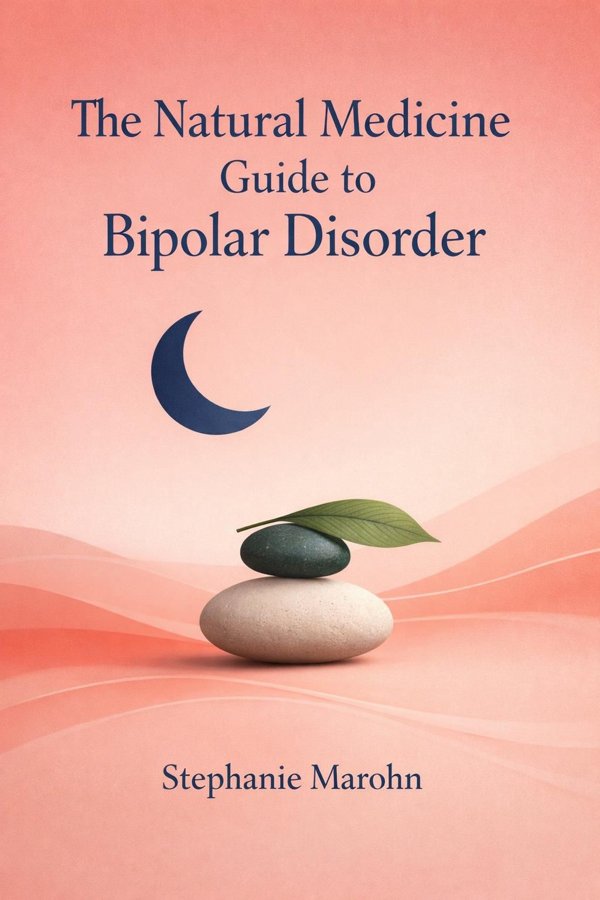
The Natural Medicine Guide to Bipolar Disorder: Summary & Key Insights
 10 min7 chaptersAudio available
What Is The Natural Medicine Guide to Bipolar Disorder About?
The Natural Medicine Guide to Bipolar Disorder by Stephanie Marohn is a health_med book spanning 7 pages. Medical journalist Stephanie Marohn explores integrative and natural approaches to understanding and managing bipolar disorder. The book identifies key contributing factors and triggers for mood disorders and presents a range of natural medicine treatments, including nutritional, lifestyle, and mind-body therapies, aimed at supporting emotional balance and mental health.
This FizzRead summary covers all 7 key chapters of The Natural Medicine Guide to Bipolar Disorder in approximately 10 minutes, distilling the most important ideas, arguments, and takeaways from Stephanie Marohn's work. Also available as an audio summary and Key Quotes Podcast.
The Natural Medicine Guide to Bipolar Disorder
Medical journalist Stephanie Marohn explores integrative and natural approaches to understanding and managing bipolar disorder. The book identifies key contributing factors and triggers for mood disorders and presents a range of natural medicine treatments, including nutritional, lifestyle, and mind-body therapies, aimed at supporting emotional balance and mental health.
Who Should Read The Natural Medicine Guide to Bipolar Disorder?
This book is perfect for anyone interested in health_med and looking to gain actionable insights in a short read. Whether you're a student, professional, or lifelong learner, the key ideas from The Natural Medicine Guide to Bipolar Disorder by Stephanie Marohn will help you think differently.
- ✓Readers who enjoy health_med and want practical takeaways
- ✓Professionals looking to apply new ideas to their work and life
- ✓Anyone who wants the core insights of The Natural Medicine Guide to Bipolar Disorder in just 10 minutes
Want the full summary?
Get instant access to this book summary and 100K+ more with Fizz Moment.
Get Free SummaryAvailable on App Store • Free to download
Key Chapters
Traditional psychiatry describes bipolar disorder as a problem of chemical imbalance—of neurotransmitters misfiring and neurocircuits overstimulating. The conventional treatment model heavily emphasizes pharmacological intervention: mood stabilizers, antidepressants, antipsychotics. While these medications can provide relief, they rarely address underlying causes. In my research, I encountered countless individuals who continued to cycle between mania and depression, despite medication compliance. Their frustration led me to explore why.
From the perspective of natural medicine, symptoms are signals. The extreme highs and lows of bipolarity reflect systemic disharmony—often biochemical, sometimes environmental, always multi-layered. This integrative model does not reject conventional psychiatry but enriches it. It asks questions such as: What roles do thyroid function, adrenal fatigue, and nutritional deficiencies play in mood swings? How does chronic stress alter the body’s neuroendocrine rhythms? Can lifestyle changes rebalance chemistry without suppressing emotion?
In contrast to the linear model of mental illness, natural medicine embraces the concept of feedback: every aspect of life—diet, sleep, light exposure, relationships, and meaning—influences neural stability. My purpose here is to help you see bipolar disorder as a dynamic condition that can be influenced from multiple directions, not merely medicated from one. The integrative perspective restores agency to the person, transforming the treatment process from passive prescription to active participation.
In examining bipolar disorder’s roots, we find deeply interconnected physiological systems. Blood sugar regulation, hormonal signaling, and brain cell communication function as one interdependent web. When glucose metabolism falters, mood instability often follows. When thyroid output is low, both physical and emotional energy decline. When adrenal glands are overstressed by chronic stimulation, periods of exhaustion may alternate with bursts of mania. Understanding these biological interrelations enables treatment to become more precise and compassionate.
I have seen how a diet high in refined carbohydrates and caffeine can perpetuate emotional volatility. Excess sugar creates roller coaster blood glucose levels that mirror mood swings. Similarly, magnesium deficiency—a common result of stress and poor nutrition—can lead to anxiety and racing thoughts. These are not peripheral issues; they are biochemical realities that interact directly with the brain.
Within the book, I present evidence and clinical testimonies showing how restoring nutrient balance helps stabilize mood. Omega-3 fatty acids, for instance, support neural membrane integrity and modulate inflammatory responses associated with depression. Minerals such as lithium in trace amounts (distinct from pharmaceutical doses) and zinc contribute to neurotransmitter balance. This biochemical map reveals the tangible connection between physical nourishment and emotional regulation. To accept this truth is to recognize the profound wisdom of the body—it does not separate mental from physical health; it integrates both into one.
+ 5 more chapters — available in the FizzRead app
All Chapters in The Natural Medicine Guide to Bipolar Disorder
About the Author
Stephanie Marohn is a medical journalist and author specializing in integrative medicine and holistic health. She has written several books in 'The Healthy Mind Guides' series, focusing on natural approaches to mental wellness and emotional healing.
Get This Summary in Your Preferred Format
Read or listen to the The Natural Medicine Guide to Bipolar Disorder summary by Stephanie Marohn anytime, anywhere. FizzRead offers multiple formats so you can learn on your terms — all free.
Available formats: App · Audio · PDF · EPUB — All included free with FizzRead
Download The Natural Medicine Guide to Bipolar Disorder PDF and EPUB Summary
Key Quotes from The Natural Medicine Guide to Bipolar Disorder
“Traditional psychiatry describes bipolar disorder as a problem of chemical imbalance—of neurotransmitters misfiring and neurocircuits overstimulating.”
“In examining bipolar disorder’s roots, we find deeply interconnected physiological systems.”
Frequently Asked Questions about The Natural Medicine Guide to Bipolar Disorder
The Natural Medicine Guide to Bipolar Disorder by Stephanie Marohn is a health_med book that explores key ideas across 7 chapters. Medical journalist Stephanie Marohn explores integrative and natural approaches to understanding and managing bipolar disorder. The book identifies key contributing factors and triggers for mood disorders and presents a range of natural medicine treatments, including nutritional, lifestyle, and mind-body therapies, aimed at supporting emotional balance and mental health.
You Might Also Like

On Immunity
Eula Biss
10 min
The Three-Body Problem
Liu Cixin
10 min
Community Health Volunteer Toolkit: Training and Practical Activities
World Health Organization
10 min
Healing Back Pain: The Mind-Body Connection
John E. Sarno
10 min
Health Literacy for All: Practical Guides to Communicate Health Information (Compilations)
World Health Organization
10 min
The Complete Guide to Sports Supplements: An Evidence-Based Review
Anita Bean
10 minBrowse by Category
Ready to read The Natural Medicine Guide to Bipolar Disorder?
Get the full summary and 100K+ more books with Fizz Moment.