
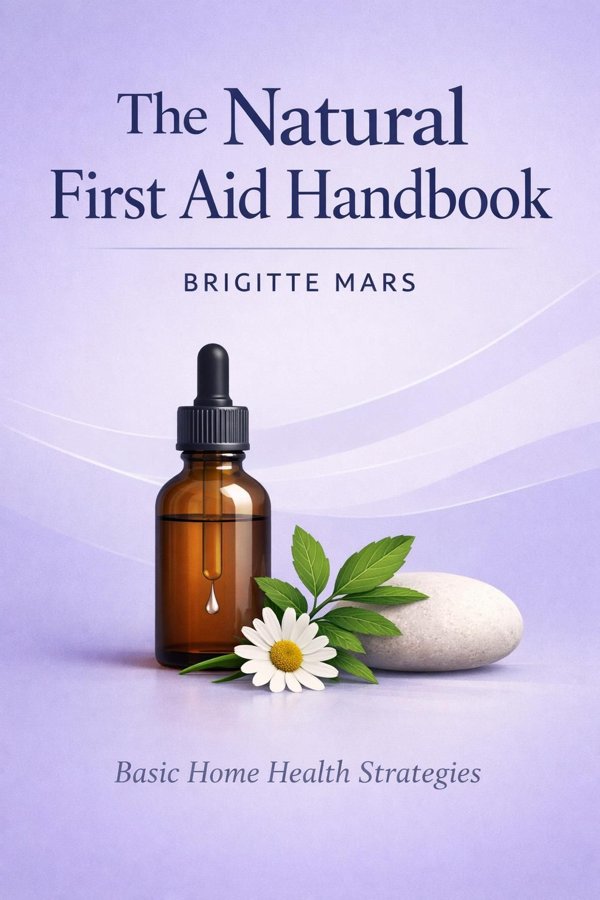
The Natural First Aid Handbook: Basic Home Health Strategies: Summary & Key Insights
 10 min8 chaptersAudio available
Key Takeaways from The Natural First Aid Handbook: Basic Home Health Strategies
Healing often begins before anything goes wrong.
The skin is both shield and signal, and when it is injured, the first response matters.
Many everyday health problems are less about crisis and more about imbalance.
Not every health problem starts in the body; many begin in an overstimulated mind.
Natural does not automatically mean harmless.
What Is The Natural First Aid Handbook: Basic Home Health Strategies About?
The Natural First Aid Handbook: Basic Home Health Strategies by Brigitte Mars is a health_med book spanning 5 pages. What if your first response to everyday illness or minor injury did not begin at the pharmacy, but with the practical healing tools already available in your kitchen, garden, or medicine cabinet? In The Natural First Aid Handbook, Brigitte Mars offers a grounded introduction to caring for common health problems with herbs, essential oils, nutrition, and simple home remedies. Rather than treating natural medicine as mystical or complicated, she presents it as a practical, accessible skill set that can help families respond calmly to cuts, burns, bites, digestive discomfort, colds, stress, and other routine concerns. The book matters because it restores confidence. Many people feel dependent on over-the-counter products for every minor symptom, yet Mars shows that basic natural care can be safe, inexpensive, and effective when used responsibly. Her approach is holistic: she looks at symptoms, but also at the body’s overall balance, resilience, and ability to heal. Mars writes with the authority of an experienced herbalist and health educator who has spent decades teaching plant-based wellness. Her tone is reassuring rather than extreme, making this handbook especially valuable for readers who want realistic, everyday strategies for home health support.
This FizzRead summary covers all 8 key chapters of The Natural First Aid Handbook: Basic Home Health Strategies in approximately 10 minutes, distilling the most important ideas, arguments, and takeaways from Brigitte Mars's work. Also available as an audio summary and Key Quotes Podcast.
The Natural First Aid Handbook: Basic Home Health Strategies
What if your first response to everyday illness or minor injury did not begin at the pharmacy, but with the practical healing tools already available in your kitchen, garden, or medicine cabinet? In The Natural First Aid Handbook, Brigitte Mars offers a grounded introduction to caring for common health problems with herbs, essential oils, nutrition, and simple home remedies. Rather than treating natural medicine as mystical or complicated, she presents it as a practical, accessible skill set that can help families respond calmly to cuts, burns, bites, digestive discomfort, colds, stress, and other routine concerns.
The book matters because it restores confidence. Many people feel dependent on over-the-counter products for every minor symptom, yet Mars shows that basic natural care can be safe, inexpensive, and effective when used responsibly. Her approach is holistic: she looks at symptoms, but also at the body’s overall balance, resilience, and ability to heal.
Mars writes with the authority of an experienced herbalist and health educator who has spent decades teaching plant-based wellness. Her tone is reassuring rather than extreme, making this handbook especially valuable for readers who want realistic, everyday strategies for home health support.
Who Should Read The Natural First Aid Handbook: Basic Home Health Strategies?
This book is perfect for anyone interested in health_med and looking to gain actionable insights in a short read. Whether you're a student, professional, or lifelong learner, the key ideas from The Natural First Aid Handbook: Basic Home Health Strategies by Brigitte Mars will help you think differently.
- ✓Readers who enjoy health_med and want practical takeaways
- ✓Professionals looking to apply new ideas to their work and life
- ✓Anyone who wants the core insights of The Natural First Aid Handbook: Basic Home Health Strategies in just 10 minutes
Want the full summary?
Get instant access to this book summary and 100K+ more with Fizz Moment.
Get Free SummaryAvailable on App Store • Free to download
Key Chapters
Healing often begins before anything goes wrong. One of the book’s central insights is that natural first aid is not just a collection of remedies; it is a mindset of readiness, observation, and respect for the body’s healing processes. Brigitte Mars frames nature not as an alternative to life, but as the environment from which human health has always drawn support. Herbs, compresses, teas, salves, and essential oils are not exotic interventions. They are practical tools that become most effective when they are understood in advance and kept close at hand.
Mars encourages readers to build a basic home first aid kit that includes both conventional necessities and natural supports. This might include bandages, gauze, and a thermometer alongside aloe vera gel, calendula salve, lavender essential oil, peppermint tea, chamomile, and soothing herbal tinctures. The goal is not to reject modern care, but to expand the range of responses available for minor conditions. Preparedness also includes knowing when a situation is too severe for home treatment and requires medical attention.
The broader philosophy is holistic. A natural first aid response asks: What happened? What does the body need right now? Is the priority to cool, cleanse, calm, stimulate, moisten, or rest? A scraped knee may need cleansing and a soothing herbal wash. A headache may call for hydration, quiet, and a tension-relieving herb rather than immediate medication. This approach slows panic and promotes thoughtful care.
Mars also highlights confidence as a health resource. When people know how to use a few simple remedies correctly, they become less reactive and more capable in moments of stress. The practical takeaway is to assemble a small natural first aid kit, learn the purpose of each item, and review it before an emergency arises.
The skin is both shield and signal, and when it is injured, the first response matters. Mars devotes important attention to common surface injuries such as cuts, scrapes, burns, splinters, and insect bites because these are among the situations where natural remedies can be especially useful. Her emphasis is on gentle, immediate care that supports the body’s repair mechanisms while reducing irritation, infection risk, and discomfort.
For cuts and scrapes, cleansing is the first priority. Natural care may include rinsing with clean water and then applying soothing, antimicrobial herbs such as calendula or plantain in salve, wash, or poultice form. These plants have long been valued for helping calm inflamed tissue and supporting skin recovery. For burns, Mars points readers toward cooling remedies like aloe vera, a classic household plant with clear gel that can ease heat and dryness in minor burns. Lavender is often mentioned in natural care traditions for its soothing effect, though she stresses using essential oils carefully and appropriately diluted when needed.
Insect bites, bee stings, and minor skin irritations benefit from remedies that reduce swelling and itching. A crushed plantain leaf, a paste of baking soda, or a cool herbal compress can offer fast relief. Splinters may be softened and encouraged out with warm soaks or drawing poultices. The underlying lesson is that treatment should match the tissue’s immediate need: clean when dirty, cool when hot, soothe when irritated, and protect when exposed.
Mars does not romanticize natural care. She recognizes that deep wounds, severe burns, allergic reactions, or signs of infection need professional evaluation. Her contribution is showing that many everyday injuries respond well to calm, plant-based support. Action step: learn three reliable skin remedies for your home, such as aloe for burns, calendula for cuts, and plantain for bites.
Many everyday health problems are less about crisis and more about imbalance. Mars extends natural first aid beyond visible injuries to internal discomforts such as fever, indigestion, nausea, gas, sore throats, and respiratory congestion. Her approach suggests that home healing is not merely about stopping symptoms as fast as possible. It is also about helping the body complete its own restorative process with comfort and efficiency.
For fever, she treats the symptom as meaningful rather than automatically dangerous. A mild fever can be part of the immune response, so the aim is not always suppression but support. Rest, fluids, light nourishment, and cooling cloths may be more appropriate than aggressive intervention, particularly when the fever is not extreme. For digestive issues, Mars turns to classic herbal allies such as peppermint, ginger, chamomile, and fennel. These can calm nausea, reduce cramping, stimulate sluggish digestion, or ease intestinal discomfort. A warm tea often works on multiple levels: it hydrates, soothes, and encourages slowing down.
Respiratory distress from colds or mild congestion may be addressed with steam inhalation, warming teas, garlic, thyme, or soothing demulcent herbs for irritated throats. Honey with lemon, for example, illustrates the book’s practical style: common ingredients can serve real medicinal functions when used thoughtfully. She also pays attention to what not to do, such as overloading the body with heavy foods when digestion is weak or ignoring dehydration during illness.
The larger insight is that natural first aid often begins with restoring basic conditions for healing: warmth, moisture, rest, circulation, and elimination. Small interventions can shift the body from strain to recovery. Actionable takeaway: identify two digestive herbs and two cold-care remedies you trust, and keep them stocked for the next time discomfort appears.
Not every health problem starts in the body; many begin in an overstimulated mind. One of the book’s valuable themes is that emotional distress, nervous tension, headaches, irritability, and sleeplessness deserve first aid too. Mars treats calmness not as a luxury, but as a form of medicine. When the nervous system is agitated, pain often feels worse, digestion becomes less efficient, and healing slows. Supporting mental equilibrium can therefore improve the whole recovery process.
She recommends simple methods that are easy to use in ordinary life. Herbal teas like chamomile, lemon balm, or linden can soften tension and encourage relaxation without overwhelming the system. Aromatic support may come from carefully used essential oils such as lavender or sweet orange, whether through a bath, diluted topical application, or room diffusion. Breath, quiet, and rest are recurring remedies in the book because they remind readers that healing is not only something applied from the outside; it is something made possible by the body’s internal shift from vigilance to repair.
This chapter’s wisdom is especially relevant for modern lifestyles. A stress headache, upset stomach before a difficult event, or inability to sleep after emotional strain may not require a dramatic intervention. It may require reducing stimulation, drinking a calming tea, loosening tight muscles, and allowing the nervous system to reset. Mars presents these steps as practical home care rather than abstract wellness advice.
Her broader point is that first aid should include the person’s state of mind. Panic, fear, and overstimulation can intensify symptoms and impair judgment. A soothing ritual can be an immediate and meaningful treatment. Action step: create a short calming protocol for your home, such as herbal tea, deep breathing, and lavender, so you can respond to tension before it becomes exhaustion.
Natural does not automatically mean harmless. Mars is careful to emphasize that herbs and essential oils require knowledge, moderation, and common sense. This is one of the book’s strongest contributions because it prevents readers from mistaking home medicine for casual experimentation. Remedies can be powerful, and their usefulness depends on proper selection, preparation, dosage, and context.
She encourages readers to learn the difference between teas, tinctures, salves, poultices, compresses, and essential oils. A chamomile tea taken internally is not the same as a chamomile compress used externally. A soothing herb in one form may be too concentrated in another. Essential oils deserve particular caution because they are potent extracts, not interchangeable with whole herbs. Mars advises careful dilution, awareness of skin sensitivity, and restraint in use, especially around children, pregnancy, pets, or people with allergies.
Another key point is individual variation. A remedy that works beautifully for one person may irritate another or be unsuitable due to a health condition or medication interaction. This makes observation essential. Start small, note the response, and discontinue anything that worsens symptoms. Readers are also reminded that serious symptoms, persistent pain, high fever, breathing difficulty, or severe reactions call for professional medical care.
Mars’s responsible tone gives the book credibility. She does not present natural healing as a replacement for judgment. Instead, she teaches readers to combine curiosity with caution. This leads to safer and more effective home care. Actionable takeaway: before using any new herb or oil, learn its best form, appropriate amount, possible cautions, and the situations in which it should not be used.
Some of the most useful remedies do not come from a specialty store; they come from the pantry. Mars repeatedly shows that natural first aid can begin with ordinary foods and household ingredients used with therapeutic intention. This idea is empowering because it lowers the barrier to care. A person does not need an elaborate herbal apothecary to begin supporting health naturally.
Garlic, honey, lemon, apple cider vinegar, salt, ginger, and baking soda all have roles in traditional home medicine. Honey can soothe a cough or irritated throat. Ginger can settle nausea and improve circulation. Salt water can rinse the mouth or gargle for throat discomfort. Lemon can brighten a warm drink and encourage hydration. Garlic may be used in food or simple preparations to support immune resilience. Mars’s larger point is not that these ingredients cure everything, but that they often provide immediate, accessible relief when used appropriately.
The kitchen also offers methods, not just ingredients. Broths nourish when appetite is low. Warm water encourages hydration and circulation. Soft, simple meals reduce digestive strain during illness. The body often recovers better when it is not burdened with heavy, processed, or irritating foods. This practical nutritional wisdom is part of what makes the handbook so approachable. It integrates healing into daily life instead of separating medicine from ordinary routines.
By reframing food as a first aid ally, Mars broadens readers’ understanding of what home health support can look like. Simple does not mean ineffective. Thoughtful nourishment is often one of the most powerful interventions available. Action step: make a short list of kitchen remedies you already have at home and learn one specific use for each during colds, digestive upset, or sore throats.
A plant’s usefulness depends not only on what it is, but on how it is prepared. Mars helps readers see that natural medicine is practical craft as much as it is ingredient knowledge. Teas, infusions, decoctions, salves, poultices, steams, baths, and compresses each deliver herbs in different ways, and choosing the right preparation can make a remedy far more effective.
A tea works well for gentle internal support, especially with aromatic or delicate herbs like peppermint or chamomile. A decoction, made by simmering tougher plant material such as roots or bark, is better for extracting other constituents. A poultice places moist plant matter directly on the skin, which is useful for bites, splinters, or localized swelling. A salve provides a protective, soothing layer for dry or irritated skin. Steam inhalation targets the respiratory system more directly, making it especially useful for congestion. The remedy is therefore not just the herb itself, but the delivery system.
This matters because many people assume natural care failed when they simply used the wrong form. Drinking an herb that would have been more effective as a compress, or applying a salve when cooling water was the first need, can lead to disappointment. Mars quietly educates readers to think like home practitioners: What tissue am I trying to reach? What action do I want? What preparation best serves that purpose?
This hands-on understanding increases both confidence and safety. It also turns first aid into a skill that can improve with practice. Readers learn that natural healing is not vague intuition; it is applied knowledge. Actionable takeaway: choose one common herb in your home and learn two different ways to prepare it, noting when each form is most useful.
The body gives clues before it gives emergencies. A subtle but important lesson in Mars’s handbook is that effective natural first aid depends on paying attention. Good home care is not just about having remedies available. It is about observing symptoms clearly, noticing changes over time, and responding in proportion to what the body is showing.
Observation begins with simple questions. Is the person hot or chilled? Restless or exhausted? Thirsty or nauseated? Is the pain sharp, dull, spreading, or easing? Has the skin become red, swollen, dry, blistered, or infected-looking? These details help determine whether a remedy should cool, warm, moisten, stimulate, or calm. They also help identify when home care is no longer enough. Mars’s practical style encourages readers not to overreact to every symptom, but also not to ignore warning signs.
This observational skill is particularly useful with children and family care. A parent may notice that a child with a mild cold simply needs rest, fluids, and steam, while another child with lethargy, persistent high fever, or breathing difficulty needs immediate medical evaluation. Similarly, a minor scrape can be managed at home, but redness that spreads or produces heat and pus indicates a different level of concern. Natural first aid becomes safer when it is linked to ongoing assessment rather than one-time treatment.
There is also an emotional benefit to observation. Caregivers who watch carefully tend to feel less helpless because they are engaged with what is actually happening, not only with fear. Mars teaches attentiveness as a therapeutic tool in its own right. Action step: when using a home remedy, check in after a set period and note whether symptoms are improving, unchanged, or worsening before deciding the next step.
All Chapters in The Natural First Aid Handbook: Basic Home Health Strategies
About the Author
Brigitte Mars is an American herbalist, author, and natural health educator based in Boulder, Colorado. She is widely known for her long-standing work in herbal medicine, nutrition, and holistic self-care, and has written numerous books on plant-based healing and natural living. Over the course of her career, Mars has taught classes and workshops internationally, helping readers and students understand how herbs, foods, and simple daily practices can support well-being. Her teaching style combines traditional herbal wisdom with practical household application, making natural health feel accessible rather than intimidating. In The Natural First Aid Handbook, she brings that experience to everyday care, showing how common remedies can be used thoughtfully and safely. Her work continues to appeal to readers seeking a grounded, empowering approach to wellness.
Get This Summary in Your Preferred Format
Read or listen to the The Natural First Aid Handbook: Basic Home Health Strategies summary by Brigitte Mars anytime, anywhere. FizzRead offers multiple formats so you can learn on your terms — all free.
Available formats: App · Audio · PDF · EPUB — All included free with FizzRead
Download The Natural First Aid Handbook: Basic Home Health Strategies PDF and EPUB Summary
Key Quotes from The Natural First Aid Handbook: Basic Home Health Strategies
“Healing often begins before anything goes wrong.”
“The skin is both shield and signal, and when it is injured, the first response matters.”
“Many everyday health problems are less about crisis and more about imbalance.”
“Not every health problem starts in the body; many begin in an overstimulated mind.”
“Natural does not automatically mean harmless.”
Frequently Asked Questions about The Natural First Aid Handbook: Basic Home Health Strategies
The Natural First Aid Handbook: Basic Home Health Strategies by Brigitte Mars is a health_med book that explores key ideas across 8 chapters. What if your first response to everyday illness or minor injury did not begin at the pharmacy, but with the practical healing tools already available in your kitchen, garden, or medicine cabinet? In The Natural First Aid Handbook, Brigitte Mars offers a grounded introduction to caring for common health problems with herbs, essential oils, nutrition, and simple home remedies. Rather than treating natural medicine as mystical or complicated, she presents it as a practical, accessible skill set that can help families respond calmly to cuts, burns, bites, digestive discomfort, colds, stress, and other routine concerns. The book matters because it restores confidence. Many people feel dependent on over-the-counter products for every minor symptom, yet Mars shows that basic natural care can be safe, inexpensive, and effective when used responsibly. Her approach is holistic: she looks at symptoms, but also at the body’s overall balance, resilience, and ability to heal. Mars writes with the authority of an experienced herbalist and health educator who has spent decades teaching plant-based wellness. Her tone is reassuring rather than extreme, making this handbook especially valuable for readers who want realistic, everyday strategies for home health support.
You Might Also Like

On Immunity
Eula Biss
10 min
The Three-Body Problem
Liu Cixin
10 min
Community Health Volunteer Toolkit: Training and Practical Activities
World Health Organization
10 min
Healing Back Pain: The Mind-Body Connection
John E. Sarno
10 min
Health Literacy for All: Practical Guides to Communicate Health Information (Compilations)
World Health Organization
10 min
The Complete Guide to Sports Supplements: An Evidence-Based Review
Anita Bean
10 minBrowse by Category
Ready to read The Natural First Aid Handbook: Basic Home Health Strategies?
Get the full summary and 100K+ more books with Fizz Moment.