
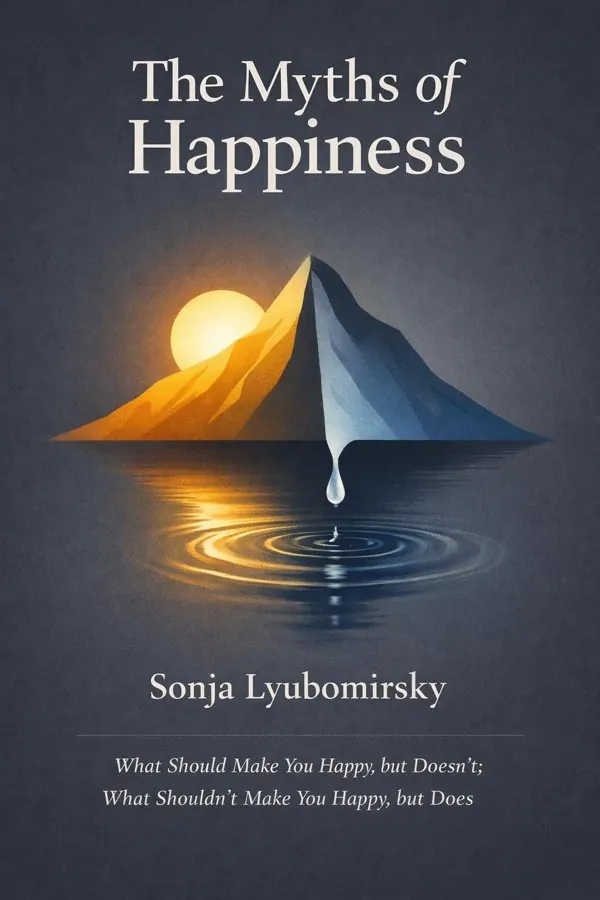
The Myths of Happiness: What Should Make You Happy, but Doesn't; What Shouldn't Make You Happy, but Does: Summary & Key Insights
 10 min8 chaptersAudio available
What Is The Myths of Happiness: What Should Make You Happy, but Doesn't; What Shouldn't Make You Happy, but Does About?
The Myths of Happiness: What Should Make You Happy, but Doesn't; What Shouldn't Make You Happy, but Does by Sonja Lyubomirsky is a positive_psych book spanning 8 pages. In this insightful work, Sonja Lyubomirsky explores the misconceptions surrounding happiness and fulfillment. Drawing on decades of psychological research, she reveals how common life events—such as marriage, wealth, and success—often fail to bring lasting joy, while unexpected challenges can foster growth and satisfaction. The book offers practical strategies for cultivating genuine well-being and reframing our understanding of what truly makes life meaningful.
This FizzRead summary covers all 8 key chapters of The Myths of Happiness: What Should Make You Happy, but Doesn't; What Shouldn't Make You Happy, but Does in approximately 10 minutes, distilling the most important ideas, arguments, and takeaways from Sonja Lyubomirsky's work. Also available as an audio summary and Key Quotes Podcast.
The Myths of Happiness: What Should Make You Happy, but Doesn't; What Shouldn't Make You Happy, but Does
In this insightful work, Sonja Lyubomirsky explores the misconceptions surrounding happiness and fulfillment. Drawing on decades of psychological research, she reveals how common life events—such as marriage, wealth, and success—often fail to bring lasting joy, while unexpected challenges can foster growth and satisfaction. The book offers practical strategies for cultivating genuine well-being and reframing our understanding of what truly makes life meaningful.
Who Should Read The Myths of Happiness: What Should Make You Happy, but Doesn't; What Shouldn't Make You Happy, but Does?
This book is perfect for anyone interested in positive_psych and looking to gain actionable insights in a short read. Whether you're a student, professional, or lifelong learner, the key ideas from The Myths of Happiness: What Should Make You Happy, but Doesn't; What Shouldn't Make You Happy, but Does by Sonja Lyubomirsky will help you think differently.
- ✓Readers who enjoy positive_psych and want practical takeaways
- ✓Professionals looking to apply new ideas to their work and life
- ✓Anyone who wants the core insights of The Myths of Happiness: What Should Make You Happy, but Doesn't; What Shouldn't Make You Happy, but Does in just 10 minutes
Want the full summary?
Get instant access to this book summary and 100K+ more with Fizz Moment.
Get Free SummaryAvailable on App Store • Free to download
Key Chapters
I often meet people who believe marriage is the ultimate happiness destination. They imagine that once they find “the one,” lifelong joy will follow naturally, shining forever. But psychological data tell a different story. Marriage, while deeply meaningful, does not guarantee sustained happiness. The truth is that even the most blissful couples gradually adapt to marital life. The initial surge of excitement and affection gives way to routine, familiarity, and the everyday rhythm of shared responsibilities.
It’s not that love dies; instead, our emotional brains normalize the positive change. This process—hedonic adaptation—is powerful and deeply human. After the honeymoon period, satisfaction levels tend to return close to pre-marriage baselines unless couples actively nurture novelty, gratitude, and appreciation.
Seeing marriage through the lens of realistic happiness doesn’t mean giving up romance; it means shifting focus. Real joy in marriage comes not from the institution itself but from deliberate acts—communicating openly, expressing gratitude, cultivating shared purpose, and maintaining kindness even amid difficulty. When partners engage in positive, intentional activities, they slow adaptation and sustain emotional closeness.
So, marriage is not a “happiness guarantee” but rather a living, dynamic process. The myth that marriage automatically equals happiness blinds us to the effort that joy requires. When we move beyond fantasy, we begin to see love not as perpetual euphoria but as an evolving commitment grounded in attention, intention, and care.
Money is one of the most persistent happiness myths. We’ve been told from childhood that wealth equals success, and success equals happiness. Yet, scientific studies—including longitudinal analyses spanning decades—consistently show that beyond meeting basic needs and securing stability, more money brings only minimal joy. People with vast wealth often report similar satisfaction levels as middle-income individuals once essential comforts are met.
This happens because our expectations rise as our income grows. What once seemed luxurious becomes standard, then ordinary. The new car loses its gleam, the larger home becomes simply home. Hedonic adaptation again plays its quiet trick, normalizing privilege until it no longer feels special.
Moreover, financial success often introduces new comparison pressures. Happiness derived from wealth is fragile, dependent on how one’s possessions measure up to others’. True well-being declines when comparison replaces contentment.
If we understand that wealth’s impact plateaus, we can redirect energy toward what yields real joy—gratitude, generosity, and meaningful experiences. Giving money away, for instance, reliably increases happiness because it connects us with purpose and empathy. Financial freedom matters, yes—but emotional freedom matters more. When we release the myth that money can buy lasting joy, we reclaim the ability to find it in authentic, everyday richness.
+ 6 more chapters — available in the FizzRead app
All Chapters in The Myths of Happiness: What Should Make You Happy, but Doesn't; What Shouldn't Make You Happy, but Does
About the Author
Sonja Lyubomirsky is a professor of psychology at the University of California, Riverside, known for her pioneering research on happiness and positive psychology. She is the author of several influential books on well-being and has received numerous awards for her contributions to psychological science.
Get This Summary in Your Preferred Format
Read or listen to the The Myths of Happiness: What Should Make You Happy, but Doesn't; What Shouldn't Make You Happy, but Does summary by Sonja Lyubomirsky anytime, anywhere. FizzRead offers multiple formats so you can learn on your terms — all free.
Available formats: App · Audio · PDF · EPUB — All included free with FizzRead
Download The Myths of Happiness: What Should Make You Happy, but Doesn't; What Shouldn't Make You Happy, but Does PDF and EPUB Summary
Key Quotes from The Myths of Happiness: What Should Make You Happy, but Doesn't; What Shouldn't Make You Happy, but Does
“I often meet people who believe marriage is the ultimate happiness destination.”
“Money is one of the most persistent happiness myths.”
Frequently Asked Questions about The Myths of Happiness: What Should Make You Happy, but Doesn't; What Shouldn't Make You Happy, but Does
The Myths of Happiness: What Should Make You Happy, but Doesn't; What Shouldn't Make You Happy, but Does by Sonja Lyubomirsky is a positive_psych book that explores key ideas across 8 chapters. In this insightful work, Sonja Lyubomirsky explores the misconceptions surrounding happiness and fulfillment. Drawing on decades of psychological research, she reveals how common life events—such as marriage, wealth, and success—often fail to bring lasting joy, while unexpected challenges can foster growth and satisfaction. The book offers practical strategies for cultivating genuine well-being and reframing our understanding of what truly makes life meaningful.
More by Sonja Lyubomirsky
You Might Also Like
Don't Sweat the Small Stuff... and It's All Small Stuff
Richard Carlson
10 min
Option B
Sheryl Sandberg & Adam Grant
10 min
Hallelujah Anyway: Rediscovering Mercy
Anne Lamott
10 min
I Can Do It: How to Use Affirmations to Change Your Life
Louise Hay
10 min
The Coffee Bean: A Simple Lesson to Create Positive Change
Jon Gordon, Damon West
10 min
The Happiness Hypothesis: Finding Modern Truth in Ancient Wisdom
Jonathan Haidt
10 minBrowse by Category
Ready to read The Myths of Happiness: What Should Make You Happy, but Doesn't; What Shouldn't Make You Happy, but Does?
Get the full summary and 100K+ more books with Fizz Moment.