
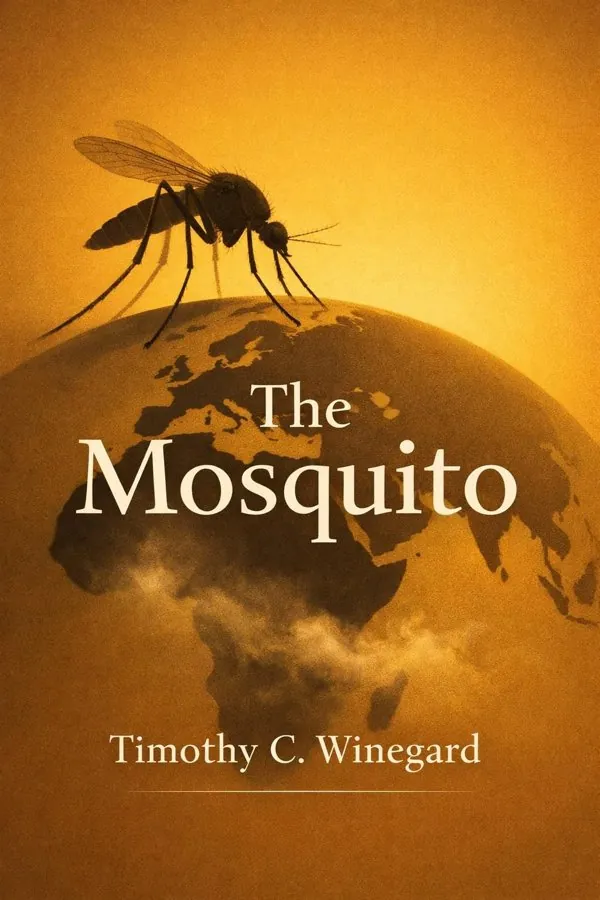
The Mosquito: A Human History of Our Deadliest Predator: Summary & Key Insights
 10 min10 chaptersAudio available
What Is The Mosquito: A Human History of Our Deadliest Predator About?
The Mosquito: A Human History of Our Deadliest Predator by Timothy C. Winegard is a popular_sci book spanning 10 pages. An exploration of how the mosquito has shaped human history, influencing wars, empires, and the course of civilization through the diseases it spreads. The book traces the insect’s impact from ancient times to modern global health challenges, blending science, history, and storytelling.
This FizzRead summary covers all 10 key chapters of The Mosquito: A Human History of Our Deadliest Predator in approximately 10 minutes, distilling the most important ideas, arguments, and takeaways from Timothy C. Winegard's work. Also available as an audio summary and Key Quotes Podcast.
The Mosquito: A Human History of Our Deadliest Predator
An exploration of how the mosquito has shaped human history, influencing wars, empires, and the course of civilization through the diseases it spreads. The book traces the insect’s impact from ancient times to modern global health challenges, blending science, history, and storytelling.
Who Should Read The Mosquito: A Human History of Our Deadliest Predator?
This book is perfect for anyone interested in popular_sci and looking to gain actionable insights in a short read. Whether you're a student, professional, or lifelong learner, the key ideas from The Mosquito: A Human History of Our Deadliest Predator by Timothy C. Winegard will help you think differently.
- ✓Readers who enjoy popular_sci and want practical takeaways
- ✓Professionals looking to apply new ideas to their work and life
- ✓Anyone who wants the core insights of The Mosquito: A Human History of Our Deadliest Predator in just 10 minutes
Want the full summary?
Get instant access to this book summary and 100K+ more with Fizz Moment.
Get Free SummaryAvailable on App Store • Free to download
Key Chapters
To understand the mosquito’s dominion, we must start at the beginning. Mosquitoes have existed for over two hundred million years, predating humanity by far and thriving through countless planetary transformations. From damp prehistoric swamps arose these masters of adaptation, fine-tuned by evolution to feed on blood. Not for cruelty, but survival—their reproduction depends upon the nutrients found in animal blood. This evolutionary specialization gave them a powerful advantage: wherever life thrived, mosquitoes followed.
In examining their biology, I found an astonishing blend of elegance and efficiency. Only female mosquitoes bite, using their needle-like proboscis not just to pierce skin but to inject anticoagulants and pathogens. Over millennia, they have diversified into over 3,500 species, each tailored to particular climates and hosts. The Anopheles mosquito became the infamous vector for malaria; Aedes aegypti spread yellow fever and dengue; Culex took over the transmission of West Nile virus. Their world dominance lies in this diversity—they inhabit tundra and rainforest, desert edge and urban alley with equal ease.
Through this lens, evolution is not simply survival of the fittest—it is survival of the most adaptable. As human history unfolded, mosquitoes adapted to our transformations: agriculture created stagnant water for their breeding; urbanization multiplied their habitats; imperial travel spread their species to distant continents. They are not just survivors—they are opportunists. Wherever humans build, they follow. This symbiosis, costly as it is, makes them our most enduring natural companion, and our most lethal rival.
In the cradle of civilization, mosquitoes were already shaping destiny. The rivers of Mesopotamia, the Nile Delta, and the swamps of the Mediterranean were fertile grounds not only for crops but also for mosquito larvae. As humans gathered near water to cultivate and trade, malaria became a persistent shadow. Ancient texts from Egypt and Greece mention fevers that confounded healers and struck indiscriminately. The priests of Egypt offered prayers and rituals against the 'curses of the marshes,' unaware that their suffering stemmed not from divine wrath but a creature smaller than a grain of rice.
In Greece and Rome, the intellectual pursuit of balance between health and environment led thinkers like Hippocrates to describe diseases attributed to 'bad air'—the miasma theory that would dominate medicine for centuries. Yet this misunderstanding, though flawed, shaped city planning and even religious belief. Malaria weakened populations, undermined armies, and changed migration paths. It contributed to the decline of civilizations that sought dominion over nature without understanding its intricacies. It is humbling to realize how such towering powers of antiquity were undermined by a foe they could not see.
+ 8 more chapters — available in the FizzRead app
All Chapters in The Mosquito: A Human History of Our Deadliest Predator
About the Author
Timothy C. Winegard is a Canadian historian and author known for his works on military and world history. He has served as an officer in the Canadian and British armed forces and taught history at several universities. His writing often connects historical events with broader human and environmental themes.
Get This Summary in Your Preferred Format
Read or listen to the The Mosquito: A Human History of Our Deadliest Predator summary by Timothy C. Winegard anytime, anywhere. FizzRead offers multiple formats so you can learn on your terms — all free.
Available formats: App · Audio · PDF · EPUB — All included free with FizzRead
Download The Mosquito: A Human History of Our Deadliest Predator PDF and EPUB Summary
Key Quotes from The Mosquito: A Human History of Our Deadliest Predator
“To understand the mosquito’s dominion, we must start at the beginning.”
“In the cradle of civilization, mosquitoes were already shaping destiny.”
Frequently Asked Questions about The Mosquito: A Human History of Our Deadliest Predator
The Mosquito: A Human History of Our Deadliest Predator by Timothy C. Winegard is a popular_sci book that explores key ideas across 10 chapters. An exploration of how the mosquito has shaped human history, influencing wars, empires, and the course of civilization through the diseases it spreads. The book traces the insect’s impact from ancient times to modern global health challenges, blending science, history, and storytelling.
You Might Also Like
Structures: Or Why Things Don"t Fall Down
J.E. Gordon
10 min
The Road to Wigan Pier
George Orwell
10 min
Bonk: The Curious Coupling of Science and Sex
Mary Roach
10 min
First Bite: How We Learn to Eat
Bee Wilson
10 min
In Pursuit Of The Unknown: 17 Equations That Changed The World
Ian Stewart
10 min
Napoleon's Buttons: 17 Molecules That Changed History
Penny Le Couteur and Jay Burreson
10 minBrowse by Category
Ready to read The Mosquito: A Human History of Our Deadliest Predator?
Get the full summary and 100K+ more books with Fizz Moment.