
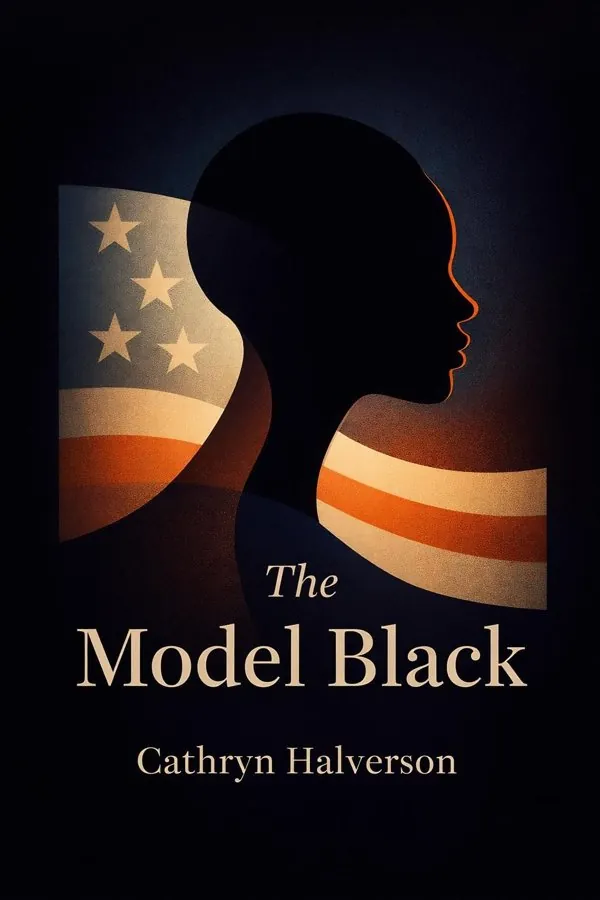
The Model Black: Summary & Key Insights
 10 min7 chaptersAudio available
What Is The Model Black About?
The Model Black by Cathryn Halverson is a sociology book spanning 7 pages. The Model Black: How Black Women Writers Reimagined U.S. Citizenship explores how African American women authors of the early twentieth century used literature to challenge racial and gender stereotypes and to redefine the concept of American citizenship. Through close readings of works by writers such as Jessie Fauset, Nella Larsen, and Zora Neale Hurston, Halverson examines how these authors constructed new models of Black womanhood and civic identity in the face of systemic exclusion.
This FizzRead summary covers all 7 key chapters of The Model Black in approximately 10 minutes, distilling the most important ideas, arguments, and takeaways from Cathryn Halverson's work. Also available as an audio summary and Key Quotes Podcast.
The Model Black
The Model Black: How Black Women Writers Reimagined U.S. Citizenship explores how African American women authors of the early twentieth century used literature to challenge racial and gender stereotypes and to redefine the concept of American citizenship. Through close readings of works by writers such as Jessie Fauset, Nella Larsen, and Zora Neale Hurston, Halverson examines how these authors constructed new models of Black womanhood and civic identity in the face of systemic exclusion.
Who Should Read The Model Black?
This book is perfect for anyone interested in sociology and looking to gain actionable insights in a short read. Whether you're a student, professional, or lifelong learner, the key ideas from The Model Black by Cathryn Halverson will help you think differently.
- ✓Readers who enjoy sociology and want practical takeaways
- ✓Professionals looking to apply new ideas to their work and life
- ✓Anyone who wants the core insights of The Model Black in just 10 minutes
Want the full summary?
Get instant access to this book summary and 100K+ more with Fizz Moment.
Get Free SummaryAvailable on App Store • Free to download
Key Chapters
At the heart of *The Model Black* is an engagement with theories of citizenship that move beyond legal definitions toward cultural and affective ones. In the early twentieth century, American citizenship was bound to narratives of racial purity, national progress, and gendered respectability. To be considered a 'true citizen' was to embody an idealized whiteness and domestic virtue—an ideal from which Black women were excluded on both counts.
I begin by drawing on W.E.B. Du Bois’s notion of 'double consciousness' and feminist theorists of intersectionality to explain how these exclusions operated. For African American women, citizenship was doubly complicated: while Black men were fighting for racial inclusion, women faced simultaneous marginalization within that struggle. The ideology of 'racial uplift' demanded that women serve as moral exemplars for the race, yet rarely granted them the same public intellectual authority. These women were compelled to embody respectability while their creative voices were confined to narrow spaces.
Black women writers of the era responded by reworking the discourse from within. They took the concept of the 'model citizen' and inverted it into 'The Model Black'—a figure that did not mimic white norms but redefined virtue, intelligence, and selfhood through distinctly African American values. Literature became the site of this redefinition. In the fictional worlds they built, Fauset, Larsen, and Hurston explored what civic identity could mean when one's humanity was questioned.
The theoretical framework guiding this study therefore treats literature as civic practice. Through narrative technique—especially irony, interiority, and dialogue—these authors transform the political language of citizenship into a field of subjective exploration. Each story and novel becomes a miniature republic where marginalized voices negotiate inclusion, equality, and justice.
The historical backdrop to the authors I examine is crucial. After Reconstruction, African Americans found themselves systematically excluded from the promises of emancipation. Jim Crow legislation, disenfranchisement, and patriarchal norms defined civic life. Yet it was precisely within this restrictive climate that Black cultural production flourished. The Harlem Renaissance acted not only as a literary movement but as a national reimagining of identity.
African American women’s entry into the literary field during this time was revolutionary. Writing in magazines such as *The Crisis* and *Opportunity*, they positioned themselves as both cultural critics and moral citizens. Jessie Fauset, literary editor of *The Crisis*, exemplified this dual role: she curated voices that expanded the moral and aesthetic reach of Black America. Similarly, Larsen and Hurston translated lived Black experience into modernist forms that challenged genteel notions of progress.
Within this historical moment, literature became a corrective to political exclusion. If Black women could not occupy the center of the civic sphere, they occupied its moral imagination. Their fiction revealed paradoxes of racial democracy and exposed how national ideals failed in practice. The historical significance of their work rests on this imaginative intervention—one that allowed the community to envision freedom before the law recognized it. The Harlem Renaissance was thus both a cultural awakening and a civic revolution, shaped profoundly by the pens of Black women.
+ 5 more chapters — available in the FizzRead app
All Chapters in The Model Black
About the Author
Cathryn Halverson is an American literary scholar specializing in African American and women’s literature. She has written extensively on U.S. regionalism, race, and gender in twentieth-century fiction and teaches American literature at the University of Copenhagen.
Get This Summary in Your Preferred Format
Read or listen to the The Model Black summary by Cathryn Halverson anytime, anywhere. FizzRead offers multiple formats so you can learn on your terms — all free.
Available formats: App · Audio · PDF · EPUB — All included free with FizzRead
Download The Model Black PDF and EPUB Summary
Key Quotes from The Model Black
“At the heart of *The Model Black* is an engagement with theories of citizenship that move beyond legal definitions toward cultural and affective ones.”
“The historical backdrop to the authors I examine is crucial.”
Frequently Asked Questions about The Model Black
The Model Black by Cathryn Halverson is a sociology book that explores key ideas across 7 chapters. The Model Black: How Black Women Writers Reimagined U.S. Citizenship explores how African American women authors of the early twentieth century used literature to challenge racial and gender stereotypes and to redefine the concept of American citizenship. Through close readings of works by writers such as Jessie Fauset, Nella Larsen, and Zora Neale Hurston, Halverson examines how these authors constructed new models of Black womanhood and civic identity in the face of systemic exclusion.
You Might Also Like
Between the World and Me
Ta-Nehisi Coates
10 min
Half the Sky
Nicholas D. Kristof, Sheryl WuDunn
10 min
Men Explain Things To Me
Rebecca Solnit
10 min
Rational Ritual
Michael Suk-Young Chwe
10 min
The New Jim Crow
Michelle Alexander
10 min
Beyond Culture
Edward T. Hall
10 minBrowse by Category
Ready to read The Model Black?
Get the full summary and 100K+ more books with Fizz Moment.