
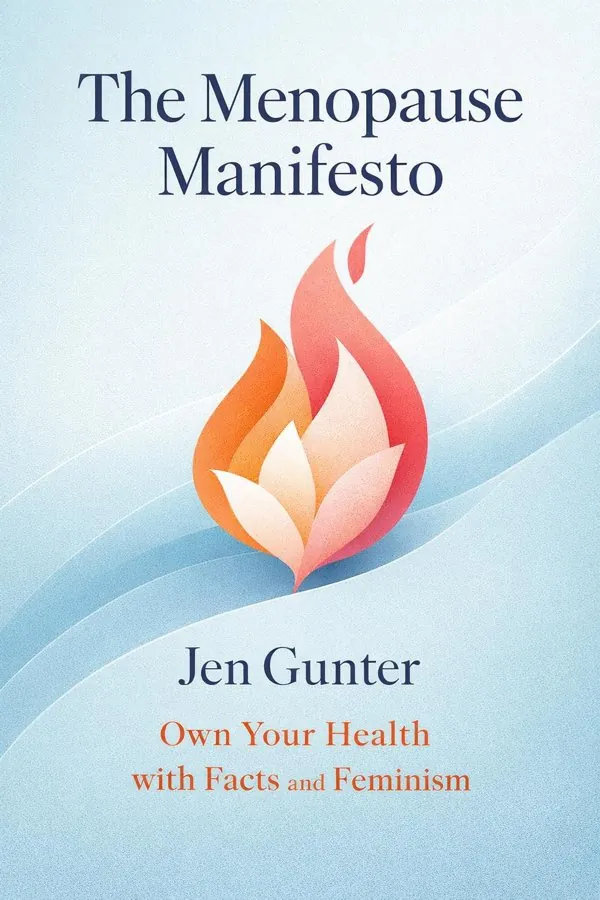
The Menopause Manifesto: Own Your Health with Facts and Feminism: Summary & Key Insights
by Jen Gunter
 10 min9 chaptersAudio available
What Is The Menopause Manifesto: Own Your Health with Facts and Feminism About?
The Menopause Manifesto: Own Your Health with Facts and Feminism by Jen Gunter is a health_med book spanning 9 pages. In this empowering and evidence-based guide, Dr. Jen Gunter dismantles myths and misinformation surrounding menopause. She provides clear explanations of hormonal changes, symptoms, and treatment options, advocating for women’s autonomy and informed decision-making. The book combines medical expertise with feminist insight to help readers navigate this natural life stage with confidence and knowledge.
This FizzRead summary covers all 9 key chapters of The Menopause Manifesto: Own Your Health with Facts and Feminism in approximately 10 minutes, distilling the most important ideas, arguments, and takeaways from Jen Gunter's work. Also available as an audio summary and Key Quotes Podcast.
The Menopause Manifesto: Own Your Health with Facts and Feminism
In this empowering and evidence-based guide, Dr. Jen Gunter dismantles myths and misinformation surrounding menopause. She provides clear explanations of hormonal changes, symptoms, and treatment options, advocating for women’s autonomy and informed decision-making. The book combines medical expertise with feminist insight to help readers navigate this natural life stage with confidence and knowledge.
Who Should Read The Menopause Manifesto: Own Your Health with Facts and Feminism?
This book is perfect for anyone interested in health_med and looking to gain actionable insights in a short read. Whether you're a student, professional, or lifelong learner, the key ideas from The Menopause Manifesto: Own Your Health with Facts and Feminism by Jen Gunter will help you think differently.
- ✓Readers who enjoy health_med and want practical takeaways
- ✓Professionals looking to apply new ideas to their work and life
- ✓Anyone who wants the core insights of The Menopause Manifesto: Own Your Health with Facts and Feminism in just 10 minutes
Want the full summary?
Get instant access to this book summary and 100K+ more with Fizz Moment.
Get Free SummaryAvailable on App Store • Free to download
Key Chapters
To understand menopause, we must start with language and biology. Menopause isn’t one moment; it’s a process. Technically, it marks twelve consecutive months without menstruation, signaling the end of ovarian reproductive function. But the journey begins years earlier, in a transitional phase called perimenopause, and continues into postmenopause. The ovary’s production of estrogen and progesterone gradually declines, leading to changes in the menstrual cycle and a cascade of symptoms.
I often say that the menopause transition is as individual as a fingerprint. Some experience a few hot flashes; others feel like their entire internal thermostat has gone haywire. But understanding the basic physiology can ground you. Ovaries don’t just make hormones—they regulate bone density, cholesterol, and even cognition. As these hormonal communications wind down, the body finds a new equilibrium. Menopause is not a failure, but a recalibration.
The historical misunderstanding of menopause comes from viewing it as a disease rather than a natural developmental stage. Medicine long ignored it because it was associated with older women—those deemed invisible or unworthy of study. By restoring factual clarity, I want to return ownership of this knowledge to the people who live it. When you know what your body is doing, you can engage with healthcare providers confidently and demand proper, evidence-based support.
Hormones are chemical messengers, and menopause rewrites their conversation. Estrogen and progesterone—the key players—decline as the ovarian follicles that once produced them are slowly depleted. Testosterone, though less discussed, also changes subtly. These fluctuations are responsible for both the physical and emotional experiences that define this transition.
Estrogen affects nearly every tissue: brain, bones, skin, heart, and genital tract. As levels decline, the lining of the vagina thins, contributing to discomfort or pain. Thermoregulatory instability triggers hot flashes. In the brain, neurotransmitter interactions can affect mood and sleep. Understanding these effects turns distressing symptoms into something manageable—you realize they’re not arbitrary; they’re chemistry.
The perimenopausal phase is the hormonal rollercoaster. Cycles become irregular as progesterone production falters before estrogen fully dwindles. This is why people often experience heavier or unpredictable bleeding before periods stop entirely. It’s not chaos; it’s transition. Once in postmenopause, hormone levels stabilize—lower, yes, but steady. And with stability often comes newfound physical ease and emotional equilibrium.
Knowing this physiology demystifies what can otherwise feel like betrayal. Your body isn’t turning against you—it’s adapting, transitioning to a stage evolution designed long before medicine or patriarchy tried to define it.
+ 7 more chapters — available in the FizzRead app
All Chapters in The Menopause Manifesto: Own Your Health with Facts and Feminism
About the Author
Dr. Jen Gunter is a Canadian-American obstetrician-gynecologist and pain medicine physician known for her advocacy of women’s health and her efforts to combat medical misinformation. She is also the author of 'The Vagina Bible' and a columnist for The New York Times.
Get This Summary in Your Preferred Format
Read or listen to the The Menopause Manifesto: Own Your Health with Facts and Feminism summary by Jen Gunter anytime, anywhere. FizzRead offers multiple formats so you can learn on your terms — all free.
Available formats: App · Audio · PDF · EPUB — All included free with FizzRead
Download The Menopause Manifesto: Own Your Health with Facts and Feminism PDF and EPUB Summary
Key Quotes from The Menopause Manifesto: Own Your Health with Facts and Feminism
“To understand menopause, we must start with language and biology.”
“Hormones are chemical messengers, and menopause rewrites their conversation.”
Frequently Asked Questions about The Menopause Manifesto: Own Your Health with Facts and Feminism
The Menopause Manifesto: Own Your Health with Facts and Feminism by Jen Gunter is a health_med book that explores key ideas across 9 chapters. In this empowering and evidence-based guide, Dr. Jen Gunter dismantles myths and misinformation surrounding menopause. She provides clear explanations of hormonal changes, symptoms, and treatment options, advocating for women’s autonomy and informed decision-making. The book combines medical expertise with feminist insight to help readers navigate this natural life stage with confidence and knowledge.
You Might Also Like
On Immunity
Eula Biss
10 min
The Three-Body Problem
Liu Cixin
10 min
Community Health Volunteer Toolkit: Training and Practical Activities
World Health Organization
10 min
Healing Back Pain: The Mind-Body Connection
John E. Sarno
10 min
Health Literacy for All: Practical Guides to Communicate Health Information (Compilations)
World Health Organization
10 min
The Complete Guide to Sports Supplements: An Evidence-Based Review
Anita Bean
10 minBrowse by Category
Ready to read The Menopause Manifesto: Own Your Health with Facts and Feminism?
Get the full summary and 100K+ more books with Fizz Moment.