

The Magic Mountain: Summary & Key Insights
by Thomas Mann
 10 min9 chaptersAudio available
Key Takeaways from The Magic Mountain
Sometimes the most important turning points in life arrive disguised as short detours.
Illness in The Magic Mountain is never merely physical; it becomes a way of living, seeing, and even belonging.
Ideas are not abstract in this novel; they arrive as living voices competing for a young man’s soul.
Desire often enters life not as a clear decision but as a disturbance in attention.
When a worldview promises total certainty, it often asks for more than agreement; it asks for surrender.
What Is The Magic Mountain About?
The Magic Mountain by Thomas Mann is a classics book spanning 6 pages. What begins as a brief visit becomes a seven-year education in illness, desire, philosophy, and the strange elasticity of time. In The Magic Mountain, Thomas Mann follows Hans Castorp, an ordinary young German engineer who travels to a tuberculosis sanatorium in Davos to see his cousin Joachim Ziemssen. He plans to stay only three weeks. Instead, the rarefied atmosphere of the Berghof, with its routines, intellectual debates, flirtations, and proximity to death, gradually absorbs him. From this seemingly narrow setting, Mann builds one of the grandest novels of modern literature. The book matters because it turns a closed world into a portrait of an entire civilization. Beneath its story of rest cures and mountain air, The Magic Mountain examines the ideas that shaped pre–World War I Europe: humanism, radicalism, faith, reason, pleasure, discipline, and nihilism. It is both a coming-of-age novel and a diagnosis of a continent drifting toward catastrophe. Mann, winner of the 1929 Nobel Prize in Literature, writes with irony, psychological depth, and astonishing intellectual range. The result is a novel that rewards patient reading with profound insights into time, mortality, education, and what it means to become fully human.
This FizzRead summary covers all 9 key chapters of The Magic Mountain in approximately 10 minutes, distilling the most important ideas, arguments, and takeaways from Thomas Mann's work. Also available as an audio summary and Key Quotes Podcast.
The Magic Mountain
What begins as a brief visit becomes a seven-year education in illness, desire, philosophy, and the strange elasticity of time. In The Magic Mountain, Thomas Mann follows Hans Castorp, an ordinary young German engineer who travels to a tuberculosis sanatorium in Davos to see his cousin Joachim Ziemssen. He plans to stay only three weeks. Instead, the rarefied atmosphere of the Berghof, with its routines, intellectual debates, flirtations, and proximity to death, gradually absorbs him. From this seemingly narrow setting, Mann builds one of the grandest novels of modern literature.
The book matters because it turns a closed world into a portrait of an entire civilization. Beneath its story of rest cures and mountain air, The Magic Mountain examines the ideas that shaped pre–World War I Europe: humanism, radicalism, faith, reason, pleasure, discipline, and nihilism. It is both a coming-of-age novel and a diagnosis of a continent drifting toward catastrophe. Mann, winner of the 1929 Nobel Prize in Literature, writes with irony, psychological depth, and astonishing intellectual range. The result is a novel that rewards patient reading with profound insights into time, mortality, education, and what it means to become fully human.
Who Should Read The Magic Mountain?
This book is perfect for anyone interested in classics and looking to gain actionable insights in a short read. Whether you're a student, professional, or lifelong learner, the key ideas from The Magic Mountain by Thomas Mann will help you think differently.
- ✓Readers who enjoy classics and want practical takeaways
- ✓Professionals looking to apply new ideas to their work and life
- ✓Anyone who wants the core insights of The Magic Mountain in just 10 minutes
Want the full summary?
Get instant access to this book summary and 100K+ more with Fizz Moment.
Get Free SummaryAvailable on App Store • Free to download
Key Chapters
Sometimes the most important turning points in life arrive disguised as short detours. Hans Castorp comes to the Berghof sanatorium in Davos intending to spend only three weeks with his cousin Joachim Ziemssen, a dutiful young soldier recovering from tuberculosis. At first, Hans is an outsider. He notices the odd routines of the place: endless temperature-taking, heavy meals, reclining cures on balconies, and the strangely casual way patients discuss illness and death. The mountain world feels separate from ordinary life below, operating by its own rhythms and values.
That separation is central to the novel. The Berghof is not just a medical institution; it is a laboratory of consciousness. Removed from work, civic obligation, and normal social time, Hans becomes more suggestible, more reflective, and more open to influences he might have resisted in the flatlands. Even before his own health becomes questionable, he begins to absorb the sanatorium’s atmosphere. Mann shows how environments shape perception. What seems eccentric on arrival soon feels natural, even inevitable.
This is one reason the novel still speaks to modern readers. A new workplace, a university campus, a long illness, a retreat, or even an online community can create its own enclosed reality. Values shift. Priorities reorganize. Time stretches or contracts. We begin by observing a culture and end by belonging to it.
Hans’s arrival also introduces one of Mann’s deepest concerns: how quickly curiosity can become attachment. The mountain seduces not through dramatic events but through routine, ambiguity, and delay.
Actionable takeaway: Pay attention to the worlds you enter. Ask yourself early: what habits, beliefs, and tempo is this environment encouraging in me?
Illness in The Magic Mountain is never merely physical; it becomes a way of living, seeing, and even belonging. At the Berghof, disease grants status, routine, exemption, and community. Hans soon learns that to be “ill” on the mountain is to be admitted into a distinct social order. Diagnoses are discussed with near-religious seriousness, and symptoms become a language through which people interpret themselves and one another. Mann refuses to romanticize sickness, yet he shows how powerfully it can organize identity.
Hans’s own transition from visitor to patient is intentionally ambiguous. Is he truly ill, or does he gradually accept the role because the mountain exerts a psychological attraction? Mann leaves room for both readings. That ambiguity matters because it reveals how human beings can internalize labels. A condition may begin in the body, but it can expand into a worldview. The sick role offers shelter from pressure, adulthood, and decision. It can also produce self-absorption and passivity.
Modern life offers many parallels. People may define themselves entirely through burnout, stress, trauma, or professional exhaustion. These experiences are real and often serious, but Mann invites us to ask when a condition becomes an identity that narrows life rather than clarifies it. Institutions can reinforce this by rewarding dependency, dramatizing fragility, or turning suffering into social currency.
At the same time, the novel is compassionate. It acknowledges that illness strips away illusions and brings mortality close. The question is not whether suffering changes us; it certainly does. The question is whether we remain larger than our diagnosis.
Actionable takeaway: Take health seriously, but resist building your whole self around limitation. Ask: what part of me exists beyond the label I carry?
Ideas are not abstract in this novel; they arrive as living voices competing for a young man’s soul. One of the first great influences on Hans is Lodovico Settembrini, an Italian humanist, writer, and defender of enlightenment values. Eloquent, ironic, and morally earnest, Settembrini believes in reason, progress, education, civic responsibility, and the dignity of active life. To him, the sanatorium represents dangerous passivity, a seductive withdrawal from history into morbidity and indulgence.
Settembrini tries to educate Hans by teaching him to distrust mystification. He sees illness cults, irrationalism, and fascination with death as threats to freedom. Literature, political engagement, and disciplined thought, he argues, are tools for human liberation. In his presence, Hans is challenged to become more than a drifting observer. Mann presents Settembrini with sympathy but also irony: he can be verbose, self-assured, and occasionally schematic. Yet his core message remains powerful. Civilization depends on people who defend clarity, humane values, and open inquiry.
This makes Settembrini strikingly relevant today. In periods of confusion, conspiracy, polarization, or aestheticized despair, the defense of reason can seem unfashionable. But Mann reminds us that humanism is not bland optimism. It is the difficult commitment to dignity, conversation, and responsibility in a world full of suffering.
Practically, Settembrini represents the mentors, books, teachers, and friends who call us back from passivity. They may not be glamorous. They may even irritate us. But they keep us oriented toward growth rather than enchantment.
Actionable takeaway: Identify one voice in your life that consistently pushes you toward clarity, education, and responsibility. Give that voice more influence than the ones that flatter your confusion.
Desire often enters life not as a clear decision but as a disturbance in attention. For Hans, that disturbance takes the form of Clavdia Chauchat, the enigmatic patient whose slamming door, languid manner, and distant allure awaken in him an erotic fascination that is also bound up with memory, illness, and fantasy. She is less a conventional love interest than a force that unsettles Hans’s self-control and draws him deeper into the emotional atmosphere of the Berghof.
Mann treats attraction as a complicated mixture of sensuality, projection, and symbolic longing. Hans does not simply love Clavdia as a knowable person; he invests her with meanings that exceed her. She becomes associated with youth, transgression, foreignness, fever, and even mortality. His obsession culminates in the extraordinary Walpurgis Night scene, where confession, desire, and self-revelation merge in an atmosphere of carnival and unreality.
What makes this more than a romantic subplot is the way it exposes how desire transforms time and judgment. Hans lingers because he is enchanted, and enchantment blurs boundaries between insight and self-deception. Many readers will recognize this dynamic. A person, ambition, or fantasy can become a screen for our unmet needs. We call it love, destiny, or inspiration, but often it includes projection we barely understand.
Mann does not dismiss passion; he shows its power to awaken dormant parts of the self. Yet he also suggests that desire without self-knowledge can lead to suspension rather than growth. We become attached not only to another person but to the heightened state they generate in us.
Actionable takeaway: When attraction feels overwhelming, ask two questions: What do I truly know about this person, and what am I projecting onto them from my own unmet longings?
When a worldview promises total certainty, it often asks for more than agreement; it asks for surrender. This danger appears vividly in the figure of Leo Naphta, the brilliant, unsettling intellectual who becomes Settembrini’s adversary. If Settembrini represents liberal humanism, Naphta embodies a volatile mixture of religious absolutism, revolutionary fervor, anti-rationalism, and fascination with violence. Their debates draw Hans into the central ideological conflicts of the age.
Naphta is one of Mann’s most penetrating portraits of extremism. He is intelligent enough to expose the limits and hypocrisies of liberal progress, but he uses that intelligence to justify coercion, hierarchy, suffering, and spiritual terror. He argues that reason alone cannot satisfy the human hunger for transcendence and authority. In this, he speaks to a perennial temptation: when modern life feels empty or fragmented, totalizing systems become attractive because they promise unity and meaning.
Mann’s brilliance lies in refusing to make Naphta a cartoon villain. He is often sharper than Settembrini, and his criticisms can sound compelling. That is precisely the point. Dangerous ideas do not seduce because they are obviously foolish. They seduce because they answer real anxieties with absolute remedies.
The relevance today is unmistakable. Whether in politics, ideology, religion, or identity, people are often pulled toward rigid camps that transform complexity into moral war. The more disoriented we feel, the more appealing certainty becomes.
Hans, caught between competing doctrines, struggles to form an independent self. Mann suggests that education is not merely exposure to ideas but the hard work of resisting domination by any single total explanation.
Actionable takeaway: Whenever an ideology claims to explain everything and divide humanity neatly into pure and impure, slow down. Complexity is not weakness; it is often the first defense against fanaticism.
Clarity sometimes arrives only after disorientation. In one of the novel’s most celebrated episodes, Hans ventures out skiing, becomes lost in a snowstorm, and nearly freezes to death. In the midst of physical exhaustion and dreamlike hallucination, he experiences a vision that brings together beauty, terror, civilization, and cruelty. He imagines a radiant scene of human harmony, only to glimpse beneath it a hidden violence. From this contrast, he arrives at one of the book’s deepest insights: love and compassion must be chosen in full awareness of death and brutality, not in denial of them.
This episode matters because it condenses the novel’s moral argument. Hans has been drifting among illness, sensuality, and intellectual spectacle. In the snow, stripped of comfort and social performance, he reaches a more personal understanding. Human life contains both tenderness and destruction. Any mature ethic must recognize both. Sentimental optimism is inadequate, but so is fascination with death. The task is to affirm life without naivety.
The scene remains powerful because modern life also swings between denial and despair. We may insulate ourselves from suffering with distraction, or else become so fixated on catastrophe that we lose faith in human goodness. Mann offers a harder path: lucid compassion. To care for others while knowing the world is dangerous is a disciplined moral achievement.
In everyday terms, this can mean facing family illness honestly, working in professions touched by trauma, or staying humane amid political conflict. Compassion becomes meaningful when it is not based on illusions.
Actionable takeaway: Practice a realism that does not harden into cynicism. In difficult moments, ask: how can I respond with honesty about suffering and still choose care over withdrawal?
One of the strangest truths of life is that repetition can make years disappear. The Magic Mountain is obsessed with time: how it stretches during boredom, vanishes in retrospect, and becomes almost unreal under conditions of routine. At the Berghof, days are divided into meals, rest cures, conversations, minor medical rituals, and seasonal returns. Because each day resembles the next, Hans gradually loses any stable sense of duration. What was meant to be three weeks turns into seven years almost imperceptibly.
Mann explores a paradox familiar to anyone who has lived through monotonous or insulated periods. In the moment, repetitive life feels slow. Looking back, it feels shockingly brief. This is not just a formal trick; it is a philosophical insight. Time is shaped by consciousness. Where there is novelty, urgency, and decision, time feels vivid. Where there is passivity and sameness, life dissolves into an indistinct blur.
That insight gives the novel enduring practical force. Many modern people live in loops: commuting, scrolling, attending meetings, recovering from work, repeating. Weeks feel long, but years vanish. We may mistake routine for stability when it is actually eroding our sense of purpose.
Hans’s prolonged stay asks a disturbing question: how much of life can be lost not through disaster, but through drift? Mann does not condemn rest or contemplation. He condemns unconscious duration, the kind that replaces chosen living with habitual suspension.
To counter this, people need markers of meaning: projects, relationships, travel, study, difficult conversations, acts of service, and periodic reflection. Without them, time becomes merely weather passing over us.
Actionable takeaway: Create intentional distinctions in your life. Plan meaningful experiences, review your goals regularly, and notice where repetition is quietly stealing years from you.
Not everyone on the mountain yields to its enchantment in the same way. Hans’s cousin Joachim Ziemssen offers a revealing contrast. Disciplined, honorable, and impatient with the Berghof’s languor, Joachim longs to recover and return to military service. Where Hans drifts into reflection and fascination, Joachim clings to duty, structure, and purposeful action. He wants life to regain direction, hierarchy, and movement.
Joachim’s role deepens the novel’s exploration of competing ideals. Mann does not portray duty as simple virtue or as mere rigidity. In Joachim, duty expresses a desire to belong to a world where effort matters and identity is tested through action rather than passive observation. He is, in a sense, the opposite of the sanatorium ethos. Yet his seriousness also raises difficult questions. Is his devotion admirable, tragic, or both? Does purpose save a person, or can it become another form of submission?
Joachim’s fate is one of the novel’s emotional centers because it strips away abstractions. Intellectual debates at the Berghof can feel theatrical, but Joachim’s struggle reminds readers that bodies are finite and decisions have consequences. His yearning for ordinary life below the mountain also symbolizes a broader longing for reality over suspension.
In contemporary terms, Joachim represents the part of us that resists endless postponement. He reminds us that health, vocation, and responsibility are not enemies of thought; they may be what thought is for. Reflection matters, but if it never returns to commitment, it curdles into detachment.
Actionable takeaway: If you have been waiting indefinitely to begin something meaningful, choose one concrete responsibility and re-enter it fully. Purpose often returns through action before it returns through feeling.
Private education never remains private for long, because history eventually calls everyone down from the mountain. The final movement of The Magic Mountain breaks the enclosed spell of the Berghof and returns Hans to a world rushing toward World War I. After years of suspended time, endless conversation, flirtation, and speculation, the catastrophe of European history arrives as the decisive answer to the sanatorium’s dreamlike delay. Hans disappears into the chaos of war, and the novel closes not with resolution but with uncertainty.
This ending transforms everything that came before. The Berghof was not merely an isolated world; it was a concentrated image of prewar Europe, full of brilliance, decadence, argument, morbidity, and inability to act. The ideas debated there—humanism, authoritarianism, mysticism, nationalism, radicalism—were not academic. They were the currents shaping a civilization on the brink. Hans’s personal formation becomes inseparable from the fate of his generation.
Mann’s achievement is to show how historical disaster grows alongside cultivated life. Intelligent people can discuss ethics, beauty, freedom, and transcendence while remaining unable to prevent collapse. This is one reason the novel still feels urgent. It asks readers whether they are merely interpreting their age or actually preparing to live responsibly within it.
The ending also gives Hans’s story a poignant dignity. His years on the mountain may seem wasted, but they have furnished him with an inward education in mortality, compassion, confusion, and the complexity of being human. Whether that education can survive war remains an open question.
Actionable takeaway: Do not let reflection become an escape from history. Ask how your beliefs, values, and conversations prepare you to act when the world becomes demanding, unstable, or morally urgent.
All Chapters in The Magic Mountain
About the Author
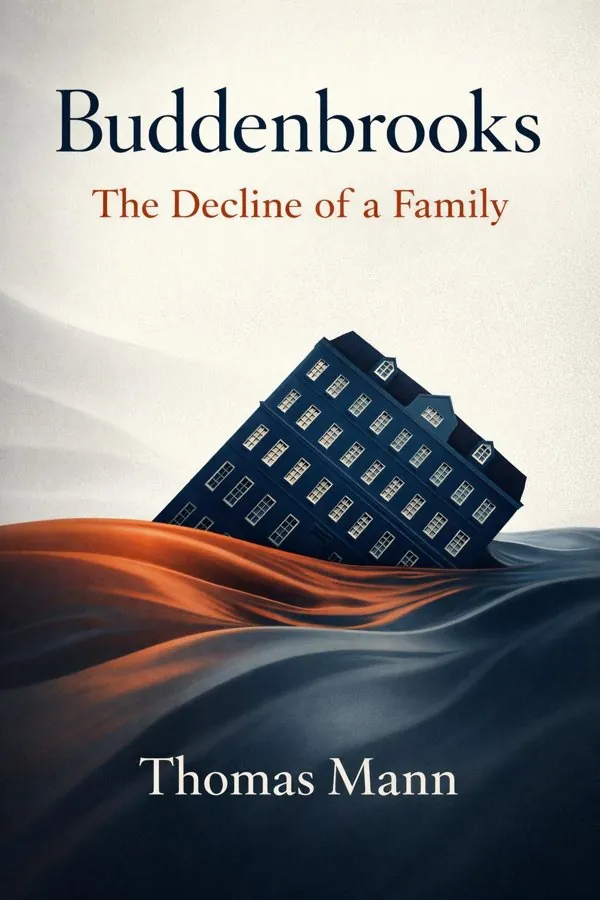
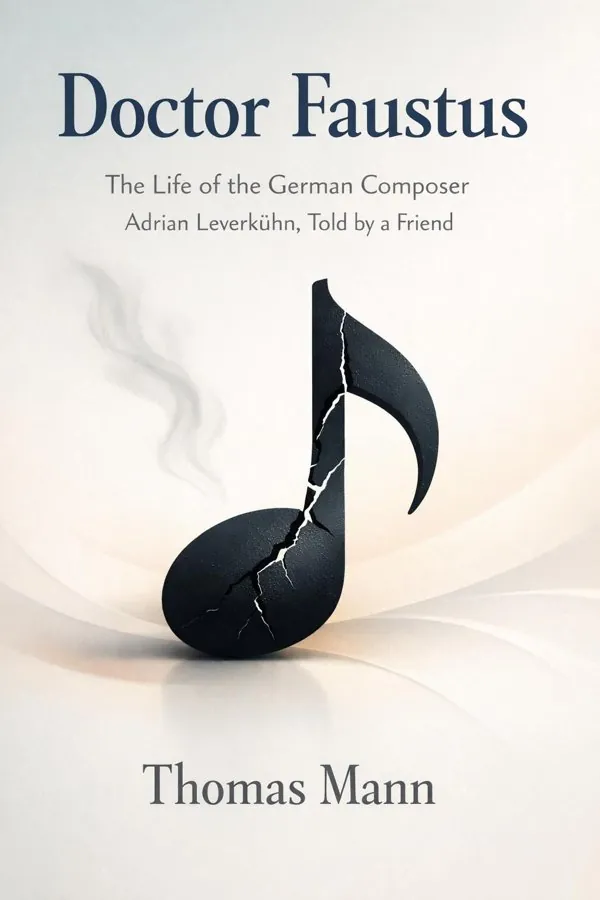
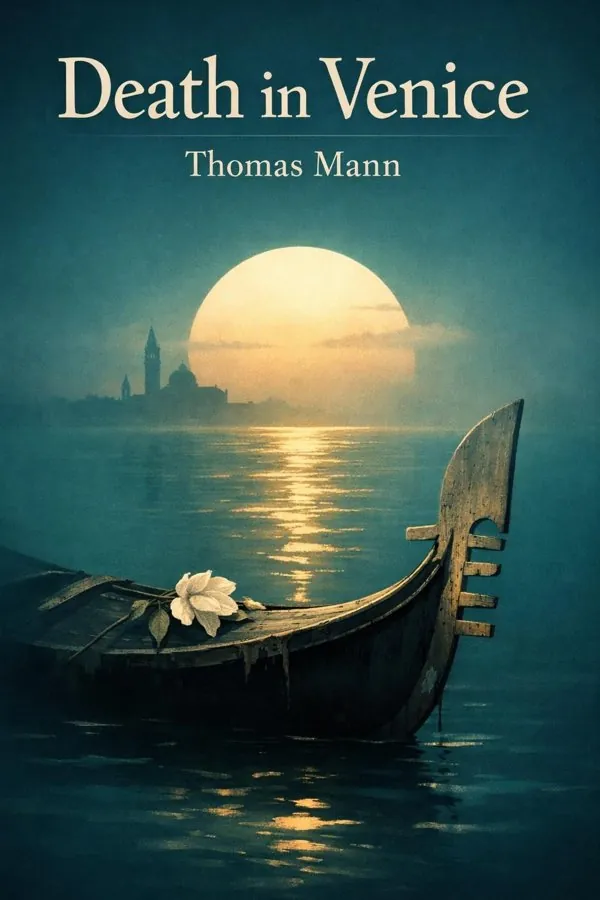
Thomas Mann (1875–1955) was a German novelist, essayist, and one of the most important literary voices of the twentieth century. Born in Lübeck, he first gained fame with Buddenbrooks, a multigenerational novel of bourgeois decline, and later wrote landmark works including Death in Venice, The Magic Mountain, Joseph and His Brothers, and Doctor Faustus. Mann’s fiction is known for its intellectual ambition, psychological subtlety, irony, and deep engagement with European culture, politics, and moral crisis. He received the Nobel Prize in Literature in 1929. After the rise of Nazism, Mann left Germany and became a prominent critic of Hitler and the regime. His work remains central to modern literature for its combination of narrative artistry and philosophical depth.
Get This Summary in Your Preferred Format
Read or listen to the The Magic Mountain summary by Thomas Mann anytime, anywhere. FizzRead offers multiple formats so you can learn on your terms — all free.
Available formats: App · Audio · PDF · EPUB — All included free with FizzRead
Download The Magic Mountain PDF and EPUB Summary
Key Quotes from The Magic Mountain
“Sometimes the most important turning points in life arrive disguised as short detours.”
“Illness in The Magic Mountain is never merely physical; it becomes a way of living, seeing, and even belonging.”
“Ideas are not abstract in this novel; they arrive as living voices competing for a young man’s soul.”
“Desire often enters life not as a clear decision but as a disturbance in attention.”
“When a worldview promises total certainty, it often asks for more than agreement; it asks for surrender.”
Frequently Asked Questions about The Magic Mountain
The Magic Mountain by Thomas Mann is a classics book that explores key ideas across 9 chapters. What begins as a brief visit becomes a seven-year education in illness, desire, philosophy, and the strange elasticity of time. In The Magic Mountain, Thomas Mann follows Hans Castorp, an ordinary young German engineer who travels to a tuberculosis sanatorium in Davos to see his cousin Joachim Ziemssen. He plans to stay only three weeks. Instead, the rarefied atmosphere of the Berghof, with its routines, intellectual debates, flirtations, and proximity to death, gradually absorbs him. From this seemingly narrow setting, Mann builds one of the grandest novels of modern literature. The book matters because it turns a closed world into a portrait of an entire civilization. Beneath its story of rest cures and mountain air, The Magic Mountain examines the ideas that shaped pre–World War I Europe: humanism, radicalism, faith, reason, pleasure, discipline, and nihilism. It is both a coming-of-age novel and a diagnosis of a continent drifting toward catastrophe. Mann, winner of the 1929 Nobel Prize in Literature, writes with irony, psychological depth, and astonishing intellectual range. The result is a novel that rewards patient reading with profound insights into time, mortality, education, and what it means to become fully human.
More by Thomas Mann
You Might Also Like



Browse by Category
Ready to read The Magic Mountain?
Get the full summary and 100K+ more books with Fizz Moment.