
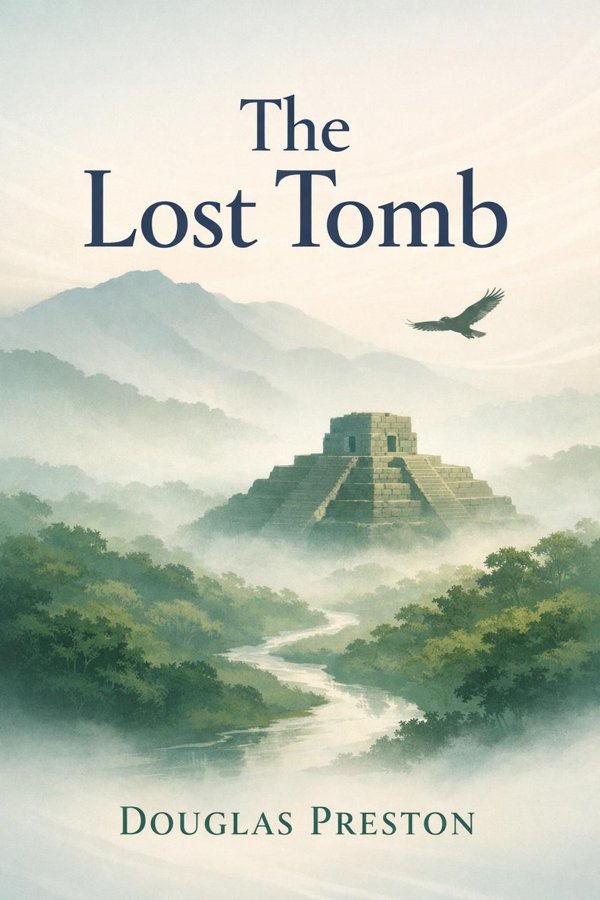
The Lost Tomb: Summary & Key Insights
 10 min9 chaptersAudio available
What Is The Lost Tomb About?
The Lost Tomb by Douglas Preston is a archaeology book spanning 9 pages. A thrilling nonfiction account in which Douglas Preston recounts his expedition into the Honduran jungle in search of the legendary Ciudad Blanca, or the White City. Combining adventure, archaeology, and investigative journalism, the book explores the discovery of a lost civilization and the modern scientific and ethical questions surrounding it.
This FizzRead summary covers all 9 key chapters of The Lost Tomb in approximately 10 minutes, distilling the most important ideas, arguments, and takeaways from Douglas Preston's work. Also available as an audio summary and Key Quotes Podcast.
The Lost Tomb
A thrilling nonfiction account in which Douglas Preston recounts his expedition into the Honduran jungle in search of the legendary Ciudad Blanca, or the White City. Combining adventure, archaeology, and investigative journalism, the book explores the discovery of a lost civilization and the modern scientific and ethical questions surrounding it.
Who Should Read The Lost Tomb?
This book is perfect for anyone interested in archaeology and looking to gain actionable insights in a short read. Whether you're a student, professional, or lifelong learner, the key ideas from The Lost Tomb by Douglas Preston will help you think differently.
- ✓Readers who enjoy archaeology and want practical takeaways
- ✓Professionals looking to apply new ideas to their work and life
- ✓Anyone who wants the core insights of The Lost Tomb in just 10 minutes
Want the full summary?
Get instant access to this book summary and 100K+ more with Fizz Moment.
Get Free SummaryAvailable on App Store • Free to download
Key Chapters
Long before we set foot in Mosquitia, the White City existed in stories. Indigenous people spoke of a place abandoned long ago, cursed by the gods after its people succumbed to greed. Early explorers in the twentieth century—figures like Theodore Morde—claimed to have found it, returning with tales of sculptured idols and temple walls gleaming under the sun. Yet their reports often blurred fact and fiction, tangled in ambition and mystery. Airborne surveys from the mid-century revealed miles of untouched jungle, but no definitive city—only hints of ancient habitation swallowed by vegetation.
The allure of lost civilizations has always fascinated humanity. From El Dorado to Atlantis, we seek proof of worlds erased by time because discovering them confirms not only our curiosity but also our humility before history’s vastness. In Honduras, every expedition seemed haunted by the jungle itself, a living vault that consumed all traces of its buried kingdoms. The myth of Ciudad Blanca became a mirror of our own persistence—the need to know that what we imagine might truly exist beyond the wall of green.
When I began researching the legend, I realized how deeply its roots reached into Honduran culture and geopolitical history. Explorers were often outsiders, yet their ambitions fed local hopes of national pride and heritage. The White City was more than stone—it was identity, suspended between fantasy and archaeology. And therein lay the challenge: separating a story told by generations from a reality hidden under centuries of decay.
Science changed everything. The jungle had long defied excavation, its canopy too dense for traditional aerial photography. But LiDAR—Light Detection and Ranging—offered a new language to speak with the land. Using laser pulses from aircraft, researchers could peel away vegetation virtually, leaving digital shadows of what lay beneath. In 2012, a specialized survey team applied this technology across a vast region of Mosquitia, transforming mystery into measurable data.
When the results came in, they were astonishing. Beneath the trees, invisible to the human eye, stretched unmistakable patterns of urban design—plazas, mounds, causeways. It was like uncovering city lights under a forest. For the first time, we had scientific evidence pointing toward a complex civilization no one had cataloged. LiDAR had pierced through the ancient silence, revealing not one, but possibly multiple lost settlements.
For me, as a journalist long immersed in stories of explorers and treasure hunters, this was history rewritten. Technology had achieved what centuries of machetes could not. It was proof that modern tools could reconcile myth and science, offering us the chance to walk into legends as factual terrain rather than dreams. Yet even with data in hand, discovery remained fragile—maps did not reveal danger, disease, or the morality that comes with unearthing other people’s ancestors.
LiDAR opened a door. What waited beyond it was the timeless cost of exploration itself.
+ 7 more chapters — available in the FizzRead app
All Chapters in The Lost Tomb
About the Author
Douglas Preston is an American author and journalist known for his adventure and thriller novels, as well as his nonfiction works on archaeology and exploration. He has collaborated with Lincoln Child on the popular Pendergast series and has written extensively for publications such as The New Yorker and National Geographic.
Get This Summary in Your Preferred Format
Read or listen to the The Lost Tomb summary by Douglas Preston anytime, anywhere. FizzRead offers multiple formats so you can learn on your terms — all free.
Available formats: App · Audio · PDF · EPUB — All included free with FizzRead
Download The Lost Tomb PDF and EPUB Summary
Key Quotes from The Lost Tomb
“Long before we set foot in Mosquitia, the White City existed in stories.”
“The jungle had long defied excavation, its canopy too dense for traditional aerial photography.”
Frequently Asked Questions about The Lost Tomb
The Lost Tomb by Douglas Preston is a archaeology book that explores key ideas across 9 chapters. A thrilling nonfiction account in which Douglas Preston recounts his expedition into the Honduran jungle in search of the legendary Ciudad Blanca, or the White City. Combining adventure, archaeology, and investigative journalism, the book explores the discovery of a lost civilization and the modern scientific and ethical questions surrounding it.
You Might Also Like
America Before: The Key to Earth's Lost Civilization
Graham Hancock
10 min
Four Lost Cities: A Secret History of the Urban Age
Annalee Newitz
10 min
The Collapse of Complex Societies
Joseph A. Tainter
10 min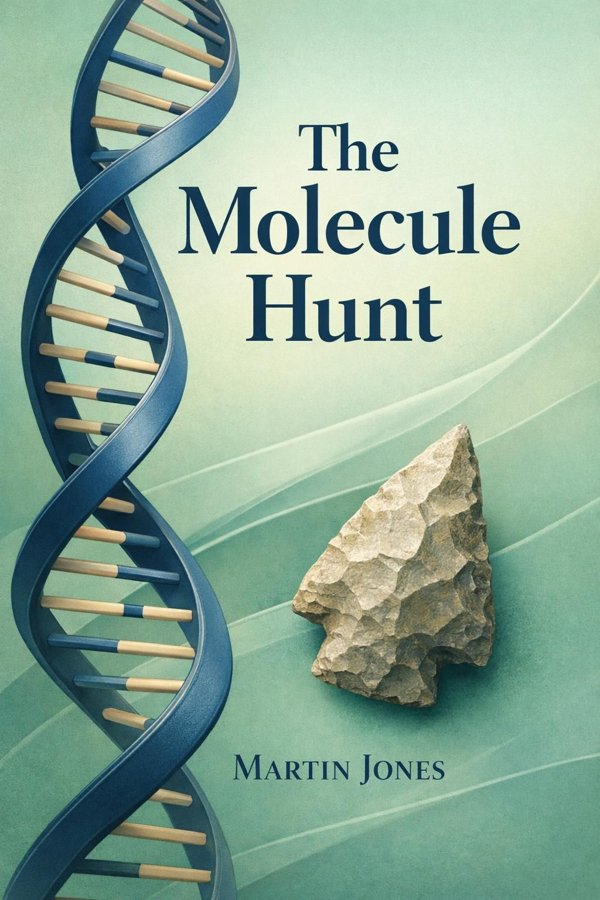
The Molecule Hunt: Archaeology and the Search for Ancient DNA
Martin Jones
10 minBrowse by Category
Ready to read The Lost Tomb?
Get the full summary and 100K+ more books with Fizz Moment.