
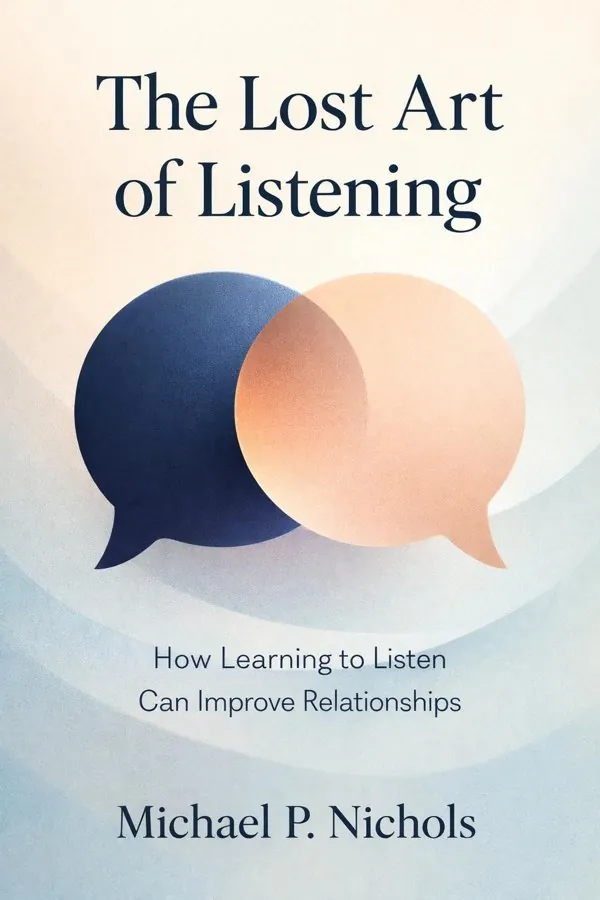
The Lost Art of Listening: How Learning to Listen Can Improve Relationships: Summary & Key Insights
 10 min11 chaptersAudio available
What Is The Lost Art of Listening: How Learning to Listen Can Improve Relationships About?
The Lost Art of Listening: How Learning to Listen Can Improve Relationships by Michael P. Nichols is a communication book spanning 11 pages. This book explores the essential skill of listening and how it can transform personal and professional relationships. Michael P. Nichols, a clinical psychologist, explains why people often fail to listen effectively and provides practical strategies to become a better listener. Through real-life examples and psychological insights, the book helps readers understand the emotional barriers to listening and offers tools to foster empathy, understanding, and connection.
This FizzRead summary covers all 11 key chapters of The Lost Art of Listening: How Learning to Listen Can Improve Relationships in approximately 10 minutes, distilling the most important ideas, arguments, and takeaways from Michael P. Nichols's work. Also available as an audio summary and Key Quotes Podcast.
The Lost Art of Listening: How Learning to Listen Can Improve Relationships
This book explores the essential skill of listening and how it can transform personal and professional relationships. Michael P. Nichols, a clinical psychologist, explains why people often fail to listen effectively and provides practical strategies to become a better listener. Through real-life examples and psychological insights, the book helps readers understand the emotional barriers to listening and offers tools to foster empathy, understanding, and connection.
Who Should Read The Lost Art of Listening: How Learning to Listen Can Improve Relationships?
This book is perfect for anyone interested in communication and looking to gain actionable insights in a short read. Whether you're a student, professional, or lifelong learner, the key ideas from The Lost Art of Listening: How Learning to Listen Can Improve Relationships by Michael P. Nichols will help you think differently.
- ✓Readers who enjoy communication and want practical takeaways
- ✓Professionals looking to apply new ideas to their work and life
- ✓Anyone who wants the core insights of The Lost Art of Listening: How Learning to Listen Can Improve Relationships in just 10 minutes
Want the full summary?
Get instant access to this book summary and 100K+ more with Fizz Moment.
Get Free SummaryAvailable on App Store • Free to download
Key Chapters
In therapy, I often see people desperate to talk, yet reluctant to listen. The irony is striking: we crave to be understood, but resist understanding others. To grasp this, we must look at the psychological barriers that sabotage listening. Most stem from the self—the incessant tug of ego and anxiety. When someone speaks, we instinctively assess how their words affect us, whether they validate our beliefs or threaten our security. This inward focus turns attention away from the speaker’s experience.
People don’t listen because listening requires surrender. It asks us to suspend our agendas and tolerate uncertainty. It means allowing another person’s feelings to exist without fixing, defending, or negating them. Many fear that if they truly understand another’s perspective, they are admitting fault or losing control. In families and marriages, that fear often manifests as interruption, argument, or withdrawal.
The modern world compounds this problem. Our minds are overstimulated and our patience thin. Genuine listening slows down the pace of interaction—it demands presence, not efficiency. Social conditioning reinforces the idea that being articulate or assertive is strength, while being quiet and receptive seems passive. But listening, as I urge in the book, is an active art. It calls on empathy, not silence.
Understanding why we fail to listen is the first step toward change. It helps us see that the enemy is not rudeness or ignorance, but emotional defense. Once you recognize that failing to listen is often an attempt to protect yourself from discomfort, you can begin to practice the courage it takes to stay open.
Few experiences are more painful than feeling unheard. In the therapy room, when couples or family members recall times they spoke in distress and were met with indifference, the wound is palpable. To feel unheard is to feel invisible. It tells us our emotions don’t matter. This book delves deeply into that emotional injury because understanding it is vital to compassion.
I often remind readers that communication is not symmetrical. Speaking and listening are not equal acts; listening carries emotional responsibility. When one person shares a feeling—anger, sadness, fear—they are taking a risk. The risk is rejection. If their listener responds with interruption, advice, or dismissal, the opportunity for connection collapses, replaced by resentment.
In friendships and relationships, this dynamic repeats endlessly. A partner says, “You never listen,” and the other protests, “I do!” But what they mean by ‘listening’ differs: one means emotional presence, the other means mere attention to words. Listening is about acknowledgment—about signaling to others that their inner world is valid and seen. When people feel heard, their tension eases, defensiveness drops, and trust begins.
I share stories from family therapy sessions where simple acts of listening transformed dynamics that years of argument could not. A father understood his teenage son’s silence when he stopped lecturing and instead asked, “What’s it like for you?” That small shift—listening with curiosity rather than control—restored connection. This is the heart of the practice: listening rescues people from isolation.
+ 9 more chapters — available in the FizzRead app
All Chapters in The Lost Art of Listening: How Learning to Listen Can Improve Relationships
About the Author
Michael P. Nichols, Ph.D., is a clinical psychologist and professor emeritus at the College of William and Mary. He is known for his work on family therapy and communication, and he has authored several influential books on psychotherapy and interpersonal relationships.
Get This Summary in Your Preferred Format
Read or listen to the The Lost Art of Listening: How Learning to Listen Can Improve Relationships summary by Michael P. Nichols anytime, anywhere. FizzRead offers multiple formats so you can learn on your terms — all free.
Available formats: App · Audio · PDF · EPUB — All included free with FizzRead
Download The Lost Art of Listening: How Learning to Listen Can Improve Relationships PDF and EPUB Summary
Key Quotes from The Lost Art of Listening: How Learning to Listen Can Improve Relationships
“In therapy, I often see people desperate to talk, yet reluctant to listen.”
“Few experiences are more painful than feeling unheard.”
Frequently Asked Questions about The Lost Art of Listening: How Learning to Listen Can Improve Relationships
The Lost Art of Listening: How Learning to Listen Can Improve Relationships by Michael P. Nichols is a communication book that explores key ideas across 11 chapters. This book explores the essential skill of listening and how it can transform personal and professional relationships. Michael P. Nichols, a clinical psychologist, explains why people often fail to listen effectively and provides practical strategies to become a better listener. Through real-life examples and psychological insights, the book helps readers understand the emotional barriers to listening and offers tools to foster empathy, understanding, and connection.
You Might Also Like
Magic Words: The Science and Secrets Behind Seven Words That Motivate, Engage, and Influence
Tim David
10 min
Talking Across The Divide: How to Communicate with People You Disagree with and Maybe Even Change the World
Justin Lee
10 min
The Exceptional Presenter: A Proven Formula to Open Up! and Own the Room
Timothy J. Koegel
10 min
4 Essential Keys to Effective Communication in Love, Life, Work--Anywhere!: Including the 12-Day Communication Challenge!
Bento C. Leal III
10 min
Active Listening Techniques: 30 Practical Tools to Hone Your Communication Skills
Nisha Gupta
10 min
Bargaining for Advantage: Negotiation Strategies for Reasonable People
G. Richard Shell
10 minBrowse by Category
Ready to read The Lost Art of Listening: How Learning to Listen Can Improve Relationships?
Get the full summary and 100K+ more books with Fizz Moment.