
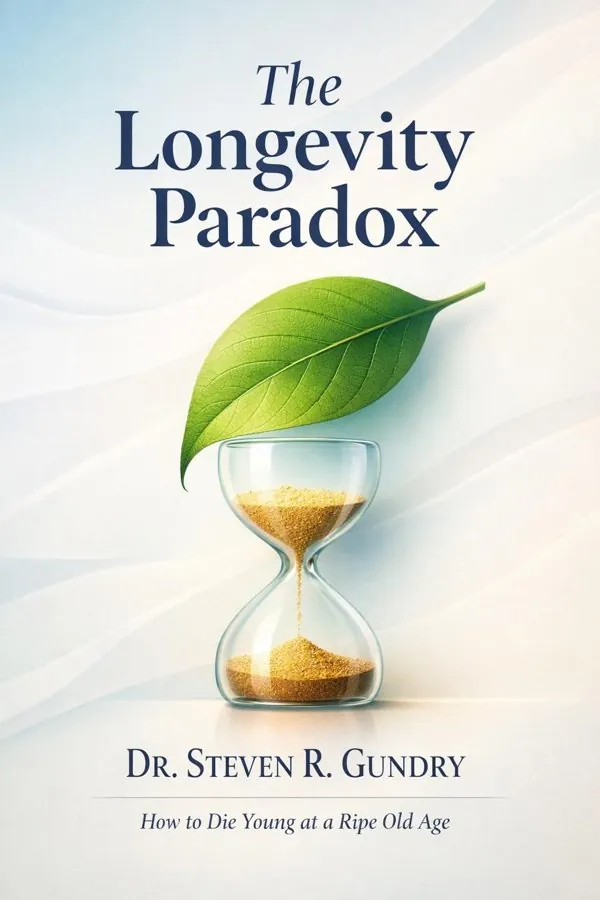
The Longevity Paradox: How to Die Young at a Ripe Old Age: Summary & Key Insights
 10 min9 chaptersAudio available
Key Takeaways from The Longevity Paradox: How to Die Young at a Ripe Old Age
What if aging is less like a countdown clock and more like a negotiation between your body and your environment?
According to Gundry, the trillions of microbes living in and on your body are major partners in determining whether you move toward vitality or decline.
Most people notice aging in the mirror, but Gundry asks readers to notice it in the immune system first.
Feeling old often starts as feeling tired.
One of Gundry’s most provocative arguments is that many foods commonly marketed as healthy may not be helping everyone age well.
What Is The Longevity Paradox: How to Die Young at a Ripe Old Age About?
The Longevity Paradox: How to Die Young at a Ripe Old Age by Dr. Steven R. Gundry is a health_med book spanning 12 pages. In The Longevity Paradox, Dr. Steven R. Gundry challenges one of our deepest assumptions: that aging is an unavoidable process written into our genes. His argument is both provocative and practical. While modern medicine has helped people live longer, many are spending those extra years burdened by fatigue, inflammation, memory loss, heart disease, diabetes, and digestive problems. Gundry calls this contradiction the longevity paradox: we have extended lifespan without protecting healthspan. Drawing on his background as a renowned heart surgeon, researcher, and clinician, Gundry argues that the true drivers of accelerated aging are often hidden in plain sight—chronic inflammation, a damaged gut microbiome, poor food choices, environmental toxins, and lifestyle habits that disrupt our cellular repair systems. He places the gut at the center of the story, suggesting that the microbes living inside us influence everything from immunity and metabolism to brain function and energy production. This book matters because it reframes longevity as something shaped by daily choices, not just inherited luck. Whether or not readers agree with every claim, Gundry offers a compelling framework for anyone who wants not merely to live longer, but to remain vibrant, mentally sharp, and physically capable deep into old age.
This FizzRead summary covers all 9 key chapters of The Longevity Paradox: How to Die Young at a Ripe Old Age in approximately 10 minutes, distilling the most important ideas, arguments, and takeaways from Dr. Steven R. Gundry's work. Also available as an audio summary and Key Quotes Podcast.
The Longevity Paradox: How to Die Young at a Ripe Old Age
In The Longevity Paradox, Dr. Steven R. Gundry challenges one of our deepest assumptions: that aging is an unavoidable process written into our genes. His argument is both provocative and practical. While modern medicine has helped people live longer, many are spending those extra years burdened by fatigue, inflammation, memory loss, heart disease, diabetes, and digestive problems. Gundry calls this contradiction the longevity paradox: we have extended lifespan without protecting healthspan.
Drawing on his background as a renowned heart surgeon, researcher, and clinician, Gundry argues that the true drivers of accelerated aging are often hidden in plain sight—chronic inflammation, a damaged gut microbiome, poor food choices, environmental toxins, and lifestyle habits that disrupt our cellular repair systems. He places the gut at the center of the story, suggesting that the microbes living inside us influence everything from immunity and metabolism to brain function and energy production.
This book matters because it reframes longevity as something shaped by daily choices, not just inherited luck. Whether or not readers agree with every claim, Gundry offers a compelling framework for anyone who wants not merely to live longer, but to remain vibrant, mentally sharp, and physically capable deep into old age.
Who Should Read The Longevity Paradox: How to Die Young at a Ripe Old Age?
This book is perfect for anyone interested in health_med and looking to gain actionable insights in a short read. Whether you're a student, professional, or lifelong learner, the key ideas from The Longevity Paradox: How to Die Young at a Ripe Old Age by Dr. Steven R. Gundry will help you think differently.
- ✓Readers who enjoy health_med and want practical takeaways
- ✓Professionals looking to apply new ideas to their work and life
- ✓Anyone who wants the core insights of The Longevity Paradox: How to Die Young at a Ripe Old Age in just 10 minutes
Want the full summary?
Get instant access to this book summary and 100K+ more with Fizz Moment.
Get Free SummaryAvailable on App Store • Free to download
Key Chapters
What if aging is less like a countdown clock and more like a negotiation between your body and your environment? That is one of the book’s boldest claims. Dr. Gundry argues that many people treat aging as inevitable decline, as though wrinkles, weakness, brain fog, and chronic disease are simply the cost of getting older. He pushes back against that idea by distinguishing between lifespan and healthspan. Living longer means little if those years are defined by pain, disability, and dependence.
His central point is that genes may load the gun, but daily habits often pull the trigger. The body constantly responds to food quality, sleep patterns, stress, movement, toxins, light exposure, and the condition of the gut. In other words, aging is influenced by signals. When those signals promote repair, resilience, and low inflammation, the body functions more youthfully. When they promote chronic immune activation and metabolic stress, aging appears to accelerate.
This perspective is empowering because it shifts the focus away from helplessness. Family history may matter, but it does not tell the whole story. A person with risk factors for diabetes or heart disease can still improve outcomes through diet, exercise, fasting practices, and better sleep. Someone struggling with low energy may not be “just getting old” but instead dealing with inflammation, poor mitochondrial function, or microbiome imbalance.
Gundry’s broader lesson is that the body is adaptive. Many signs associated with aging are not fixed destinies but feedback from systems under strain. When readers begin to interpret fatigue, weight gain, and digestive discomfort as messages rather than inevitabilities, they gain room to intervene.
Actionable takeaway: Stop using age as the default explanation for declining health and start auditing the daily signals—food, sleep, stress, movement, and gut health—that may be accelerating it.
You are not aging alone. According to Gundry, the trillions of microbes living in and on your body are major partners in determining whether you move toward vitality or decline. The gut microbiome helps regulate digestion, immune function, metabolism, inflammation, and even mood and cognition. When this inner ecosystem is diverse and balanced, it supports repair and resilience. When it is damaged, the consequences can spread throughout the entire body.
A key idea in the book is that modern living often harms the microbiome. Highly processed foods, excess sugar, antibiotics, environmental chemicals, low-fiber diets, and chronic stress can reduce beneficial bacteria and encourage more harmful strains. This imbalance may weaken the intestinal barrier, allowing troublesome compounds to enter the bloodstream and trigger inflammation. From Gundry’s viewpoint, this process is deeply tied to aging.
He encourages readers to think of the gut as a command center rather than a simple digestive tube. A healthy microbiome can help produce beneficial compounds such as short-chain fatty acids, influence insulin sensitivity, and educate the immune system. Poor gut health, by contrast, may contribute to weight gain, autoimmune issues, fatigue, and neurodegenerative risk.
Practical applications include eating more polyphenol-rich foods, increasing prebiotic fibers from tolerated plant sources, considering fermented foods if they work for you, and reducing the dietary patterns that feed microbial imbalance. He also emphasizes that gut repair is not an overnight project. It requires consistent habits that create a hospitable environment for beneficial organisms.
The larger insight is simple but powerful: longevity is not just about preserving human cells but also about cultivating the microbial community that helps those cells thrive.
Actionable takeaway: Treat gut health as a daily longevity practice by prioritizing fiber-rich, minimally processed foods and reducing habits that disrupt microbial balance.
Most people notice aging in the mirror, but Gundry asks readers to notice it in the immune system first. Chronic inflammation, he argues, is one of the deepest drivers of degenerative aging. Inflammation itself is not the enemy; it is a necessary defense and repair mechanism. The problem begins when the body stays stuck in low-grade immune alert for years. Then inflammation stops being protective and starts becoming destructive.
This persistent inflammatory state can damage blood vessels, strain the heart, impair insulin signaling, disrupt hormones, affect mood, and accelerate wear and tear in tissues throughout the body. It also helps explain why so many age-related diseases seem connected. Heart disease, arthritis, cognitive decline, obesity, autoimmune disorders, and type 2 diabetes may look different on the surface, but they often share inflammatory roots.
Gundry links this inflammation to several triggers: gut permeability, lectin-heavy foods that some individuals may tolerate poorly, processed ingredients, excess sugar, poor sleep, stress, environmental toxins, and lack of recovery. He wants readers to stop seeing symptoms in isolation. Joint pain, foggy thinking, bloating, skin issues, and stubborn belly fat may all be signs that the immune system is overreacting.
The practical importance of this idea is enormous. Rather than chasing symptoms one by one, readers can aim to reduce the inflammatory load. That means identifying food sensitivities, protecting the gut barrier, sleeping deeply, spending time in restorative activities, and choosing anti-inflammatory foods such as leafy greens, olive oil, nuts, and polyphenol-rich produce.
Gundry’s message is that many people are not simply aging; they are inflaming. Lower the inflammatory burden, and many systems may begin working better at once.
Actionable takeaway: If you want to age better, focus less on surface symptoms and more on lowering the chronic inflammation that may be driving them.
Feeling old often starts as feeling tired. Gundry uses that everyday experience to introduce a deeper idea: aging is closely tied to the health of mitochondria, the tiny energy-producing structures inside cells. These organelles convert fuel into usable energy, but they do much more than that. They influence metabolism, cellular signaling, repair capacity, and resistance to stress. When mitochondria function well, the body feels energetic and adaptive. When they falter, fatigue, weakness, and accelerated aging often follow.
The book argues that poor diet, chronic inflammation, excessive eating, toxin exposure, and sedentary habits can burden mitochondrial function. Cells begin to produce energy less efficiently, and harmful byproducts can accumulate. Over time, this can affect muscles, the brain, the heart, and the immune system. Gundry frames mitochondrial decline not as a random event but as the result of repeated lifestyle signals.
He recommends strategies that gently challenge and strengthen these cellular power plants. Periods of fasting can encourage cells to repair and recycle damaged components. Exercise, especially regular movement and some intensity, stimulates mitochondrial growth and efficiency. Nutrient-dense foods rich in polyphenols and healthy fats may support better cellular performance while lowering inflammatory stress.
A practical example is the difference between constant snacking and intentional meal timing. Frequent eating may keep the body in a perpetual processing state, while giving it breaks can trigger maintenance pathways. Likewise, movement throughout the day may protect mitochondria more effectively than one isolated workout followed by long hours of sitting.
The deeper lesson is that youthful function depends on cellular energy, not just on calories consumed. Supporting mitochondria means supporting the entire organism’s capacity to stay strong, clear-headed, and active.
Actionable takeaway: Build your longevity routine around mitochondrial support through regular movement, strategic fasting, and foods that reduce inflammatory stress.
One of Gundry’s most provocative arguments is that many foods commonly marketed as healthy may not be helping everyone age well. He is especially concerned with processed foods, excess sugar, industrial additives, and certain plant compounds such as lectins that he believes can irritate the gut in sensitive individuals. Whether readers accept all of his dietary cautions or not, his larger point is worth serious attention: not all calories are equal when it comes to longevity.
Modern diets often prioritize convenience, taste, and shelf life over biological compatibility. Ultra-processed foods can disrupt blood sugar, feed less beneficial gut bacteria, and promote inflammation. Constant exposure to sweetened snacks and refined carbohydrates trains the body toward insulin resistance and fat storage. Even foods with a healthy reputation may cause problems if they trigger digestive distress or immune activation in a particular person.
Gundry asks readers to become investigators rather than followers of generic nutrition advice. If a food leaves you bloated, sluggish, hungry again an hour later, or dealing with skin and joint symptoms, that response matters. He also emphasizes food quality: olive oil over industrial seed-heavy junk foods, whole ingredients over engineered products, and vegetables prepared in ways that improve digestibility.
Practical applications include reducing packaged foods, cutting back on added sugars, experimenting with elimination if certain foods seem problematic, and focusing meals around vegetables, healthy fats, and clean sources of nourishment. He often favors pressure-cooking or peeling and deseeding some foods to reduce potentially irritating compounds.
The main insight is that a long life is not built on dietary averages but on foods that help your body repair rather than inflame.
Actionable takeaway: Replace convenience-based eating with a more observant, personalized approach that prioritizes whole foods and removes items that consistently leave you feeling worse.
Eating for longevity is not the same as eating for entertainment, muscle gain, or short-term weight loss. Gundry argues that the best diet for long-term vitality is one that nourishes the gut, lowers inflammation, stabilizes energy, and supports cellular repair. In his framework, the goal is not simply to consume nutrients but to create an internal environment where the body can maintain and restore itself.
He places strong emphasis on plant diversity, polyphenols, healthy fats, and foods that beneficial microbes can use. Polyphenol-rich foods such as berries, olive oil, dark chocolate, herbs, coffee, and teas may act like conversation partners for the microbiome, encouraging bacterial activity associated with health. Healthy fats, particularly from sources like olives, avocados, and certain nuts, can help replace the blood sugar roller coaster caused by processed carbohydrates.
At the same time, Gundry pushes against the assumption that more protein is always better. While protein is essential, excessive amounts—especially from certain animal sources—may stimulate growth pathways that are useful in youth but potentially counterproductive for longevity if activated constantly. This does not mean becoming protein-phobic. It means aligning intake with actual needs, age, and activity while leaving room for repair signaling.
Readers can apply this by building meals around vegetables, quality fats, and carefully chosen proteins rather than centering every plate on refined starch or large portions of meat. It also means eating with purpose: choosing foods for what they do in the body, not just how familiar they are.
The lasting contribution of this idea is that nutrition should be evaluated by its effect on repair systems, not merely by calories, macros, or trends.
Actionable takeaway: Design meals to support gut diversity, steady energy, and cellular repair by emphasizing colorful plants, healthy fats, and appropriately sized protein portions.
Sometimes the most powerful thing you can do for your body is not to feed it. Gundry presents fasting and time-restricted eating as tools for activating ancient repair programs that modern constant eating suppresses. In a world of snacks, late-night meals, and around-the-clock calories, the body has little chance to switch from processing incoming food to repairing internal damage.
When food intake pauses for long enough, the body begins to change gears. Insulin levels can fall, stored energy becomes more accessible, and cellular cleanup pathways such as autophagy may become more active. This matters for longevity because damaged proteins, dysfunctional cell parts, and metabolic waste are believed to contribute to aging. Fasting gives the system time to clear some of that clutter.
Gundry does not frame fasting as punishment or an extreme ritual. Instead, he treats it as a return to a more natural rhythm. A simple overnight fasting window, avoiding late-night eating, or gradually narrowing the daily eating period can be meaningful first steps. For some people, this may improve energy, digestion, appetite control, and metabolic markers.
Practical application depends on the individual. Someone used to grazing all day might start by leaving 12 hours between dinner and breakfast, then slowly extend the gap if it feels sustainable. Pairing fasting with nutrient-dense meals is critical; the goal is not deprivation but metabolic flexibility and repair.
The broader insight is that the body needs alternating periods of abundance and rest. Without the rest phase, maintenance suffers. Gundry sees fasting as one of the clearest ways to help the body behave younger from the inside.
Actionable takeaway: Create a consistent daily eating window and avoid constant snacking so your body has time to shift from digestion into repair.
Longevity is built between meals as much as at the table. Gundry repeatedly emphasizes that diet alone cannot overcome a lifestyle that tells the body it is under threat. Movement, sleep quality, light exposure, toxin burden, and stress management all influence whether the body invests in repair or remains trapped in survival mode.
Regular movement improves circulation, insulin sensitivity, mood, and mitochondrial function. It does not have to mean punishing workouts. Walking after meals, standing more often, maintaining muscle through resistance work, and staying physically engaged throughout the day may do as much for healthy aging as formal exercise sessions. The key is consistency.
Sleep is equally central. Poor sleep increases inflammatory signaling, disrupts appetite hormones, impairs blood sugar control, and reduces recovery. In practical terms, someone eating well but sleeping five fragmented hours a night may still be sending strong age-accelerating signals. Stress has similar effects. Chronic psychological pressure can alter digestion, immunity, and hormone balance, making it harder for the body to restore itself.
Gundry also draws attention to environmental influences such as plastics, chemicals, and pollutants. While avoiding every exposure is impossible, reducing obvious sources—using fewer processed products, improving indoor air, filtering water when possible, and storing food more carefully—can lower cumulative burden.
This idea broadens the discussion of aging beyond medicine and supplements. Healthy aging is a systems outcome. The body is always reading its environment: Is it safe? Is it nourished? Can it repair? Daily routines answer those questions more loudly than intentions do.
Actionable takeaway: Strengthen your longevity foundation by prioritizing daily movement, consistent sleep, stress recovery, and simple reductions in toxin exposure.
A longevity plan succeeds only when it can be lived. In the book’s more practical sections, Gundry ties his theory together through immune resilience, muscle preservation, and realistic implementation. He argues that a healthy immune system should be vigilant without being chronically overactive. That balance depends heavily on gut integrity, nutrient status, sleep, and inflammation control. When immunity is regulated well, the body can defend itself without constantly damaging its own tissues.
He also addresses a common fear around longevity nutrition: if lower protein and fasting are helpful, what about muscle loss? Gundry’s answer is nuanced. Muscle remains essential for function, metabolism, and independence, especially with age. The goal is not to neglect protein but to avoid excess while preserving muscle through smart timing, movement, resistance training, and adequate nourishment. In other words, longevity is not frailty. It is maintained capability.
Case examples and implementation advice reinforce the importance of routine over perfection. Readers are encouraged to make sustainable upgrades rather than chase dramatic overhauls. A practical plan might include a shorter eating window, more vegetables and olive oil, fewer processed foods, regular walking, strength training a few times weekly, and closer attention to digestion and energy after meals. Progress comes from patterns.
This final idea matters because information alone does not change aging. Systems do. A stronger immune system, functional muscle, and repeatable daily habits are what translate theory into real-world healthspan. Gundry’s lasting message is that better aging is built through disciplined but flexible practices, not biohacking fantasies.
Actionable takeaway: Turn longevity principles into a repeatable routine by protecting immune balance, maintaining muscle with resistance work, and choosing habits you can sustain for years.
All Chapters in The Longevity Paradox: How to Die Young at a Ripe Old Age
About the Author
Dr. Steven R. Gundry is an American cardiac surgeon, medical researcher, speaker, and bestselling author focused on nutrition, gut health, inflammation, and longevity. After a distinguished career in cardiothoracic surgery, including academic and clinical leadership roles, he shifted his attention toward preventive medicine and the relationship between diet and chronic disease. He founded the International Heart and Lung Institute and later the Center for Restorative Medicine, where he developed programs centered on the microbiome and metabolic health. Gundry became widely known through books such as The Plant Paradox, The Longevity Paradox, and other works that challenge conventional assumptions about healthy eating. While some of his views are debated, he remains an influential figure in popular health writing and functional medicine.
Get This Summary in Your Preferred Format
Read or listen to the The Longevity Paradox: How to Die Young at a Ripe Old Age summary by Dr. Steven R. Gundry anytime, anywhere. FizzRead offers multiple formats so you can learn on your terms — all free.
Available formats: App · Audio · PDF · EPUB — All included free with FizzRead
Download The Longevity Paradox: How to Die Young at a Ripe Old Age PDF and EPUB Summary
Key Quotes from The Longevity Paradox: How to Die Young at a Ripe Old Age
“What if aging is less like a countdown clock and more like a negotiation between your body and your environment?”
“According to Gundry, the trillions of microbes living in and on your body are major partners in determining whether you move toward vitality or decline.”
“Most people notice aging in the mirror, but Gundry asks readers to notice it in the immune system first.”
“Feeling old often starts as feeling tired.”
“One of Gundry’s most provocative arguments is that many foods commonly marketed as healthy may not be helping everyone age well.”
Frequently Asked Questions about The Longevity Paradox: How to Die Young at a Ripe Old Age
The Longevity Paradox: How to Die Young at a Ripe Old Age by Dr. Steven R. Gundry is a health_med book that explores key ideas across 9 chapters. In The Longevity Paradox, Dr. Steven R. Gundry challenges one of our deepest assumptions: that aging is an unavoidable process written into our genes. His argument is both provocative and practical. While modern medicine has helped people live longer, many are spending those extra years burdened by fatigue, inflammation, memory loss, heart disease, diabetes, and digestive problems. Gundry calls this contradiction the longevity paradox: we have extended lifespan without protecting healthspan. Drawing on his background as a renowned heart surgeon, researcher, and clinician, Gundry argues that the true drivers of accelerated aging are often hidden in plain sight—chronic inflammation, a damaged gut microbiome, poor food choices, environmental toxins, and lifestyle habits that disrupt our cellular repair systems. He places the gut at the center of the story, suggesting that the microbes living inside us influence everything from immunity and metabolism to brain function and energy production. This book matters because it reframes longevity as something shaped by daily choices, not just inherited luck. Whether or not readers agree with every claim, Gundry offers a compelling framework for anyone who wants not merely to live longer, but to remain vibrant, mentally sharp, and physically capable deep into old age.
More by Dr. Steven R. Gundry
You Might Also Like

On Immunity
Eula Biss
10 min
The Three-Body Problem
Liu Cixin
10 min
Community Health Volunteer Toolkit: Training and Practical Activities
World Health Organization
10 min
Healing Back Pain: The Mind-Body Connection
John E. Sarno
10 min
Health Literacy for All: Practical Guides to Communicate Health Information (Compilations)
World Health Organization
10 min
The Complete Guide to Sports Supplements: An Evidence-Based Review
Anita Bean
10 minBrowse by Category
Ready to read The Longevity Paradox: How to Die Young at a Ripe Old Age?
Get the full summary and 100K+ more books with Fizz Moment.