
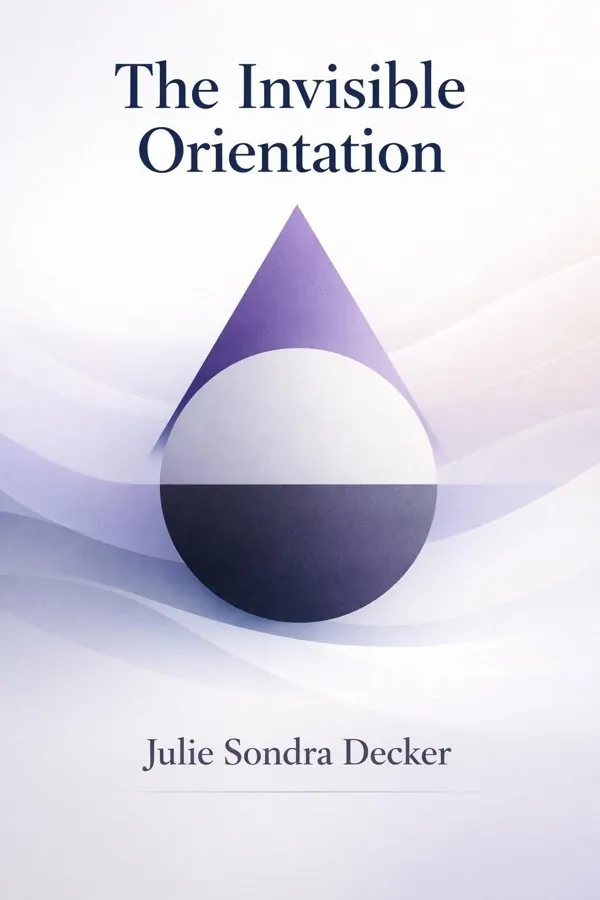
The Invisible Orientation: An Introduction to Asexuality: Summary & Key Insights
 10 min5 chaptersAudio available
What Is The Invisible Orientation: An Introduction to Asexuality About?
The Invisible Orientation: An Introduction to Asexuality by Julie Sondra Decker is a sociology book spanning 5 pages. The Invisible Orientation es una guía introductoria sobre la asexualidad escrita por Julie Sondra Decker. El libro explica qué es la asexualidad, desmonta mitos comunes, ofrece recursos y contextualiza las experiencias de las personas asexuales. Está dirigido tanto a personas asexuales como a quienes desean comprender mejor esta orientación, promoviendo la aceptación y la visibilidad dentro de la diversidad sexual.
This FizzRead summary covers all 5 key chapters of The Invisible Orientation: An Introduction to Asexuality in approximately 10 minutes, distilling the most important ideas, arguments, and takeaways from Julie Sondra Decker's work. Also available as an audio summary and Key Quotes Podcast.
The Invisible Orientation: An Introduction to Asexuality
The Invisible Orientation es una guía introductoria sobre la asexualidad escrita por Julie Sondra Decker. El libro explica qué es la asexualidad, desmonta mitos comunes, ofrece recursos y contextualiza las experiencias de las personas asexuales. Está dirigido tanto a personas asexuales como a quienes desean comprender mejor esta orientación, promoviendo la aceptación y la visibilidad dentro de la diversidad sexual.
Who Should Read The Invisible Orientation: An Introduction to Asexuality?
This book is perfect for anyone interested in sociology and looking to gain actionable insights in a short read. Whether you're a student, professional, or lifelong learner, the key ideas from The Invisible Orientation: An Introduction to Asexuality by Julie Sondra Decker will help you think differently.
- ✓Readers who enjoy sociology and want practical takeaways
- ✓Professionals looking to apply new ideas to their work and life
- ✓Anyone who wants the core insights of The Invisible Orientation: An Introduction to Asexuality in just 10 minutes
Want the full summary?
Get instant access to this book summary and 100K+ more with Fizz Moment.
Get Free SummaryAvailable on App Store • Free to download
Key Chapters
The first task in approaching asexuality is to clarify what it actually means. When I describe asexuality, I mean the lack of sexual attraction—nothing more and nothing less. Asexual people may still experience romantic attraction, affection, aesthetic appreciation, or emotional connection, but they do not feel the impulse toward sexual activity that most people assume is universal. This distinction is crucial, because sexual behavior and sexual attraction are not the same. Some asexual people do engage in sexual activity—for emotional closeness, for partnership, or even curiosity—but this does not make them any less asexual. The challenge is that society often interprets attraction as behavior and vice versa, confusing the nuance that identities like mine bring to light.
Years of stereotypes have clouded understanding of what it means to be asexual. Some assume it’s a medical problem—hormonal imbalance or trauma response. Others reduce it to moral choices like celibacy or religious abstinence. Neither captures the truth. Asexuality is not the absence of libido in a medical sense, nor a lifestyle rejection of sex. It is simply a variation in human desire. A lack of sexual attraction is as intrinsic and authentic as its presence in others. What frustrates many asexual people is not confusion within themselves but invalidation from others—the insistence that they must be broken, or waiting to be ‘fixed.’ In the pages that follow, I dismantle these myths one by one, grounding each in real testimonies and psychological research. The purpose is not only educational but also affirming: you deserve to understand yourself without apology.
Just as there is no single way to be heterosexual, homosexual, or bisexual, there is no single way to be asexual. The spectrum is wide. Some individuals identify as gray-asexuals, who may occasionally experience sexual attraction under specific circumstances. Others call themselves demisexuals, feeling sexual attraction only after forming a deep emotional bond. These identities do not dilute asexuality; they enrich it by demonstrating its diversity. Living anywhere on this continuum means engaging in self-discovery and honesty about how one relates to others and to themselves.
Then there is the matter of romantic orientation. Not all asexual individuals are aromantic—meaning they experience no romantic attraction. Many asexual people fall in love, crave partnerships, and nurture families. The key is distinguishing between romantic and sexual desire. Recognizing this separation allows people to understand why some asexual individuals pursue romantic relationships even without sexual drive. Conversely, aromantic people—whether asexual or not—may live rich, fulfilling lives without attachments that fit traditional romantic frameworks. Through storytelling and explanation, I show that these different pathways are not deficiencies but authentic human expressions. Awareness of these varieties helps communities foster inclusion and respect the subjective experiences that shape individual identity.
+ 3 more chapters — available in the FizzRead app
All Chapters in The Invisible Orientation: An Introduction to Asexuality
About the Author
Julie Sondra Decker es una escritora estadounidense conocida por su activismo en torno a la visibilidad asexual. Ha publicado ensayos y artículos sobre identidad y orientación sexual, y The Invisible Orientation es su obra más reconocida en el ámbito de la educación sobre la asexualidad.
Get This Summary in Your Preferred Format
Read or listen to the The Invisible Orientation: An Introduction to Asexuality summary by Julie Sondra Decker anytime, anywhere. FizzRead offers multiple formats so you can learn on your terms — all free.
Available formats: App · Audio · PDF · EPUB — All included free with FizzRead
Download The Invisible Orientation: An Introduction to Asexuality PDF and EPUB Summary
Key Quotes from The Invisible Orientation: An Introduction to Asexuality
“The first task in approaching asexuality is to clarify what it actually means.”
“Just as there is no single way to be heterosexual, homosexual, or bisexual, there is no single way to be asexual.”
Frequently Asked Questions about The Invisible Orientation: An Introduction to Asexuality
The Invisible Orientation: An Introduction to Asexuality by Julie Sondra Decker is a sociology book that explores key ideas across 5 chapters. The Invisible Orientation es una guía introductoria sobre la asexualidad escrita por Julie Sondra Decker. El libro explica qué es la asexualidad, desmonta mitos comunes, ofrece recursos y contextualiza las experiencias de las personas asexuales. Está dirigido tanto a personas asexuales como a quienes desean comprender mejor esta orientación, promoviendo la aceptación y la visibilidad dentro de la diversidad sexual.
You Might Also Like

Between the World and Me
Ta-Nehisi Coates
10 min
Half the Sky
Nicholas D. Kristof, Sheryl WuDunn
10 min
Men Explain Things To Me
Rebecca Solnit
10 min
Rational Ritual
Michael Suk-Young Chwe
10 min
The New Jim Crow
Michelle Alexander
10 min
Beyond Culture
Edward T. Hall
10 minBrowse by Category
Ready to read The Invisible Orientation: An Introduction to Asexuality?
Get the full summary and 100K+ more books with Fizz Moment.