
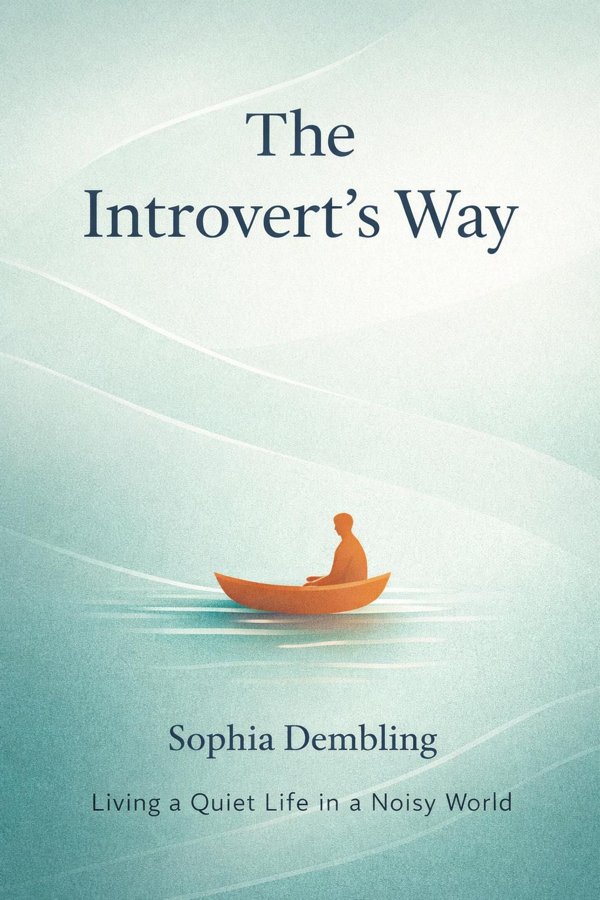
The Introvert's Way: Living a Quiet Life in a Noisy World: Summary & Key Insights
 10 min9 chaptersAudio available
Key Takeaways from The Introvert's Way: Living a Quiet Life in a Noisy World
One of the most liberating realizations in the book is that introversion is not a character flaw waiting to be corrected.
A powerful idea running through the book is that personality differences are not abstract labels; they influence everyday habits, reactions, and preferences in concrete ways.
Introverts often know depletion intimately, but many do not realize that managing energy is one of the central skills of a healthy introverted life.
Few things burden introverts more than the feeling that they are constantly being measured against extroverted expectations.
Dembling shows that introverts often communicate best not through volume or speed, but through depth, thoughtfulness, and careful attention.
What Is The Introvert's Way: Living a Quiet Life in a Noisy World About?
The Introvert's Way: Living a Quiet Life in a Noisy World by Sophia Dembling is a psychology book spanning 7 pages. The Introvert's Way: Living a Quiet Life in a Noisy World is an affirming, practical exploration of what it really means to be introverted in a culture that often celebrates constant socializing, quick talk, and visible self-promotion. Sophia Dembling argues that introversion is not a flaw, a social deficit, or a problem to overcome. Instead, it is a valid temperament with its own strengths, needs, and ways of flourishing. Through humor, personal reflection, and accessible psychological insight, she helps readers understand why introverts often need solitude, prefer depth over chatter, and feel drained by environments that extroverts may find energizing. The book matters because it offers both relief and language: relief for readers who have long felt "wrong," and language for understanding their own rhythms more clearly. Dembling writes with unusual authority not because she presents herself as a detached academic, but because she combines journalistic clarity with lived experience and deep familiarity with conversations around personality psychology. The result is a warm, intelligent guide for anyone who wants to live more comfortably and authentically as an introvert.
This FizzRead summary covers all 9 key chapters of The Introvert's Way: Living a Quiet Life in a Noisy World in approximately 10 minutes, distilling the most important ideas, arguments, and takeaways from Sophia Dembling's work. Also available as an audio summary and Key Quotes Podcast.
The Introvert's Way: Living a Quiet Life in a Noisy World
The Introvert's Way: Living a Quiet Life in a Noisy World is an affirming, practical exploration of what it really means to be introverted in a culture that often celebrates constant socializing, quick talk, and visible self-promotion. Sophia Dembling argues that introversion is not a flaw, a social deficit, or a problem to overcome. Instead, it is a valid temperament with its own strengths, needs, and ways of flourishing. Through humor, personal reflection, and accessible psychological insight, she helps readers understand why introverts often need solitude, prefer depth over chatter, and feel drained by environments that extroverts may find energizing. The book matters because it offers both relief and language: relief for readers who have long felt "wrong," and language for understanding their own rhythms more clearly. Dembling writes with unusual authority not because she presents herself as a detached academic, but because she combines journalistic clarity with lived experience and deep familiarity with conversations around personality psychology. The result is a warm, intelligent guide for anyone who wants to live more comfortably and authentically as an introvert.
Who Should Read The Introvert's Way: Living a Quiet Life in a Noisy World?
This book is perfect for anyone interested in psychology and looking to gain actionable insights in a short read. Whether you're a student, professional, or lifelong learner, the key ideas from The Introvert's Way: Living a Quiet Life in a Noisy World by Sophia Dembling will help you think differently.
- ✓Readers who enjoy psychology and want practical takeaways
- ✓Professionals looking to apply new ideas to their work and life
- ✓Anyone who wants the core insights of The Introvert's Way: Living a Quiet Life in a Noisy World in just 10 minutes
Want the full summary?
Get instant access to this book summary and 100K+ more with Fizz Moment.
Get Free SummaryAvailable on App Store • Free to download
Key Chapters
One of the most liberating realizations in the book is that introversion is not a character flaw waiting to be corrected. Dembling challenges the common assumption that the ideal personality is outgoing, always available, and socially effortless. In many cultures, especially modern professional and social environments, extroverted behavior is treated as the norm and often as the standard for confidence, likability, and success. Against that backdrop, introverts can easily internalize the idea that they are too quiet, too serious, too distant, or simply not enough.
Dembling reframes the issue completely. Introversion and extroversion are not moral categories; they are different ways of responding to stimulation, social interaction, and the outer world. Extroverts often gain energy from activity, novelty, and connection. Introverts often lose energy through those same experiences and restore themselves through reflection, calm, and time alone. This does not mean introverts dislike people or lack warmth. It means their internal wiring works differently.
This distinction matters because it shifts the conversation from self-criticism to self-understanding. An introvert who leaves a party early is not failing socially; they may simply be listening to their own limits. A quiet student is not necessarily disengaged; they may be thinking deeply before speaking. A professional who hates open-plan offices is not antisocial; they may need lower stimulation to do their best work.
Dembling’s great gift is giving readers permission to stop treating their temperament as a problem. Once introversion is understood as a natural variation rather than a deficiency, the pressure to perform a false personality starts to loosen.
Actionable takeaway: Replace the question “What’s wrong with me?” with “What does my temperament need to thrive?” and let that guide your choices.
A powerful idea running through the book is that personality differences are not abstract labels; they influence everyday habits, reactions, and preferences in concrete ways. Dembling shows that introversion and extroversion affect how people approach conversation, downtime, workspaces, friendships, and even leisure. This is why misunderstandings between the two types are so common. People often assume others experience the world the way they do, and when they do not, they interpret the difference as rudeness, coldness, or excessive neediness.
For example, an extrovert may see a quiet dinner as dull and a lively group gathering as relaxing. An introvert may have the opposite response, finding one-on-one time meaningful and large gatherings exhausting. Neither reaction is superior; each reflects a different internal economy of attention and energy. Dembling invites readers to notice these patterns without judgment.
Understanding these differences can improve relationships and reduce conflict. A friend who declines frequent plans may not be pulling away emotionally. A coworker who prefers email over spontaneous meetings may not be aloof; they may communicate better with time to think. An introverted parent may deeply love family life while still needing regular moments of privacy to remain patient and present.
Dembling’s broader point is that self-knowledge creates freedom. When you recognize the structure of your temperament, you can build routines and environments that work with you rather than against you. You also become more charitable toward others whose needs differ from yours.
Actionable takeaway: Identify three recurring situations that drain or restore you, then use those patterns to make more intentional decisions about your schedule, relationships, and environment.
Introverts often know depletion intimately, but many do not realize that managing energy is one of the central skills of a healthy introverted life. Dembling emphasizes that for introverts, solitude is not a luxury or indulgence. It is maintenance. It is how the mind settles, the nervous system resets, and attention returns. In a world that frames busyness and availability as virtues, this can feel selfish. Dembling argues the opposite: respecting your energy makes you more functional, more generous, and more authentically engaged.
This perspective helps explain why introverts can enjoy socializing and still need to recover from it. A meaningful dinner with friends, a successful meeting, or a family celebration may be enjoyable in the moment but still draining afterward. The key is not to avoid all stimulation, but to understand its cost and plan accordingly.
Practical energy management can look simple. You might schedule downtime after a conference instead of stacking appointments back-to-back. You might drive separately to an event so you can leave when you need to. You might choose one important social commitment for the weekend instead of overfilling every evening. At work, you may block quiet focus hours after collaborative meetings rather than expecting yourself to be equally productive in every context.
Dembling makes an important emotional point too: needing recovery does not make an introvert fragile. It makes them self-aware. Ignoring energy limits often leads to irritability, shutdown, or resentment. Honoring them leads to steadier participation in the parts of life that matter.
Actionable takeaway: Start tracking which interactions energize, which exhaust, and how much recovery time you need after each, then build your week around that reality.
Dembling shows that introverts often communicate best not through volume or speed, but through depth, thoughtfulness, and careful attention. In a culture that rewards quick responses and verbal agility, this style can be overlooked. Yet it often produces some of the most meaningful conversations and strongest relationships. Introverts may prefer one-on-one exchanges, smaller groups, and discussions that move past superficial chatter. They often think before speaking and may say less, but with greater precision.
This has important implications for relationships. Friends, partners, and coworkers may misread introverted communication as detachment if they expect constant verbal reassurance or spontaneous talk. Dembling encourages introverts to understand their own style and explain it when necessary. Saying, “I need a little time to think before I answer,” or “I connect best in quieter settings,” can prevent unnecessary misunderstandings.
At the same time, the book does not romanticize introverted communication as automatically superior. Quiet people can still withdraw too far, avoid hard conversations, or hope others will magically understand them. Healthy communication requires effort from all sides. Introverts benefit from learning how to express needs clearly rather than silently enduring discomfort.
In practice, this may mean proposing coffee with one friend instead of attending a loud group outing, writing down key points before a difficult conversation, or following up after meetings by email when you communicate more effectively in writing. These are not evasions; they are strategic ways of showing up fully.
Actionable takeaway: Choose one relationship in which you feel misunderstood and clearly explain how you communicate best, along with one concrete change that would help you connect more easily.
One of Dembling’s most practical contributions is her discussion of how introverts can navigate workplaces that often reward extroverted habits. Many offices value brainstorming out loud, networking, frequent meetings, open-plan spaces, and visible enthusiasm. Introverts may find these norms tiring or even counterproductive, yet feel pressured to imitate them in order to seem engaged or ambitious.
Dembling challenges the assumption that success belongs to the loudest person in the room. Introverts often bring strengths that organizations need desperately: sustained concentration, thoughtful preparation, careful listening, calm under pressure, and the ability to work independently. The problem is not lack of value; it is lack of recognition when workplaces equate visibility with contribution.
Rather than encouraging introverts to become pseudo-extroverts, Dembling advocates working on one’s own terms where possible. This might mean preparing ideas before meetings so you can contribute with confidence, asking for agendas in advance, seeking quieter work conditions, or using writing strategically to communicate complex thoughts. Networking does not have to mean working every room at a crowded event; it can mean building a few genuine professional relationships over time.
There is also a deeper message here about identity. When introverts constantly perform an unnatural social persona, work becomes more exhausting than it needs to be. The energy spent managing appearances drains energy that could have gone toward creativity, competence, and meaningful collaboration.
Actionable takeaway: Identify one workplace practice that drains you unnecessarily and propose or create a quieter, more effective alternative that still supports your goals and visibility.
A quiet life is not an empty life. Dembling makes the case that introversion often creates fertile conditions for creativity, insight, and original thought. Because introverts are typically comfortable with solitude and introspection, they may spend more time observing, reflecting, and mentally processing experience. This inner activity is not passivity. It is often the very place where ideas are formed, emotions are understood, and meaning is made.
The book suggests that overstimulation can interfere with this process. Constant noise, social interruption, and digital chatter leave little room for deeper thinking. Introverts may feel this acutely, but many people can benefit from the principle: creativity often requires spaciousness. It needs time without demands, room for unfinished thoughts, and permission not to be instantly responsive.
In practical terms, this might involve protecting a few uninterrupted hours for reading, writing, designing, problem-solving, or simply thinking. It might mean taking walks without podcasts, resisting the urge to fill every silence, or creating a home corner that feels mentally restorative. For artists, thinkers, and knowledge workers, this can be essential. But it is equally useful for parents, students, and professionals who need clarity and perspective.
Dembling also validates a subtle truth: some of the richest inner lives are invisible from the outside. An introvert sitting quietly may be processing ideas more deeply than the most animated person in the room. Valuing that inner life is part of valuing introversion itself.
Actionable takeaway: Protect one regular block of solitude each week for uninterrupted thought or creative work, and treat it as seriously as any external appointment.
Dembling helps readers name something they may have felt for years without fully understanding: overstimulation. For introverts, too much noise, activity, social contact, unpredictability, or sensory input can create a state of mental crowding. It is not merely annoyance. It can feel like your attention is fraying, your patience is thinning, and your ability to think clearly is slipping away. This is one reason why environments that others find exciting can leave introverts feeling tense or exhausted.
Recognizing overstimulation is important because it allows prevention instead of collapse. Many introverts push through discomfort until they become irritable, withdrawn, or completely drained. Dembling encourages a gentler and smarter approach: notice early signs and respond before you hit the wall. These signs might include difficulty concentrating, a sudden desire to escape, unusual sensitivity to sound, or feeling emotionally flat after too much input.
Managing overstimulation does not require a perfectly quiet life. It requires thoughtful boundaries. You might carry headphones, choose off-peak hours for errands, take short breaks during conferences, sit at the edge of a room rather than the center, or create home rituals that reduce sensory load after a busy day. You may also need to be more selective about social settings, favoring environments where conversation and presence feel sustainable.
Dembling’s underlying point is deeply compassionate: if certain kinds of intensity affect you strongly, that does not make you difficult. It means your system is responsive. Once understood, that sensitivity can be managed rather than feared.
Actionable takeaway: Learn your earliest signs of overstimulation and create a simple recovery plan you can use immediately when they appear.
Perhaps the book’s most reassuring message is that a quiet life is not a lesser life. Dembling resists the cultural myth that fulfillment must look busy, public, loud, and highly social. Many introverts are made to feel that unless they are constantly out, constantly connected, and constantly expanding their circles, they are somehow missing life. Dembling offers a different vision: a life can be rich because it is intentional, not because it is crowded.
For introverts, joy may come from a few close relationships rather than many casual ones, from deep interests rather than endless activity, and from meaningful solitude rather than nonstop participation. This does not imply fear of the world. It suggests discernment about what genuinely nourishes a person. A calm evening with a book, a thoughtful conversation, a walk alone, or focused immersion in a hobby may provide more satisfaction than an event-filled weekend.
Dembling also reminds readers that personal growth does not always look dramatic. Sometimes it means becoming less ashamed of your own rhythm, more capable of saying no without guilt, and more willing to build a life that reflects your true preferences. That kind of growth can be transformative, even if it is quiet.
The deeper contribution of the book is existential as much as psychological: it gives introverts permission to define a good life for themselves instead of borrowing an extroverted script. A life built around fit rather than performance is often more stable, generous, and satisfying.
Actionable takeaway: Define your version of a fulfilling life in writing, focusing on what genuinely restores and matters to you rather than what looks impressive from the outside.
All Chapters in The Introvert's Way: Living a Quiet Life in a Noisy World
About the Author
Sophia Dembling is an American writer and journalist known for her thoughtful work on introversion, personality, and the experience of living quietly in a highly social culture. She has written for outlets such as Psychology Today and The Dallas Morning News, bringing a clear, approachable style to topics that often feel deeply personal. Dembling became especially well known for articulating the needs, frustrations, and strengths of introverts in a way that is both validating and practical. Her writing blends lived experience with journalistic observation, helping readers understand introversion not as a limitation but as a legitimate and often overlooked temperament. Through her books and essays, she has become a trusted voice for readers seeking self-acceptance, emotional clarity, and a more balanced view of what it means to live well.
Get This Summary in Your Preferred Format
Read or listen to the The Introvert's Way: Living a Quiet Life in a Noisy World summary by Sophia Dembling anytime, anywhere. FizzRead offers multiple formats so you can learn on your terms — all free.
Available formats: App · Audio · PDF · EPUB — All included free with FizzRead
Download The Introvert's Way: Living a Quiet Life in a Noisy World PDF and EPUB Summary
Key Quotes from The Introvert's Way: Living a Quiet Life in a Noisy World
“One of the most liberating realizations in the book is that introversion is not a character flaw waiting to be corrected.”
“A powerful idea running through the book is that personality differences are not abstract labels; they influence everyday habits, reactions, and preferences in concrete ways.”
“Introverts often know depletion intimately, but many do not realize that managing energy is one of the central skills of a healthy introverted life.”
“Few things burden introverts more than the feeling that they are constantly being measured against extroverted expectations.”
“Dembling shows that introverts often communicate best not through volume or speed, but through depth, thoughtfulness, and careful attention.”
Frequently Asked Questions about The Introvert's Way: Living a Quiet Life in a Noisy World
The Introvert's Way: Living a Quiet Life in a Noisy World by Sophia Dembling is a psychology book that explores key ideas across 9 chapters. The Introvert's Way: Living a Quiet Life in a Noisy World is an affirming, practical exploration of what it really means to be introverted in a culture that often celebrates constant socializing, quick talk, and visible self-promotion. Sophia Dembling argues that introversion is not a flaw, a social deficit, or a problem to overcome. Instead, it is a valid temperament with its own strengths, needs, and ways of flourishing. Through humor, personal reflection, and accessible psychological insight, she helps readers understand why introverts often need solitude, prefer depth over chatter, and feel drained by environments that extroverts may find energizing. The book matters because it offers both relief and language: relief for readers who have long felt "wrong," and language for understanding their own rhythms more clearly. Dembling writes with unusual authority not because she presents herself as a detached academic, but because she combines journalistic clarity with lived experience and deep familiarity with conversations around personality psychology. The result is a warm, intelligent guide for anyone who wants to live more comfortably and authentically as an introvert.
You Might Also Like
The Body Keeps the Score
Bessel van der Kolk
10 min
Surrounded by Idiots
Thomas Erikson
10 min
Emotional Intelligence
Daniel Goleman
10 min
Attached
Amir Levine
10 min
Why Does He Do That
Lundy Bancroft
10 min
Women Who Run with the Wolves
Clarissa Pinkola Estés
10 minBrowse by Category
Ready to read The Introvert's Way: Living a Quiet Life in a Noisy World?
Get the full summary and 100K+ more books with Fizz Moment.