
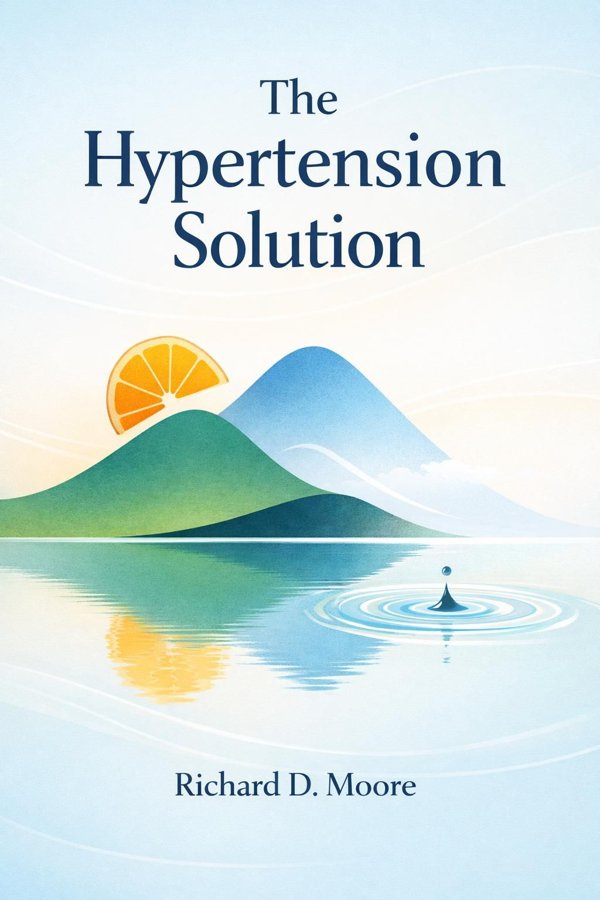
The Hypertension Solution: A Clinician’s Guide to Lifestyle-First Management: Summary & Key Insights
 10 min8 chaptersAudio available
Key Takeaways from The Hypertension Solution: A Clinician’s Guide to Lifestyle-First Management
A blood pressure reading is not just a number; it is a message from the body about how hard the cardiovascular system is working to maintain balance.
The most important nutritional story in hypertension is not sodium alone, but sodium in relation to potassium.
Food is not just fuel; it is instruction for the body’s chemistry.
Not all pressure comes from food.
Exercise does not merely burn calories; it recalibrates the systems that govern blood pressure.
What Is The Hypertension Solution: A Clinician’s Guide to Lifestyle-First Management About?
The Hypertension Solution: A Clinician’s Guide to Lifestyle-First Management by Richard D. Moore is a health_med book spanning 7 pages. High blood pressure is often treated as a numbers problem: a reading rises, a prescription follows, and the deeper causes remain untouched. In The Hypertension Solution: A Clinician’s Guide to Lifestyle-First Management, Richard D. Moore argues that this approach is incomplete. Hypertension is not simply a defect to suppress with drugs, but a physiological signal that the body’s regulatory systems, especially those involving diet, minerals, stress, movement, and metabolism, have fallen out of balance. This book offers a practical, evidence-based framework for restoring that balance. Moore writes with the dual authority of a physician and researcher, translating complex cardiovascular science into clear clinical guidance. He does not reject medication outright; instead, he places it in its proper role as one tool among many, often most effective when paired with meaningful lifestyle change. What makes the book especially valuable is its insistence that patients are not passive recipients of treatment. Daily choices around food, sleep, activity, and stress can meaningfully alter blood pressure trajectories. For clinicians, patients, and health-conscious readers alike, this is a persuasive case for treating the causes of hypertension, not just the symptoms.
This FizzRead summary covers all 8 key chapters of The Hypertension Solution: A Clinician’s Guide to Lifestyle-First Management in approximately 10 minutes, distilling the most important ideas, arguments, and takeaways from Richard D. Moore's work. Also available as an audio summary and Key Quotes Podcast.
The Hypertension Solution: A Clinician’s Guide to Lifestyle-First Management
High blood pressure is often treated as a numbers problem: a reading rises, a prescription follows, and the deeper causes remain untouched. In The Hypertension Solution: A Clinician’s Guide to Lifestyle-First Management, Richard D. Moore argues that this approach is incomplete. Hypertension is not simply a defect to suppress with drugs, but a physiological signal that the body’s regulatory systems, especially those involving diet, minerals, stress, movement, and metabolism, have fallen out of balance. This book offers a practical, evidence-based framework for restoring that balance.
Moore writes with the dual authority of a physician and researcher, translating complex cardiovascular science into clear clinical guidance. He does not reject medication outright; instead, he places it in its proper role as one tool among many, often most effective when paired with meaningful lifestyle change. What makes the book especially valuable is its insistence that patients are not passive recipients of treatment. Daily choices around food, sleep, activity, and stress can meaningfully alter blood pressure trajectories. For clinicians, patients, and health-conscious readers alike, this is a persuasive case for treating the causes of hypertension, not just the symptoms.
Who Should Read The Hypertension Solution: A Clinician’s Guide to Lifestyle-First Management?
This book is perfect for anyone interested in health_med and looking to gain actionable insights in a short read. Whether you're a student, professional, or lifelong learner, the key ideas from The Hypertension Solution: A Clinician’s Guide to Lifestyle-First Management by Richard D. Moore will help you think differently.
- ✓Readers who enjoy health_med and want practical takeaways
- ✓Professionals looking to apply new ideas to their work and life
- ✓Anyone who wants the core insights of The Hypertension Solution: A Clinician’s Guide to Lifestyle-First Management in just 10 minutes
Want the full summary?
Get instant access to this book summary and 100K+ more with Fizz Moment.
Get Free SummaryAvailable on App Store • Free to download
Key Chapters
A blood pressure reading is not just a number; it is a message from the body about how hard the cardiovascular system is working to maintain balance. One of Moore’s central insights is that modern medicine often responds to hypertension too narrowly. A patient is diagnosed, medication is started, and the treatment is considered successful if the numbers decline. Yet this can obscure the deeper drivers of elevated pressure: excess sodium, low potassium intake, insulin resistance, chronic stress, inactivity, poor sleep, and weight gain.
Moore does not deny the value of medication. In many cases, especially with severe hypertension or high cardiovascular risk, drugs are necessary and lifesaving. But he argues that medication alone rarely changes the biological conditions that produced the problem. A patient may see improved readings while still consuming processed food, remaining sedentary, and living under constant stress. In that sense, treatment can become management without restoration.
He reframes hypertension as a systems issue rather than an isolated disease. The blood vessels, kidneys, hormones, nervous system, and metabolism all participate in blood pressure regulation. If these systems are strained by lifestyle patterns, pills may suppress the symptom while the underlying imbalance persists. For example, a person who lowers blood pressure with medication but continues a high-sodium, low-nutrient diet may still face elevated long-term risk.
The practical implication is not that patients should refuse medication, but that they should see lifestyle interventions as first-line medicine. Clinicians should investigate what is driving the pressure upward and help patients act on those causes. Actionable takeaway: Treat every blood pressure reading as an invitation to ask, “What in my daily life is pushing this higher, and what can I start changing today?”
The most important nutritional story in hypertension is not sodium alone, but sodium in relation to potassium. Moore emphasizes that blood pressure regulation depends heavily on this mineral balance. Sodium tends to promote fluid retention and increased vascular tension when consumed in excess, while potassium supports cellular balance, nerve signaling, and the relaxation of blood vessel walls. When diets are overloaded with sodium and starved of potassium, the cardiovascular system is pushed toward higher pressure.
This matters because many people misunderstand the issue. They may think they are eating reasonably because they do not add much salt at the table. Yet the bulk of dietary sodium often comes from packaged bread, soups, sauces, deli meats, frozen meals, and restaurant food. At the same time, they may eat very few potassium-rich foods such as leafy greens, beans, potatoes, squash, avocados, fruit, and yogurt. The result is not simply “too much salt” but a profoundly distorted mineral environment.
Moore explains that traditional diets tended to contain much more potassium than sodium. Modern processed diets often reverse that ratio. This shift influences kidney function, fluid balance, and arterial responsiveness. For a patient with hypertension, correcting the ratio can have an outsized effect. A practical example is replacing a processed lunch of deli meat, chips, and canned soup with a meal built around beans, vegetables, fruit, and unsalted whole grains.
Importantly, patients with kidney disease or those on certain medications need individualized guidance before dramatically increasing potassium. But for many people, the safest first step is to reduce processed sodium while increasing whole foods naturally rich in potassium. Actionable takeaway: Audit one day of eating and identify both hidden sodium sources and missed potassium opportunities, then redesign one meal around whole, unprocessed foods.
Food is not just fuel; it is instruction for the body’s chemistry. Moore’s dietary philosophy is grounded in the idea that hypertension emerges when modern eating patterns distort natural physiological ratios. Processed foods are typically dense in sodium, calories, and refined carbohydrates, while being poor in fiber, magnesium, potassium, and protective plant compounds. A lifestyle-first approach aims not merely to restrict food, but to rebuild a nutritional environment in which healthy blood pressure can become easier to maintain.
He advocates a whole-food pattern centered on vegetables, fruits, legumes, nuts, seeds, intact grains, and minimally processed proteins. Such diets do more than cut sodium. They improve insulin sensitivity, support weight control, reduce inflammation, and provide minerals that influence vascular tone. Fiber slows glucose absorption, helping stabilize metabolism. Magnesium and potassium help with smooth muscle function. Antioxidants from plants may improve endothelial health, which affects how blood vessels dilate.
A useful example is breakfast. Many common options, such as sugary cereal, pastries, or fast-food sandwiches, set the day up for poor metabolic control. By contrast, oatmeal with berries and nuts, plain yogurt with fruit, or eggs with vegetables provides more satiety and better nutrient density. Over time, these choices can lower blood pressure indirectly by reducing calorie excess and directly by improving mineral intake.
Moore’s point is not dietary perfection. It is consistency in shifting the pattern. A person does not need exotic foods or a rigid plan to benefit. Simple substitutions repeated daily can reshape blood pressure biology. Actionable takeaway: Build your meals around foods that look close to their natural form, and aim to make half your plate vegetables or fruit at least twice a day.
Not all pressure comes from food. Some of it comes from the mind’s interpretation of life. Moore highlights chronic stress as a major but often underestimated contributor to hypertension. When the body perceives threat, the sympathetic nervous system activates, stress hormones rise, heart rate increases, blood vessels constrict, and the body prepares for action. In short bursts, this response is adaptive. When it becomes a near-constant background state, it can help keep blood pressure chronically elevated.
Modern stressors are rarely life-threatening in the traditional sense, but they are persistent: financial strain, relationship conflict, work overload, sleep deprivation, noise, digital overstimulation, and a lack of recovery time. The body often reacts to these pressures as if danger is continuous. This can influence not only blood pressure directly, but also behavior indirectly. Stressed individuals may sleep less, eat more processed food, skip exercise, and rely on alcohol or excessive caffeine.
Moore argues that stress management is not an optional wellness extra; it is part of hypertension treatment. Practical interventions include daily walks without a phone, slow breathing exercises, meditation, prayer, journaling, time in nature, and structured limits on work and screen exposure. Even five minutes of extended exhalation breathing can reduce physiological arousal. Better sleep routines also matter because poor sleep amplifies stress hormones and vascular strain.
The deeper insight is that managing stress is not about eliminating all difficulty. It is about increasing the body’s ability to return to baseline. Patients who learn to downshift regularly create a more favorable environment for vascular health. Actionable takeaway: Choose one daily stress-reduction practice that takes less than ten minutes and commit to doing it at the same time every day for the next two weeks.
Exercise does not merely burn calories; it recalibrates the systems that govern blood pressure. Moore presents movement as a cornerstone of lifestyle-first hypertension care because it improves vascular flexibility, insulin sensitivity, body composition, autonomic balance, and mood. Sedentary living, by contrast, tells the body to become metabolically sluggish and less efficient at regulating circulation.
Many people hear “exercise” and imagine intense gym sessions or athletic training. Moore’s approach is more inclusive and clinically practical. Walking, cycling, swimming, resistance training, gardening, stair climbing, and even repeated movement breaks during the workday can all contribute to better blood pressure control. The key is regularity. Consistent moderate activity often provides more sustainable benefit than occasional heroic effort.
Movement helps the lining of blood vessels function better, supports nitric oxide production, and reduces stiffness in the arterial system. It also lowers stress, improves sleep quality, and helps manage weight, creating multiple pathways to lower blood pressure. A patient who walks briskly for 30 minutes most days may improve far more than someone who only exercises hard once a week. Adding basic strength training can further support glucose handling and preserve muscle mass, which is metabolically protective.
A useful strategy for sedentary people is to stop thinking in all-or-nothing terms. Ten-minute walks after meals, standing up each hour, or doing bodyweight exercises at home can become entry points. The blood pressure benefit accumulates through repetition. Actionable takeaway: If you are inactive, start with a ten-minute walk after one meal each day this week, then gradually build toward most days of the week.
Excess body weight is not just stored energy; it is often a signal of deeper metabolic disruption that can raise blood pressure through multiple channels. Moore explains that weight gain, especially around the abdomen, is closely linked to insulin resistance, inflammation, altered kidney sodium handling, sleep-disordered breathing, and increased sympathetic nervous system activity. In other words, the body under metabolic strain often also becomes a body under circulatory strain.
This is why blood pressure management cannot be separated from metabolic health. A person may focus solely on sodium while overlooking how refined carbohydrates, frequent overeating, low activity, and poor sleep contribute to hormonal patterns that encourage both weight gain and hypertension. Insulin resistance can increase fluid retention and affect vascular function. Adipose tissue itself is biologically active, producing substances that influence inflammation and vascular tone.
Moore avoids simplistic blame. He treats weight as a clinical clue rather than a moral failing. Sustainable change comes from improving the systems that regulate appetite, energy use, and blood sugar. For many patients, this means emphasizing whole foods, increasing protein and fiber, reducing ultra-processed snacks, becoming more physically active, and prioritizing sleep. Even modest weight loss can produce meaningful improvements in blood pressure, especially when paired with better diet quality and exercise.
A practical example is replacing calorie-dense convenience foods with meals that provide satiety: beans and vegetables, eggs and greens, Greek yogurt and fruit, or chicken with roasted vegetables. These changes reduce passive overeating and support steadier metabolism. Actionable takeaway: Focus on losing the first 5 to 10 percent of excess weight through repeatable habits rather than extreme diets, and track waist circumference along with the scale.
A tired body is often a stressed body, and a stressed body tends to raise blood pressure. Although diet and exercise receive more attention, Moore’s framework points toward sleep and recovery as crucial but underappreciated elements of hypertension control. During healthy sleep, the nervous system shifts, hormone rhythms reset, and the cardiovascular system gets a chance to recover. When sleep is short, fragmented, or chronically poor, blood pressure regulation suffers.
Sleep deprivation can increase cortisol, heighten sympathetic activity, worsen insulin resistance, and intensify appetite for calorie-dense foods. It also reduces motivation to exercise and tolerance for stress. The result is a cascade in which poor sleep fuels the very habits that worsen hypertension. For some patients, obstructive sleep apnea is part of the picture, especially in those who snore loudly, wake unrefreshed, or struggle with daytime sleepiness. Untreated apnea can keep blood pressure elevated despite medication and other efforts.
Moore’s practical approach includes regular sleep and wake times, reducing late-night screen exposure, limiting alcohol close to bedtime, managing caffeine timing, and creating a cooler, darker sleeping environment. For shift workers or parents with limited flexibility, the goal becomes improving sleep quality and consistency where possible, rather than chasing a perfect routine.
The broader lesson is that recovery is not laziness; it is maintenance for the cardiovascular system. A person cannot expect optimal blood pressure if the body never fully comes down from stress and fatigue. Actionable takeaway: Protect a consistent sleep window for the next seven nights and note whether your energy, cravings, and blood pressure readings begin to improve.
The book’s lifestyle-first message is not anti-medication; it is anti-reductionism. Moore is careful to show that antihypertensive drugs can be essential, especially for people with very high readings, target-organ damage, diabetes, kidney disease, or established cardiovascular risk. The problem arises when medication becomes the entire plan. When clinicians and patients rely on prescriptions without changing the conditions that sustain hypertension, treatment becomes incomplete.
Moore argues for a partnership model. Medication can lower immediate risk and buy time, while lifestyle changes address root causes and may reduce the amount of medication needed over time. This balanced approach is both medically responsible and empowering. It avoids two common mistakes: assuming pills solve everything, and assuming lifestyle alone is always enough. Some patients can reduce dosages as health improves; others will continue to need medication long term, but with better overall outcomes because they have improved diet, activity, sleep, and stress resilience.
The practical challenge is clinical monitoring. Blood pressure can change meaningfully as habits improve, so home measurements and regular follow-up matter. Patients should never stop medication abruptly on their own. Instead, they should work with a clinician to adjust treatment based on trends, symptoms, and risk profile.
An example is a patient who begins walking daily, loses weight, improves diet quality, and sees lower readings over several months. In that case, medication may be re-evaluated. But the key victory is not getting off a pill; it is improving total cardiovascular health. Actionable takeaway: View medication as one component of a broader care plan, and track home blood pressure consistently so treatment decisions can be guided by real patterns.
All Chapters in The Hypertension Solution: A Clinician’s Guide to Lifestyle-First Management
About the Author
Richard D. Moore, M.D., Ph.D., is a physician-researcher whose work centers on cardiovascular health, metabolic dysfunction, and the clinical impact of nutrition and lifestyle. Trained in both medicine and scientific research, he brings a dual perspective to chronic disease management, combining physiological explanation with practical treatment strategies. Moore has written and spoken extensively about hypertension as a condition shaped not only by genetics and age, but also by diet quality, mineral balance, physical activity, stress, and weight regulation. His approach emphasizes prevention and root-cause medicine without dismissing the value of conventional therapies. In The Hypertension Solution, he applies that philosophy to high blood pressure, arguing for a model of care that helps patients and clinicians use lifestyle interventions as a primary tool for long-term cardiovascular improvement.
Get This Summary in Your Preferred Format
Read or listen to the The Hypertension Solution: A Clinician’s Guide to Lifestyle-First Management summary by Richard D. Moore anytime, anywhere. FizzRead offers multiple formats so you can learn on your terms — all free.
Available formats: App · Audio · PDF · EPUB — All included free with FizzRead
Download The Hypertension Solution: A Clinician’s Guide to Lifestyle-First Management PDF and EPUB Summary
Key Quotes from The Hypertension Solution: A Clinician’s Guide to Lifestyle-First Management
“A blood pressure reading is not just a number; it is a message from the body about how hard the cardiovascular system is working to maintain balance.”
“The most important nutritional story in hypertension is not sodium alone, but sodium in relation to potassium.”
“Food is not just fuel; it is instruction for the body’s chemistry.”
“Some of it comes from the mind’s interpretation of life.”
“Exercise does not merely burn calories; it recalibrates the systems that govern blood pressure.”
Frequently Asked Questions about The Hypertension Solution: A Clinician’s Guide to Lifestyle-First Management
The Hypertension Solution: A Clinician’s Guide to Lifestyle-First Management by Richard D. Moore is a health_med book that explores key ideas across 8 chapters. High blood pressure is often treated as a numbers problem: a reading rises, a prescription follows, and the deeper causes remain untouched. In The Hypertension Solution: A Clinician’s Guide to Lifestyle-First Management, Richard D. Moore argues that this approach is incomplete. Hypertension is not simply a defect to suppress with drugs, but a physiological signal that the body’s regulatory systems, especially those involving diet, minerals, stress, movement, and metabolism, have fallen out of balance. This book offers a practical, evidence-based framework for restoring that balance. Moore writes with the dual authority of a physician and researcher, translating complex cardiovascular science into clear clinical guidance. He does not reject medication outright; instead, he places it in its proper role as one tool among many, often most effective when paired with meaningful lifestyle change. What makes the book especially valuable is its insistence that patients are not passive recipients of treatment. Daily choices around food, sleep, activity, and stress can meaningfully alter blood pressure trajectories. For clinicians, patients, and health-conscious readers alike, this is a persuasive case for treating the causes of hypertension, not just the symptoms.
You Might Also Like

On Immunity
Eula Biss
10 min
The Three-Body Problem
Liu Cixin
10 min
Community Health Volunteer Toolkit: Training and Practical Activities
World Health Organization
10 min
Healing Back Pain: The Mind-Body Connection
John E. Sarno
10 min
Health Literacy for All: Practical Guides to Communicate Health Information (Compilations)
World Health Organization
10 min
The Complete Guide to Sports Supplements: An Evidence-Based Review
Anita Bean
10 minBrowse by Category
Ready to read The Hypertension Solution: A Clinician’s Guide to Lifestyle-First Management?
Get the full summary and 100K+ more books with Fizz Moment.