
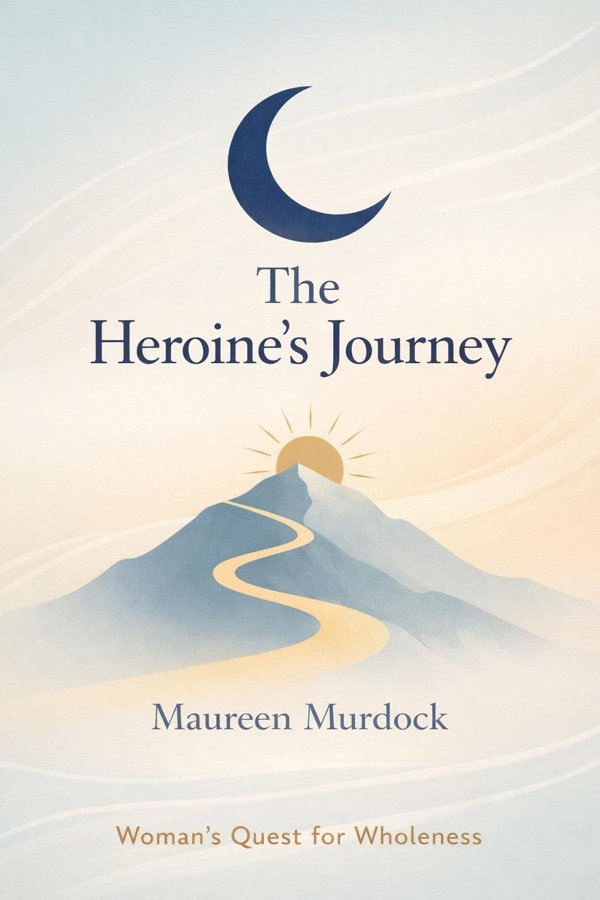
The Heroine's Journey: Woman's Quest for Wholeness: Summary & Key Insights
 10 min9 chaptersAudio available
Key Takeaways from The Heroine's Journey: Woman's Quest for Wholeness
The heroine’s journey often starts not with adventure, but with alienation.
To gain power in a world organized around masculine values, the heroine often learns to become fluent in those values.
Success does not end the journey; it intensifies the test.
One of Murdock’s most penetrating insights is that outer accomplishment can coexist with inner desolation.
Healing begins not by ascending further, but by descending.
What Is The Heroine's Journey: Woman's Quest for Wholeness About?
The Heroine's Journey: Woman's Quest for Wholeness by Maureen Murdock is a psychology book spanning 9 pages. What if success, independence, and achievement are not the end of the story, but only one phase in a deeper search for wholeness? In The Heroine's Journey, Maureen Murdock offers a powerful alternative to the classic hero’s journey by tracing the inner path many women follow as they separate from the feminine, pursue recognition through masculine values, and eventually return to reclaim the lost parts of themselves. Rather than celebrating conquest alone, Murdock explores healing, integration, embodiment, and relationship as essential dimensions of psychological growth. Drawing on Jungian psychology, mythology, dreams, and years of therapeutic practice, Murdock maps a developmental process that resonates far beyond gender stereotypes. Her model explains why many women who “make it” in the outer world still feel exhausted, disconnected, or spiritually empty. It also shows how reclaiming intuition, vulnerability, feeling, and creativity can become a source of strength rather than weakness. This book matters because it names a struggle many people feel but cannot articulate: the cost of rejecting parts of ourselves in order to belong. Murdock’s work remains a deeply insightful guide for anyone seeking a fuller, more balanced life.
This FizzRead summary covers all 9 key chapters of The Heroine's Journey: Woman's Quest for Wholeness in approximately 10 minutes, distilling the most important ideas, arguments, and takeaways from Maureen Murdock's work. Also available as an audio summary and Key Quotes Podcast.
The Heroine's Journey: Woman's Quest for Wholeness
What if success, independence, and achievement are not the end of the story, but only one phase in a deeper search for wholeness? In The Heroine's Journey, Maureen Murdock offers a powerful alternative to the classic hero’s journey by tracing the inner path many women follow as they separate from the feminine, pursue recognition through masculine values, and eventually return to reclaim the lost parts of themselves. Rather than celebrating conquest alone, Murdock explores healing, integration, embodiment, and relationship as essential dimensions of psychological growth.
Drawing on Jungian psychology, mythology, dreams, and years of therapeutic practice, Murdock maps a developmental process that resonates far beyond gender stereotypes. Her model explains why many women who “make it” in the outer world still feel exhausted, disconnected, or spiritually empty. It also shows how reclaiming intuition, vulnerability, feeling, and creativity can become a source of strength rather than weakness. This book matters because it names a struggle many people feel but cannot articulate: the cost of rejecting parts of ourselves in order to belong. Murdock’s work remains a deeply insightful guide for anyone seeking a fuller, more balanced life.
Who Should Read The Heroine's Journey: Woman's Quest for Wholeness?
This book is perfect for anyone interested in psychology and looking to gain actionable insights in a short read. Whether you're a student, professional, or lifelong learner, the key ideas from The Heroine's Journey: Woman's Quest for Wholeness by Maureen Murdock will help you think differently.
- ✓Readers who enjoy psychology and want practical takeaways
- ✓Professionals looking to apply new ideas to their work and life
- ✓Anyone who wants the core insights of The Heroine's Journey: Woman's Quest for Wholeness in just 10 minutes
Want the full summary?
Get instant access to this book summary and 100K+ more with Fizz Moment.
Get Free SummaryAvailable on App Store • Free to download
Key Chapters
The heroine’s journey often starts not with adventure, but with alienation. Murdock argues that many women begin by distancing themselves from the feminine because the culture teaches them that feminine traits are less valuable than masculine ones. Receptivity, emotionality, nurturance, intuition, and interdependence are often dismissed as weak, while rationality, competition, independence, and control are praised. To survive, succeed, or gain approval, the heroine may reject the feminine within herself and sometimes in other women as well.
This separation can happen early. A girl may learn that being “too sensitive” is a problem, that ambition matters more than connection, or that she must not resemble a mother she perceives as powerless. Over time, she forms a split inside herself. Outwardly, she may become capable and accomplished. Inwardly, she may feel cut off from softness, trust, embodiment, or belonging. The wound is not simply personal; it is cultural. The heroine absorbs the message that she must abandon one part of herself in order to be valued.
Murdock’s insight is especially useful because it reframes dissatisfaction. Instead of seeing anxiety, perfectionism, or emotional numbness as individual failures, she invites us to see them as signs of an inner divide. The first step toward healing is recognizing what was disowned.
In everyday life, this might look like noticing where you apologize for needing rest, dismiss your intuition, or judge yourself for wanting connection. Actionable takeaway: identify one feminine quality you have undervalued—such as intuition, receptivity, or tenderness—and practice honoring it this week without labeling it weakness.
To gain power in a world organized around masculine values, the heroine often learns to become fluent in those values. Murdock describes this stage as identification with the masculine and gathering allies. The heroine develops discipline, ambition, strategy, competence, and resilience. She enters institutions, careers, and systems that reward performance. This phase is not fake or meaningless; it often produces real growth. The heroine proves she can act, lead, and achieve.
Yet this identification can become overidentification. What begins as empowerment may slowly turn into self-betrayal if the heroine relies exclusively on masculine modes of being. She may become hyperproductive, emotionally defended, disconnected from her body, or unable to receive support. Her worth becomes tied to output. Relationships may feel secondary to accomplishment, and rest may feel like failure.
Murdock does not reject masculine energy. Instead, she shows that the problem arises when one mode of being is treated as superior and the other is denied. In practical terms, many people recognize this stage in workaholism, relentless self-improvement, or the need to appear strong at all times. The heroine gathers allies—mentors, credentials, skills, external recognition—but still lacks inner harmony.
A modern example is a woman who excels professionally yet feels empty, exhausted, or oddly fraudulent despite success. She has won the race she was taught to run, only to realize it was never the whole path.
Actionable takeaway: examine one area of your life where achievement has come at the cost of emotional, relational, or bodily well-being, and set a boundary that restores balance.
One of Murdock’s most penetrating insights is that outer accomplishment can coexist with inner desolation. The stage she calls spiritual aridity and death marks a crisis point: the heroine has pursued recognition, mastery, and perhaps even power, yet feels dry, empty, or deadened inside. The old strategies no longer nourish her. What once brought validation now feels hollow.
This is a painful but necessary turning point. Spiritual aridity often arrives as depression, exhaustion, loss of meaning, creative paralysis, or the collapse of a cherished identity. The heroine may realize that she has built a life that looks impressive but feels lifeless. She may no longer know what she truly wants apart from what she has been trained to want.
Murdock treats this not as pathology alone, but as initiation. The death here is symbolic: the death of false identifications, inflated control, and the belief that external success can substitute for inner connection. The heroine must grieve what has been lost, including years spent denying her deeper needs. In Jungian terms, the psyche is demanding a larger life.
Many readers recognize this stage in midlife crises, career disillusionment, or a sudden inability to continue performing a role that once defined them. The invitation is not to immediately fix the emptiness, but to listen to it. Meaning often returns only after old certainties break down.
Actionable takeaway: if you feel spiritually dry, resist the urge to instantly optimize or distract yourself. Create space for honest reflection through journaling, therapy, dream work, or quiet solitude, and ask what is trying to end so something truer can begin.
Healing begins not by ascending further, but by descending. After the collapse of old identities, the heroine enters a deeper realm Murdock calls initiation and descent to the goddess. This stage is a turning inward toward the unconscious, the body, emotion, memory, myth, and the sacred feminine. Rather than conquering, the heroine must surrender. Rather than performing, she must feel.
The goddess in Murdock’s framework is not merely a literal deity but a symbol of the neglected dimensions of life: intuition, cyclical wisdom, sensuality, mystery, creativity, and embodied knowing. Descent means entering places the achievement-oriented self has avoided—grief, rage, longing, vulnerability, ancestral pain, and the truths held in the body. It is often experienced through dreams, therapy, ritual, art, solitude, or honest emotional work.
This phase can feel disorienting because it asks the heroine to trust forms of knowing that are not linear or easily measurable. Yet this is where depth returns. She begins to encounter a source of value not dependent on performance. She learns that the feminine is not weakness but a mode of profound intelligence.
In practical terms, descent may involve reconnecting with creativity after years of productivity, allowing yourself to cry after decades of stoicism, or listening to bodily signals instead of overriding them. It may also involve confronting inherited beliefs about femininity, sexuality, motherhood, aging, or dependency.
Actionable takeaway: choose one practice that helps you access inner depth—such as dream journaling, meditation, expressive writing, movement, or time in nature—and commit to it regularly as a way of hearing what your deeper self is saying.
The goal of the heroine’s journey is not simply to visit the feminine, but to reclaim its power and value. Murdock emphasizes that the feminine has been culturally devalued, so recovering it requires more than private healing. It means revising one’s standards of worth. The heroine must learn to honor care, receptivity, intuition, relationship, embodiment, and cyclical living as legitimate sources of wisdom and strength.
This is transformative because many people unconsciously rank qualities. They may respect decisiveness more than tenderness, productivity more than presence, intellect more than intuition. Reclaiming the feminine challenges that hierarchy. The heroine discovers that nurturing is not passivity, receptivity is not weakness, and vulnerability is not incompetence. She can feel deeply and still be strong. She can receive and still be powerful.
This shift often changes daily life in concrete ways. A woman may stop measuring her worth solely by professional success and begin valuing emotional honesty, meaningful relationships, and bodily well-being. She may rediscover pleasure, play, art, spiritual practice, or community. She may also become less reactive to systems that only reward overwork and domination.
Murdock’s contribution here is crucial: reclaiming the feminine is not regression. It is not about returning to limiting gender roles. It is about recovering capacities the culture taught us to dismiss. The result is a fuller self, not a narrower one.
Actionable takeaway: make a list of qualities you associate with strength, then add at least three traditionally feminine qualities—such as compassion, receptivity, or intuition—and actively treat them as strengths in your choices this week.
A central wound in the heroine’s journey is often the split from the mother. Murdock explores how many women reject the mother—whether the literal mother, the maternal lineage, or the symbolic feminine—in order to avoid powerlessness and align with the valued world of the masculine. If the mother appeared dependent, silenced, overburdened, or unfulfilled, the daughter may vow never to become like her. This rejection can fuel ambition, but it also deepens inner division.
Healing this split does not require idealizing one’s mother or denying real pain. Instead, it involves seeing her within a larger cultural context. The heroine begins to understand the constraints, sacrifices, and inherited wounds that shaped the maternal line. Compassion becomes possible without erasing boundaries. By reclaiming the mother, she reclaims disowned parts of herself.
This insight has broad applications. People often carry shame around need, care, aging, domesticity, or dependence because these were projected onto the mother and devalued. The heroine’s task is to disentangle herself from contempt and move toward understanding. This may involve grief for what was not received, anger for what was imposed, and reverence for what survived.
In practical life, healing the mother-daughter split can mean having more honest conversations, exploring family history, or working in therapy with inherited beliefs about femininity. Even if the mother is absent, deceased, or unsafe, symbolic repair is possible through reflection, ritual, and conscious reparenting.
Actionable takeaway: reflect on one trait you rejected because it reminded you of your mother or maternal lineage, and ask whether it contains a hidden strength or unmet need that deserves compassion.
The heroine’s journey culminates not in victory over one side of the self, but in integration. Murdock argues that true maturity requires reconciling masculine and feminine energies within. The heroine does not abandon the skills she developed through ambition, discipline, and action. Instead, she learns to balance them with intuition, receptivity, feeling, and relational wisdom. Wholeness emerges when neither pole dominates.
This is a radical redefinition of success. Integration means you can act without constant aggression, lead without severing empathy, rest without guilt, and love without losing autonomy. It also means accepting paradox: strength and softness, agency and surrender, reason and intuition can coexist. The integrated self is more flexible, creative, and alive than the divided self.
Murdock’s model is especially relevant in contemporary life, where many people swing between overcontrol and collapse. Integration offers an alternative. Instead of optimizing one mode of being, we cultivate inner dialogue between different capacities. For example, in decision-making, the masculine may help structure goals and take action, while the feminine may sense timing, relational impact, and emotional truth.
Wholeness is not a permanent state of harmony. It is an ongoing practice of noticing imbalance and restoring connection. The heroine continues to evolve, but she no longer has to amputate parts of herself to function in the world.
Actionable takeaway: before making an important decision, deliberately consult both sides of yourself by asking, “What do logic and strategy suggest?” and “What do intuition, body, and emotion know?” Then choose from the overlap.
The heroine’s journey does not end in private enlightenment. Murdock stresses that after integration comes return to the community. The heroine brings back not a trophy, but wisdom: a new way of living that honors both inner truth and outer contribution. Her task is to embody wholeness in relationships, work, creativity, leadership, and culture.
This return matters because personal healing is never only personal. A woman who has reclaimed her voice may parent differently, lead differently, partner differently, and create spaces where others feel less pressure to split themselves. She may challenge institutions that reward domination and undervalue care. She may become a mentor, artist, therapist, teacher, or simply a more present human being. The gift she returns with is integration made visible.
Murdock’s vision is not separatist. The heroine does not retreat forever from the world of action. Instead, she re-enters it with a deeper center. She can participate without being consumed. She can contribute without self-erasure. This is especially powerful in communities shaped by burnout, emotional suppression, or rigid gender roles.
In practical terms, the return may mean building healthier workplace cultures, modeling emotional honesty in families, or creating rituals and conversations that honor the body, cycles, grief, and connection. The integrated life becomes contagious.
Actionable takeaway: identify one community you belong to—family, workplace, friendship circle, or creative group—and bring one element of your inner healing into it, such as clearer boundaries, more honest feeling, or greater respect for care and rest.
All Chapters in The Heroine's Journey: Woman's Quest for Wholeness
About the Author
Maureen Murdock is an American psychotherapist, writing teacher, and author whose work focuses on women’s psychology, mythology, creativity, and spiritual development. She is best known for articulating the “heroine’s journey,” a model that challenged male-centered understandings of personal transformation and gave language to the inner conflicts many women experience in patriarchal cultures. Influenced by Jungian thought and mythological studies, including her connection to Joseph Campbell’s work, Murdock combines symbolic insight with the grounded perspective of a practicing therapist. Her writing explores themes such as identity, mother-daughter dynamics, feminine power, and the search for wholeness. Through her books, teaching, and clinical work, she has become an important voice for readers seeking a more integrated and compassionate understanding of growth.
Get This Summary in Your Preferred Format
Read or listen to the The Heroine's Journey: Woman's Quest for Wholeness summary by Maureen Murdock anytime, anywhere. FizzRead offers multiple formats so you can learn on your terms — all free.
Available formats: App · Audio · PDF · EPUB — All included free with FizzRead
Download The Heroine's Journey: Woman's Quest for Wholeness PDF and EPUB Summary
Key Quotes from The Heroine's Journey: Woman's Quest for Wholeness
“The heroine’s journey often starts not with adventure, but with alienation.”
“To gain power in a world organized around masculine values, the heroine often learns to become fluent in those values.”
“Success does not end the journey; it intensifies the test.”
“One of Murdock’s most penetrating insights is that outer accomplishment can coexist with inner desolation.”
“Healing begins not by ascending further, but by descending.”
Frequently Asked Questions about The Heroine's Journey: Woman's Quest for Wholeness
The Heroine's Journey: Woman's Quest for Wholeness by Maureen Murdock is a psychology book that explores key ideas across 9 chapters. What if success, independence, and achievement are not the end of the story, but only one phase in a deeper search for wholeness? In The Heroine's Journey, Maureen Murdock offers a powerful alternative to the classic hero’s journey by tracing the inner path many women follow as they separate from the feminine, pursue recognition through masculine values, and eventually return to reclaim the lost parts of themselves. Rather than celebrating conquest alone, Murdock explores healing, integration, embodiment, and relationship as essential dimensions of psychological growth. Drawing on Jungian psychology, mythology, dreams, and years of therapeutic practice, Murdock maps a developmental process that resonates far beyond gender stereotypes. Her model explains why many women who “make it” in the outer world still feel exhausted, disconnected, or spiritually empty. It also shows how reclaiming intuition, vulnerability, feeling, and creativity can become a source of strength rather than weakness. This book matters because it names a struggle many people feel but cannot articulate: the cost of rejecting parts of ourselves in order to belong. Murdock’s work remains a deeply insightful guide for anyone seeking a fuller, more balanced life.
You Might Also Like
The Body Keeps the Score
Bessel van der Kolk
10 min
Surrounded by Idiots
Thomas Erikson
10 min
Emotional Intelligence
Daniel Goleman
10 min
Attached
Amir Levine
10 min
Why Does He Do That
Lundy Bancroft
10 min
Women Who Run with the Wolves
Clarissa Pinkola Estés
10 minBrowse by Category
Ready to read The Heroine's Journey: Woman's Quest for Wholeness?
Get the full summary and 100K+ more books with Fizz Moment.