
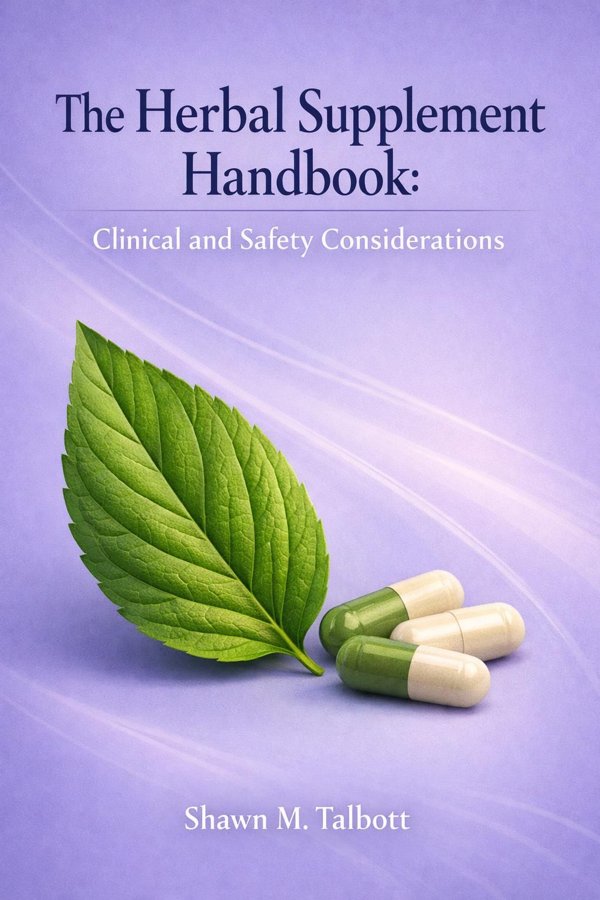
The Herbal Supplement Handbook: Clinical and Safety Considerations: Summary & Key Insights
 10 min9 chaptersAudio available
Key Takeaways from The Herbal Supplement Handbook: Clinical and Safety Considerations
The first mistake many people make with herbal supplements is assuming that “natural” means simple.
Anecdotes can inspire research, but they should never replace it.
The most dangerous phrase in supplement culture may be “it’s just an herb.
An herb does not need to be toxic on its own to become dangerous.
A clinical recommendation is only as trustworthy as the product behind it.
What Is The Herbal Supplement Handbook: Clinical and Safety Considerations About?
The Herbal Supplement Handbook: Clinical and Safety Considerations by Shawn M. Talbott is a health_med book spanning 5 pages. Herbal medicine occupies a curious space in modern healthcare: widely used by patients, deeply rooted in traditional practice, yet often misunderstood in clinical settings. In The Herbal Supplement Handbook: Clinical and Safety Considerations, Shawn M. Talbott tackles that gap head-on. Rather than treating herbs as either miracle cures or fringe remedies, he presents them as pharmacologically active substances that demand the same careful evaluation as conventional therapies. The book examines how herbal supplements work, what they are used for, how strong the evidence is, and where the real safety concerns lie. What makes this handbook especially valuable is its practical orientation. Talbott does not simply list herbs and their folklore; he frames them in terms healthcare professionals can use: mechanisms of action, dosage considerations, standardization, toxicity, interactions, and contraindications. That approach matters in a world where patients routinely combine supplements with prescription medications, often without mentioning it. As a nutritional biochemist with extensive expertise in integrative health and supplement science, Talbott brings both scientific rigor and clinical realism. The result is a guide that helps practitioners, students, and informed readers make better, safer decisions about botanical medicine.
This FizzRead summary covers all 9 key chapters of The Herbal Supplement Handbook: Clinical and Safety Considerations in approximately 10 minutes, distilling the most important ideas, arguments, and takeaways from Shawn M. Talbott's work. Also available as an audio summary and Key Quotes Podcast.
The Herbal Supplement Handbook: Clinical and Safety Considerations
Herbal medicine occupies a curious space in modern healthcare: widely used by patients, deeply rooted in traditional practice, yet often misunderstood in clinical settings. In The Herbal Supplement Handbook: Clinical and Safety Considerations, Shawn M. Talbott tackles that gap head-on. Rather than treating herbs as either miracle cures or fringe remedies, he presents them as pharmacologically active substances that demand the same careful evaluation as conventional therapies. The book examines how herbal supplements work, what they are used for, how strong the evidence is, and where the real safety concerns lie.
What makes this handbook especially valuable is its practical orientation. Talbott does not simply list herbs and their folklore; he frames them in terms healthcare professionals can use: mechanisms of action, dosage considerations, standardization, toxicity, interactions, and contraindications. That approach matters in a world where patients routinely combine supplements with prescription medications, often without mentioning it. As a nutritional biochemist with extensive expertise in integrative health and supplement science, Talbott brings both scientific rigor and clinical realism. The result is a guide that helps practitioners, students, and informed readers make better, safer decisions about botanical medicine.
Who Should Read The Herbal Supplement Handbook: Clinical and Safety Considerations?
This book is perfect for anyone interested in health_med and looking to gain actionable insights in a short read. Whether you're a student, professional, or lifelong learner, the key ideas from The Herbal Supplement Handbook: Clinical and Safety Considerations by Shawn M. Talbott will help you think differently.
- ✓Readers who enjoy health_med and want practical takeaways
- ✓Professionals looking to apply new ideas to their work and life
- ✓Anyone who wants the core insights of The Herbal Supplement Handbook: Clinical and Safety Considerations in just 10 minutes
Want the full summary?
Get instant access to this book summary and 100K+ more with Fizz Moment.
Get Free SummaryAvailable on App Store • Free to download
Key Chapters
The first mistake many people make with herbal supplements is assuming that “natural” means simple. In reality, medicinal plants are chemically complex systems containing dozens, sometimes hundreds, of biologically active compounds. Talbott begins with pharmacognosy because it gives readers the basic language needed to understand herbs scientifically rather than romantically. Pharmacognosy studies medicinal plants, their constituents, and their physiological effects, creating a bridge between traditional plant use and modern pharmacology.
This foundation matters because herbs do not act as vague wellness tonics. They influence enzymes, receptors, hormones, inflammatory pathways, neurotransmitters, and immune responses. For example, one plant may contain compounds that reduce inflammation, while another may alter liver metabolism and thereby change how drugs are processed. Without understanding these mechanisms, clinicians risk oversimplifying both benefit and harm.
Talbott encourages readers to think of a botanical product the way they would think of any therapeutic agent: What are the active constituents? How are they absorbed? What tissues do they affect? What dose produces an effect? This shift in mindset is essential for responsible use. Herbal therapy becomes more credible when it is evaluated through the lens of chemistry, physiology, and evidence rather than anecdote alone.
A practical application of this idea appears in patient counseling. If someone reports taking an herbal product for stress, sleep, digestion, or immunity, a practitioner should not stop at the plant’s common name. They should ask about the specific extract, dosage, concentration, and purpose. That information can reveal whether the supplement is likely to be effective, redundant, or risky.
Actionable takeaway: Treat every herb as a biologically active intervention, and evaluate it by its compounds, mechanism, and dose—not by its “natural” label.
Anecdotes can inspire research, but they should never replace it. One of Talbott’s central arguments is that herbal supplements deserve the same evidentiary scrutiny as any clinical intervention. Traditional use may suggest potential value, but only controlled research can clarify efficacy, ideal dosage, target populations, and realistic expectations. This is especially important because public perceptions of herbal medicine are often driven by marketing language, personal testimonials, or cultural assumptions rather than careful science.
Talbott emphasizes the hierarchy of evidence. Historical use and observational reports may offer clues, but randomized controlled trials, systematic reviews, and reproducible findings provide stronger grounds for clinical recommendations. He also reminds readers that evidence is rarely all-or-nothing. Some herbs are supported for specific applications but not for the broad claims often attached to them. Others show promising mechanisms in laboratory studies but weak or inconsistent outcomes in humans.
The practical lesson is not to dismiss herbs when evidence is incomplete, nor to embrace them uncritically when evidence is preliminary. Instead, clinicians should weigh quality, consistency, clinical relevance, and risk. For instance, if an herb has modest evidence for mild symptom relief and a strong safety profile, it may be worth considering. But if claims are sweeping and studies are poor, caution is warranted.
This evidence-based mindset also improves conversations with patients. Rather than saying a supplement “works” or “doesn’t work,” healthcare professionals can explain what the current evidence actually shows: whether benefits are likely, limited, conditional, or unproven. That nuance builds trust while protecting patients from exaggerated promises.
Actionable takeaway: Before recommending or using an herbal supplement, ask what level of evidence supports it, in what population, at what dose, and for which specific outcome.
The most dangerous phrase in supplement culture may be “it’s just an herb.” Talbott makes clear that safety is never an automatic property of natural products. It depends on how much is taken, in what form, for how long, by whom, and alongside what other therapies. A leaf tea, concentrated extract, alcohol tincture, and isolated phytochemical from the same plant may produce very different physiological effects. This is why dosage and preparation matter just as much as botanical identity.
Talbott pays close attention to toxicity, adverse reactions, and the importance of standardization. An herb that is safe in culinary amounts may cause problems when consumed in concentrated supplemental doses. Certain populations—pregnant individuals, children, older adults, people with liver or kidney disease, and patients taking multiple medications—require extra caution. Some adverse effects arise from the herb itself; others result from contamination, adulteration, or poor manufacturing practices.
Standardization helps reduce uncertainty by ensuring that a product contains a defined amount of a known active constituent. Without it, consumers may unknowingly switch between weak and potent products while assuming they are equivalent. This inconsistency undermines both safety and efficacy. A clinician trying to assess why a patient experienced side effects or no benefit at all cannot do much if the product itself is poorly characterized.
In practice, this means healthcare professionals must ask detailed questions: Which brand? Which extract ratio? How many milligrams? How often? For how long? Was the product independently tested? These are not minor technicalities; they are core safety questions.
Actionable takeaway: Never assess an herb in the abstract—evaluate the exact product, dosage, duration, and patient context before judging whether it is safe.
An herb does not need to be toxic on its own to become dangerous. Talbott devotes careful attention to herb-drug interactions because they represent one of the most underappreciated risks in integrative care. Many patients use supplements alongside prescription medications, over-the-counter products, and even other herbs, creating layered pharmacological effects that can increase toxicity, reduce efficacy, or alter metabolism in unpredictable ways.
Some interactions occur at the level of liver enzymes and transport proteins, changing how quickly drugs are absorbed, activated, or eliminated. Others occur because the herb and the medication share similar effects. An herb with anticoagulant activity may compound the action of a blood thinner. A sedating herb may intensify drowsiness when paired with sleep aids, antihistamines, or alcohol. A stimulating botanical may worsen anxiety, blood pressure, or cardiac symptoms in susceptible individuals.
Talbott’s broader message is that supplement histories must be taken as seriously as medication histories. Patients often fail to disclose herbal use because they assume it is irrelevant, harmless, or outside the clinician’s interest. That silence can create real danger. A practitioner who knows a patient is preparing for surgery, undergoing chemotherapy, managing hypertension, or taking antidepressants should actively ask about all botanicals and nutraceuticals.
This idea is highly practical in clinical workflows. Intake forms should include herbs, teas, powders, tinctures, and “natural” sleep, energy, weight-loss, and immune products. Pharmacists, nurses, and physicians can then identify combinations that deserve monitoring or discontinuation.
Actionable takeaway: Make herbal supplement review a routine part of every medication reconciliation, especially before surgery, during chronic disease management, and when multiple drugs are involved.
A clinical recommendation is only as trustworthy as the product behind it. Talbott emphasizes that one of the biggest challenges in herbal medicine is product variability. Two supplements with the same herb listed on the label may differ in species, plant part used, extraction method, concentration, purity, and active-compound content. As a result, a clinician may believe they are discussing one intervention when the patient is actually taking something materially different.
This variability has major consequences. It can explain why research findings are hard to replicate, why one patient benefits while another does not, and why adverse events sometimes appear unexpectedly. Contamination with heavy metals, microbes, pesticides, or undeclared pharmaceuticals further complicates the landscape. Misidentification of plant species or substitution with cheaper materials can make a product ineffective at best and harmful at worst.
Talbott argues that quality assurance should not be treated as a technical side issue; it is central to evidence-based use. If a study shows benefit from a specific standardized extract, clinicians should not assume any retail product will produce the same result. Likewise, patients should be taught to look for reputable manufacturers, third-party testing, and clear labeling regarding standardization and ingredient amounts.
This chapter is especially useful for professionals counseling patients overwhelmed by supplement choices. Rather than simply saying “buy a good brand,” Talbott’s framework encourages a more precise checklist: verify botanical identity, standardization, dosage, manufacturing quality, and independent certification where possible.
Actionable takeaway: Match clinical decisions to high-quality, well-characterized products, and avoid assuming that all versions of an herb are interchangeable.
The question is rarely whether an herb is “good” or “bad”; the real question is whether it is appropriate for a particular person at a particular time. Talbott’s handbook is strongest when it moves beyond abstract supplement facts and into clinical application. He shows that integrating herbal medicine responsibly requires individualized assessment—of symptoms, goals, medical history, medications, vulnerabilities, and patient preferences.
This personalized approach reflects how real healthcare works. An herb that may be reasonable for a healthy adult with mild stress-related symptoms might be inappropriate for a pregnant patient, a person with autoimmune disease, or someone on complex cardiovascular medication. Even when an herb has potential benefit, the decision must account for timing, monitoring, and therapeutic alternatives. In some cases, lifestyle intervention or conventional treatment may be safer or more effective. In others, a carefully chosen botanical may serve as a useful adjunct.
Talbott also recognizes the communication challenge. Patients often come to herbal medicine with strong beliefs shaped by culture, family practice, internet advice, or dissatisfaction with conventional care. Clinicians who dismiss those beliefs risk losing trust. The better strategy is collaborative evaluation: clarify the patient’s goal, assess the evidence, discuss risks honestly, and decide together whether the supplement fits into a broader treatment plan.
For example, a patient seeking support for mild digestive discomfort may benefit from a monitored trial of an appropriate herbal product, while still being evaluated for red-flag symptoms that require medical attention. Integration means neither rejection nor blind acceptance; it means informed, supervised use.
Actionable takeaway: Use herbal supplements as part of an individualized care plan, not as one-size-fits-all remedies, and pair every recommendation with follow-up and monitoring.
Traditional use is valuable, but it becomes clinically useful only when translated carefully into modern medical language. Talbott respects the long history of herbal medicine while insisting that historical use alone cannot answer contemporary questions about dosage, purity, contraindications, or outcomes in medically complex patients. The challenge is not to choose between tradition and science, but to connect them responsibly.
Many herbs entered modern awareness because generations observed effects on digestion, sleep, mood, inflammation, or infection-related symptoms. Those observations deserve attention because they often point researchers toward relevant physiological actions. However, traditional contexts differ from today’s reality. A plant used as a fresh decoction in one cultural setting may be sold as a concentrated capsule elsewhere. Traditional users may not have faced the same burden of polypharmacy, chronic disease, or industrial manufacturing that shapes current supplement use.
Talbott’s contribution is to show how these older knowledge systems can be interrogated and refined through modern methods. If a botanical has a long reputation for calming the nervous system, clinical science can ask which compounds are responsible, what dose is effective, what adverse effects are possible, and who should avoid it. That process preserves the insight of tradition while filtering out exaggeration and uncertainty.
For clinicians and educated readers, this balanced stance is especially helpful. It prevents two extremes: uncritical romanticism and dismissive skepticism. It allows herbal medicine to be taken seriously without being taken on faith.
Actionable takeaway: Respect traditional herbal knowledge as a starting point, but translate it into evidence, dose, safety, and patient-specific decision-making before applying it clinically.
Good outcomes depend not only on what patients take, but on what they tell their clinicians. Talbott repeatedly underscores a communication gap at the center of herbal supplement use: patients often self-prescribe botanicals without disclosing them, and healthcare professionals often fail to ask. This silence leaves both sides working with incomplete information and raises the risk of interactions, duplicated therapies, and missed diagnostic clues.
Why does this happen? Some patients assume herbs are too harmless to mention. Others worry their clinician will dismiss them. Meanwhile, busy providers may focus on prescription medications and acute symptoms, leaving supplements off the agenda. Talbott’s broader point is that safe integrative care requires a culture shift. Herbal use should be discussed openly, routinely, and without judgment.
In practical terms, that means asking specific, nonleading questions: Do you take any herbs, teas, tinctures, powders, natural sleep aids, energy boosters, immune products, or weight-loss supplements? Have you started anything new recently? Are you taking products recommended by friends, online sources, or alternative practitioners? These questions often reveal information that generic medication prompts miss.
Once supplements are identified, the conversation should include expected benefits, realistic time frames, product quality, warning signs, and follow-up plans. This turns supplement use from a hidden variable into a manageable part of care. It also empowers patients to see herbal products as interventions that deserve informed oversight rather than casual experimentation.
Actionable takeaway: Normalize detailed, nonjudgmental conversations about herbal use so patients feel comfortable disclosing everything they take.
One of the most constructive themes in Talbott’s handbook is that herbal medicine is not a closed body of ancient truths; it is an evolving field of investigation. New analytical tools, better clinical trial design, improved manufacturing standards, and growing interest in integrative care are changing how botanicals are studied and used. The future of herbal supplementation will depend less on broad claims and more on precision: precise identification, precise dosing, precise indications, and precise safety monitoring.
Talbott sees this evolution as an opportunity. As research improves, clinicians will be better able to distinguish which herbs have meaningful therapeutic roles, which are overhyped, and which require tighter restrictions. Advances in phytochemistry and metabolomics may help clarify why certain extracts work better than others. Better post-market surveillance may improve detection of adverse events and interactions. Stronger regulation and quality standards could also narrow the gap between clinical evidence and retail reality.
At the same time, the book implies a note of humility. Not every question has been answered, and not every traditional claim will survive scientific testing. Responsible practice therefore requires intellectual flexibility: willingness to use promising evidence where appropriate, but also willingness to revise beliefs when stronger data emerge.
For students, practitioners, and informed consumers, this perspective is liberating. It means herbal medicine can be approached neither as dogma nor as taboo, but as a field worthy of serious, ongoing evaluation.
Actionable takeaway: Stay current with emerging herbal research and be prepared to update recommendations as evidence, quality standards, and safety data continue to develop.
All Chapters in The Herbal Supplement Handbook: Clinical and Safety Considerations
About the Author
Shawn M. Talbott, Ph.D., is an American nutritional biochemist, researcher, and author whose work focuses on integrative health, dietary supplements, metabolism, stress physiology, and performance nutrition. He is known for translating complex biochemical and clinical concepts into practical guidance for both professionals and general readers. Across his writing and research, Talbott has explored how nutrition, botanical compounds, and lifestyle factors influence energy, mood, resilience, and long-term health outcomes. His expertise makes him a credible voice in the supplement field, particularly when evaluating claims through the lens of mechanism, evidence, and safety. In The Herbal Supplement Handbook, Talbott brings that scientific rigor to the world of botanical medicine, helping readers understand herbal supplements not as vague natural remedies, but as active therapeutic substances that require careful clinical consideration.
Get This Summary in Your Preferred Format
Read or listen to the The Herbal Supplement Handbook: Clinical and Safety Considerations summary by Shawn M. Talbott anytime, anywhere. FizzRead offers multiple formats so you can learn on your terms — all free.
Available formats: App · Audio · PDF · EPUB — All included free with FizzRead
Download The Herbal Supplement Handbook: Clinical and Safety Considerations PDF and EPUB Summary
Key Quotes from The Herbal Supplement Handbook: Clinical and Safety Considerations
“The first mistake many people make with herbal supplements is assuming that “natural” means simple.”
“Anecdotes can inspire research, but they should never replace it.”
“The most dangerous phrase in supplement culture may be “it’s just an herb.”
“An herb does not need to be toxic on its own to become dangerous.”
“A clinical recommendation is only as trustworthy as the product behind it.”
Frequently Asked Questions about The Herbal Supplement Handbook: Clinical and Safety Considerations
The Herbal Supplement Handbook: Clinical and Safety Considerations by Shawn M. Talbott is a health_med book that explores key ideas across 9 chapters. Herbal medicine occupies a curious space in modern healthcare: widely used by patients, deeply rooted in traditional practice, yet often misunderstood in clinical settings. In The Herbal Supplement Handbook: Clinical and Safety Considerations, Shawn M. Talbott tackles that gap head-on. Rather than treating herbs as either miracle cures or fringe remedies, he presents them as pharmacologically active substances that demand the same careful evaluation as conventional therapies. The book examines how herbal supplements work, what they are used for, how strong the evidence is, and where the real safety concerns lie. What makes this handbook especially valuable is its practical orientation. Talbott does not simply list herbs and their folklore; he frames them in terms healthcare professionals can use: mechanisms of action, dosage considerations, standardization, toxicity, interactions, and contraindications. That approach matters in a world where patients routinely combine supplements with prescription medications, often without mentioning it. As a nutritional biochemist with extensive expertise in integrative health and supplement science, Talbott brings both scientific rigor and clinical realism. The result is a guide that helps practitioners, students, and informed readers make better, safer decisions about botanical medicine.
You Might Also Like

On Immunity
Eula Biss
10 min
The Three-Body Problem
Liu Cixin
10 min
Community Health Volunteer Toolkit: Training and Practical Activities
World Health Organization
10 min
Healing Back Pain: The Mind-Body Connection
John E. Sarno
10 min
Health Literacy for All: Practical Guides to Communicate Health Information (Compilations)
World Health Organization
10 min
The Complete Guide to Sports Supplements: An Evidence-Based Review
Anita Bean
10 minBrowse by Category
Ready to read The Herbal Supplement Handbook: Clinical and Safety Considerations?
Get the full summary and 100K+ more books with Fizz Moment.