
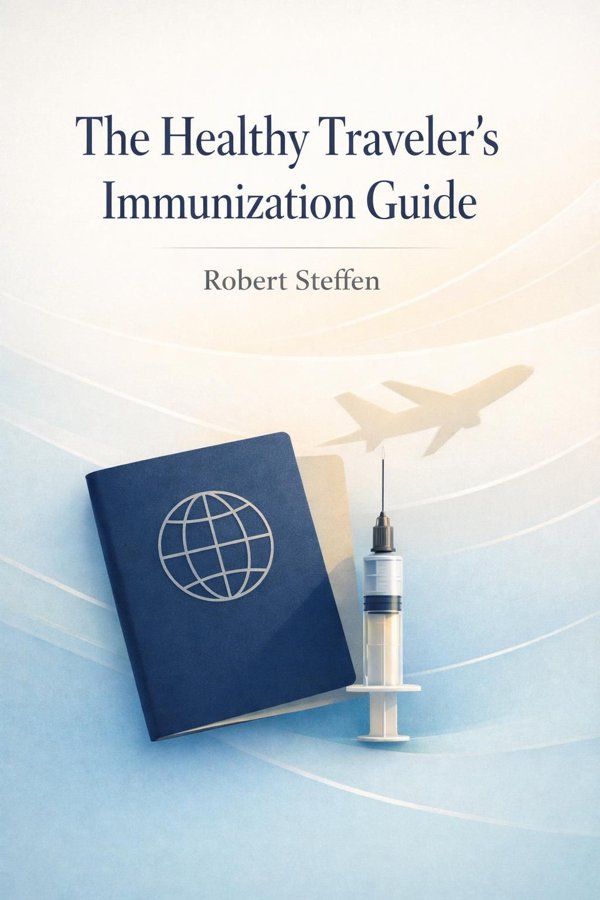
The Healthy Traveler’s Immunization Guide: Practical Vaccination and Travel Health Resources (Compilations): Summary & Key Insights
 10 min9 chaptersAudio available
Key Takeaways from The Healthy Traveler’s Immunization Guide: Practical Vaccination and Travel Health Resources (Compilations)
The moment you cross a border, your health risks can change faster than your itinerary.
Good travel medicine begins not with a needle, but with a conversation.
Travel medicine is not only about exotic diseases; often, the biggest protection comes from staying current on ordinary vaccines.
No destination is medically neutral, and no two regions present the same pattern of hazards.
Mosquitoes are small, but in travel medicine they can shape the entire risk equation.
What Is The Healthy Traveler’s Immunization Guide: Practical Vaccination and Travel Health Resources (Compilations) About?
The Healthy Traveler’s Immunization Guide: Practical Vaccination and Travel Health Resources (Compilations) by Robert Steffen is a health_med book spanning 9 pages. Travel exposes people to more than new cultures, foods, and landscapes; it also brings them into contact with unfamiliar disease environments that may demand very different health precautions than those at home. In The Healthy Traveler’s Immunization Guide, Robert Steffen offers a concise but highly practical framework for understanding how vaccines, preventive planning, and informed decision-making protect travelers before, during, and after international journeys. The book explains which immunizations matter, how disease risks vary by destination, and why preparation must be tailored to the individual traveler rather than treated as a one-size-fits-all checklist. What makes this guide especially valuable is its foundation in evidence-based travel medicine. Steffen is one of the field’s most respected epidemiologists, known for his work in infectious disease prevention, vaccination policy, and global travel health. His expertise gives the book both scientific credibility and practical relevance. For clinicians, it serves as a rapid reference; for travelers, it offers a clear roadmap to safer movement across borders. In a world of increasing mobility and evolving outbreaks, this guide makes a powerful case that good travel begins with good prevention.
This FizzRead summary covers all 9 key chapters of The Healthy Traveler’s Immunization Guide: Practical Vaccination and Travel Health Resources (Compilations) in approximately 10 minutes, distilling the most important ideas, arguments, and takeaways from Robert Steffen's work. Also available as an audio summary and Key Quotes Podcast.
The Healthy Traveler’s Immunization Guide: Practical Vaccination and Travel Health Resources (Compilations)
Travel exposes people to more than new cultures, foods, and landscapes; it also brings them into contact with unfamiliar disease environments that may demand very different health precautions than those at home. In The Healthy Traveler’s Immunization Guide, Robert Steffen offers a concise but highly practical framework for understanding how vaccines, preventive planning, and informed decision-making protect travelers before, during, and after international journeys. The book explains which immunizations matter, how disease risks vary by destination, and why preparation must be tailored to the individual traveler rather than treated as a one-size-fits-all checklist. What makes this guide especially valuable is its foundation in evidence-based travel medicine. Steffen is one of the field’s most respected epidemiologists, known for his work in infectious disease prevention, vaccination policy, and global travel health. His expertise gives the book both scientific credibility and practical relevance. For clinicians, it serves as a rapid reference; for travelers, it offers a clear roadmap to safer movement across borders. In a world of increasing mobility and evolving outbreaks, this guide makes a powerful case that good travel begins with good prevention.
Who Should Read The Healthy Traveler’s Immunization Guide: Practical Vaccination and Travel Health Resources (Compilations)?
This book is perfect for anyone interested in health_med and looking to gain actionable insights in a short read. Whether you're a student, professional, or lifelong learner, the key ideas from The Healthy Traveler’s Immunization Guide: Practical Vaccination and Travel Health Resources (Compilations) by Robert Steffen will help you think differently.
- ✓Readers who enjoy health_med and want practical takeaways
- ✓Professionals looking to apply new ideas to their work and life
- ✓Anyone who wants the core insights of The Healthy Traveler’s Immunization Guide: Practical Vaccination and Travel Health Resources (Compilations) in just 10 minutes
Want the full summary?
Get instant access to this book summary and 100K+ more with Fizz Moment.
Get Free SummaryAvailable on App Store • Free to download
Key Chapters
The moment you cross a border, your health risks can change faster than your itinerary. One of the guide’s foundational ideas is that infectious disease exposure is shaped by geography, season, infrastructure, sanitation, local vaccination coverage, and the traveler’s own behavior. A short business trip to a major city may carry very different risks than a backpacking journey through rural areas, even within the same country. Steffen emphasizes that global infectious threats are dynamic, not fixed. Outbreaks emerge, vaccination requirements change, and population movement continually reshapes risk patterns.
This matters because many travelers underestimate threats they cannot see. Diseases such as hepatitis A, typhoid, yellow fever, meningococcal infection, or Japanese encephalitis may be uncommon at home yet relevant abroad. Even common illnesses become more significant when medical access is limited. The guide encourages readers to think epidemiologically: Where am I going? What diseases circulate there? How long will I stay? What activities will I engage in? Will I be in urban hotels, refugee settings, cruise ports, rainforests, or high-altitude regions?
A useful example is the difference between a tourist visiting resort areas and a volunteer working in remote clinics. The first may need routine vaccine review and food-and-water precautions; the second may need hepatitis B, rabies consideration, enhanced malaria protection, and contingency planning for limited medical care. The risk is not defined by the passport alone but by the interaction between traveler and environment.
Actionable takeaway: Before planning vaccines, define the actual exposure profile of the trip—destination, duration, season, accommodations, activities, and access to care—because risk assessment is the foundation of smart prevention.
Good travel medicine begins not with a needle, but with a conversation. Steffen stresses that the pre-travel consultation is the core of effective prevention because it turns general recommendations into a personalized health plan. Vaccination decisions should be based not only on destination but also on age, pregnancy status, chronic disease, immune function, previous vaccines, allergies, medications, and purpose of travel.
This individualized approach prevents two common mistakes: under-protection and over-simplification. A healthy young tourist going abroad for one week may need a different strategy than an older traveler with diabetes, a pregnant woman, or a child visiting friends and relatives in an endemic region. Travelers visiting family often stay longer, eat local food, and live in community settings rather than protected tourist environments, which can increase exposure. Someone with immune suppression may not be eligible for certain live vaccines and may need alternative precautions.
The guide also highlights timing. Many vaccines require multiple doses or need time to become effective. Last-minute travelers can still benefit from accelerated schedules, selective protection, and practical counseling, but they lose options when they delay preparation. A pre-travel visit should also address food safety, insect avoidance, altitude, insurance, medical kits, and what to do if symptoms arise during or after the trip.
In practical terms, this means using travel medicine as a planning discipline, not an afterthought. A family heading to sub-Saharan Africa, for instance, may need routine vaccine updates, yellow fever documentation, malaria prophylaxis, and strategies for children’s dehydration and mosquito protection. A cruise passenger may need less intensive intervention but still benefit from respiratory illness and gastrointestinal prevention counseling.
Actionable takeaway: Schedule a pre-travel health consultation at least 4-6 weeks before departure so vaccines, medications, and personalized advice can be matched to your specific medical profile and travel plans.
Travel medicine is not only about exotic diseases; often, the biggest protection comes from staying current on ordinary vaccines. One of the guide’s most important corrections is that travelers frequently focus on rare tropical infections while neglecting routine immunizations such as measles, tetanus, diphtheria, pertussis, polio, influenza, and COVID-era respiratory awareness. Yet outbreaks of common vaccine-preventable diseases often spread quickly through airports, pilgrimage routes, crowded transport systems, and international gatherings.
Steffen explains that routine and travel-specific vaccines work together. A traveler may need destination-based protection such as yellow fever, typhoid, hepatitis A, rabies, cholera, or Japanese encephalitis, but these should not distract from baseline immunization status. In fact, incomplete routine vaccination can create major vulnerabilities, particularly in places where disease control differs from that of the traveler’s home country.
For example, an adult who has not received a tetanus booster may be at risk after a seemingly minor injury in a remote area. A student traveling to a region with measles transmission may become both infected and a source of spread on return. A healthcare volunteer may require hepatitis B because of potential blood exposure. Some vaccines are recommended for self-protection, while others may be required for entry under international health regulations.
The guide’s practical strength lies in helping readers sort these categories: routine updates, recommended travel vaccines, and country-specific entry requirements. That framework reduces confusion and supports informed choices. It also reminds clinicians to verify records rather than rely on memory, since vaccine histories are often incomplete or mistaken.
Actionable takeaway: Review routine immunizations first, then add destination-specific vaccines based on risk, exposure, and legal requirements rather than treating travel health as a separate category from general preventive care.
No destination is medically neutral, and no two regions present the same pattern of hazards. Steffen emphasizes that travel health advice must be geographically precise. Broad labels like “Asia,” “Africa,” or “South America” are too crude to guide prevention because disease exposure varies dramatically by country, province, altitude, climate, urbanization, and season. A traveler in a modern business district may face very different risks from one trekking through forested border regions a few hundred miles away.
The book encourages travelers and clinicians to move from generic advice to location-specific thinking. Yellow fever risk may be relevant in parts of tropical Africa and South America but absent elsewhere. Meningococcal disease is more concerning in certain African belt countries, especially during dry season. Japanese encephalitis risk depends on rural exposure, agricultural settings, and longer stays in parts of Asia. Tick-borne or waterborne threats may dominate in regions where mosquito-borne illness receives most of the attention.
Localized prevention includes more than vaccination. It also involves food and water discipline, vector avoidance, sun and heat protection, altitude planning, and awareness of healthcare infrastructure. A traveler to a high-end hotel in Singapore needs a different plan than a field researcher in rural Laos. Likewise, a safari trip, humanitarian deployment, religious pilgrimage, and cruise vacation all produce distinct risk profiles even if they occur on the same continent.
What makes this idea powerful is that it shifts travel medicine from memorizing diseases to understanding context. Prevention works best when travelers know not just what could happen, but where and under what circumstances it becomes more likely.
Actionable takeaway: Build your health plan around the exact places you will visit—not just the country name—using up-to-date regional disease information and itinerary-specific advice.
Mosquitoes are small, but in travel medicine they can shape the entire risk equation. Steffen treats malaria as a central concern because it remains one of the most serious preventable infections facing international travelers to endemic areas. The key message is that malaria prevention cannot rely on a single tactic. Effective protection requires a layered strategy that combines risk assessment, chemoprophylaxis when indicated, and rigorous bite avoidance.
The guide explains that malaria risk depends on destination, elevation, season, type of travel, and local resistance patterns. Not every traveler to a tropical country needs the same drug, and not every area within an endemic nation carries equal danger. Proper prophylaxis selection must consider medical history, side effects, pregnancy, duration of stay, and likely adherence. A medication that works well for a short organized trip may be less suitable for a long backpacking journey if daily compliance becomes difficult.
Steffen also underscores that pills alone are not enough. Insect repellents containing effective active ingredients, long sleeves, treated bed nets, screened accommodations, and awareness of peak biting times all reduce exposure. This is especially important because mosquitoes can transmit other diseases as well, including dengue, chikungunya, and Zika, for which vaccines or preventive medications may be limited or unavailable.
A practical example: a traveler on safari in East Africa may need both a prescribed antimalarial and strict evening mosquito precautions, while someone staying only in a low-risk urban area might receive a different recommendation. The point is not fear, but disciplined prevention based on actual epidemiology.
Actionable takeaway: If traveling to a malaria-risk area, ask not only whether prophylaxis is needed, but which drug fits your itinerary and health status—and pair it with serious mosquito bite prevention every day of the trip.
The same destination can be safe for one traveler and medically complex for another. A major contribution of the guide is its recognition that travel health recommendations must be adapted for special populations, including children, pregnant travelers, older adults, immunocompromised individuals, and people with chronic illness. Standard vaccine lists may be insufficient, inappropriate, or even contraindicated depending on the traveler’s condition.
Children, for example, may need accelerated vaccine schedules, stricter dehydration prevention, and more careful insect protection. Pregnant travelers require heightened attention to foodborne infections, malaria, and vaccines that may not be suitable during pregnancy. Older adults may face greater risk from cardiovascular strain, heat, long-haul immobility, or severe outcomes from infections. Immunocompromised travelers present another layer of complexity because live vaccines may be restricted, immune responses may be weaker, and opportunistic infection risk may be higher.
Travelers with diabetes, asthma, seizure disorders, kidney disease, or psychiatric conditions also need practical planning beyond immunization. Medication transport, refrigeration, time-zone adjustments, medical documentation, and access to emergency care become part of the preventive strategy. A dialysis patient, for instance, must think about treatment continuity abroad. Someone with severe allergies may need translated emergency instructions and backup medication in multiple bags.
Steffen’s broader point is that travel medicine should protect functionality as well as prevent infection. A safe trip depends on preserving the traveler’s ability to manage existing health needs in unfamiliar settings. This often requires closer coordination between primary care, specialists, and travel medicine providers.
Actionable takeaway: If you fall into a higher-risk medical group, do not rely on standard travel advice—seek a tailored plan that addresses both vaccine suitability and the management of your underlying health needs abroad.
The illnesses most likely to ruin a trip are not always the rarest ones. Steffen reminds readers that while severe tropical infections deserve serious attention, many travel problems arise from far more common conditions: traveler’s diarrhea, respiratory infections, skin issues, dehydration, motion sickness, jet lag, minor injuries, and foodborne illness. These may not sound dramatic, but they account for a large share of travel-related suffering and logistical disruption.
The guide therefore frames prevention broadly. Safe food and water habits, hand hygiene, oral rehydration knowledge, sensible self-medication, and awareness of red-flag symptoms are just as important as receiving vaccines. Travelers should understand when diarrhea can be managed conservatively, when antibiotics may be appropriate, and when fever, blood in stool, severe dehydration, or persistent vomiting require medical evaluation. Similarly, respiratory symptoms after crowded flights or cruises may need different responses depending on severity and context.
Practical preparation includes packing a health kit with oral rehydration salts, basic pain relief, any prescribed standby medication, dressings, insect repellent, sunscreen, and copies of prescriptions. A trekker in Peru may need altitude medication and blister care; a family visiting relatives may need pediatric fever tools and hydration supplies; a business traveler may prioritize hand hygiene and rapid symptom management to maintain function.
This chapter’s underlying insight is that successful travel health depends on everyday competence, not only specialized knowledge. Many problems become serious because travelers are unprepared for basic self-care or delay seeking help when warning signs appear.
Actionable takeaway: Prepare for the most likely travel illnesses—not just the most frightening ones—by carrying a simple medical kit and knowing the warning symptoms that require professional care.
A trip does not end medically when the flight lands. One of the guide’s most important messages is that post-travel vigilance is essential because some infections emerge only after return. Fever, persistent diarrhea, rash, jaundice, respiratory symptoms, unusual fatigue, or skin lesions can reflect illnesses acquired abroad, even if the traveler felt well during the trip. Delayed recognition can worsen outcomes and, in some cases, create public health risks.
Steffen encourages both travelers and clinicians to take travel history seriously. Diagnosis after return depends heavily on where the traveler went, how long they stayed, what exposures occurred, which vaccines were received, and whether malaria prophylaxis was taken correctly. A fever after visiting a malaria-endemic area, for example, demands urgent assessment. Likewise, prolonged gastrointestinal symptoms may require evaluation for parasitic infection, not just routine self-treatment.
The guide also broadens the concept of follow-up beyond acute illness. Long-term travelers, aid workers, and people with high-risk exposures may need screening for conditions such as tuberculosis, sexually transmitted infections, or hepatitis depending on circumstances. Those who received partial vaccine series before travel may need to complete them afterward. Post-travel care is therefore both reactive and preventive.
A practical example is the traveler who dismisses fever as “just jet lag” after returning from West Africa. Without prompt evaluation, a treatable infection may become dangerous. Early disclosure of travel history can dramatically improve care, yet many patients fail to mention it unless asked.
Actionable takeaway: If you become ill after international travel—especially with fever—tell a healthcare provider exactly where you went and seek evaluation promptly rather than assuming symptoms are unrelated or temporary.
In travel health, bad information can be as dangerous as no information. Steffen highlights the practical value of trustworthy resources for both travelers and clinicians, arguing that evidence-based guidance is indispensable in a field where recommendations can change rapidly. Disease outbreaks, entry requirements, vaccine availability, and regional advisories are not static, so decision-making must be supported by current, credible sources rather than hearsay, outdated websites, or anecdotal travel forums.
The guide functions partly as a compilation of tools: destination-specific references, vaccination frameworks, preventive checklists, and clinician-oriented decision support. This is especially important because travelers are often overwhelmed by fragmented advice. One website stresses yellow fever, another warns about dengue, another lists mandatory certificates, and none explains how to prioritize. Steffen’s approach helps readers separate core essentials from optional precautions.
For clinicians, reliable tools improve consistency and reduce omissions. For travelers, they create confidence and practical structure. A well-prepared traveler might use official country health notices, vaccine records, emergency contact lists, insurance documents, and a written medication plan. A clinician might rely on updated international guidance to confirm yellow fever zones, meningococcal recommendations, or malaria prophylaxis options.
The broader lesson is that travel medicine is not a one-time reading exercise. It is a process of informed updating. Because conditions shift, especially during outbreaks or policy changes, preparation should include a final review close to departure and awareness of where to look if circumstances change abroad.
Actionable takeaway: Base your travel health decisions on current, authoritative medical and public health resources, and recheck destination-specific guidance shortly before departure instead of relying on old advice or informal online opinions.
All Chapters in The Healthy Traveler’s Immunization Guide: Practical Vaccination and Travel Health Resources (Compilations)
About the Author
Robert Steffen is a Swiss epidemiologist, professor, and one of the most respected figures in the field of travel medicine. He is known for his extensive work on infectious disease prevention, vaccination policy, and the health risks associated with international travel. Over the course of his career, Steffen has contributed significantly to research on how global mobility affects the spread of disease and how travelers can be better protected through evidence-based preventive strategies. His expertise spans epidemiology, public health guidance, and practical travel health counseling, making him a leading authority for both clinicians and policy makers. In The Healthy Traveler’s Immunization Guide, he brings that scientific credibility to a concise, accessible resource designed to help travelers and healthcare professionals make safer, better-informed decisions.
Get This Summary in Your Preferred Format
Read or listen to the The Healthy Traveler’s Immunization Guide: Practical Vaccination and Travel Health Resources (Compilations) summary by Robert Steffen anytime, anywhere. FizzRead offers multiple formats so you can learn on your terms — all free.
Available formats: App · Audio · PDF · EPUB — All included free with FizzRead
Download The Healthy Traveler’s Immunization Guide: Practical Vaccination and Travel Health Resources (Compilations) PDF and EPUB Summary
Key Quotes from The Healthy Traveler’s Immunization Guide: Practical Vaccination and Travel Health Resources (Compilations)
“The moment you cross a border, your health risks can change faster than your itinerary.”
“Good travel medicine begins not with a needle, but with a conversation.”
“Travel medicine is not only about exotic diseases; often, the biggest protection comes from staying current on ordinary vaccines.”
“No destination is medically neutral, and no two regions present the same pattern of hazards.”
“Mosquitoes are small, but in travel medicine they can shape the entire risk equation.”
Frequently Asked Questions about The Healthy Traveler’s Immunization Guide: Practical Vaccination and Travel Health Resources (Compilations)
The Healthy Traveler’s Immunization Guide: Practical Vaccination and Travel Health Resources (Compilations) by Robert Steffen is a health_med book that explores key ideas across 9 chapters. Travel exposes people to more than new cultures, foods, and landscapes; it also brings them into contact with unfamiliar disease environments that may demand very different health precautions than those at home. In The Healthy Traveler’s Immunization Guide, Robert Steffen offers a concise but highly practical framework for understanding how vaccines, preventive planning, and informed decision-making protect travelers before, during, and after international journeys. The book explains which immunizations matter, how disease risks vary by destination, and why preparation must be tailored to the individual traveler rather than treated as a one-size-fits-all checklist. What makes this guide especially valuable is its foundation in evidence-based travel medicine. Steffen is one of the field’s most respected epidemiologists, known for his work in infectious disease prevention, vaccination policy, and global travel health. His expertise gives the book both scientific credibility and practical relevance. For clinicians, it serves as a rapid reference; for travelers, it offers a clear roadmap to safer movement across borders. In a world of increasing mobility and evolving outbreaks, this guide makes a powerful case that good travel begins with good prevention.
You Might Also Like

On Immunity
Eula Biss
10 min
The Three-Body Problem
Liu Cixin
10 min
Community Health Volunteer Toolkit: Training and Practical Activities
World Health Organization
10 min
Healing Back Pain: The Mind-Body Connection
John E. Sarno
10 min
Health Literacy for All: Practical Guides to Communicate Health Information (Compilations)
World Health Organization
10 min
The Complete Guide to Sports Supplements: An Evidence-Based Review
Anita Bean
10 minBrowse by Category
Ready to read The Healthy Traveler’s Immunization Guide: Practical Vaccination and Travel Health Resources (Compilations)?
Get the full summary and 100K+ more books with Fizz Moment.