
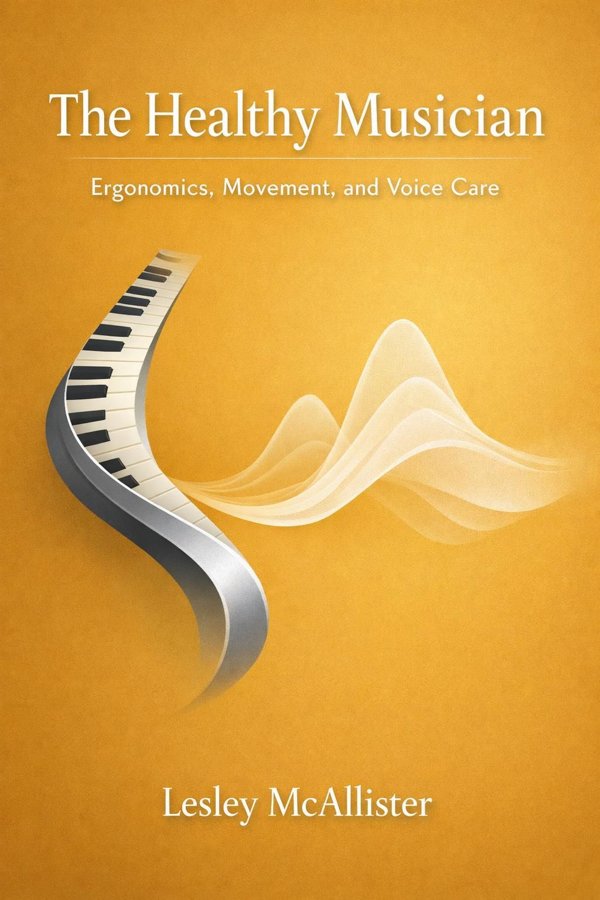
The Healthy Musician: Ergonomics, Movement, and Voice Care: Summary & Key Insights
 10 min9 chaptersAudio available
Key Takeaways from The Healthy Musician: Ergonomics, Movement, and Voice Care
Many musicians assume discomfort is simply part of serious training, but McAllister challenges that belief at its core.
Every musical phrase is also a physical event.
Injury often seems sudden, but McAllister makes clear that most performance-related problems build gradually through repetition, overload, and ignored warning signs.
More practice is not always better practice.
Stage anxiety is often discussed as a mental issue, but McAllister shows that it is equally physical.
What Is The Healthy Musician: Ergonomics, Movement, and Voice Care About?
The Healthy Musician: Ergonomics, Movement, and Voice Care by Lesley McAllister is a music_film book spanning 7 pages. Music may sound effortless at its highest level, but great performance rests on a deeply physical craft. In The Healthy Musician: Ergonomics, Movement, and Voice Care, Lesley McAllister argues that artistry and health are not separate concerns: they are inseparable. Whether a musician is playing piano, violin, winds, percussion, or singing, every phrase depends on posture, coordination, breathing, recovery, and the ability to work with the body rather than against it. This book offers a practical, research-informed guide to preventing injury, improving efficiency, and building habits that support a long creative life. What makes McAllister’s approach especially valuable is its balance of science and musical reality. She does not reduce performance to anatomy charts or generic wellness advice. Instead, she connects ergonomics, movement science, vocal care, psychology, and pedagogy directly to rehearsal rooms, practice studios, and performance settings. As a pianist, educator, and scholar of musician wellness, McAllister brings both professional credibility and day-to-day relevance. The result is a thoughtful manual for musicians who want not only to perform better today, but to remain expressive, resilient, and healthy for years to come.
This FizzRead summary covers all 9 key chapters of The Healthy Musician: Ergonomics, Movement, and Voice Care in approximately 10 minutes, distilling the most important ideas, arguments, and takeaways from Lesley McAllister's work. Also available as an audio summary and Key Quotes Podcast.
The Healthy Musician: Ergonomics, Movement, and Voice Care
Music may sound effortless at its highest level, but great performance rests on a deeply physical craft. In The Healthy Musician: Ergonomics, Movement, and Voice Care, Lesley McAllister argues that artistry and health are not separate concerns: they are inseparable. Whether a musician is playing piano, violin, winds, percussion, or singing, every phrase depends on posture, coordination, breathing, recovery, and the ability to work with the body rather than against it. This book offers a practical, research-informed guide to preventing injury, improving efficiency, and building habits that support a long creative life.
What makes McAllister’s approach especially valuable is its balance of science and musical reality. She does not reduce performance to anatomy charts or generic wellness advice. Instead, she connects ergonomics, movement science, vocal care, psychology, and pedagogy directly to rehearsal rooms, practice studios, and performance settings. As a pianist, educator, and scholar of musician wellness, McAllister brings both professional credibility and day-to-day relevance. The result is a thoughtful manual for musicians who want not only to perform better today, but to remain expressive, resilient, and healthy for years to come.
Who Should Read The Healthy Musician: Ergonomics, Movement, and Voice Care?
This book is perfect for anyone interested in music_film and looking to gain actionable insights in a short read. Whether you're a student, professional, or lifelong learner, the key ideas from The Healthy Musician: Ergonomics, Movement, and Voice Care by Lesley McAllister will help you think differently.
- ✓Readers who enjoy music_film and want practical takeaways
- ✓Professionals looking to apply new ideas to their work and life
- ✓Anyone who wants the core insights of The Healthy Musician: Ergonomics, Movement, and Voice Care in just 10 minutes
Want the full summary?
Get instant access to this book summary and 100K+ more with Fizz Moment.
Get Free SummaryAvailable on App Store • Free to download
Key Chapters
Many musicians assume discomfort is simply part of serious training, but McAllister challenges that belief at its core. Ergonomics in music is not about gadgets or rigid posture rules; it is about creating a productive fit between the human body, the instrument, and the performance environment. A chair that is too low, a music stand positioned poorly, a keyboard bench set incorrectly, or an instrument strap that forces tension can gradually turn ordinary practice into chronic strain.
McAllister explains that ergonomic awareness begins by observing how the body organizes itself during performance. Are the shoulders lifted unnecessarily? Is the neck craning toward the score? Are the wrists collapsing or overextending? These small patterns often seem harmless in the moment, yet repeated for hours, they can limit freedom and increase injury risk. Good ergonomics means adjusting the environment so natural alignment and efficient movement are more likely.
The concept applies differently across instruments. Pianists may need to reevaluate bench height and distance from the keyboard. Violinists may benefit from customized chin rests or shoulder rests. Wind players may need to monitor how the stand height affects the spine and head position. Singers must also consider how body alignment supports breath rather than compressing it.
McAllister’s larger point is that technique improves when the setup supports the body. A musician who feels balanced and unconstricted can focus on sound, phrasing, and expression instead of compensating for physical inefficiency. Actionable takeaway: before changing your technique, first assess your setup—seat height, stand position, instrument support, and line of sight—and make one adjustment that allows easier, freer movement.
Every musical phrase is also a physical event. McAllister emphasizes that movement is not a secondary concern added onto music-making; it is one of the mechanisms through which musical intention becomes audible. Tone, articulation, rhythm, phrasing, and dynamic control all depend on coordinated motion. When movement is rigid, excessive, or poorly timed, sound quality often suffers along with physical comfort.
Drawing from movement science, she shows that efficient performance relies on coordinated chains rather than isolated effort. A pianist does not create power from the fingers alone. A singer does not support tone through the throat. A string player does not bow only with the hand. Instead, expressive action depends on relationships among joints, breath, weight transfer, balance, and timing. Kinesthetic awareness—the ability to sense what the body is doing—becomes essential. Without it, musicians may repeat counterproductive habits because they cannot accurately detect tension or misuse.
Practical application involves slowing down and observing movement as carefully as sound. A flutist might notice unnecessary jaw tension during fast passages. A percussionist may find that over-gripping mallets reduces rebound. A vocalist could discover that lifting the chest excessively interferes with flexible breathing. These observations allow the musician to replace force with coordination.
McAllister encourages curiosity instead of self-criticism. The goal is not to become mechanical or overcontrolled, but to understand which movements support musical goals and which interfere. Better movement leads not only to comfort, but to greater expressive range and consistency under pressure. Actionable takeaway: choose one recurring technical challenge and study the movement behind it at a slow tempo, asking what can be released, coordinated, or redistributed more efficiently.
Injury often seems sudden, but McAllister makes clear that most performance-related problems build gradually through repetition, overload, and ignored warning signs. Pain, numbness, burning, fatigue, hoarseness, stiffness, and loss of control are not badges of dedication. They are information. Musicians frequently normalize these symptoms because they fear losing momentum, disappointing teachers, or appearing uncommitted. McAllister argues that this culture of silence is one of the biggest threats to artistic longevity.
She outlines common contributors to injury: practicing too long without breaks, increasing repertoire demands too quickly, maintaining awkward postures, using excessive muscular force, and returning to intense playing after inadequate recovery. Stress also plays a role, often causing musicians to grip more, breathe less freely, and ignore subtle signals from the body. Over time, compensations can become ingrained and harder to reverse.
Prevention, then, must be proactive rather than reactive. Musicians need systems for monitoring load, not merely techniques for enduring discomfort. This includes warming up progressively, balancing repetitive tasks with contrasting activities, varying repertoire demands, and seeking expert help early. Teachers and institutions also share responsibility by creating environments where health concerns can be discussed without stigma.
McAllister does not present prevention as fear-based caution. Instead, she frames it as intelligent stewardship of one’s artistic instrument. The healthiest musicians are not necessarily those who work the least, but those who manage effort wisely, respond early, and understand that sustainable technique is part of excellence. Actionable takeaway: if you notice recurring pain or vocal fatigue, stop treating it as normal—track when it appears, reduce the triggering load, and consult a qualified health or pedagogy professional before it escalates.
More practice is not always better practice. One of McAllister’s most useful contributions is her insistence that progress depends on the rhythm between effort and recovery. Musicians often think in terms of hours logged, but the body learns and adapts through cycles of concentration, rest, repetition, and integration. Practice that ignores recovery can produce diminishing returns, technical breakdown, mental fatigue, and elevated injury risk.
McAllister encourages musicians to treat scheduling as part of technique. A well-designed practice session includes a purposeful warm-up, focused work on high-priority material, brief breaks before fatigue becomes severe, and a realistic endpoint. Long, unstructured sessions often create the illusion of commitment while promoting sloppy repetition. By contrast, shorter blocks with clear goals can improve retention and protect physical resources.
The principle extends beyond daily sessions. Weekly planning matters too. A singer preparing multiple rehearsals may need lighter technical work on heavy vocal days. An instrumentalist facing juries or auditions should avoid cramming difficult passages at maximum intensity for days on end. Sleep, hydration, physical activity, and non-musical recovery practices also influence readiness and resilience.
McAllister’s perspective is especially valuable for ambitious students, who often believe exhaustion proves seriousness. In reality, consistent progress comes from respecting biological limits while training them gradually. Recovery is not laziness; it is the condition that allows adaptation to happen.
A practical example might be alternating demanding etudes with score study, mental practice, stretching, or listening analysis. This keeps the mind engaged while reducing repetitive strain. Actionable takeaway: redesign your practice week so that intensity rises and falls deliberately, and schedule short breaks every 25 to 40 minutes before your body forces you to stop.
Stage anxiety is often discussed as a mental issue, but McAllister shows that it is equally physical. Under performance pressure, heart rate rises, breathing becomes shallow, muscles brace, attention narrows, and fine motor control can become less reliable. For musicians, this means that psychological stress does not stay in the mind; it directly affects sound production, timing, coordination, and vocal freedom.
This insight changes how preparation should work. Instead of trying to eliminate nerves entirely, musicians can train their bodies to function skillfully under arousal. McAllister highlights the value of breath regulation, grounding, pre-performance routines, realistic run-throughs, and recovery strategies after intense performances. These practices help convert stress from a destabilizing force into manageable energy.
She also points out that some technical problems may emerge primarily in performance because stress alters movement patterns. A pianist who plays a passage easily in the studio may tighten the forearms onstage. A singer may lose resonance because anxiety triggers jaw or tongue tension. A violinist may raise the shoulders and restrict bow freedom. Effective preparation therefore includes simulating performance conditions, not just polishing notes in private.
Equally important is self-talk. Catastrophic internal language often fuels physical guarding. Reframing anxiety as activation can reduce the tendency to fight bodily sensations. The goal is not numbness, but regulation. Musicians can learn to notice signs of escalation early and respond with practical tools.
McAllister’s broader message is reassuring: many performance problems are trainable because they arise from patterns, not personal weakness. Actionable takeaway: create a repeatable pre-performance routine that includes slow breathing, physical grounding, and one mock run-through under pressure so your body learns familiarity instead of panic.
The voice is both instrument and tissue, which means it cannot be separated from daily habits. McAllister treats vocal health not as a niche topic for elite singers, but as a vital concern for anyone who uses the voice extensively in rehearsal, teaching, speaking, and performance. A healthy voice depends on coordinated breathing, efficient phonation, hydration, recovery, and the avoidance of chronic misuse.
She warns against the common assumption that vocal problems always come from singing badly. In reality, excessive speaking, poor sleep, dehydration, illness, reflux, noisy environments, and stress can all affect vocal function. Teachers, choral directors, and students in busy academic settings often accumulate vocal strain outside formal practice and then wonder why their singing feels inconsistent.
McAllister also emphasizes that good vocal technique is inseparable from whole-body organization. Neck tension, collapsed posture, jaw rigidity, and inefficient breathing habits can compromise tone and endurance. Warm-ups should therefore prepare the body as well as the voice. Likewise, rest should be seen as preventive care rather than a last resort after damage has occurred.
Practical strategies include drinking water regularly, pacing voice use across the day, avoiding habitual throat clearing, managing volume in loud environments, and seeking professional evaluation when hoarseness persists. Singers should also learn to distinguish healthy fatigue from warning signs such as pain, chronic raspiness, or loss of range.
McAllister’s key insight is that vocal longevity is built through consistency, not heroic effort. The voice responds best to respectful daily management. Actionable takeaway: track your total voice use for one week—not just singing, but speaking and teaching too—and identify one habit, such as shouting over noise or skipping hydration, that you can change immediately.
A powerful theme in McAllister’s work is that musician health should not be treated as remedial information for those already in pain. It should be woven into music education from the beginning. Too many students are taught to chase artistic outcomes while receiving little guidance on how to organize practice, recognize physical warning signs, or care for the body and voice that make performance possible. This gap leaves young musicians vulnerable to avoidable injury and burnout.
McAllister argues that wellness education should be practical and discipline-specific. Students need to learn how to set up their instrument stations, warm up intelligently, pace intense repertoire, and understand the connection between movement and sound. Teachers do not need to become medical specialists, but they can foster awareness, model healthy language, and normalize conversations about pain, fatigue, and recovery.
This educational shift also changes values. When institutions celebrate overwork, all-night practice, and silent endurance, students internalize unhealthy norms. By contrast, when faculty discuss sustainable careers, efficient learning, and body literacy, wellness becomes part of professionalism. Ensembles, studios, and classrooms can support this by allowing time for breaks, movement, and reflection rather than treating physical needs as distractions.
McAllister sees wellness not as an optional add-on, but as part of artistic training itself. Healthy technique, resilient attention, and durable performance habits are core competencies. A student who learns these early gains not only protection from injury, but also a more confident and informed relationship with music-making.
Actionable takeaway: if you teach or mentor musicians, add one wellness practice to your regular instruction—such as a setup check, movement observation, or discussion of recovery—so health becomes normal, visible, and teachable.
Musicians often focus on what happens during practice while overlooking the larger physical lifestyle that shapes their capacity to perform. McAllister broadens the conversation by showing that general wellness habits—sleep, nutrition, hydration, physical activity, and stress management—have direct musical consequences. A body that is under-rested, sedentary, or chronically stressed is less adaptable, less coordinated, and more vulnerable to pain and fatigue.
This does not mean musicians must become athletes or follow rigid health regimens. McAllister’s point is more balanced: the body used for music is still a human body with fundamental needs. Sleep supports learning and motor consolidation. Moderate physical activity can improve circulation, posture, mobility, and endurance. Hydration affects tissue function and vocal health. Regular meals help stabilize energy and concentration during long rehearsals or performances.
She also notes that wellness can be highly individualized. One musician may benefit from walking and mobility work to offset hours of sitting. Another may need better sleep routines during performance season. A singer may prioritize reflux management. A touring artist may need strategies for travel fatigue and inconsistent schedules. The common principle is self-observation linked to practical adjustment.
Importantly, McAllister avoids framing health as moral perfection. The goal is not to become obsessively optimized, but to build enough support around music-making that the body remains available for artistic demands. Small habits, repeated consistently, often matter more than dramatic interventions.
Actionable takeaway: choose one non-musical health habit that most affects your playing or singing—such as sleep, hydration, or movement—and improve it for two weeks as seriously as you would practice a technical exercise.
At the heart of McAllister’s book is a quiet but transformative claim: caring for the body is not separate from artistry, it is a form of artistry. Many musicians are trained to think of health as maintenance and expression as the real work. McAllister dissolves that divide. The way a musician sits, breathes, moves, warms up, recovers, and responds to strain shapes not only longevity but also sound, nuance, freedom, and confidence.
This perspective invites a different definition of discipline. Discipline is not punishing repetition or ignoring pain in pursuit of excellence. It is the ability to work consistently, attentively, and sustainably. It includes asking better questions: What setup allows my best sound? What amount of effort is truly necessary? When am I practicing productively, and when am I simply accumulating fatigue? How can I preserve expressive freedom under pressure?
McAllister’s message is especially important in a field that often rewards short-term results over long-term capacity. A musician may force progress for a season while silently eroding future potential. Sustainable musicianship asks for a longer view. It values durability, adaptability, and self-knowledge alongside ambition.
The practical result is empowering. Musicians do not need to choose between artistry and wellness. In fact, those who integrate wellness into training often gain more reliable technique, clearer focus, and greater expressive ease. Healthy habits become artistic tools.
Actionable takeaway: redefine one aspect of your training this week—not as self-protection alone, but as a way to improve expression, consistency, and freedom—so health becomes part of your musical identity rather than an emergency response.
All Chapters in The Healthy Musician: Ergonomics, Movement, and Voice Care
About the Author
Lesley McAllister is a pianist, teacher, and scholar whose work focuses on musician wellness, piano pedagogy, and performance health. She is widely recognized for exploring how ergonomics, movement science, and body awareness can be integrated into music training to reduce injury risk and support long-term artistic development. In addition to her work as a performer and educator, McAllister has published extensively on health-related issues in music education, helping bring topics such as posture, movement efficiency, and sustainable practice into mainstream pedagogical discussion. Her writing stands out for combining academic rigor with practical relevance for real musicians. Through her teaching and research, she has helped shape a more holistic understanding of what it means to train seriously while protecting the physical and vocal resources on which all performance depends.
Get This Summary in Your Preferred Format
Read or listen to the The Healthy Musician: Ergonomics, Movement, and Voice Care summary by Lesley McAllister anytime, anywhere. FizzRead offers multiple formats so you can learn on your terms — all free.
Available formats: App · Audio · PDF · EPUB — All included free with FizzRead
Download The Healthy Musician: Ergonomics, Movement, and Voice Care PDF and EPUB Summary
Key Quotes from The Healthy Musician: Ergonomics, Movement, and Voice Care
“Many musicians assume discomfort is simply part of serious training, but McAllister challenges that belief at its core.”
“Every musical phrase is also a physical event.”
“Injury often seems sudden, but McAllister makes clear that most performance-related problems build gradually through repetition, overload, and ignored warning signs.”
“More practice is not always better practice.”
“Stage anxiety is often discussed as a mental issue, but McAllister shows that it is equally physical.”
Frequently Asked Questions about The Healthy Musician: Ergonomics, Movement, and Voice Care
The Healthy Musician: Ergonomics, Movement, and Voice Care by Lesley McAllister is a music_film book that explores key ideas across 9 chapters. Music may sound effortless at its highest level, but great performance rests on a deeply physical craft. In The Healthy Musician: Ergonomics, Movement, and Voice Care, Lesley McAllister argues that artistry and health are not separate concerns: they are inseparable. Whether a musician is playing piano, violin, winds, percussion, or singing, every phrase depends on posture, coordination, breathing, recovery, and the ability to work with the body rather than against it. This book offers a practical, research-informed guide to preventing injury, improving efficiency, and building habits that support a long creative life. What makes McAllister’s approach especially valuable is its balance of science and musical reality. She does not reduce performance to anatomy charts or generic wellness advice. Instead, she connects ergonomics, movement science, vocal care, psychology, and pedagogy directly to rehearsal rooms, practice studios, and performance settings. As a pianist, educator, and scholar of musician wellness, McAllister brings both professional credibility and day-to-day relevance. The result is a thoughtful manual for musicians who want not only to perform better today, but to remain expressive, resilient, and healthy for years to come.
You Might Also Like
Beethoven: A Documentary Study
H. C. Robbins Landon
10 min
Cinema Speculation
Quentin Tarantino
10 min
Deep Listening: A Composer's Sound Practice
Pauline Oliveros
10 min
Dylan Goes Electric!: Newport, Seeger, Dylan, and the Night That Split the Sixties
Elijah Wald
10 min
Future Frames
Maria Walsh
10 min
Hamilton: The Revolution: Being the Complete Libretto of the Broadway Musical, with a True Account of Its Creation, and Concise Remarks on Hip-Hop, the Power of Stories, and the New America
Lin-Manuel Miranda, Jeremy McCarter
10 minBrowse by Category
Ready to read The Healthy Musician: Ergonomics, Movement, and Voice Care?
Get the full summary and 100K+ more books with Fizz Moment.