
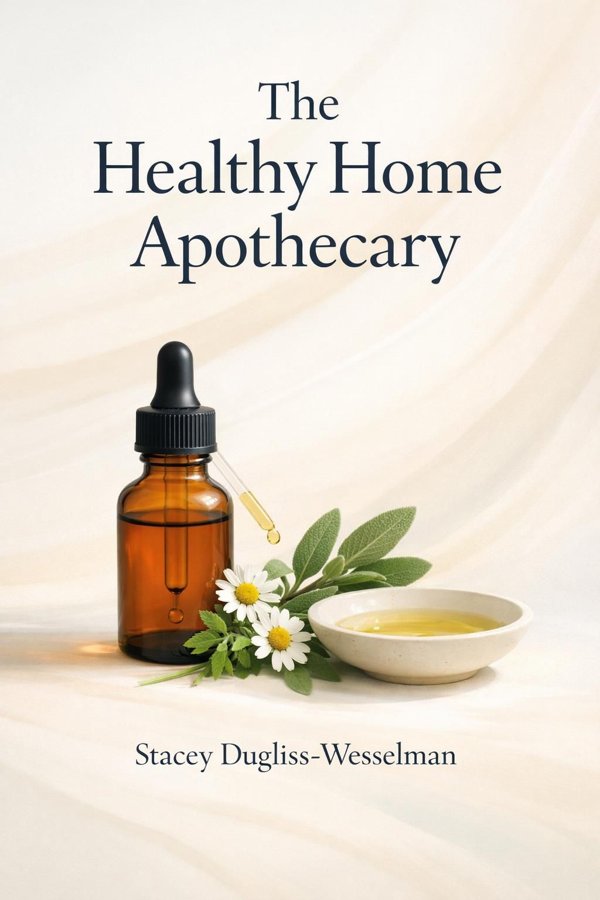
The Healthy Home Apothecary: Natural Remedies & Recipes for Everyday Health: Summary & Key Insights
 10 min9 chaptersAudio available
Key Takeaways from The Healthy Home Apothecary: Natural Remedies & Recipes for Everyday Health
A home apothecary is less about owning many remedies and more about knowing how to care well with a few trustworthy ones.
Plants speak before they are ever turned into remedies; the key is learning how to notice what they are saying.
The most meaningful remedies often begin long before the jar is filled; they begin in the soil.
A remedy is only as useful as the form it takes, and one of the book’s greatest strengths is showing how preparation changes possibility.
Health is rarely built through dramatic interventions; more often, it grows from small, repeated choices.
What Is The Healthy Home Apothecary: Natural Remedies & Recipes for Everyday Health About?
The Healthy Home Apothecary: Natural Remedies & Recipes for Everyday Health by Stacey Dugliss-Wesselman is a health_med book spanning 5 pages. What if better everyday health began not in a pharmacy aisle, but in your kitchen, garden, and pantry? In The Healthy Home Apothecary, Stacey Dugliss-Wesselman presents a grounded, practical guide to building a personal wellness toolkit from herbs, oils, vinegars, teas, salves, syrups, and other homemade remedies. Rather than promoting complicated formulas or hard-to-find ingredients, the book emphasizes approachable natural care for common needs such as stress, sleep, digestion, immune support, minor skin issues, and seasonal discomforts. What makes this book especially valuable is its balance of inspiration and usability. Dugliss-Wesselman treats herbalism not as a mysterious craft reserved for experts, but as a learnable household skill rooted in observation, safety, and simplicity. She encourages readers to understand why remedies work, how to prepare them well, and when to use them thoughtfully. For anyone interested in holistic living, self-reliance, or a gentler approach to family wellness, this book offers both confidence and structure. It invites readers to reconnect with traditional plant knowledge and to create a home environment where everyday care becomes more intentional, natural, and deeply empowering.
This FizzRead summary covers all 9 key chapters of The Healthy Home Apothecary: Natural Remedies & Recipes for Everyday Health in approximately 10 minutes, distilling the most important ideas, arguments, and takeaways from Stacey Dugliss-Wesselman's work. Also available as an audio summary and Key Quotes Podcast.
The Healthy Home Apothecary: Natural Remedies & Recipes for Everyday Health
What if better everyday health began not in a pharmacy aisle, but in your kitchen, garden, and pantry? In The Healthy Home Apothecary, Stacey Dugliss-Wesselman presents a grounded, practical guide to building a personal wellness toolkit from herbs, oils, vinegars, teas, salves, syrups, and other homemade remedies. Rather than promoting complicated formulas or hard-to-find ingredients, the book emphasizes approachable natural care for common needs such as stress, sleep, digestion, immune support, minor skin issues, and seasonal discomforts.
What makes this book especially valuable is its balance of inspiration and usability. Dugliss-Wesselman treats herbalism not as a mysterious craft reserved for experts, but as a learnable household skill rooted in observation, safety, and simplicity. She encourages readers to understand why remedies work, how to prepare them well, and when to use them thoughtfully.
For anyone interested in holistic living, self-reliance, or a gentler approach to family wellness, this book offers both confidence and structure. It invites readers to reconnect with traditional plant knowledge and to create a home environment where everyday care becomes more intentional, natural, and deeply empowering.
Who Should Read The Healthy Home Apothecary: Natural Remedies & Recipes for Everyday Health?
This book is perfect for anyone interested in health_med and looking to gain actionable insights in a short read. Whether you're a student, professional, or lifelong learner, the key ideas from The Healthy Home Apothecary: Natural Remedies & Recipes for Everyday Health by Stacey Dugliss-Wesselman will help you think differently.
- ✓Readers who enjoy health_med and want practical takeaways
- ✓Professionals looking to apply new ideas to their work and life
- ✓Anyone who wants the core insights of The Healthy Home Apothecary: Natural Remedies & Recipes for Everyday Health in just 10 minutes
Want the full summary?
Get instant access to this book summary and 100K+ more with Fizz Moment.
Get Free SummaryAvailable on App Store • Free to download
Key Chapters
A home apothecary is less about owning many remedies and more about knowing how to care well with a few trustworthy ones. That idea sits at the heart of Stacey Dugliss-Wesselman’s approach. She strips away the intimidating image of shelves packed with exotic herbs and replaces it with something far more practical: a dedicated, organized collection of simple tools and versatile ingredients that can support everyday health needs.
The book explains that a useful apothecary begins with intention. You choose a clean, dry space, gather jars, labels, strainers, measuring spoons, and storage bottles, and stock only what you are likely to use. Common ingredients such as peppermint, chamomile, calendula, ginger, garlic, honey, apple cider vinegar, and olive oil can become the basis for a surprising number of remedies. This makes the practice accessible to beginners and sustainable over time.
Dugliss-Wesselman also emphasizes order and recordkeeping. A home apothecary works best when remedies are clearly labeled with ingredients, dates, and intended uses. This prevents waste, increases safety, and helps you learn from experience. If a sore-throat syrup worked well for your family, you can make it again with confidence. If a tea blend tasted unpleasant or felt ineffective, your notes help you refine it.
Importantly, the apothecary is presented as a support system, not a replacement for medical care. It is meant for minor, everyday wellness needs and preventative care. A digestive tea after a heavy meal, a soothing salve for dry skin, or a steam inhalation during seasonal congestion are examples of appropriate use.
Actionable takeaway: Start small by setting up one shelf or box with five staple herbs, a jar of honey, a carrier oil, and labeling supplies, then build your apothecary around remedies you will genuinely use.
Plants speak before they are ever turned into remedies; the key is learning how to notice what they are saying. Dugliss-Wesselman introduces herbal understanding as both a sensory and practical skill. Rather than memorizing endless facts, she encourages readers to pay attention to taste, aroma, texture, and traditional actions. This way of learning makes herbs feel less like abstract ingredients and more like living tools with distinct personalities.
For example, bitter herbs are often associated with digestive stimulation. Aromatic herbs tend to move, warm, or soothe through their volatile oils. Mucilaginous plants coat and calm irritated tissues. Astringent herbs tighten and tone. Once readers grasp these broad categories, they can begin to understand why ginger may help a sluggish stomach, why peppermint can refresh and open the senses, or why calendula is often used in skin preparations.
The book also encourages observing how herbs behave in different preparations. A tea extracts water-soluble properties and suits gentle daily use. A tincture captures more concentrated constituents and stores longer. An infused oil draws out qualities useful for external applications. This matters because the same herb can serve different purposes depending on how it is prepared.
Another important point is relationship. Dugliss-Wesselman frames herbal practice as an ongoing conversation with plants. You notice how an herb tastes, how your body responds, and whether it feels warming, drying, calming, or stimulating. Over time, you develop judgment instead of relying only on recipes.
This chapter turns herbalism from a hobby of copying instructions into a practice of understanding patterns. That understanding makes your remedies more effective and your choices more thoughtful.
Actionable takeaway: Choose three common herbs such as chamomile, peppermint, and ginger, then taste them as teas and write down their flavor, effects, and best uses to begin building your herbal intuition.
The most meaningful remedies often begin long before the jar is filled; they begin in the soil. One of the book’s most empowering ideas is that anyone can reduce the distance between plant and preparation. Growing, harvesting, and drying your own herbs transforms wellness from a consumer activity into a relationship with seasonality, ecology, and self-reliance.
Dugliss-Wesselman shows that a medicinal garden does not require acreage. A few pots of mint, lemon balm, thyme, calendula, or basil on a patio can supply ingredients for teas, steams, syrups, and infused oils. The benefit is not only convenience but quality. Freshly grown herbs are often more vibrant, aromatic, and trustworthy because you know exactly how they were raised and handled.
The book also highlights proper timing and processing. Herbs should be harvested at their peak, usually after morning dew has dried and before the strongest midday heat. Leaves and flowers are often best picked before they fade; roots may be dug when the plant’s energy has returned below ground. Drying matters too. Herbs need airflow, shade, and patience so they retain their color, scent, and potency. Poor drying can lead to mold or weak remedies.
Once preserved, homegrown herbs become the basis for practical preparations: calendula petals infused into oil for skin salves, lemon balm dried for calming teas, thyme steeped for seasonal respiratory support. Even if you cannot grow everything, cultivating a few reliable plants deepens confidence and cuts cost.
This chapter reframes remedy-making as a full cycle of care, from planting to storage. In doing so, it reminds readers that health can be cultivated literally as well as figuratively.
Actionable takeaway: Grow two easy medicinal herbs this season, such as calendula and peppermint, and use the harvest to make one tea and one infused oil so you experience the entire garden-to-remedy process.
A remedy is only as useful as the form it takes, and one of the book’s greatest strengths is showing how preparation changes possibility. Dugliss-Wesselman explains core apothecary methods in a way that removes guesswork while preserving the craft behind them. She focuses especially on teas, tinctures, and salves because they cover many of the most common household wellness needs.
Teas are the most approachable starting point. Infusions and decoctions allow readers to work with water-soluble plant compounds in a gentle, inexpensive format. Chamomile tea for winding down, ginger tea for digestive support, or thyme tea for seasonal discomfort are familiar and effective examples. Teas are ideal when you want something immediate, comforting, and easy to make.
Tinctures offer concentration and convenience. By extracting herbs into alcohol or another suitable solvent, you create remedies with a longer shelf life and easy dosing. A few drops of an herbal tincture can provide support when a tea is impractical. The book helps readers understand ratios, steeping times, and the value of careful labeling.
Salves turn herbs into external care. An infused oil made with calendula, plantain, or lavender can be thickened with beeswax to create a soothing preparation for dry skin, rough hands, or minor irritations. This is where herbalism becomes especially tangible: a plant from the garden is transformed into a useful product your household can keep on hand.
The larger lesson is flexibility. Different issues call for different forms, and learning a handful of methods lets you match remedy to need.
Actionable takeaway: Master one preparation in each category by making a digestive tea, an immune-support tincture, and a skin-soothing salve, then note which method feels easiest and most useful in daily life.
Health is rarely built through dramatic interventions; more often, it grows from small, repeated choices. Dugliss-Wesselman makes this point clearly by showing that the home apothecary is not just for sickness. It is equally valuable as a daily wellness practice that supports resilience, comfort, and rhythm.
This shift matters. Many people approach natural remedies only when something is already wrong. The book encourages a broader view: herbal wellness can be preventative, restorative, and habitual. A cup of calming tea in the evening may support sleep and stress regulation. Bitters before meals can help digestion become more efficient. A vinegar infusion added to food can gently increase mineral intake. Herbal oils and salves can be part of skin care rather than emergency care only.
The book also shows how remedies fit naturally into household routines. A morning tonic, an after-dinner digestive tea, a chest rub during cold season, a bath soak for muscle tension, or a linen spray for bedtime all integrate wellness into ordinary moments. Instead of adding another burdensome health regime, the apothecary becomes woven into patterns that already exist.
This daily integration builds familiarity and confidence. When family members use simple remedies regularly, they become more aware of their bodies and more capable of responding early to discomfort. It also fosters a calmer relationship to health, one rooted in attentiveness instead of panic.
Dugliss-Wesselman’s message is that herbal living is not an all-or-nothing identity. It can begin with one cup, one jar, one routine. The cumulative effect of these rituals is greater self-awareness and a more intentional home environment.
Actionable takeaway: Add one herbal habit to your routine this week, such as a nightly chamomile tea or a daily digestive infusion, and keep it consistent for seven days before adding anything else.
Some of the most helpful remedies are hiding in plain sight. One of the book’s most practical contributions is its reminder that natural wellness does not always begin with specialty herbs. Many powerful supports already live in the kitchen: garlic, onion, ginger, lemon, salt, honey, vinegar, and common culinary spices. By reframing food ingredients as medicinal allies, Dugliss-Wesselman lowers the barrier to entry and makes herbal care feel immediately possible.
Garlic, for instance, is valued not only for flavor but also for its traditional role in immune support. Ginger can warm, stimulate circulation, and ease digestive discomfort. Honey soothes the throat and serves as a base for syrups and infused remedies. Apple cider vinegar becomes a mineral-rich infusion when combined with nourishing herbs. Even steam from hot water with aromatic additions can offer simple respiratory comfort.
The beauty of kitchen medicine lies in familiarity. People are more likely to use remedies consistently when the ingredients feel safe, affordable, and already integrated into daily life. A ginger-honey preparation for a scratchy throat, a saltwater gargle, a garlic broth during seasonal illness, or lemon with warm water for gentle morning support are examples of small interventions that are easy to adopt.
This perspective also encourages less waste. Instead of buying many packaged wellness products, you can use versatile staples in multiple ways: nourishment, prevention, and symptom support. It creates a natural bridge between cooking and healing.
The book does not romanticize these ingredients as cure-alls. Rather, it presents them as practical first-line supports that complement a broader wellness toolkit.
Actionable takeaway: Make a list of ten medicinal pantry items you already own, then learn one simple remedy for three of them so your apothecary starts with ingredients already in your home.
Natural does not automatically mean harmless, and one of the book’s most responsible themes is that good herbalism depends on discernment. Dugliss-Wesselman treats safety not as a discouraging warning but as a core part of competent home care. This approach gives readers confidence without encouraging recklessness.
The book emphasizes several basics: identify herbs correctly, use clean equipment, store preparations properly, label everything, and respect shelf life. It also encourages awareness of individual differences. Children, pregnant people, older adults, and those taking medications may need extra caution or professional guidance. A soothing tea used occasionally is not the same as a concentrated tincture taken regularly, and readers are reminded that form, strength, frequency, and body context all matter.
Another important distinction is knowing what belongs in home care and what requires medical attention. Minor cuts, temporary digestive upset, tension, dry skin, and mild seasonal discomfort may be appropriate situations for simple remedies. Severe symptoms, persistent problems, allergic reactions, infections, breathing difficulty, or unexplained pain are not situations for guesswork. The home apothecary supports care; it does not replace diagnosis or emergency treatment.
Dugliss-Wesselman’s sensible tone helps prevent two common mistakes: overconfidence and fear. Readers do not need to avoid all herbs out of anxiety, nor should they assume every plant product is universally safe. Instead, they learn to use remedies in measured, informed ways.
This chapter ultimately strengthens the rest of the book, because skill without safety is incomplete. Responsible practice protects both health and trust in natural medicine.
Actionable takeaway: Create a simple safety system by labeling every preparation with ingredients, date made, intended use, and any cautions, and keep a short list of symptoms that always warrant professional medical care.
The body does not have the same needs in every season, and a thoughtful apothecary changes with the calendar. Dugliss-Wesselman highlights the importance of preparing remedies that match recurring patterns: cold-weather congestion, spring allergies, summer skin irritation, digestive heaviness around holidays, or the dry air and stress that often accompany winter. This seasonal mindset makes the apothecary more relevant and more effective.
In colder months, readers might turn to warming teas with ginger or cinnamon, steam inhalations, throat syrups, and chest rubs. Spring may call for lighter cleansing herbs, soothing rinses, or support for environmental irritation. Summer brings opportunities for sun-soothing preparations, bug-bite relief, and hydrating herbal drinks. Autumn often becomes a time to stock shelves, dry herbs, and prepare immune-support blends before illness peaks.
Thinking seasonally also helps with planning. Instead of making remedies only after symptoms arrive, you can preserve herbs when they are abundant and create staples ahead of time. Dry lemon balm in summer for winter calming tea. Infuse calendula oil when flowers are at their brightest so you have salve for dry, irritated skin later. Make elderberry syrup before cold season begins rather than in the middle of it.
This chapter reflects a larger philosophy: health is part of a natural cycle. By responding to the environment with foresight, readers become less reactive and more prepared. Seasonal remedy-making turns the apothecary into a living household practice rather than a static collection of jars.
Actionable takeaway: Build a seasonal checklist with three remedies to prepare before each season begins, focusing first on the health concerns that recur most often in your home.
A remedy does more than treat a symptom; it can also restore a sense of agency. Beneath the recipes and techniques, Dugliss-Wesselman’s book offers a deeper argument about self-reliance. In a culture where health care often feels outsourced, rushed, or impersonal, making a tea, syrup, or salve at home becomes an act of reconnection. It reminds people that care can be skilled, attentive, and local.
This does not mean doing everything alone. Instead, it means reclaiming a sphere of competence within everyday life. Knowing how to soothe a minor burn, support digestion after a rich meal, calm the nervous system before bed, or prepare for cold season gives a household practical resilience. It can reduce dependence on unnecessary products and foster a more confident response to ordinary discomforts.
The book also honors the ritual dimension of healing. Stirring herbs into oil, steeping tea in quiet moments, labeling jars, and tending a small garden all create rhythms of care. These rituals have emotional value. They slow the pace, encourage observation, and make wellness feel personal rather than mechanical. For many readers, this may be one of the book’s most lasting gifts.
Home healing, in this sense, is not only about remedy outcomes but also about attention. When you prepare natural medicine, you notice your body, your environment, and your habits more carefully. That awareness often improves health choices beyond the remedy itself.
The result is a vision of wellness that is practical, grounded, and quietly empowering. The home apothecary becomes both a cabinet of remedies and a mindset of care.
Actionable takeaway: Choose one recurring household health issue and create a simple ritual around supporting it naturally, so your apothecary becomes a lived practice rather than just stored supplies.
All Chapters in The Healthy Home Apothecary: Natural Remedies & Recipes for Everyday Health
About the Author
Stacey Dugliss-Wesselman is an herbalist and natural health advocate known for making holistic wellness approachable for everyday readers. Her work focuses on practical home care, sustainable living, and the use of traditional plant knowledge in modern households. Rather than presenting herbalism as a specialized or inaccessible discipline, she emphasizes simple remedies, common ingredients, and skills that can be learned gradually through observation and practice. In her writing, Dugliss-Wesselman encourages readers to reconnect with the healing potential of kitchens, gardens, and daily routines. Her perspective blends respect for traditional wisdom with a clear, grounded understanding of safety and realistic home use. Through books like The Healthy Home Apothecary, she helps readers build confidence in creating natural remedies that support comfort, resilience, and intentional living.
Get This Summary in Your Preferred Format
Read or listen to the The Healthy Home Apothecary: Natural Remedies & Recipes for Everyday Health summary by Stacey Dugliss-Wesselman anytime, anywhere. FizzRead offers multiple formats so you can learn on your terms — all free.
Available formats: App · Audio · PDF · EPUB — All included free with FizzRead
Download The Healthy Home Apothecary: Natural Remedies & Recipes for Everyday Health PDF and EPUB Summary
Key Quotes from The Healthy Home Apothecary: Natural Remedies & Recipes for Everyday Health
“A home apothecary is less about owning many remedies and more about knowing how to care well with a few trustworthy ones.”
“Plants speak before they are ever turned into remedies; the key is learning how to notice what they are saying.”
“The most meaningful remedies often begin long before the jar is filled; they begin in the soil.”
“A remedy is only as useful as the form it takes, and one of the book’s greatest strengths is showing how preparation changes possibility.”
“Health is rarely built through dramatic interventions; more often, it grows from small, repeated choices.”
Frequently Asked Questions about The Healthy Home Apothecary: Natural Remedies & Recipes for Everyday Health
The Healthy Home Apothecary: Natural Remedies & Recipes for Everyday Health by Stacey Dugliss-Wesselman is a health_med book that explores key ideas across 9 chapters. What if better everyday health began not in a pharmacy aisle, but in your kitchen, garden, and pantry? In The Healthy Home Apothecary, Stacey Dugliss-Wesselman presents a grounded, practical guide to building a personal wellness toolkit from herbs, oils, vinegars, teas, salves, syrups, and other homemade remedies. Rather than promoting complicated formulas or hard-to-find ingredients, the book emphasizes approachable natural care for common needs such as stress, sleep, digestion, immune support, minor skin issues, and seasonal discomforts. What makes this book especially valuable is its balance of inspiration and usability. Dugliss-Wesselman treats herbalism not as a mysterious craft reserved for experts, but as a learnable household skill rooted in observation, safety, and simplicity. She encourages readers to understand why remedies work, how to prepare them well, and when to use them thoughtfully. For anyone interested in holistic living, self-reliance, or a gentler approach to family wellness, this book offers both confidence and structure. It invites readers to reconnect with traditional plant knowledge and to create a home environment where everyday care becomes more intentional, natural, and deeply empowering.
You Might Also Like

On Immunity
Eula Biss
10 min
The Three-Body Problem
Liu Cixin
10 min
Community Health Volunteer Toolkit: Training and Practical Activities
World Health Organization
10 min
Healing Back Pain: The Mind-Body Connection
John E. Sarno
10 min
Health Literacy for All: Practical Guides to Communicate Health Information (Compilations)
World Health Organization
10 min
The Complete Guide to Sports Supplements: An Evidence-Based Review
Anita Bean
10 minBrowse by Category
Ready to read The Healthy Home Apothecary: Natural Remedies & Recipes for Everyday Health?
Get the full summary and 100K+ more books with Fizz Moment.