
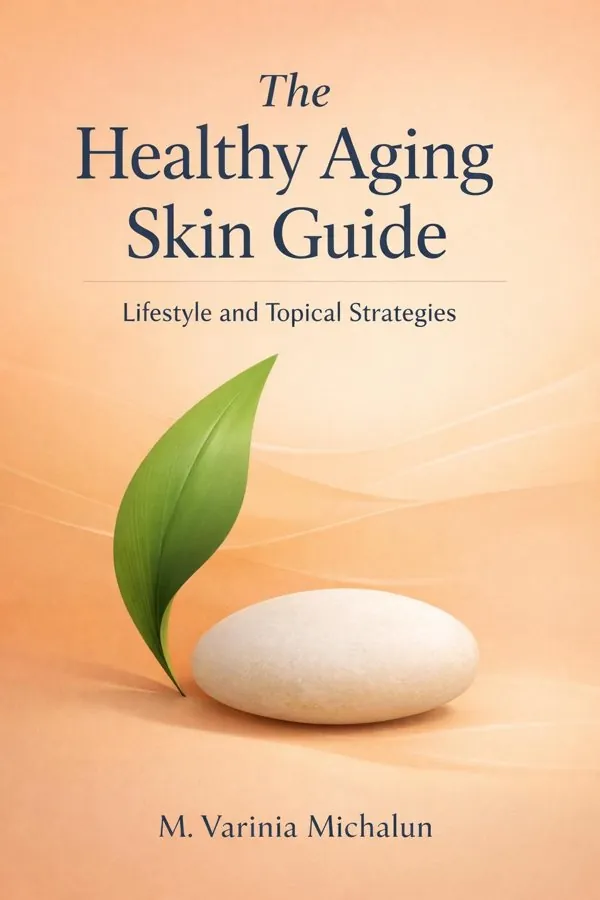
The Healthy Aging Skin Guide: Lifestyle and Topical Strategies: Summary & Key Insights
 10 min9 chaptersAudio available
Key Takeaways from The Healthy Aging Skin Guide: Lifestyle and Topical Strategies
The most effective skincare begins with a simple shift in perspective: skin is not a decorative covering, but a living organ with structure, intelligence, and changing needs.
Aging may be inevitable, but how skin ages is far from predetermined.
Radiance cannot be fully bottled because skin health is built from raw materials supplied by the body.
If there is one factor that repeatedly dominates the science of skin aging, it is environmental exposure, especially ultraviolet radiation.
Many people treat skincare as something that happens at the sink, yet some of the most powerful beauty interventions occur in bed, in the gym, and in the nervous system.
What Is The Healthy Aging Skin Guide: Lifestyle and Topical Strategies About?
The Healthy Aging Skin Guide: Lifestyle and Topical Strategies by M. Varinia Michalun is a health_med book spanning 7 pages. Healthy skin aging is not about fighting time at all costs. It is about understanding how skin changes over the years and responding with smarter, gentler, and more evidence-based care. In The Healthy Aging Skin Guide: Lifestyle and Topical Strategies, M. Varinia Michalun brings together skin physiology, lifestyle medicine, and practical skincare into a concise guide for anyone who wants to protect the skin’s function as well as its appearance. Rather than promising miracles, the book explains what actually influences aging skin: genetics, hormones, sun exposure, pollution, stress, diet, sleep, and the products we choose every day. What makes this guide especially useful is its balanced perspective. Michalun does not present skincare as a vanity project, but as an extension of overall health. She connects the visible signs of aging, such as dryness, laxity, uneven tone, and fine lines, with the biological processes happening beneath the surface. Drawing on her expertise in esthetics education and cosmetic science, she offers a practical roadmap that helps readers build realistic habits, choose effective ingredients, and understand when professional support may be beneficial. The result is an accessible, trustworthy resource for aging well from the skin outward.
This FizzRead summary covers all 9 key chapters of The Healthy Aging Skin Guide: Lifestyle and Topical Strategies in approximately 10 minutes, distilling the most important ideas, arguments, and takeaways from M. Varinia Michalun's work. Also available as an audio summary and Key Quotes Podcast.
The Healthy Aging Skin Guide: Lifestyle and Topical Strategies
Healthy skin aging is not about fighting time at all costs. It is about understanding how skin changes over the years and responding with smarter, gentler, and more evidence-based care. In The Healthy Aging Skin Guide: Lifestyle and Topical Strategies, M. Varinia Michalun brings together skin physiology, lifestyle medicine, and practical skincare into a concise guide for anyone who wants to protect the skin’s function as well as its appearance. Rather than promising miracles, the book explains what actually influences aging skin: genetics, hormones, sun exposure, pollution, stress, diet, sleep, and the products we choose every day.
What makes this guide especially useful is its balanced perspective. Michalun does not present skincare as a vanity project, but as an extension of overall health. She connects the visible signs of aging, such as dryness, laxity, uneven tone, and fine lines, with the biological processes happening beneath the surface. Drawing on her expertise in esthetics education and cosmetic science, she offers a practical roadmap that helps readers build realistic habits, choose effective ingredients, and understand when professional support may be beneficial. The result is an accessible, trustworthy resource for aging well from the skin outward.
Who Should Read The Healthy Aging Skin Guide: Lifestyle and Topical Strategies?
This book is perfect for anyone interested in health_med and looking to gain actionable insights in a short read. Whether you're a student, professional, or lifelong learner, the key ideas from The Healthy Aging Skin Guide: Lifestyle and Topical Strategies by M. Varinia Michalun will help you think differently.
- ✓Readers who enjoy health_med and want practical takeaways
- ✓Professionals looking to apply new ideas to their work and life
- ✓Anyone who wants the core insights of The Healthy Aging Skin Guide: Lifestyle and Topical Strategies in just 10 minutes
Want the full summary?
Get instant access to this book summary and 100K+ more with Fizz Moment.
Get Free SummaryAvailable on App Store • Free to download
Key Chapters
The most effective skincare begins with a simple shift in perspective: skin is not a decorative covering, but a living organ with structure, intelligence, and changing needs. Michalun explains that the skin is composed of three major layers: the epidermis, which acts as the outer barrier; the dermis, which contains collagen, elastin, blood vessels, and connective tissue; and the subcutaneous layer, which provides cushioning and insulation. As we age, each of these layers undergoes meaningful changes. Cell turnover slows, the barrier becomes less resilient, moisture retention declines, and the supporting matrix in the dermis gradually weakens.
This framework matters because many visible concerns, from dullness to wrinkles, are symptoms of deeper structural shifts. For example, thinning epidermal renewal can leave skin looking rough and uneven, while collagen loss in the dermis contributes to sagging and reduced firmness. Sebum production may decline as well, especially later in life, making mature skin more vulnerable to dryness and irritation.
Understanding this anatomy helps readers stop chasing random products and start asking better questions. Is the skin dehydrated or truly dry? Is sensitivity caused by a weak barrier? Is uneven texture linked to reduced turnover? Instead of treating every change as a flaw, Michalun encourages readers to see aging skin as skin that needs support in function, protection, and repair.
A practical application is to build skincare around the skin’s core jobs: protect the barrier, preserve hydration, defend against environmental damage, and stimulate healthy renewal without overstripping. Actionable takeaway: before adding more products, identify which skin layer or function your current routine is actually supporting.
Aging may be inevitable, but how skin ages is far from predetermined. One of the book’s central ideas is the distinction between intrinsic aging and extrinsic aging. Intrinsic aging refers to the natural, internal biological process shaped by genetics, time, and hormonal shifts. It tends to produce thinner skin, gradual dryness, and fine wrinkles. Extrinsic aging, by contrast, is driven by external forces such as ultraviolet radiation, smoking, pollution, poor diet, stress, and inadequate sleep. This form of aging often appears as rough texture, deeper wrinkles, discoloration, and loss of elasticity.
Michalun’s point is not merely academic. It is empowering. While intrinsic aging cannot be stopped, extrinsic aging can be significantly influenced. A person may not control genetic collagen decline, but they can reduce unnecessary damage from repeated sun exposure or chronic inflammation. In that sense, healthy aging is less about reversing time and more about minimizing preventable harm.
This distinction also helps readers understand why some people show accelerated aging despite being the same chronological age. Daily habits accumulate. Years of tanning, inconsistent sunscreen use, heavy alcohol intake, or high stress can amplify oxidative damage and inflammation, causing the skin to age faster than its biological baseline.
A useful way to apply this insight is to evaluate skincare and lifestyle choices through a simple lens: am I supporting intrinsic resilience or adding to extrinsic damage? Sunscreen, nutrient-dense food, smoking cessation, and gentle skincare all reduce the external burden placed on aging skin. Actionable takeaway: make one change that reduces cumulative damage, because skin aging is shaped as much by repetition as by time.
Radiance cannot be fully bottled because skin health is built from raw materials supplied by the body. Michalun emphasizes that nutrition is foundational to aging skin because cells require adequate protein, essential fatty acids, vitamins, minerals, and water to maintain structure, repair damage, and regulate inflammation. Skin may be visible on the outside, but its quality depends heavily on internal nourishment.
The book highlights the role of antioxidants in helping the skin respond to oxidative stress. Nutrients such as vitamins C and E, carotenoids, polyphenols, and selenium can support the body’s defense systems against free radicals generated by sun exposure, pollution, and metabolic processes. Protein matters because collagen and elastin are protein-based structures. Healthy fats, especially omega-3 fatty acids, can support barrier function and reduce inflammation, which may be especially relevant for dry, reactive, or mature skin.
Hydration is presented with needed nuance. Drinking water is important for overall health, but hydration in skin is also influenced by barrier integrity, environmental conditions, and topical care. A person can drink adequate fluids and still have dehydrated-feeling skin if the barrier is compromised. That means internal hydration works best when paired with external support such as humectants, emollients, and barrier-friendly routines.
Practical examples include prioritizing colorful fruits and vegetables, sufficient protein intake, nuts and seeds, olive oil, and fatty fish where appropriate. It also means reducing patterns that inflame the body, such as highly processed diets, excess sugar, or frequent dehydration. Actionable takeaway: treat every meal as a skin intervention by emphasizing whole foods that supply antioxidants, protein, and healthy fats.
If there is one factor that repeatedly dominates the science of skin aging, it is environmental exposure, especially ultraviolet radiation. Michalun underscores that sun exposure is the single most significant extrinsic driver of visible aging. UV rays break down collagen, impair repair processes, increase pigmentation irregularities, and contribute to roughness, fine lines, and deeper wrinkles over time. This process, often called photoaging, can make skin look older than its years.
Pollution adds another layer of damage. Airborne particles and environmental toxins can trigger oxidative stress, inflammation, and barrier disruption. While pollution may not receive the same attention as sunlight, long-term exposure can worsen dullness, sensitivity, and uneven tone, especially in urban settings. Together, sun and pollution create a constant background assault that depletes the skin’s ability to maintain itself.
What makes this chapter practical is its emphasis on prevention over perfection. Daily broad-spectrum sunscreen is not framed as an optional cosmetic step but as a nonnegotiable strategy for preserving skin function and appearance. Protective clothing, hats, sunglasses, and shade become tools of long-term skin preservation rather than inconvenience. Cleansing at the end of the day helps remove pollutants, sunscreen residues, and debris, but Michalun warns against overcleansing, which can weaken the barrier.
Readers can also support environmental defense with antioxidant-rich skincare and diets, but these should complement, not replace, photoprotection. A vitamin C serum cannot undo habitual unprotected sun exposure. Actionable takeaway: choose one daily sun-protection habit you can maintain year-round, because consistency protects skin better than occasional corrective treatments.
Many people treat skincare as something that happens at the sink, yet some of the most powerful beauty interventions occur in bed, in the gym, and in the nervous system. Michalun expands the conversation beyond creams to show how sleep, physical activity, and stress management influence the biological environment in which skin ages. Chronic stress can increase inflammatory signaling, disrupt hormonal balance, impair barrier function, and worsen conditions such as sensitivity, acne, or dullness. Poor sleep limits the body’s restorative processes and may leave skin looking puffy, tired, or less resilient.
Exercise, when balanced and regular, supports circulation, metabolic health, and stress regulation. Better blood flow helps deliver oxygen and nutrients throughout the body, including the skin. Movement also helps manage insulin sensitivity and systemic inflammation, both of which matter for aging well. The message is not that exercise will erase wrinkles, but that skin reflects the broader health of the organism.
Michalun’s strength is practicality. She does not suggest an extreme wellness regimen. Instead, she points toward sustainable habits: consistent sleep timing, moderate exercise, stress-reduction practices, and avoiding the cycle of overwork followed by compensatory quick fixes. Even a simple evening wind-down routine can improve both sleep quality and skincare consistency. A morning walk, yoga practice, or resistance training plan can support mood and health while indirectly benefiting the skin.
The deeper point is that healthy aging skin emerges in a regulated body. Topicals can help, but they perform better when the internal environment is less inflamed and more rested. Actionable takeaway: pair your skincare routine with one recovery habit, such as better sleep or daily movement, to support skin from the inside out.
The skincare industry often sells complexity, but aging skin usually responds best to thoughtful consistency. Michalun explains that effective topical care depends on choosing ingredients and formulations that match the skin’s actual needs rather than chasing trends. Mature skin often benefits from products that support hydration, barrier function, antioxidant defense, and cell renewal. The most useful routine is rarely the most elaborate one.
Core categories include gentle cleansers, moisturizers with humectants and emollients, sunscreen, and targeted treatment products. Humectants such as glycerin and hyaluronic acid help attract water. Emollients and occlusives help soften skin and reduce water loss. Antioxidants may help neutralize oxidative stress, while ingredients that encourage turnover and collagen support, such as retinoids or certain exfoliating acids, can improve texture and tone when used correctly. However, potency without tolerance is a mistake. Overusing active ingredients can increase redness, dryness, and barrier impairment, especially in aging skin.
Formulation matters as much as ingredient lists. A beautifully formulated moisturizer can outperform a harsher product loaded with fashionable actives. Readers are encouraged to consider texture, fragrance, packaging, pH, and stability. A serum may be useful, but if it causes irritation or is incompatible with the rest of a routine, it may create more problems than it solves.
A practical routine might include a mild cleanser, antioxidant or treatment serum in the morning, moisturizer, and broad-spectrum sunscreen, followed by a nourishing evening moisturizer and a carefully introduced retinoid at night. Actionable takeaway: simplify your routine around proven categories, and judge products by results, tolerance, and consistency rather than marketing claims.
One of the most helpful truths in the book is that professional treatments can be valuable, but they are not magical substitutes for daily care. Michalun discusses how procedures and advanced interventions may complement a healthy aging strategy, especially when addressing concerns such as texture changes, pigmentation, laxity, or more pronounced signs of photoaging. Yet she places these treatments in context: they work best when paired with realistic goals, proper skin preparation, and ongoing maintenance.
Depending on individual needs, professional options may include facials, chemical peels, microdermabrasion, light-based treatments, or medical procedures performed by qualified practitioners. These can help accelerate exfoliation, stimulate renewal, or address specific cosmetic concerns. However, the skin’s condition, sensitivity level, pigment tendency, health history, and post-treatment care all influence outcomes. An aggressive treatment on a compromised barrier can backfire.
Michalun also points to the importance of provider expertise and informed consent. Readers should understand what a treatment is designed to do, how many sessions may be needed, what downtime is involved, and what risks exist. This is especially important for aging skin, which may heal more slowly or react differently than younger skin.
The larger message is integration. Professional care should extend a long-term plan, not serve as a rescue mission after years of neglect. Someone who receives a peel but ignores sunscreen or moisturizer will undermine the benefit. Actionable takeaway: if you consider a professional treatment, first strengthen your baseline routine and seek a qualified expert who can explain both benefits and limitations clearly.
Skin aging is not driven by the calendar alone; it is also shaped by chemistry. Michalun highlights the major role hormones play in skin thickness, oil production, elasticity, wound healing, and moisture retention. This becomes especially significant during midlife transitions, when changing levels of estrogen and other hormones can alter the skin dramatically. Many people notice increased dryness, reduced firmness, slower healing, and greater sensitivity during these periods and mistakenly assume their products have suddenly stopped working. In reality, the skin itself has entered a different physiological state.
Estrogen, in particular, affects collagen content, hydration, and barrier integrity. As levels decline, skin may become thinner and less elastic, and transepidermal water loss may increase. Sebum production can also decrease, contributing to dryness and a rougher feel. At the same time, hormonal shifts can create paradoxical issues, such as breakouts in some adults alongside overall skin fragility.
This insight encourages a more compassionate and adaptive approach. Instead of clinging to a routine that worked ten years ago, readers are urged to reassess changing needs. Richer moisturizers, gentler cleansers, more barrier-supportive ingredients, and carefully selected actives may become more appropriate. In some cases, consultation with healthcare professionals may help connect skin symptoms with broader hormonal health.
The key contribution here is perspective: skin changes are not always signs of failure or neglect. Often, they reflect a new biological context that requires updated strategies. Actionable takeaway: review your routine whenever major hormonal changes occur, and adjust for increased dryness, sensitivity, or slower recovery rather than pushing the skin harder.
The strongest message in The Healthy Aging Skin Guide is that no single cream, food, or treatment can carry the burden of skin aging alone. Michalun presents skin health as the outcome of an interconnected system: biology, environment, behavior, skincare, and professional support all interact. When readers understand this, they stop searching for a miracle solution and start building a coherent strategy.
A whole-system approach means aligning daily habits instead of relying on isolated efforts. Sunscreen matters more when used every day. Moisturizer works better when the barrier is not repeatedly stripped. A retinoid delivers more benefit when introduced gradually and supported by hydration. Good nutrition matters more when paired with sleep, exercise, and lower stress. Professional treatments produce better outcomes when the skin is protected and maintained between appointments.
This integrated philosophy also encourages realism. Aging skin will still change. Wrinkles may still deepen, and texture may still evolve. The goal is not to freeze the face in time, but to preserve health, comfort, resilience, and the best possible function and appearance for one’s age and circumstances. That is a more sustainable and psychologically healthy objective than endless correction.
For readers overwhelmed by conflicting advice, this chapter offers relief. You do not need to do everything at once. You need a consistent foundation built around protection, nourishment, patience, and informed choices. Small daily decisions compound just as damage does. Actionable takeaway: create a skin-aging plan that combines lifestyle, topical care, and prevention, because the best results come from coordinated habits rather than isolated fixes.
All Chapters in The Healthy Aging Skin Guide: Lifestyle and Topical Strategies
About the Author
M. Varinia Michalun is a skincare specialist, educator, and author recognized for her work in professional esthetics education. She has helped shape the way skincare is taught by contributing to reference materials that explain skin physiology, cosmetic ingredients, treatment methods, and evidence-based care practices for both students and practitioners. Her writing is known for making technical skincare knowledge accessible without stripping away scientific credibility. This combination of clarity and professional rigor has made her a respected voice in beauty and skin health education. In The Healthy Aging Skin Guide, Michalun draws on her background in cosmetic science and esthetics to offer practical advice grounded in how skin actually functions. Her work consistently emphasizes informed care, realistic expectations, and the connection between daily habits and long-term skin health.
Get This Summary in Your Preferred Format
Read or listen to the The Healthy Aging Skin Guide: Lifestyle and Topical Strategies summary by M. Varinia Michalun anytime, anywhere. FizzRead offers multiple formats so you can learn on your terms — all free.
Available formats: App · Audio · PDF · EPUB — All included free with FizzRead
Download The Healthy Aging Skin Guide: Lifestyle and Topical Strategies PDF and EPUB Summary
Key Quotes from The Healthy Aging Skin Guide: Lifestyle and Topical Strategies
“The most effective skincare begins with a simple shift in perspective: skin is not a decorative covering, but a living organ with structure, intelligence, and changing needs.”
“Aging may be inevitable, but how skin ages is far from predetermined.”
“Radiance cannot be fully bottled because skin health is built from raw materials supplied by the body.”
“If there is one factor that repeatedly dominates the science of skin aging, it is environmental exposure, especially ultraviolet radiation.”
“Many people treat skincare as something that happens at the sink, yet some of the most powerful beauty interventions occur in bed, in the gym, and in the nervous system.”
Frequently Asked Questions about The Healthy Aging Skin Guide: Lifestyle and Topical Strategies
The Healthy Aging Skin Guide: Lifestyle and Topical Strategies by M. Varinia Michalun is a health_med book that explores key ideas across 9 chapters. Healthy skin aging is not about fighting time at all costs. It is about understanding how skin changes over the years and responding with smarter, gentler, and more evidence-based care. In The Healthy Aging Skin Guide: Lifestyle and Topical Strategies, M. Varinia Michalun brings together skin physiology, lifestyle medicine, and practical skincare into a concise guide for anyone who wants to protect the skin’s function as well as its appearance. Rather than promising miracles, the book explains what actually influences aging skin: genetics, hormones, sun exposure, pollution, stress, diet, sleep, and the products we choose every day. What makes this guide especially useful is its balanced perspective. Michalun does not present skincare as a vanity project, but as an extension of overall health. She connects the visible signs of aging, such as dryness, laxity, uneven tone, and fine lines, with the biological processes happening beneath the surface. Drawing on her expertise in esthetics education and cosmetic science, she offers a practical roadmap that helps readers build realistic habits, choose effective ingredients, and understand when professional support may be beneficial. The result is an accessible, trustworthy resource for aging well from the skin outward.
You Might Also Like

On Immunity
Eula Biss
10 min
The Three-Body Problem
Liu Cixin
10 min
Community Health Volunteer Toolkit: Training and Practical Activities
World Health Organization
10 min
Healing Back Pain: The Mind-Body Connection
John E. Sarno
10 min
Health Literacy for All: Practical Guides to Communicate Health Information (Compilations)
World Health Organization
10 min
The Complete Guide to Sports Supplements: An Evidence-Based Review
Anita Bean
10 minBrowse by Category
Ready to read The Healthy Aging Skin Guide: Lifestyle and Topical Strategies?
Get the full summary and 100K+ more books with Fizz Moment.