
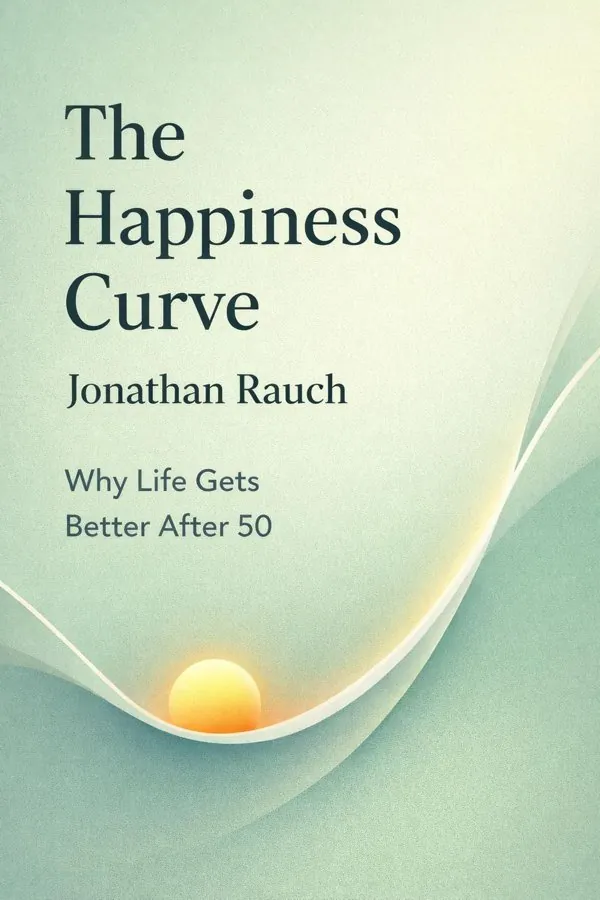
The Happiness Curve: Why Life Gets Better After 50: Summary & Key Insights
 10 min9 chaptersAudio available
What Is The Happiness Curve: Why Life Gets Better After 50 About?
The Happiness Curve: Why Life Gets Better After 50 by Jonathan Rauch is a positive_psych book spanning 9 pages. In this insightful work, Jonathan Rauch explores the surprising science behind midlife satisfaction. Drawing on psychology, economics, and personal stories, he reveals that happiness often follows a U-shaped curve—declining in early adulthood but rising again after middle age. The book offers reassurance and understanding for those navigating the challenges of midlife transitions, showing that emotional well-being tends to improve as people age.
This FizzRead summary covers all 9 key chapters of The Happiness Curve: Why Life Gets Better After 50 in approximately 10 minutes, distilling the most important ideas, arguments, and takeaways from Jonathan Rauch's work. Also available as an audio summary and Key Quotes Podcast.
The Happiness Curve: Why Life Gets Better After 50
In this insightful work, Jonathan Rauch explores the surprising science behind midlife satisfaction. Drawing on psychology, economics, and personal stories, he reveals that happiness often follows a U-shaped curve—declining in early adulthood but rising again after middle age. The book offers reassurance and understanding for those navigating the challenges of midlife transitions, showing that emotional well-being tends to improve as people age.
Who Should Read The Happiness Curve: Why Life Gets Better After 50?
This book is perfect for anyone interested in positive_psych and looking to gain actionable insights in a short read. Whether you're a student, professional, or lifelong learner, the key ideas from The Happiness Curve: Why Life Gets Better After 50 by Jonathan Rauch will help you think differently.
- ✓Readers who enjoy positive_psych and want practical takeaways
- ✓Professionals looking to apply new ideas to their work and life
- ✓Anyone who wants the core insights of The Happiness Curve: Why Life Gets Better After 50 in just 10 minutes
Want the full summary?
Get instant access to this book summary and 100K+ more with Fizz Moment.
Get Free SummaryAvailable on App Store • Free to download
Key Chapters
My own curiosity about midlife unhappiness began when I noticed something paradoxical: people in their forties and early fifties, often at their professional and personal peaks, were quietly dissatisfied. The research confirmed this wasn't anecdotal. Economists like David Blanchflower and Andrew Oswald found a consistent U-shape when plotting life satisfaction against age. After the optimism of youth declines, happiness bottoms out around midlife, regardless of wealth, health, or family status. The dip is not necessarily tied to external downturns. It's as if something in our inner mechanism rebalances itself.
Psychologically, we start our adult lives with a set of expectations about how happy success will make us. We chase milestones—career achievements, relationships, recognition—expecting them to deliver fulfillment. But as years pass, those rewards lose their potency. The very goals that once buoyed us now feel hollow. We begin to sense an emotional mismatch between what we thought happiness would be and what it actually is. This discrepancy creates tension and restlessness—the feeling that something has gone missing in our well-ordered lives.
This stage is challenging because it defies logic. We look at our circumstances and think: I have good health, family, stability—so why am I low? Because the source of discontent is not external; it’s biological and psychological, rooted in how the human brain adapts to life’s trajectory. Understanding the curve means realizing that midlife malaise is not your fault, nor permanent. It’s a stage of recalibration—a necessary pause before the emotional upswing that follows.
The data becomes intimate when you listen to the people living inside the curve. I spoke with men and women from varied backgrounds who described an unmistakable midlife fog: a vague disengagement, a sense that enthusiasm had drained away. There was a woman who had built a thriving career yet found herself feeling that all her accomplishments tasted of cardboard. A man in his forties described waking up each morning with an ache of futility, unable to identify what was missing. These were not people in crisis but people in transition—caught between having realized their youthful ambitions and yearning for a deeper kind of fulfillment.
What emerged from these personal accounts was a shared emotional vocabulary: words like emptiness, fatigue, and confusion. Many tried to escape through external change—new jobs, affairs, purchases—but found that nothing fixed the malaise. It wasn’t healing they needed; it was perspective. Midlife exposed the gap between external success and internal satisfaction.
As I listened, I saw the curve take human shape. It is not a moment of collapse but of awakening—an invitation to reevaluate what truly sustains happiness once the thrill of novelty fades. Those who made peace with the dip did not do so by fighting it. They accepted it as a season of introspection and adjustment. The accounts reveal a quiet truth: midlife dissatisfaction is not failure. It is the bridge to wisdom.
+ 7 more chapters — available in the FizzRead app
All Chapters in The Happiness Curve: Why Life Gets Better After 50
About the Author
Jonathan Rauch is an American author, journalist, and senior fellow at the Brookings Institution. He writes extensively on public policy, culture, and psychology, contributing to publications such as The Atlantic and National Journal. His works often explore themes of happiness, freedom of speech, and social dynamics.
Get This Summary in Your Preferred Format
Read or listen to the The Happiness Curve: Why Life Gets Better After 50 summary by Jonathan Rauch anytime, anywhere. FizzRead offers multiple formats so you can learn on your terms — all free.
Available formats: App · Audio · PDF · EPUB — All included free with FizzRead
Download The Happiness Curve: Why Life Gets Better After 50 PDF and EPUB Summary
Key Quotes from The Happiness Curve: Why Life Gets Better After 50
“The research confirmed this wasn't anecdotal.”
“The data becomes intimate when you listen to the people living inside the curve.”
Frequently Asked Questions about The Happiness Curve: Why Life Gets Better After 50
The Happiness Curve: Why Life Gets Better After 50 by Jonathan Rauch is a positive_psych book that explores key ideas across 9 chapters. In this insightful work, Jonathan Rauch explores the surprising science behind midlife satisfaction. Drawing on psychology, economics, and personal stories, he reveals that happiness often follows a U-shaped curve—declining in early adulthood but rising again after middle age. The book offers reassurance and understanding for those navigating the challenges of midlife transitions, showing that emotional well-being tends to improve as people age.
You Might Also Like
Don't Sweat the Small Stuff... and It's All Small Stuff
Richard Carlson
10 min
Option B
Sheryl Sandberg & Adam Grant
10 min
Hallelujah Anyway: Rediscovering Mercy
Anne Lamott
10 min
I Can Do It: How to Use Affirmations to Change Your Life
Louise Hay
10 min
The Coffee Bean: A Simple Lesson to Create Positive Change
Jon Gordon, Damon West
10 min
The Happiness Hypothesis: Finding Modern Truth in Ancient Wisdom
Jonathan Haidt
10 minBrowse by Category
Ready to read The Happiness Curve: Why Life Gets Better After 50?
Get the full summary and 100K+ more books with Fizz Moment.