
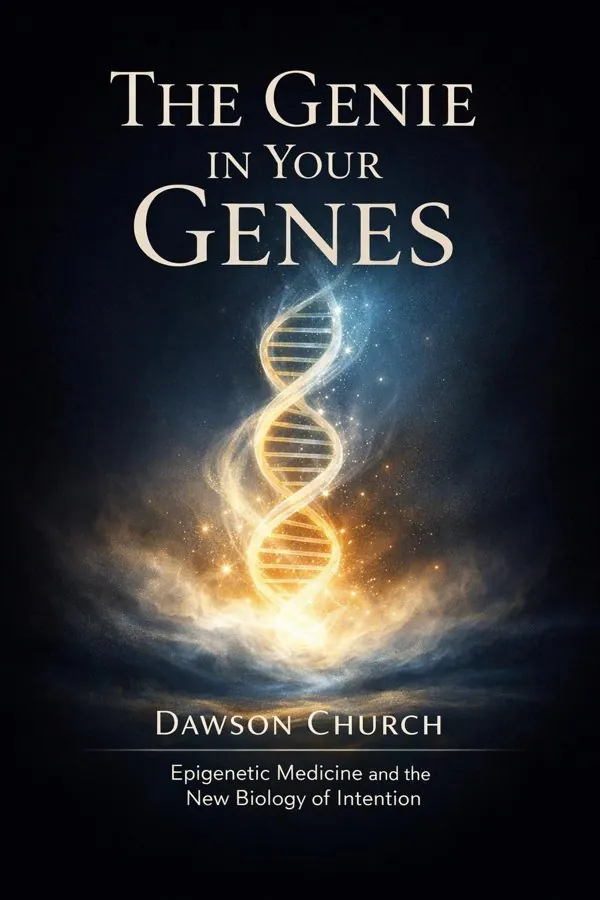
The Genie in Your Genes: Epigenetic Medicine and the New Biology of Intention: Summary & Key Insights
 10 min6 chaptersAudio available
What Is The Genie in Your Genes: Epigenetic Medicine and the New Biology of Intention About?
The Genie in Your Genes: Epigenetic Medicine and the New Biology of Intention by Dawson Church is a life_science book spanning 6 pages. This groundbreaking book explores how thoughts, emotions, and beliefs can influence gene expression through the emerging science of epigenetics. Dawson Church presents research showing that our mental states can affect physical health, immunity, and even longevity, bridging the gap between mind and body. The work integrates scientific studies with practical applications for healing and personal transformation.
This FizzRead summary covers all 6 key chapters of The Genie in Your Genes: Epigenetic Medicine and the New Biology of Intention in approximately 10 minutes, distilling the most important ideas, arguments, and takeaways from Dawson Church's work. Also available as an audio summary and Key Quotes Podcast.
The Genie in Your Genes: Epigenetic Medicine and the New Biology of Intention
This groundbreaking book explores how thoughts, emotions, and beliefs can influence gene expression through the emerging science of epigenetics. Dawson Church presents research showing that our mental states can affect physical health, immunity, and even longevity, bridging the gap between mind and body. The work integrates scientific studies with practical applications for healing and personal transformation.
Who Should Read The Genie in Your Genes: Epigenetic Medicine and the New Biology of Intention?
This book is perfect for anyone interested in life_science and looking to gain actionable insights in a short read. Whether you're a student, professional, or lifelong learner, the key ideas from The Genie in Your Genes: Epigenetic Medicine and the New Biology of Intention by Dawson Church will help you think differently.
- ✓Readers who enjoy life_science and want practical takeaways
- ✓Professionals looking to apply new ideas to their work and life
- ✓Anyone who wants the core insights of The Genie in Your Genes: Epigenetic Medicine and the New Biology of Intention in just 10 minutes
Want the full summary?
Get instant access to this book summary and 100K+ more with Fizz Moment.
Get Free SummaryAvailable on App Store • Free to download
Key Chapters
When the Human Genome Project concluded, the scientific community expected to find a definitive blueprint for life — one gene for each trait, one script for every outcome. But the data revealed something unexpected: fewer genes than anticipated, and far more regulatory complexity. What truly matters is not the DNA sequence itself, but the way in which genes are turned on or off by signals from their environment. These environmental influences can come from nutrients, toxins, hormones, social relationships, and, most strikingly, from mental and emotional states.
In this section, I explain that every cell’s nucleus is not isolated from experience. Messenger molecules such as neurotransmitters and hormones transmit emotional information to the genetic machinery, guiding protein synthesis and cellular behavior. Stress, for example, floods the body with cortisol and adrenaline, leading to the suppression of immune genes and the activation of inflammatory pathways. Conversely, calm and loving emotions produce oxytocin and endorphins, which promote cellular repair and immune strength.
Epigenetics reveals that lifestyle and mindset shape not only how we feel but how our genes function. The DNA itself is stable, but the epigenome — the layer of chemical markers controlling gene accessibility — is plastic and responsive. Chemical tags called methyl groups or histone modifications act as switches, and those switches are influenced by internal biochemical messages triggered by thoughts and perception. This means that your body constantly translates your daily mental narrative into molecular language.
The implications are enormous. You’re not condemned by heredity; you’re in continuous dialogue with it. Every time you choose calm over chaos, gratitude over resentment, you’re participating in molecular editing that can promote health and longevity. Your genes are not static text but living poetry written by consciousness.
Science has long recognized the immune system as sensitive to emotional states, but only recently have we understood the genetic intermediary connecting the two. Chronic stress reshapes gene expression patterns within immune cells, pushing them toward defense rather than repair. Under fear or anxiety, genes responsible for inflammation are upregulated — the body braces for threat. Over time, this biological vigilance corrodes tissues, burdens the cardiovascular system, and accelerates aging.
In my book, I detail experiments showing that relaxation and positive emotional engagement can do the opposite: they activate genes linked to antibody production, detoxification, and cellular rejuvenation. The work of pioneers like Herbert Benson and Candace Pert demonstrated that the mind communicates chemically via peptides that bind to cell receptors throughout the body. Every emotion sends a biochemical message, and the immune system listens attentively.
The practical insight here is that emotional literacy — the ability to consciously regulate fear, anger, and grief — isn’t mere psychology; it is molecular hygiene. When you use meditative breathing or heart-centered imagery, cortisol levels fall and pro-inflammatory genes quiet down. Your body then shifts from defense to healing. This biological rhythm echoes the message that peace isn’t passive; it is an active gene-regulating skill. You literally teach your body safety, and the immune system responds accordingly.
From my standpoint, the science justifies hope. Every kind word, every act of forgiveness or self-compassion constitutes epigenetic medicine. These aren’t metaphors — they’re measurably altering gene activation patterns observable in blood samples and saliva assays. Through emotional mastery, you become your own genetic pharmacist.
+ 4 more chapters — available in the FizzRead app
All Chapters in The Genie in Your Genes: Epigenetic Medicine and the New Biology of Intention
About the Author
Dawson Church, Ph.D., is an award-winning author and researcher in the fields of energy psychology and mind-body medicine. He founded the National Institute for Integrative Healthcare and has published numerous scientific papers on the effects of consciousness and emotional healing on health outcomes.
Get This Summary in Your Preferred Format
Read or listen to the The Genie in Your Genes: Epigenetic Medicine and the New Biology of Intention summary by Dawson Church anytime, anywhere. FizzRead offers multiple formats so you can learn on your terms — all free.
Available formats: App · Audio · PDF · EPUB — All included free with FizzRead
Download The Genie in Your Genes: Epigenetic Medicine and the New Biology of Intention PDF and EPUB Summary
Key Quotes from The Genie in Your Genes: Epigenetic Medicine and the New Biology of Intention
“When the Human Genome Project concluded, the scientific community expected to find a definitive blueprint for life — one gene for each trait, one script for every outcome.”
“Science has long recognized the immune system as sensitive to emotional states, but only recently have we understood the genetic intermediary connecting the two.”
Frequently Asked Questions about The Genie in Your Genes: Epigenetic Medicine and the New Biology of Intention
The Genie in Your Genes: Epigenetic Medicine and the New Biology of Intention by Dawson Church is a life_science book that explores key ideas across 6 chapters. This groundbreaking book explores how thoughts, emotions, and beliefs can influence gene expression through the emerging science of epigenetics. Dawson Church presents research showing that our mental states can affect physical health, immunity, and even longevity, bridging the gap between mind and body. The work integrates scientific studies with practical applications for healing and personal transformation.
You Might Also Like
The Selfish Gene
Richard Dawkins
10 min
Awakenings
Oliver Sacks
10 min
Parasite Rex: Inside the Bizarre World of Nature's Most Dangerous Creatures
Carl Zimmer
10 min
The Atlas of Life on Earth
Various
10 min
The Book of Humans: The Story of How We Became Us
Adam Rutherford
10 min
The Horse
Wendy Williams
10 minBrowse by Category
Ready to read The Genie in Your Genes: Epigenetic Medicine and the New Biology of Intention?
Get the full summary and 100K+ more books with Fizz Moment.