
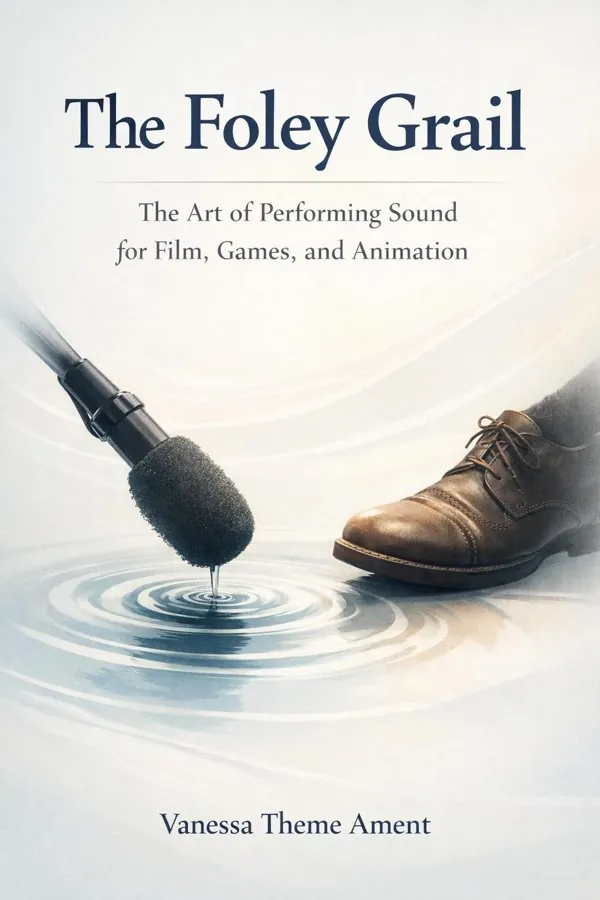
The Foley Grail: The Art of Performing Sound for Film, Games, and Animation: Summary & Key Insights
 10 min4 chaptersAudio available
What Is The Foley Grail: The Art of Performing Sound for Film, Games, and Animation About?
The Foley Grail: The Art of Performing Sound for Film, Games, and Animation by Vanessa Theme Ament is a music_film book spanning 4 pages. The Foley Grail is a comprehensive guide to the art and craft of Foley sound, the process of creating and performing sound effects for film, television, games, and animation. Written by veteran Foley artist Vanessa Theme Ament, the book explores the history, techniques, and creative process behind Foley work, offering practical insights into how sound enhances storytelling and emotional impact in visual media.
This FizzRead summary covers all 4 key chapters of The Foley Grail: The Art of Performing Sound for Film, Games, and Animation in approximately 10 minutes, distilling the most important ideas, arguments, and takeaways from Vanessa Theme Ament's work. Also available as an audio summary and Key Quotes Podcast.
The Foley Grail: The Art of Performing Sound for Film, Games, and Animation
The Foley Grail is a comprehensive guide to the art and craft of Foley sound, the process of creating and performing sound effects for film, television, games, and animation. Written by veteran Foley artist Vanessa Theme Ament, the book explores the history, techniques, and creative process behind Foley work, offering practical insights into how sound enhances storytelling and emotional impact in visual media.
Who Should Read The Foley Grail: The Art of Performing Sound for Film, Games, and Animation?
This book is perfect for anyone interested in music_film and looking to gain actionable insights in a short read. Whether you're a student, professional, or lifelong learner, the key ideas from The Foley Grail: The Art of Performing Sound for Film, Games, and Animation by Vanessa Theme Ament will help you think differently.
- ✓Readers who enjoy music_film and want practical takeaways
- ✓Professionals looking to apply new ideas to their work and life
- ✓Anyone who wants the core insights of The Foley Grail: The Art of Performing Sound for Film, Games, and Animation in just 10 minutes
Want the full summary?
Get instant access to this book summary and 100K+ more with Fizz Moment.
Get Free SummaryAvailable on App Store • Free to download
Key Chapters
When you enter a Foley stage, you’re stepping into a world designed for performance. It’s part theater, part laboratory. Every surface, every prop is chosen to conjure believable acoustic realities. The floor is divided into materials—concrete, wood, gravel—each mapped to the surfaces your characters walk on. There are racks of shoes organized by gender, style, and age, shelves of fabrics, weapons, keys, and the oddest assortment of everyday detritus imaginable. Nothing is too trivial; every texture holds potential.
But the true energy of the stage isn’t the material—it’s the people. Foley artists seldom work in isolation. The process thrives on collaboration with editors, mixers, directors, and assistants. Each contributes perspective on character, pacing, and emotion. The Foley artist’s job isn’t simply technical replication, but to interpret and perform sound musically, breathing timing and feeling into it. This is why I call Foley a performative art rather than a post-production task.
On a good day, the stage feels like a jazz session—one artist performing while another monitors playback, with rhythmic cues exchanged through glances and gestures. Technical expertise matters, yes, but spontaneity matters too. As artists, we often find that the perfect sound isn’t the literal one. A punch might sound better using a sack of wet leather than with actual physical hits. A cloth rustle might evoke intimacy more effectively when done with silk instead of denim. The judgment comes from empathy—what will the audience feel? This alignment between emotional intent and sonic texture defines professional Foley work.
Recording and synchronization bring their own challenges. In today’s digital environment, we use high-definition microphones and precise timecodes, but even with all this technology, the art still depends on human rhythm. I encourage my students to think of synchronization not as mechanical matching but as choreography—to move as the character moves, to feel as the scene breathes. That’s how Foley transcends imitation and becomes embodiment.
+ 2 more chapters — available in the FizzRead app
All Chapters in The Foley Grail: The Art of Performing Sound for Film, Games, and Animation
About the Author
Vanessa Theme Ament is an American Foley artist, sound editor, and educator with decades of experience in the film and television industry. She has worked on numerous major productions and is recognized for her expertise in sound performance and design. Ament also teaches film sound and has contributed significantly to the academic study of sound in media.
Get This Summary in Your Preferred Format
Read or listen to the The Foley Grail: The Art of Performing Sound for Film, Games, and Animation summary by Vanessa Theme Ament anytime, anywhere. FizzRead offers multiple formats so you can learn on your terms — all free.
Available formats: App · Audio · PDF · EPUB — All included free with FizzRead
Download The Foley Grail: The Art of Performing Sound for Film, Games, and Animation PDF and EPUB Summary
Key Quotes from The Foley Grail: The Art of Performing Sound for Film, Games, and Animation
“Foley’s story begins at the dawn of synchronized sound cinema.”
“When you enter a Foley stage, you’re stepping into a world designed for performance.”
Frequently Asked Questions about The Foley Grail: The Art of Performing Sound for Film, Games, and Animation
The Foley Grail: The Art of Performing Sound for Film, Games, and Animation by Vanessa Theme Ament is a music_film book that explores key ideas across 4 chapters. The Foley Grail is a comprehensive guide to the art and craft of Foley sound, the process of creating and performing sound effects for film, television, games, and animation. Written by veteran Foley artist Vanessa Theme Ament, the book explores the history, techniques, and creative process behind Foley work, offering practical insights into how sound enhances storytelling and emotional impact in visual media.
You Might Also Like
Beethoven: A Documentary Study
H. C. Robbins Landon
10 min
Cinema Speculation
Quentin Tarantino
10 min
Deep Listening: A Composer's Sound Practice
Pauline Oliveros
10 min
Dylan Goes Electric!: Newport, Seeger, Dylan, and the Night That Split the Sixties
Elijah Wald
10 min
Future Frames
Maria Walsh
10 min
Hamilton: The Revolution: Being the Complete Libretto of the Broadway Musical, with a True Account of Its Creation, and Concise Remarks on Hip-Hop, the Power of Stories, and the New America
Lin-Manuel Miranda, Jeremy McCarter
10 minBrowse by Category
Ready to read The Foley Grail: The Art of Performing Sound for Film, Games, and Animation?
Get the full summary and 100K+ more books with Fizz Moment.