
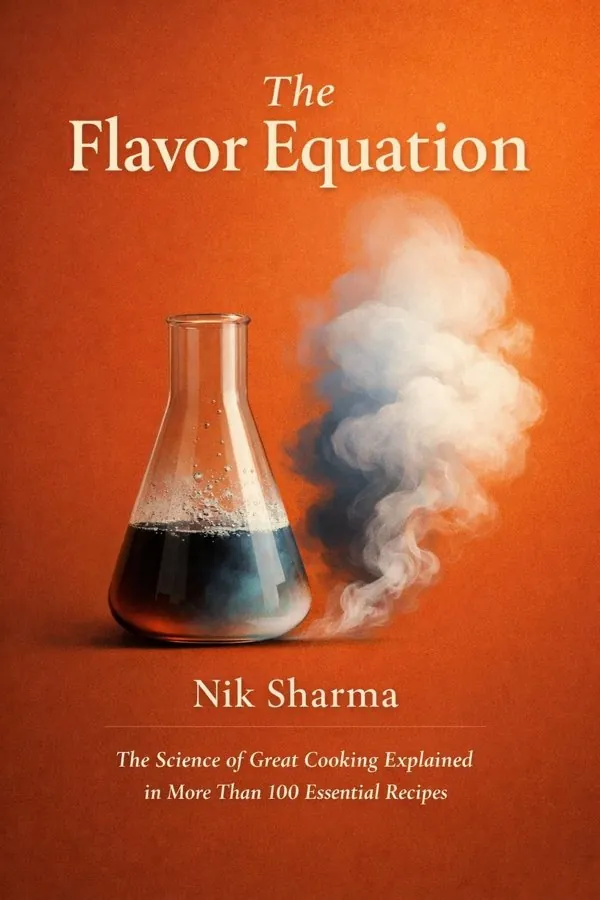
The Flavor Equation: The Science of Great Cooking Explained in More Than 100 Essential Recipes: Summary & Key Insights
by Nik Sharma
 10 min6 chaptersAudio available
What Is The Flavor Equation: The Science of Great Cooking Explained in More Than 100 Essential Recipes About?
The Flavor Equation: The Science of Great Cooking Explained in More Than 100 Essential Recipes by Nik Sharma is a popular_sci book spanning 6 pages. The Flavor Equation explores how science and emotion combine to create flavor in cooking. Nik Sharma, a molecular biologist turned food writer, explains the chemistry behind taste and aroma, and how color, sound, and memory influence our perception of food. The book includes over 100 recipes that apply these principles, blending scientific insight with culinary creativity.
This FizzRead summary covers all 6 key chapters of The Flavor Equation: The Science of Great Cooking Explained in More Than 100 Essential Recipes in approximately 10 minutes, distilling the most important ideas, arguments, and takeaways from Nik Sharma's work. Also available as an audio summary and Key Quotes Podcast.
The Flavor Equation: The Science of Great Cooking Explained in More Than 100 Essential Recipes
The Flavor Equation explores how science and emotion combine to create flavor in cooking. Nik Sharma, a molecular biologist turned food writer, explains the chemistry behind taste and aroma, and how color, sound, and memory influence our perception of food. The book includes over 100 recipes that apply these principles, blending scientific insight with culinary creativity.
Who Should Read The Flavor Equation: The Science of Great Cooking Explained in More Than 100 Essential Recipes?
This book is perfect for anyone interested in popular_sci and looking to gain actionable insights in a short read. Whether you're a student, professional, or lifelong learner, the key ideas from The Flavor Equation: The Science of Great Cooking Explained in More Than 100 Essential Recipes by Nik Sharma will help you think differently.
- ✓Readers who enjoy popular_sci and want practical takeaways
- ✓Professionals looking to apply new ideas to their work and life
- ✓Anyone who wants the core insights of The Flavor Equation: The Science of Great Cooking Explained in More Than 100 Essential Recipes in just 10 minutes
Want the full summary?
Get instant access to this book summary and 100K+ more with Fizz Moment.
Get Free SummaryAvailable on App Store • Free to download
Key Chapters
When we speak of flavor, we often equate it with taste. But scientifically, flavor is the integration of multiple senses working together—an orchestration of chemistry, physics, and biology within you. Our tongues only detect five primary tastes—sweet, salty, bitter, sour, and umami—but our sense of smell multiplies those possibilities into the hundreds of flavors we can distinguish. When volatile compounds rise from food and bind to receptors in the nose, they blend with taste signals from the tongue, creating a full flavor experience.
Chemistry, too, plays a crucial role. The Maillard reaction—those browning processes you see on bread crusts, roast meats, or coffee beans—is one of flavor’s great engines. It transforms sugar and protein molecules into thousands of new aromatic compounds, creating complexity and depth. Similarly, caramelization breaks down sugars under heat, bringing sweetness and bitterness into balance. Meanwhile, acids shape brightness and contrast; fats carry and mute aromas; salt amplifies perception. Behind a single bite is a chain of interactions that define everything from aroma release to mouthfeel.
But the science of flavor is not merely physical—it’s perceptual. Our brains construct flavor as much as our tongues perceive it. The color of food influences how sweet or sour we expect it to taste. Temperature affects our sense of intensity. Even the sound of a crisp crust can trigger anticipation. Understanding this allows us to cook consciously: to build experiences, not just dishes.
If chemistry provides the scaffolding for flavor, emotion provides the soul. Every flavor recall—every memory of your grandmother’s curry or the first coffee you ever tasted—is encoded not just in your taste buds but in your emotional centers. Neuroscience shows that the olfactory bulb, which processes smell, is directly connected to the limbic system, where memory and emotion reside. That’s why the scent of a stew simmering in the kitchen can instantly transport you to childhood.
Emotion also colors our perception of balance. When we are happy, foods taste brighter and more appealing; when we are sad or stressed, bitterness can dominate. Cultural background, too, teaches us what balance means. An American palate might prefer sweetness where an Indian one seeks heat or sourness. When I create recipes, I’m always aware that flavor is personal. The same dish may sing differently in another kitchen because it’s reinterpreted through someone else’s sensory and emotional lens.
In that sense, cooking becomes a practice of empathy. When we cook, we’re not only managing reactions and heat levels; we’re engaging in an emotional dialogue—with our ingredients, with those who eat, and with our own histories.
+ 4 more chapters — available in the FizzRead app
All Chapters in The Flavor Equation: The Science of Great Cooking Explained in More Than 100 Essential Recipes
About the Author
Nik Sharma is a molecular biologist, food writer, and photographer known for his scientific approach to cooking. He is the author of 'Season' and 'The Flavor Equation', and his work has appeared in publications such as The New York Times, Serious Eats, and Food52.
Get This Summary in Your Preferred Format
Read or listen to the The Flavor Equation: The Science of Great Cooking Explained in More Than 100 Essential Recipes summary by Nik Sharma anytime, anywhere. FizzRead offers multiple formats so you can learn on your terms — all free.
Available formats: App · Audio · PDF · EPUB — All included free with FizzRead
Download The Flavor Equation: The Science of Great Cooking Explained in More Than 100 Essential Recipes PDF and EPUB Summary
Key Quotes from The Flavor Equation: The Science of Great Cooking Explained in More Than 100 Essential Recipes
“When we speak of flavor, we often equate it with taste.”
“If chemistry provides the scaffolding for flavor, emotion provides the soul.”
Frequently Asked Questions about The Flavor Equation: The Science of Great Cooking Explained in More Than 100 Essential Recipes
The Flavor Equation: The Science of Great Cooking Explained in More Than 100 Essential Recipes by Nik Sharma is a popular_sci book that explores key ideas across 6 chapters. The Flavor Equation explores how science and emotion combine to create flavor in cooking. Nik Sharma, a molecular biologist turned food writer, explains the chemistry behind taste and aroma, and how color, sound, and memory influence our perception of food. The book includes over 100 recipes that apply these principles, blending scientific insight with culinary creativity.
You Might Also Like

Structures: Or Why Things Don"t Fall Down
J.E. Gordon
10 min
The Road to Wigan Pier
George Orwell
10 min
Bonk: The Curious Coupling of Science and Sex
Mary Roach
10 min
First Bite: How We Learn to Eat
Bee Wilson
10 min
In Pursuit Of The Unknown: 17 Equations That Changed The World
Ian Stewart
10 min
Napoleon's Buttons: 17 Molecules That Changed History
Penny Le Couteur and Jay Burreson
10 minBrowse by Category
Ready to read The Flavor Equation: The Science of Great Cooking Explained in More Than 100 Essential Recipes?
Get the full summary and 100K+ more books with Fizz Moment.