
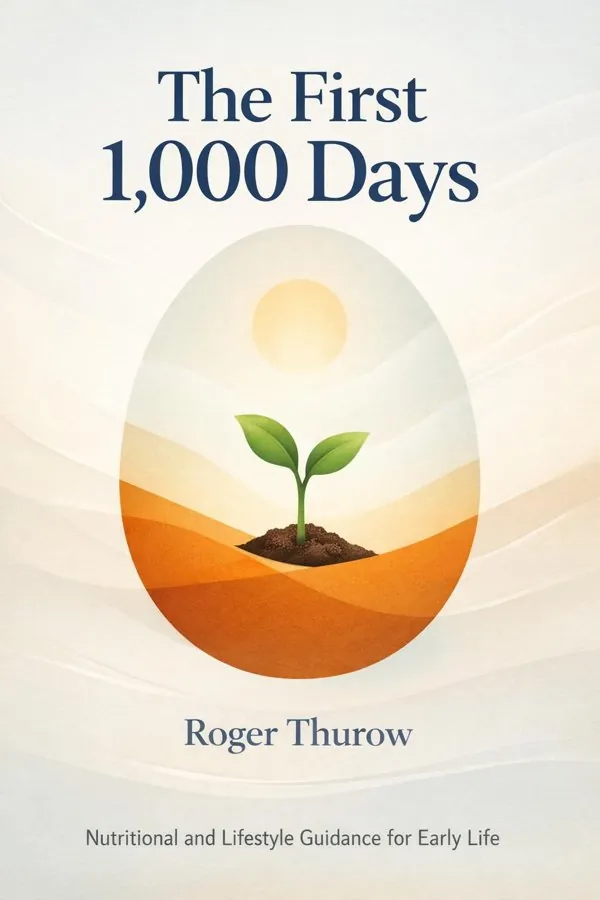
The First 1,000 Days: Nutritional and Lifestyle Guidance for Early Life: Summary & Key Insights
by Roger Thurow
 10 min9 chaptersAudio available
Key Takeaways from The First 1,000 Days: Nutritional and Lifestyle Guidance for Early Life
A child’s future can be shaped before that child ever speaks a word.
Before a child enters the world, the conditions of that child’s life are already being written.
The first food a child receives is more than nourishment; it is a biological shield and developmental signal.
A child can survive the first months well and still falter at the moment solid foods are introduced.
Hunger is visible, but malnutrition is often hidden in plain sight.
What Is The First 1,000 Days: Nutritional and Lifestyle Guidance for Early Life About?
The First 1,000 Days: Nutritional and Lifestyle Guidance for Early Life by Roger Thurow is a health_med book spanning 5 pages. The First 1,000 Days explores one of the most consequential windows in human life: the period from conception to a child’s second birthday. In this short span, the foundations of brain development, immune strength, physical growth, and lifelong health are laid. Roger Thurow argues that nutrition during these early months is not merely a matter of survival; it is a force that shapes learning capacity, earning potential, resilience, and even the prosperity of nations. Through reporting from communities in Africa, Asia, and Latin America, he shows how malnutrition quietly limits millions of children before they ever have a chance to thrive. What makes the book especially compelling is Thurow’s blend of human storytelling and public-health insight. Rather than presenting nutrition as an abstract policy topic, he connects it to mothers, farmers, health workers, and children whose futures are altered by what happens in the womb and in infancy. Drawing on years of reporting on hunger and development, Thurow writes with urgency, compassion, and authority. The result is a powerful account of why the first 1,000 days deserve the attention of parents, caregivers, educators, policymakers, and anyone concerned with human potential.
This FizzRead summary covers all 9 key chapters of The First 1,000 Days: Nutritional and Lifestyle Guidance for Early Life in approximately 10 minutes, distilling the most important ideas, arguments, and takeaways from Roger Thurow's work. Also available as an audio summary and Key Quotes Podcast.
The First 1,000 Days: Nutritional and Lifestyle Guidance for Early Life
The First 1,000 Days explores one of the most consequential windows in human life: the period from conception to a child’s second birthday. In this short span, the foundations of brain development, immune strength, physical growth, and lifelong health are laid. Roger Thurow argues that nutrition during these early months is not merely a matter of survival; it is a force that shapes learning capacity, earning potential, resilience, and even the prosperity of nations. Through reporting from communities in Africa, Asia, and Latin America, he shows how malnutrition quietly limits millions of children before they ever have a chance to thrive.
What makes the book especially compelling is Thurow’s blend of human storytelling and public-health insight. Rather than presenting nutrition as an abstract policy topic, he connects it to mothers, farmers, health workers, and children whose futures are altered by what happens in the womb and in infancy. Drawing on years of reporting on hunger and development, Thurow writes with urgency, compassion, and authority. The result is a powerful account of why the first 1,000 days deserve the attention of parents, caregivers, educators, policymakers, and anyone concerned with human potential.
Who Should Read The First 1,000 Days: Nutritional and Lifestyle Guidance for Early Life?
This book is perfect for anyone interested in health_med and looking to gain actionable insights in a short read. Whether you're a student, professional, or lifelong learner, the key ideas from The First 1,000 Days: Nutritional and Lifestyle Guidance for Early Life by Roger Thurow will help you think differently.
- ✓Readers who enjoy health_med and want practical takeaways
- ✓Professionals looking to apply new ideas to their work and life
- ✓Anyone who wants the core insights of The First 1,000 Days: Nutritional and Lifestyle Guidance for Early Life in just 10 minutes
Want the full summary?
Get instant access to this book summary and 100K+ more with Fizz Moment.
Get Free SummaryAvailable on App Store • Free to download
Key Chapters
A child’s future can be shaped before that child ever speaks a word. Thurow’s central argument is that the first thousand days—from conception to age two—form a brief but decisive window in which nutrition and care exert lifelong influence. During this period, the brain develops at astonishing speed, organs mature, bones and muscles grow, and the immune system learns how to respond to threats. If nutrition is inadequate, the damage can be severe and often irreversible, affecting cognition, growth, school performance, and adult productivity.
The book emphasizes that this is not simply an individual family issue; it is a social and economic one. Communities with widespread early malnutrition often face lower educational attainment, weaker work capacity, higher health costs, and intergenerational poverty. A nation’s development is therefore tied to whether its children are properly nourished before and after birth. Thurow draws on global research and field reporting to show that stunting is not just about short height. It is a marker of missed development and reduced potential.
Practical applications emerge clearly from this insight. Families can prioritize maternal nutrition, exclusive breastfeeding, vaccination, hygiene, and timely complementary feeding. Health systems can focus resources on prenatal care, growth monitoring, micronutrient support, and community education. Policymakers can see early nutrition not as charity, but as one of the highest-return public investments available.
Actionable takeaway: Treat the first 1,000 days as a non-negotiable priority—whether in the home, clinic, or policy arena—because delays in support during this window can carry lifelong consequences.
Before a child enters the world, the conditions of that child’s life are already being written. Thurow shows that nutrition in pregnancy is foundational because the mother’s body supplies the raw materials for fetal development. If her diet is lacking in calories, protein, iron, folate, iodine, zinc, and other essential nutrients, the baby’s growth may be compromised from the start. Low birth weight, impaired brain development, and greater vulnerability to illness can all begin in the womb.
This idea broadens the conversation about child health. It is not enough to intervene after birth if mothers themselves are undernourished, overworked, anemic, or unable to access prenatal care. Thurow repeatedly points to the reality that maternal well-being is inseparable from infant well-being. A healthy pregnancy depends not only on food, but also on rest, sanitation, emotional support, health services, and spacing between pregnancies.
In practical terms, this means communities and families should support women before and during pregnancy. Examples include regular antenatal visits, iron-folic acid supplementation, iodized salt, deworming where appropriate, malaria prevention in affected regions, and balanced meals that include diverse food groups. Even in low-resource settings, simple interventions—kitchen gardens, nutrition counseling, community health workers, and women’s support groups—can improve outcomes.
Thurow also challenges readers to see pregnancy not as a private event only, but as a shared social responsibility. When mothers lack access to food, education, or care, society bears the long-term cost.
Actionable takeaway: Support maternal nutrition early—ideally before conception and throughout pregnancy—because the path to a healthier child begins with a healthier mother.
The first food a child receives is more than nourishment; it is a biological shield and developmental signal. Thurow highlights breastfeeding as one of the most effective and accessible interventions in early life. Breast milk provides ideal nutrition, antibodies, enzymes, and hormones tailored to the infant’s needs. It supports immunity, reduces infection risk, promotes healthy growth, and contributes to cognitive development. Especially in areas where clean water and safe formula preparation are uncertain, breastfeeding can be lifesaving.
The book underscores the importance of early initiation and exclusive breastfeeding during the first six months when possible. This means the baby receives only breast milk, without water, porridge, or other foods that can displace nutrition or introduce pathogens. Yet Thurow is careful to show that breastfeeding is not simply a matter of personal choice or maternal willpower. Social norms, family pressure, work demands, lack of maternity support, aggressive formula marketing, and poor counseling can all undermine it.
Practical examples include hospital policies that encourage immediate skin-to-skin contact, community peer counselors who help mothers with latching difficulties, and workplaces that provide protected time and private space for milk expression. Fathers, grandmothers, and local leaders also matter. When they understand the benefits of breastfeeding, mothers are less likely to face conflicting advice.
Thurow’s broader point is that breastfeeding success depends on systems of support, not just individual behavior. Mothers need information, respect, and practical help.
Actionable takeaway: Create an environment that makes breastfeeding easier—from birth practices to family support—because one of the best nutrition interventions for infants is often the one closest at hand.
A child can survive the first months well and still falter at the moment solid foods are introduced. Thurow explains that the period around six months is especially vulnerable because breast milk alone is no longer enough to meet all nutritional needs. Children now require complementary foods that are nutrient-dense, safe, frequent, and age-appropriate. When those foods are too watery, too infrequent, or lacking in diversity, growth can quickly slow and deficiencies can emerge.
This is where many families face a difficult reality. Even loving caregivers may rely on thin porridge or staple grains that fill the stomach but do not adequately nourish the developing brain and body. Cultural feeding traditions, limited incomes, food shortages, and lack of nutrition knowledge can all affect what children receive. Thurow shows that the issue is rarely neglect; more often, it is constraint.
Practical applications include enriching common foods with mashed beans, eggs, groundnuts, lentils, dairy, fruits, vegetables, or oils when available. Feeding frequency matters too: small children need several meals and snacks a day because their stomachs are small but their nutrient needs are high. Hygiene is equally important. Unsafe preparation or contaminated water can trigger diarrhea, which then undermines nutrient absorption.
Thurow encourages solutions grounded in local food cultures rather than imported ideals. Nutrition programs work best when they build on familiar ingredients and caregiver routines.
Actionable takeaway: After six months, focus on food quality, meal frequency, and safe preparation—because timely complementary feeding can determine whether early growth continues or begins to unravel.
Hunger is visible, but malnutrition is often hidden in plain sight. One of Thurow’s most important contributions is showing that malnutrition cannot be reduced to an empty stomach. A child may consume enough calories and still suffer from deficiencies in iron, vitamin A, iodine, zinc, or protein. Another child may repeatedly lose nutrients through infection, diarrhea, or intestinal illness caused by unsafe water and poor sanitation. In other words, nutrition depends on what is eaten, what is absorbed, and what the body must fight against.
This broader view helps explain why solving malnutrition requires more than distributing food. Health care, clean water, sanitation, hygiene, maternal education, vaccination, and disease prevention all interact with nutrition. A child who is constantly ill may fail to grow even in a household where food is present. Likewise, a mother who lacks nutrition knowledge may unknowingly feed in ways that satisfy fullness but not development.
Practical examples include handwashing before feeding, treating drinking water, deworming where recommended, oral rehydration during diarrhea, vitamin supplementation, and growth monitoring that flags concerns early. Community programs that combine nutrition counseling with immunization and sanitation efforts tend to produce stronger results than isolated interventions.
Thurow’s analysis also pushes readers to look beyond visible famine. Chronic undernutrition, repeated illness, and micronutrient deficits can quietly alter a life without dramatic headlines.
Actionable takeaway: Address malnutrition holistically by combining food access with health, hygiene, and caregiver education—because growth depends on the whole environment, not calories alone.
When women lack power, children often lack nourishment. Thurow repeatedly demonstrates that child nutrition is deeply connected to the social and economic position of mothers. A woman’s access to education, income, land, health care, and decision-making authority influences what she can feed herself during pregnancy and what she can provide her child afterward. If she eats last, has little say in household spending, marries too young, or must return to labor immediately after birth, the child’s first 1,000 days become more precarious.
This idea shifts nutrition from a narrow feeding issue to a gender issue. Thurow shows that mothers often know what their children need but are constrained by poverty, custom, and unequal power. Improving nutrition therefore requires investing in girls’ education, delaying early marriage, strengthening maternal health services, improving rural livelihoods, and giving women more control over household resources.
In practice, this can mean cash transfers directed to mothers, agricultural training for women farmers, prenatal services designed around women’s schedules, or community programs that include fathers in discussions about maternal rest and infant feeding. Even simple changes—such as ensuring pregnant women receive priority portions during food scarcity—can have outsized effects.
Importantly, Thurow does not romanticize maternal sacrifice. He insists that mothers should not be expected to overcome structural disadvantages through effort alone. Better outcomes come when systems recognize women as central agents of development.
Actionable takeaway: Improve child nutrition by strengthening women’s education, autonomy, and access to resources—because healthier children are rarely possible without more empowered mothers.
Families do not make nutrition decisions in a vacuum; they choose from what the food system makes available, affordable, and culturally normal. Thurow connects the first 1,000 days to agriculture, markets, pricing, infrastructure, and public policy. If local food systems produce mainly low-diversity staples, if roads are poor, if nutrient-rich foods are too expensive, or if storage is inadequate, then families’ feeding options shrink dramatically. Nutrition advice means little when eggs, vegetables, legumes, or fortified foods are inaccessible.
This insight matters because it moves the conversation upstream. Child malnutrition is not only about what caregivers know, but also about what their environment permits. Thurow shows that better nutrition often depends on more resilient local agriculture, improved supply chains, crop diversity, food fortification, and policies that support smallholder farmers—especially women farmers, who often grow much of the household food in low-income settings.
Practical applications include home gardens, biofortified crops, school and community nutrition programs, local milling fortification, and agricultural extension services that emphasize both yield and diet quality. Policymakers can also reduce barriers by improving rural transport, supporting cold chains, and stabilizing food prices during crises.
Thurow’s broader lesson is that nutrition is embedded in systems. A healthy meal for a child depends on land, labor, policy, markets, and climate as much as on household intention.
Actionable takeaway: Think beyond feeding advice and strengthen the food system around families—because lasting nutrition gains require nutritious foods to be physically and economically within reach.
Knowledge saves lives only when it is translated into action. Thurow presents the first 1,000 days as a triumph of scientific understanding that still faces a gap in implementation. Researchers, pediatricians, and global health experts have generated strong evidence on maternal nutrition, breastfeeding, micronutrients, growth monitoring, and early childhood development. The challenge is that this knowledge often fails to reach the families and communities that need it most, or it is not adequately supported by public systems.
The book shows that policy matters because early-life nutrition requires organized delivery: trained health workers, prenatal clinics, supplementation programs, immunization services, breastfeeding protections, sanitation infrastructure, and data systems that identify vulnerable children. Isolated efforts can help, but scalable change depends on government commitment, donor coordination, and community trust. Thurow also emphasizes accountability. Nutrition goals should be measured, funded, and tracked with the seriousness given to economic growth or national security.
Examples of effective policy include maternity leave protections, national salt iodization, child growth campaigns, fortified staple programs, and integrated maternal-child health services. Local adaptation is crucial; what works in one region may need adjustment elsewhere. But the core principle remains the same: the science is already compelling enough to justify action.
Thurow’s moral argument is especially powerful here. Failing to apply what we know about early nutrition is not simply inefficient; it is ethically troubling because preventable harm continues despite clear evidence.
Actionable takeaway: Support policies that turn nutrition science into routine care and public investment—because evidence only changes lives when institutions put it to work.
Few investments offer returns as profound as nourishing a child at the very beginning of life. Thurow frames the first 1,000 days not only as a medical concern, but as a moral test and economic strategy. When societies fail to protect this window, they accept preventable losses in human capability. Children who are stunted or cognitively affected by early undernutrition may struggle in school, earn less as adults, and face worse health outcomes. Scaled across millions of lives, this becomes a national burden.
Yet Thurow resists reducing children to productivity statistics. His reporting keeps the human stakes at the center: every child deserves the chance to grow, learn, and flourish. Nutrition in early life is therefore about justice as much as development. It asks whether the circumstances of birth will unfairly dictate the horizon of a person’s life.
This dual framing is persuasive because it speaks to both compassion and practicality. Governments can justify nutrition programs because they reduce future health costs and strengthen workforces. Communities can support mothers and infants because it is simply the right thing to do. International organizations can prioritize early nutrition because it advances education, gender equity, and poverty reduction all at once.
A practical application of this mindset is to stop treating nutrition programs as optional add-ons during tight budgets. They are foundational infrastructure for human development. Thurow urges readers to see urgency where neglect has too often become normal.
Actionable takeaway: Advocate for early-life nutrition as both a basic human obligation and a smart societal investment—because protecting children early benefits conscience, communities, and economies alike.
All Chapters in The First 1,000 Days: Nutritional and Lifestyle Guidance for Early Life
About the Author
Roger Thurow is an American journalist and author whose work focuses on hunger, food security, and global development. He spent many years as a foreign correspondent for The Wall Street Journal, where he reported on international affairs with particular attention to the human impact of poverty and crisis. He later served as a senior fellow for global agriculture and food policy at the Chicago Council on Global Affairs. Thurow is widely recognized for translating complex issues such as malnutrition, agricultural policy, and childhood development into clear, compelling narratives. In The First 1,000 Days, he combines reporting, public-health research, and on-the-ground storytelling to show why nutrition in the earliest stage of life is central to human potential and national progress.
Get This Summary in Your Preferred Format
Read or listen to the The First 1,000 Days: Nutritional and Lifestyle Guidance for Early Life summary by Roger Thurow anytime, anywhere. FizzRead offers multiple formats so you can learn on your terms — all free.
Available formats: App · Audio · PDF · EPUB — All included free with FizzRead
Download The First 1,000 Days: Nutritional and Lifestyle Guidance for Early Life PDF and EPUB Summary
Key Quotes from The First 1,000 Days: Nutritional and Lifestyle Guidance for Early Life
“A child’s future can be shaped before that child ever speaks a word.”
“Before a child enters the world, the conditions of that child’s life are already being written.”
“The first food a child receives is more than nourishment; it is a biological shield and developmental signal.”
“A child can survive the first months well and still falter at the moment solid foods are introduced.”
“Hunger is visible, but malnutrition is often hidden in plain sight.”
Frequently Asked Questions about The First 1,000 Days: Nutritional and Lifestyle Guidance for Early Life
The First 1,000 Days: Nutritional and Lifestyle Guidance for Early Life by Roger Thurow is a health_med book that explores key ideas across 9 chapters. The First 1,000 Days explores one of the most consequential windows in human life: the period from conception to a child’s second birthday. In this short span, the foundations of brain development, immune strength, physical growth, and lifelong health are laid. Roger Thurow argues that nutrition during these early months is not merely a matter of survival; it is a force that shapes learning capacity, earning potential, resilience, and even the prosperity of nations. Through reporting from communities in Africa, Asia, and Latin America, he shows how malnutrition quietly limits millions of children before they ever have a chance to thrive. What makes the book especially compelling is Thurow’s blend of human storytelling and public-health insight. Rather than presenting nutrition as an abstract policy topic, he connects it to mothers, farmers, health workers, and children whose futures are altered by what happens in the womb and in infancy. Drawing on years of reporting on hunger and development, Thurow writes with urgency, compassion, and authority. The result is a powerful account of why the first 1,000 days deserve the attention of parents, caregivers, educators, policymakers, and anyone concerned with human potential.
You Might Also Like
On Immunity
Eula Biss
10 min
The Three-Body Problem
Liu Cixin
10 min
Community Health Volunteer Toolkit: Training and Practical Activities
World Health Organization
10 min
Healing Back Pain: The Mind-Body Connection
John E. Sarno
10 min
Health Literacy for All: Practical Guides to Communicate Health Information (Compilations)
World Health Organization
10 min
The Complete Guide to Sports Supplements: An Evidence-Based Review
Anita Bean
10 minBrowse by Category
Ready to read The First 1,000 Days: Nutritional and Lifestyle Guidance for Early Life?
Get the full summary and 100K+ more books with Fizz Moment.