
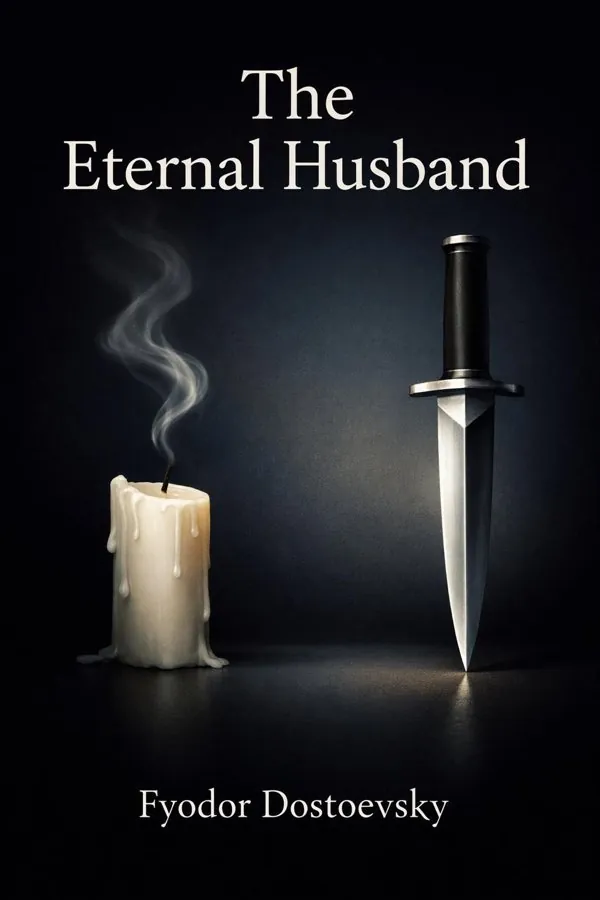
The Eternal Husband: Summary & Key Insights
 10 min9 chaptersAudio available
Key Takeaways from The Eternal Husband
One of Dostoevsky’s most unsettling insights is that people do not merely suffer humiliation; they can begin to live inside it.
The past rarely stays buried when it has moral weight.
Jealousy often pretends to be proof of love, but Dostoevsky reveals how easily it becomes a form of possession.
Few writers understood better than Dostoevsky that insight into one’s flaws does not automatically produce change.
Behind the posturing and social performance of Dostoevsky’s male characters lies a deep fragility.
What Is The Eternal Husband About?
The Eternal Husband by Fyodor Dostoevsky is a classics book. What happens when love survives only as humiliation, jealousy, and the need to possess? Fyodor Dostoevsky’s The Eternal Husband, first published in 1870, is a sharp, psychologically charged novella about betrayal, vanity, memory, and the strange dependence that can exist between rivals. At its center is a tense relationship between Aleksei Velchaninov, a self-absorbed man haunted by his past, and Pavel Pavlovich Trusotsky, the husband of Velchaninov’s former lover. What begins as an awkward reunion gradually turns into a disturbing emotional duel, full of suspicion, resentment, pity, and cruelty. Beneath its compact plot, the novella examines guilt, masculine pride, the wounds of adultery, and the human tendency to repeat degrading patterns. Dostoevsky matters because few writers have explored inner conflict with such intensity and precision. Best known for Crime and Punishment, The Brothers Karamazov, and The Idiot, he brought unmatched psychological depth to even his shorter fiction. The Eternal Husband remains deeply relevant because it reveals how people are shaped not only by what they suffer, but by the roles they cannot stop playing in love, marriage, and self-deception.
This FizzRead summary covers all 9 key chapters of The Eternal Husband in approximately 10 minutes, distilling the most important ideas, arguments, and takeaways from Fyodor Dostoevsky's work. Also available as an audio summary and Key Quotes Podcast.
The Eternal Husband
What happens when love survives only as humiliation, jealousy, and the need to possess? Fyodor Dostoevsky’s The Eternal Husband, first published in 1870, is a sharp, psychologically charged novella about betrayal, vanity, memory, and the strange dependence that can exist between rivals. At its center is a tense relationship between Aleksei Velchaninov, a self-absorbed man haunted by his past, and Pavel Pavlovich Trusotsky, the husband of Velchaninov’s former lover. What begins as an awkward reunion gradually turns into a disturbing emotional duel, full of suspicion, resentment, pity, and cruelty. Beneath its compact plot, the novella examines guilt, masculine pride, the wounds of adultery, and the human tendency to repeat degrading patterns. Dostoevsky matters because few writers have explored inner conflict with such intensity and precision. Best known for Crime and Punishment, The Brothers Karamazov, and The Idiot, he brought unmatched psychological depth to even his shorter fiction. The Eternal Husband remains deeply relevant because it reveals how people are shaped not only by what they suffer, but by the roles they cannot stop playing in love, marriage, and self-deception.
Who Should Read The Eternal Husband?
This book is perfect for anyone interested in classics and looking to gain actionable insights in a short read. Whether you're a student, professional, or lifelong learner, the key ideas from The Eternal Husband by Fyodor Dostoevsky will help you think differently.
- ✓Readers who enjoy classics and want practical takeaways
- ✓Professionals looking to apply new ideas to their work and life
- ✓Anyone who wants the core insights of The Eternal Husband in just 10 minutes
Want the full summary?
Get instant access to this book summary and 100K+ more with Fizz Moment.
Get Free SummaryAvailable on App Store • Free to download
Key Chapters
One of Dostoevsky’s most unsettling insights is that people do not merely suffer humiliation; they can begin to live inside it. In The Eternal Husband, Pavel Pavlovich is not just a wronged husband. He seems almost defined by the position of being deceived, diminished, and emotionally dependent on stronger personalities. Dostoevsky uses him to show that repeated humiliation can become a role a person unconsciously inhabits, even protects, because it gives structure to an otherwise unstable self.
The novella’s title points to this pattern. The “eternal husband” is not simply a married man. He is a type: a man destined, or at least psychologically prepared, to be secondary, mocked, betrayed, and yet still attached to the very people who degrade him. This is what makes Pavel Pavlovich both tragic and frightening. He is ridiculous, but he is also dangerous because his wounded pride is never fully passive. Humiliation curdles into resentment, manipulation, and a need to regain power.
This idea has modern relevance. People can become trapped in identities shaped by repeated rejection or disrespect: the employee who always expects to be overlooked, the friend who keeps returning to unequal relationships, or the partner who confuses suffering with loyalty. When humiliation becomes familiar, it can start to feel safer than freedom because it confirms what one already believes about oneself.
Dostoevsky does not offer easy liberation, but he does expose the trap. Recognizing a degrading role is the first step toward breaking it. Actionable takeaway: notice where you may be repeating an identity built on being undervalued, and ask what would change if you stopped performing that role for others.
The past rarely stays buried when it has moral weight. Velchaninov initially appears as a sophisticated, restless man drifting through life, but his reunion with Pavel Pavlovich forces old wrongdoing back into consciousness. Dostoevsky shows that guilt does not always arrive as open confession or clear remorse. More often, it returns indirectly, through discomfort, irritation, unease, and the presence of someone who embodies what we would rather forget.
Velchaninov once had an affair with Pavel Pavlovich’s wife, and that fact poisons every interaction between the two men. Even before the full emotional implications are confronted, the atmosphere is heavy with unfinished moral business. Dostoevsky is brilliant at depicting this kind of psychological recoil. Velchaninov tries to maintain superiority, wit, and distance, but his composure weakens as the reality of his past actions presses in. Guilt here is not abstract. It becomes interpersonal, physical, and inescapable.
This dynamic matters beyond literature. Many people imagine the past as something manageable if ignored. Yet unresolved harm often reappears in strained family gatherings, awkward reunions, or recurring emotional patterns. A person who once acted selfishly may later find that confidence turns brittle whenever old relationships resurface. The event may be over, but its meaning remains active.
Dostoevsky suggests that guilt cannot be mastered by charm or intellect alone. It demands recognition. Avoidance may preserve comfort for a while, but it deepens inner fragmentation. Actionable takeaway: if an encounter or memory repeatedly unsettles you, ask whether it points to unresolved responsibility, and consider whether honest acknowledgment would relieve more than continued denial.
Jealousy often pretends to be proof of love, but Dostoevsky reveals how easily it becomes a form of possession. In The Eternal Husband, emotional attachment is tangled with rivalry, wounded pride, and the desire to dominate. Pavel Pavlovich is not simply grieving his late wife or mourning betrayal. His jealousy extends beyond affection into a compulsive need to define himself through ownership, especially over the women connected to his sense of masculine worth.
This is part of what gives the novella its claustrophobic tension. Desire is rarely pure. Characters are not moved by tenderness alone, but by vanity, comparison, and the fear of being made ridiculous. Even when they seek closeness, they often want reassurance that they still matter more than someone else. In that environment, love becomes competitive. The beloved person is treated less as an independent self and more as a mirror reflecting status, power, or humiliation.
Dostoevsky captures a truth that remains recognizable today. Jealousy can appear in romantic relationships, friendships, workplaces, and families. A person may claim devotion while actually trying to control attention, loyalty, or access. For example, a partner who monitors every interaction may say they are protecting the relationship, when in reality they are responding to insecurity and the need to possess. The same pattern appears when someone cannot celebrate another’s happiness unless they remain central to it.
The novella warns that possessiveness deforms both the one who clings and the one being claimed. Where love requires respect for another’s freedom, jealousy often demands submission. Actionable takeaway: when strong jealousy arises, ask whether you are protecting a relationship or trying to control a person, and choose communication over surveillance or emotional pressure.
Few writers understood better than Dostoevsky that insight into one’s flaws does not automatically produce change. Velchaninov is not a simple fool. He is perceptive, intelligent, and at moments painfully aware of his vanity, selfishness, and moral inconsistency. Yet this awareness does not make him good. It often makes him more complicated, more defensive, and more capable of rationalizing his behavior.
This is a central tension in The Eternal Husband. Velchaninov can observe himself with unusual clarity, but he still harms others, delays decisive action, and vacillates between guilt and self-importance. Dostoevsky refuses the comforting idea that introspection is enough. A person may understand his own contradictions and still remain trapped in them. In some cases, self-awareness even becomes theatrical, a way of seeming honest without making sacrifice.
That insight feels especially modern. Many people are fluent in the language of psychology. They can name their patterns, discuss their attachment style, and analyze their behavior in detail. Yet naming a flaw is not the same as correcting it. Someone might say, “I know I sabotage relationships,” while continuing to do so. Another might admit to selfishness but still expect forgiveness without repair.
Dostoevsky’s moral psychology is demanding because it asks more than recognition. Real change requires action, humility, and accountability. It involves accepting not just that one is flawed, but that others have paid the price of those flaws. Actionable takeaway: when you catch yourself accurately describing a bad habit, ask what concrete behavior must change next; insight matters only when it leads to responsibility.
Behind the posturing and social performance of Dostoevsky’s male characters lies a deep fragility. The Eternal Husband is, among other things, an anatomy of masculine vanity: the need to appear superior, sexually triumphant, emotionally composed, and socially significant. Yet the novella shows how easily this image collapses. Both Pavel Pavlovich and Velchaninov are ruled, in different ways, by insecurity. Their pride is not strength but a defensive shell covering fear, shame, and dependence.
Pavel Pavlovich clings to ritual, manners, and conventional roles, yet beneath that surface is humiliation and rage. Velchaninov projects intelligence and worldly sophistication, yet he too is haunted by anxiety and moral instability. Their conflict is not merely personal. It dramatizes how men can become trapped by ideas of honor and dominance that leave little room for honest vulnerability.
This theme remains powerful because masculine vanity still shapes modern behavior. It appears when someone would rather win an argument than repair a relationship, when betrayal is treated as an injury to ego rather than trust, or when emotional pain is converted into sarcasm, aggression, or manipulation. The performance of toughness often hides an inability to face weakness directly.
Dostoevsky does not excuse these men, but he understands them. He shows that vanity is often a distorted response to inner emptiness. If men are taught to seek worth through control, conquest, or superiority, they become brittle whenever life exposes dependence or loss. Actionable takeaway: examine whether your pride is protecting genuine values or merely shielding insecurity, and practice naming disappointment or hurt before it hardens into contempt.
In Dostoevsky’s fiction, children often expose truths that adults hide from themselves, and The Eternal Husband is no exception. The figure of Liza, the child caught in the emotional wreckage of the adults around her, brings the novella’s moral stakes into sharper focus. Through her vulnerability, Dostoevsky shows that adultery, selfishness, and emotional games are never purely private matters. Adult deception spills outward, harming those least able to protect themselves.
Liza matters because she transforms the story from a duel of male egos into a broader moral tragedy. Velchaninov and Pavel Pavlovich may obsess over pride, betrayal, and revenge, but a child experiences the consequences in more naked terms: insecurity, neglect, confusion, and suffering. Dostoevsky uses her to puncture self-justifying narratives. What might seem to an adult like a complicated romantic history appears, from a child’s perspective, as abandonment and instability.
This remains one of the novella’s most practical lessons. Adults often minimize the impact of their conflicts, especially when they are consumed by their own pain. Yet children notice tone, absence, inconsistency, and emotional chaos even when they do not understand the facts. A hostile co-parenting relationship, repeated broken promises, or a household shaped by secrets can wound long before anyone explains what is happening.
Dostoevsky insists that moral life cannot be measured only by adult intentions or feelings. We must also ask who bears the consequences. Actionable takeaway: when navigating conflict, especially in families, look beyond your own grievance and ask how your behavior affects the most vulnerable person in the room.
Some of the strongest bonds in human life are not loving ones but rivalrous ones. The strange relationship between Velchaninov and Pavel Pavlovich demonstrates that enemies can become intensely attached to each other, especially when they are linked by betrayal, comparison, and unresolved emotional debt. Dostoevsky understands that rivalry is a form of intimacy because it keeps two people psychologically entangled even when affection is impossible.
What makes the novella so gripping is that the two men cannot simply walk away. Each represents something intolerable yet irresistible to the other. Pavel Pavlovich seems drawn to the very man who humiliated him. Velchaninov oscillates between disgust, pity, curiosity, and responsibility. Their interactions feel unstable because they are never only hostile. There is fascination there, and dependence too. The rival becomes a witness, a judge, and a mirror.
This pattern appears in everyday life more often than people realize. Colleagues can become obsessed with outdoing one another, ex-partners can remain emotionally fused through conflict, and family members can sustain lifelong rivalries that feel impossible to end. In such cases, what looks like hatred may conceal a need to remain relevant to the other person.
Dostoevsky’s insight is useful because it helps explain why some conflicts endure long after practical reasons disappear. Rivalry offers identity. It gives a person someone to blame, measure against, or seek recognition from. But it also drains energy and narrows life. Actionable takeaway: if a conflict occupies too much mental space, ask whether you are still using your rival to define yourself, and reclaim attention for values and relationships that are not built on opposition.
A disturbing pattern runs through The Eternal Husband: people often reenact the very structures that degrade them. Pavel Pavlovich resents humiliation, yet behaves in ways that invite it. Velchaninov dislikes his own moral shallowness, yet drifts back into vanity and self-serving choices. Dostoevsky suggests that human beings are not always driven toward freedom; they are often driven toward repetition, even when repetition hurts.
This is one reason the novella feels so psychologically modern. Instead of presenting character as a stable essence, Dostoevsky portrays people as caught in cycles. They return to familiar roles because those roles provide predictability. A person may unconsciously prefer known suffering to unknown transformation. The eternal husband is “eternal” not because fate has cursed him, but because he keeps reoccupying a script that has become part of his identity.
The same logic applies widely. Someone raised around emotional neglect may repeatedly choose unavailable partners. A worker who complains about exploitation may never challenge unfair treatment because compliance feels normal. A friend who resents being used may still offer endless access because usefulness has become their route to belonging.
Dostoevsky does not frame repetition as simple weakness. It arises from desire, fear, habit, and self-concept. But by dramatizing it so sharply, he invites readers to ask where they are participating in their own captivity. That question is uncomfortable, but necessary. Actionable takeaway: identify one painful pattern that keeps recurring in your life, write down the role you tend to play within it, and test one small behavior that interrupts the script.
All Chapters in The Eternal Husband
About the Author
Fyodor Dostoevsky was a Russian novelist, journalist, and short story writer born in Moscow in 1821. He is widely regarded as one of the greatest psychological writers in literary history. Early in life, he gained recognition for Poor Folk, but his career was transformed by arrest and exile after involvement in a political discussion group. Those experiences, along with struggles with epilepsy, poverty, and gambling, deeply shaped his fiction. Dostoevsky’s major works include Crime and Punishment, The Idiot, Demons, Notes from Underground, and The Brothers Karamazov. His writing explores moral conflict, suffering, faith, freedom, guilt, and the divided self with exceptional intensity. He died in 1881, but his influence on literature, philosophy, and psychology remains immense.
Get This Summary in Your Preferred Format
Read or listen to the The Eternal Husband summary by Fyodor Dostoevsky anytime, anywhere. FizzRead offers multiple formats so you can learn on your terms — all free.
Available formats: App · Audio · PDF · EPUB — All included free with FizzRead
Download The Eternal Husband PDF and EPUB Summary
Key Quotes from The Eternal Husband
“One of Dostoevsky’s most unsettling insights is that people do not merely suffer humiliation; they can begin to live inside it.”
“The past rarely stays buried when it has moral weight.”
“Jealousy often pretends to be proof of love, but Dostoevsky reveals how easily it becomes a form of possession.”
“Few writers understood better than Dostoevsky that insight into one’s flaws does not automatically produce change.”
“Behind the posturing and social performance of Dostoevsky’s male characters lies a deep fragility.”
Frequently Asked Questions about The Eternal Husband
The Eternal Husband by Fyodor Dostoevsky is a classics book that explores key ideas across 9 chapters. What happens when love survives only as humiliation, jealousy, and the need to possess? Fyodor Dostoevsky’s The Eternal Husband, first published in 1870, is a sharp, psychologically charged novella about betrayal, vanity, memory, and the strange dependence that can exist between rivals. At its center is a tense relationship between Aleksei Velchaninov, a self-absorbed man haunted by his past, and Pavel Pavlovich Trusotsky, the husband of Velchaninov’s former lover. What begins as an awkward reunion gradually turns into a disturbing emotional duel, full of suspicion, resentment, pity, and cruelty. Beneath its compact plot, the novella examines guilt, masculine pride, the wounds of adultery, and the human tendency to repeat degrading patterns. Dostoevsky matters because few writers have explored inner conflict with such intensity and precision. Best known for Crime and Punishment, The Brothers Karamazov, and The Idiot, he brought unmatched psychological depth to even his shorter fiction. The Eternal Husband remains deeply relevant because it reveals how people are shaped not only by what they suffer, but by the roles they cannot stop playing in love, marriage, and self-deception.
More by Fyodor Dostoevsky
You Might Also Like




Browse by Category
Ready to read The Eternal Husband?
Get the full summary and 100K+ more books with Fizz Moment.