
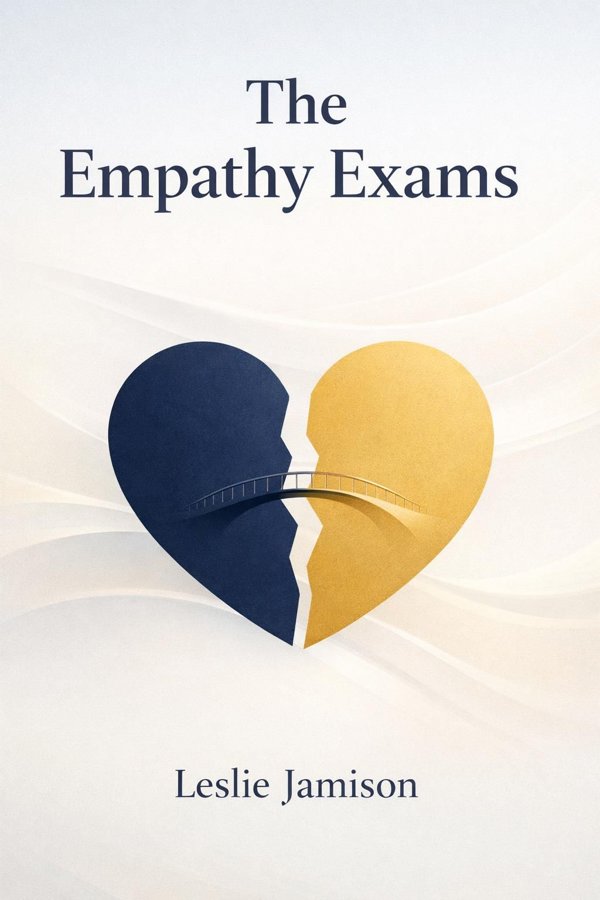
The Empathy Exams: Summary & Key Insights
 10 min9 chaptersAudio available
What Is The Empathy Exams About?
The Empathy Exams by Leslie Jamison is a sociology book spanning 9 pages. A collection of essays that explore the concept of empathy through diverse experiences such as illness, violence, incarceration, and reality television. Leslie Jamison examines how we perceive and respond to the pain of others, blending personal narrative with cultural criticism to illuminate the complexities of compassion and human connection.
This FizzRead summary covers all 9 key chapters of The Empathy Exams in approximately 10 minutes, distilling the most important ideas, arguments, and takeaways from Leslie Jamison's work. Also available as an audio summary and Key Quotes Podcast.
The Empathy Exams
A collection of essays that explore the concept of empathy through diverse experiences such as illness, violence, incarceration, and reality television. Leslie Jamison examines how we perceive and respond to the pain of others, blending personal narrative with cultural criticism to illuminate the complexities of compassion and human connection.
Who Should Read The Empathy Exams?
This book is perfect for anyone interested in sociology and looking to gain actionable insights in a short read. Whether you're a student, professional, or lifelong learner, the key ideas from The Empathy Exams by Leslie Jamison will help you think differently.
- ✓Readers who enjoy sociology and want practical takeaways
- ✓Professionals looking to apply new ideas to their work and life
- ✓Anyone who wants the core insights of The Empathy Exams in just 10 minutes
Want the full summary?
Get instant access to this book summary and 100K+ more with Fizz Moment.
Get Free SummaryAvailable on App Store • Free to download
Key Chapters
When illness moved from metaphor to intimacy—when I became the one in pain—I began to see the strange choreography of empathy more clearly. My own medical experiences exposed not only physical vulnerability but the moral economy surrounding it: which kinds of pain are believed, which dismissed, who gets to claim the stage of suffering. There were moments when my pain felt like a performance I couldn’t control, one I doubted anyone would find convincing.
Writing about my illness meant confessing not only the pain itself, but my ambivalence about it—how I wanted to be believed, yet feared needing to be. Our culture tends to reward stoicism, even as it sentimentalizes vulnerability. Within that contradiction, patients can feel invisible unless they narrate their pain in the right language. I felt that pressure too. The more I tried to sound authentic, the more artificial I became.
In exploring this dynamic, I started to understand empathy as a kind of mirroring: when someone else acknowledges our pain, they reflect it back to us in a form that validates its existence. Without that reflection, pain can become disorienting, its boundaries dissolving into self-doubt. To truly meet someone else’s suffering requires both imagination and surrender—to enter their story without rewriting it, to resist the urge to tidy what remains chaotic. My own body taught me that empathy can’t be tested or graded like a medical skill; it must be lived in the mess and uncertainty of feeling.
In “Devil’s Bait,” I traveled to Austin to attend a conference for people who believe they have Morgellons disease—a controversial condition marked by crawling sensations under the skin and fibers emerging from wounds. For most doctors, Morgellons is a delusion. For those suffering, it’s a desperate reality. Standing among them, notebook in hand, I faced an uncomfortable question: was I there to witness or to judge?
The essay asks how we extend empathy to others whose pain we can’t verify. Belief itself becomes an ethical act. If empathy requires recognition, what happens when that recognition must bridge the gap between fact and faith? In those hotel conference rooms, I realized that empathy is not agreement—it’s an effort to stay present in uncertainty. To say, I may not understand your world, but I will stand in it with you for a while.
Bearing witness to pain means accepting moral risk. We might be wrong. We might misunderstand. We might project our own desires for meaning onto someone else’s suffering. Yet refusing to witness—turning away because their pain seems inconvenient, unprovable, or grotesque—reveals a deeper failure. Listening, even when skeptical, is an act of respect. It reminds us that empathy begins not with knowledge, but with attention.
+ 7 more chapters — available in the FizzRead app
All Chapters in The Empathy Exams
About the Author
Leslie Jamison is an American author and essayist known for her works of nonfiction that combine memoir, reportage, and literary analysis. She earned acclaim for her essay collections and novels that explore themes of empathy, addiction, and emotional experience. Jamison teaches writing and continues to publish widely in major literary journals.
Get This Summary in Your Preferred Format
Read or listen to the The Empathy Exams summary by Leslie Jamison anytime, anywhere. FizzRead offers multiple formats so you can learn on your terms — all free.
Available formats: App · Audio · PDF · EPUB — All included free with FizzRead
Download The Empathy Exams PDF and EPUB Summary
Key Quotes from The Empathy Exams
“When illness moved from metaphor to intimacy—when I became the one in pain—I began to see the strange choreography of empathy more clearly.”
“For most doctors, Morgellons is a delusion.”
Frequently Asked Questions about The Empathy Exams
The Empathy Exams by Leslie Jamison is a sociology book that explores key ideas across 9 chapters. A collection of essays that explore the concept of empathy through diverse experiences such as illness, violence, incarceration, and reality television. Leslie Jamison examines how we perceive and respond to the pain of others, blending personal narrative with cultural criticism to illuminate the complexities of compassion and human connection.
You Might Also Like
Between the World and Me
Ta-Nehisi Coates
10 min
Half the Sky
Nicholas D. Kristof, Sheryl WuDunn
10 min
Men Explain Things To Me
Rebecca Solnit
10 min
Rational Ritual
Michael Suk-Young Chwe
10 min
The New Jim Crow
Michelle Alexander
10 min
Beyond Culture
Edward T. Hall
10 minBrowse by Category
Ready to read The Empathy Exams?
Get the full summary and 100K+ more books with Fizz Moment.