
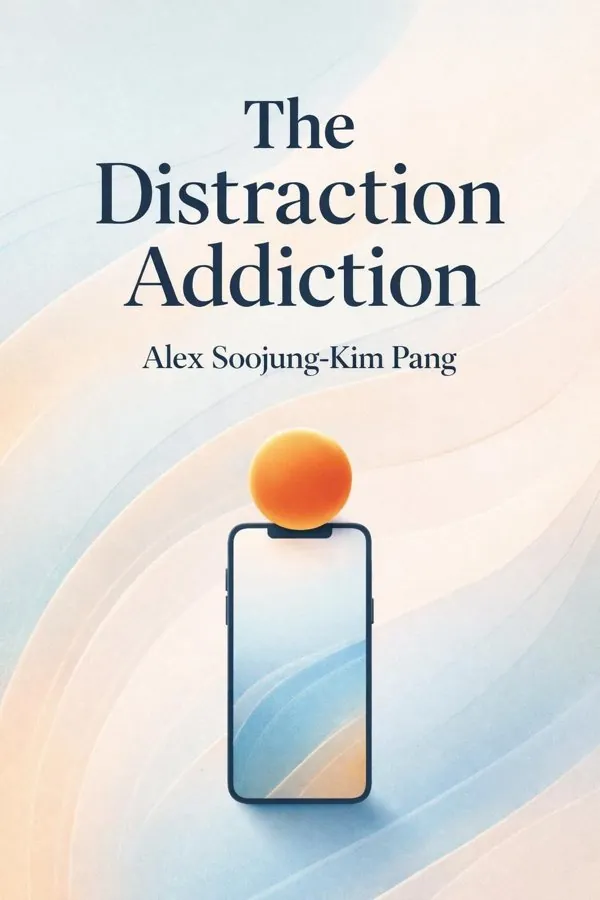
The Distraction Addiction: Summary & Key Insights
 10 min5 chaptersAudio available
What Is The Distraction Addiction About?
The Distraction Addiction by Alex Soojung-Kim Pang is a digital_culture book spanning 5 pages. In The Distraction Addiction, Alex Soojung-Kim Pang explores how technology affects our attention, productivity, and sense of fulfillment. Drawing on neuroscience, philosophy, and mindfulness practices, Pang introduces the concept of 'contemplative computing'—a way to use digital tools more consciously and meaningfully rather than being controlled by them. The book offers practical strategies for regaining focus and balance in an age of constant connectivity.
This FizzRead summary covers all 5 key chapters of The Distraction Addiction in approximately 10 minutes, distilling the most important ideas, arguments, and takeaways from Alex Soojung-Kim Pang's work. Also available as an audio summary and Key Quotes Podcast.
The Distraction Addiction
In The Distraction Addiction, Alex Soojung-Kim Pang explores how technology affects our attention, productivity, and sense of fulfillment. Drawing on neuroscience, philosophy, and mindfulness practices, Pang introduces the concept of 'contemplative computing'—a way to use digital tools more consciously and meaningfully rather than being controlled by them. The book offers practical strategies for regaining focus and balance in an age of constant connectivity.
Who Should Read The Distraction Addiction?
This book is perfect for anyone interested in digital_culture and looking to gain actionable insights in a short read. Whether you're a student, professional, or lifelong learner, the key ideas from The Distraction Addiction by Alex Soojung-Kim Pang will help you think differently.
- ✓Readers who enjoy digital_culture and want practical takeaways
- ✓Professionals looking to apply new ideas to their work and life
- ✓Anyone who wants the core insights of The Distraction Addiction in just 10 minutes
Want the full summary?
Get instant access to this book summary and 100K+ more with Fizz Moment.
Get Free SummaryAvailable on App Store • Free to download
Key Chapters
To understand today’s digital malaise, we must first remember that computing did not always signify distraction. The early pioneers of computer science—von Neumann, Engelbart, Kay, and others—imagined technology as a means to amplify human intellect. Computers were tools for solving problems too vast for the human mind, not instruments of perpetual stimulation. In those days, every click required purpose. The machine waited on the human.
Yet over time, as the internet commercialized and mobile devices emerged, that relationship flipped. Platforms were designed not to serve our concentration but to capture and monetize our attention. What began as empowering tools of focus turned into ecosystems of interruption. Our cognitive environment became saturated with notifications designed to exploit the very vulnerabilities of our mental architecture—our craving for novelty, our fear of missing out.
This shift has consequences far beyond inconvenience. Our attention—once the raw material of creativity and insight—became fragmented. Emails, social media, and instant messages began to dictate our rhythms. The neurological cost is real: each micro-switch between tasks erodes sustained focus and deep work. Neuroscientists have shown that multitasking is largely an illusion; rather than doing more, we simply switch faster with greater fatigue. The result is what I call the distraction addiction—an uneasy compulsion to check, to scroll, to stay plugged in at all times. It is not simply habit but cultural condition.
But the story is not all loss. Understanding how we got here opens the possibility of change. If design fostered distraction, design can also encourage contemplation. The important question—the one that will guide us through the rest of this book—is not how to eliminate technology but how to reclaim our agency within it.
When we speak of contemplation, we often imagine quiet rooms, monks in meditation, or the retreat from modernity. Contemplative computing challenges that stereotype. It begins with a simple recognition: the mind and the machine are not enemies; they are partners in thought. The goal is not to unplug but to engage consciously, to create patterns of use that support awareness rather than diminish it.
Contemplative computing has four dimensions. The first is *awareness*, the capacity to notice when our attention is being hijacked and what emotional needs drive us to distraction. The second is *reflection*, which invites us to ask how each technological habit serves—or undermines—our deeper values. The third is *intentionality*, a reorientation toward deliberate use. When we open a device, we do so with purpose. And finally, there is *resonance*, the reestablishment of harmony between our inner lives and the digital tools that extend them.
This framework draws from ancient philosophical traditions as much as from cognitive science. Buddhism teaches that awareness transforms suffering into insight. Western contemplative thought—from Marcus Aurelius to Thomas Merton—echoes the same truth: attention is the foundation of wisdom. In a digital context, contemplative computing applies these principles to our devices. The goal is to regain mastery over our attention, to use technology as an instrument of awareness rather than as a source of noise.
The transition begins with recognizing the moments when we reach for our devices unconsciously. Every compulsive refresh or mindless scroll is an opportunity to pause, breathe, and ask: what am I seeking here? Often, behind distraction lies something more human—a need for connection, boredom, or the search for meaning. By acknowledging that need, we can choose better ways to fulfill it. Over time, this awareness becomes second nature. We do not merely manage technology; we engage with presence, transforming both the act and the experience of using it.
+ 3 more chapters — available in the FizzRead app
All Chapters in The Distraction Addiction
About the Author
Alex Soojung-Kim Pang is a technology forecaster, consultant, and author. He has worked with organizations such as Microsoft Research and the Institute for the Future. His work focuses on the intersection of technology, mindfulness, and productivity, and he is also known for his later books on rest and work-life balance.
Get This Summary in Your Preferred Format
Read or listen to the The Distraction Addiction summary by Alex Soojung-Kim Pang anytime, anywhere. FizzRead offers multiple formats so you can learn on your terms — all free.
Available formats: App · Audio · PDF · EPUB — All included free with FizzRead
Download The Distraction Addiction PDF and EPUB Summary
Key Quotes from The Distraction Addiction
“To understand today’s digital malaise, we must first remember that computing did not always signify distraction.”
“When we speak of contemplation, we often imagine quiet rooms, monks in meditation, or the retreat from modernity.”
Frequently Asked Questions about The Distraction Addiction
The Distraction Addiction by Alex Soojung-Kim Pang is a digital_culture book that explores key ideas across 5 chapters. In The Distraction Addiction, Alex Soojung-Kim Pang explores how technology affects our attention, productivity, and sense of fulfillment. Drawing on neuroscience, philosophy, and mindfulness practices, Pang introduces the concept of 'contemplative computing'—a way to use digital tools more consciously and meaningfully rather than being controlled by them. The book offers practical strategies for regaining focus and balance in an age of constant connectivity.
More by Alex Soojung-Kim Pang
You Might Also Like

An Ugly Truth: Inside Facebook’s Battle for Domination
Sheera Frenkel, Cecilia Kang
10 min
Cyber Citizens
Ian Goodfellow
10 min
Digital Minimalism: Choosing a Focused Life in a Noisy World
Cal Newport
10 min
E‑Books & Beyond
Various Authors
10 min
The Future of Media
Various Authors
10 min
This Is Why We Can't Have Nice Things
Whitney Phillips
10 minBrowse by Category
Ready to read The Distraction Addiction?
Get the full summary and 100K+ more books with Fizz Moment.