
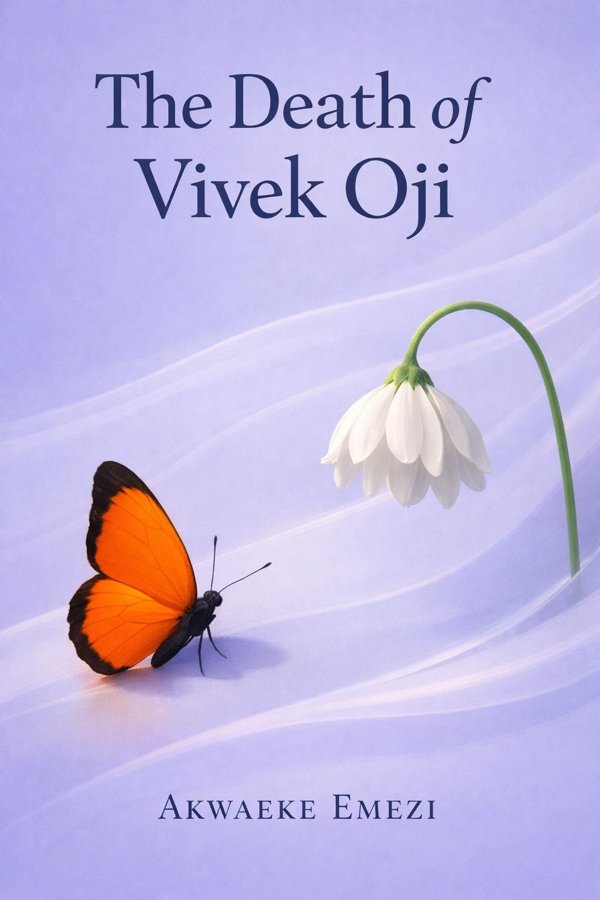
The Death of Vivek Oji: Summary & Key Insights
 10 min9 chaptersAudio available
Key Takeaways from The Death of Vivek Oji
Sometimes a story begins at the end because only the end can force everyone to confront what they refused to see.
A single voice can tell a story, but many voices reveal how incomplete every perspective is.
What looks like strangeness in childhood is often an early signal of a self struggling to emerge.
Love is not always the same as understanding, and that painful gap lies at the heart of this novel.
Desire often reveals truths that society tries hardest to suppress.
What Is The Death of Vivek Oji About?
The Death of Vivek Oji by Akwaeke Emezi is a bestsellers book spanning 7 pages. Some novels begin with a mystery and end with an answer. The Death of Vivek Oji does something far more unsettling and humane: it begins with a death, then slowly reveals the life that made that death meaningful, devastating, and unforgettable. Set in southeastern Nigeria, Akwaeke Emezi’s novel follows the aftermath of Vivek Oji’s body being found on his family’s doorstep, wrapped in cloth, while moving backward and outward through the memories of friends, family, and Vivek himself. What emerges is not simply a puzzle to be solved, but a portrait of a young person struggling to live truthfully in a world policed by tradition, gender expectations, and silence. The book matters because it treats identity not as an abstract debate, but as an intimate, daily reality shaped by tenderness, fear, community, and risk. Emezi writes with extraordinary authority, drawing on deep insight into Nigerian social life, spirituality, queerness, and the complexity of belonging. The result is a novel that is emotionally piercing, politically resonant, and impossible to reduce to a single category.
This FizzRead summary covers all 9 key chapters of The Death of Vivek Oji in approximately 10 minutes, distilling the most important ideas, arguments, and takeaways from Akwaeke Emezi's work. Also available as an audio summary and Key Quotes Podcast.
The Death of Vivek Oji
Some novels begin with a mystery and end with an answer. The Death of Vivek Oji does something far more unsettling and humane: it begins with a death, then slowly reveals the life that made that death meaningful, devastating, and unforgettable. Set in southeastern Nigeria, Akwaeke Emezi’s novel follows the aftermath of Vivek Oji’s body being found on his family’s doorstep, wrapped in cloth, while moving backward and outward through the memories of friends, family, and Vivek himself. What emerges is not simply a puzzle to be solved, but a portrait of a young person struggling to live truthfully in a world policed by tradition, gender expectations, and silence. The book matters because it treats identity not as an abstract debate, but as an intimate, daily reality shaped by tenderness, fear, community, and risk. Emezi writes with extraordinary authority, drawing on deep insight into Nigerian social life, spirituality, queerness, and the complexity of belonging. The result is a novel that is emotionally piercing, politically resonant, and impossible to reduce to a single category.
Who Should Read The Death of Vivek Oji?
This book is perfect for anyone interested in bestsellers and looking to gain actionable insights in a short read. Whether you're a student, professional, or lifelong learner, the key ideas from The Death of Vivek Oji by Akwaeke Emezi will help you think differently.
- ✓Readers who enjoy bestsellers and want practical takeaways
- ✓Professionals looking to apply new ideas to their work and life
- ✓Anyone who wants the core insights of The Death of Vivek Oji in just 10 minutes
Want the full summary?
Get instant access to this book summary and 100K+ more with Fizz Moment.
Get Free SummaryAvailable on App Store • Free to download
Key Chapters
Sometimes a story begins at the end because only the end can force everyone to confront what they refused to see. The Death of Vivek Oji opens with a stark, unforgettable image: Vivek’s body is left at his family’s home, wrapped and silent. This opening does more than create suspense. It establishes the novel’s deepest concern: how a person can be loved and still remain unseen, how a community can surround someone and yet fail to understand the truth of their life.
The mystery of Vivek’s death matters, but the novel gradually shows that the greater mystery is how Vivek lived among people who cared for him without fully recognizing who he was. The opening scene creates emotional pressure. His mother’s grief, his father’s distance, and the community’s confusion all expose the gap between public appearances and private realities. Death becomes the event that strips away polite denial.
In practical terms, this opening invites readers to rethink how they approach loss. When someone dies, people often ask what happened. Emezi asks a deeper question: who was this person when no one was looking, and what truths did others ignore? In families, workplaces, or friendships, we often notice crisis only after long periods of silence.
The lesson is to pay attention before tragedy forces honesty. Look more closely at the people you love. Ask real questions. Create space for truths that may be difficult to hear. Actionable takeaway: do not wait for loss to become curious about someone’s inner life.
A single voice can tell a story, but many voices reveal how incomplete every perspective is. One of the novel’s greatest strengths is its structure: the narrative shifts among Vivek, Osita, and other people around them, creating a layered portrait rather than a linear confession. This fragmentation mirrors the experience of identity itself, especially for someone whose inner life does not fit accepted categories.
Each narrator brings partial understanding. Vivek offers intimacy and vulnerability. Osita provides closeness mixed with secrecy and guilt. Parents, cousins, and friends contribute memory, assumption, affection, and misunderstanding. No one voice contains the whole truth, and that is precisely the point. People are never fully known through one account, especially when they are forced to hide parts of themselves to survive.
This technique also reflects how communities build narratives around a person. Families tell one version. Friends tell another. Society often imposes a third. The tension between these versions becomes part of the emotional drama. Readers must piece together Vivek’s life from fragments, just as the characters must confront the fact that they only knew pieces of him.
Outside the novel, this has clear application. In real life, we often mistake our perspective for the truth of another person. Emezi reminds us that empathy requires humility. To understand someone, we must accept that our view is partial, and we must listen across differences in age, role, gender, and experience.
Actionable takeaway: when trying to understand someone important to you, seek more than your own interpretation. Listen to multiple perspectives, and leave room for what still remains unknown.
What looks like strangeness in childhood is often an early signal of a self struggling to emerge. Vivek grows up marked by difference. He is physically delicate, emotionally inward, and never quite aligned with the expectations placed on him as a boy in his family and community. From early on, he feels slightly out of rhythm with the world around him, and others sense this too, even if they cannot name it.
Emezi handles this with great tenderness. Vivek’s outsider status is not presented as a dramatic declaration but as a series of small misalignments: discomfort in his body, social uncertainty, and an affinity for forms of expression others may dismiss or fear. His mother senses his vulnerability, but love alone cannot solve what she does not yet understand. The novel shows how difference is often recognized first as atmosphere before it is recognized as identity.
This idea has practical resonance beyond fiction. Many adults can trace their deepest questions about selfhood back to childhood moments of not fitting in. A child who seems withdrawn, unusually expressive, or resistant to rigid roles may not be “difficult”; they may be trying to survive a world that offers them too few ways to exist authentically.
For parents, teachers, and friends, the book is a reminder that early sensitivity deserves attention rather than correction. Instead of asking, “How do I make this child normal?” a more generous question is, “What does this child need to feel safe being themselves?”
Actionable takeaway: rethink signs of difference as information rather than problems. Respond with curiosity, protection, and patience rather than pressure to conform.
Love is not always the same as understanding, and that painful gap lies at the heart of this novel. Vivek’s family is not portrayed as simple villains. They care for him, worry about him, and are bound to him by genuine attachment. Yet their love is shaped by cultural expectations, fear of scandal, and assumptions about gender that prevent them from truly seeing him.
This is one of Emezi’s most nuanced achievements. The novel refuses easy moral categories. Vivek’s mother feels his fragility intensely, but her protectiveness cannot automatically become acceptance. His father is more distant, shaped by masculine expectations and emotional restraint. Extended family members alternate between affection, confusion, and judgment. The result is a believable portrait of how families can both shelter and suffocate.
The practical importance of this idea is enormous. Many people assume that if love exists, understanding will follow naturally. But families often love through the language available to them, and that language may be too narrow for the person in front of them. Good intentions do not erase harm. Silence, denial, and refusal to ask difficult questions can deepen isolation even inside loving homes.
The novel invites readers to examine their own relationships. Are there people you care about whose identities you reduce to what feels comfortable for you? Do you confuse closeness with comprehension? Real love requires revision. It asks us to let another person change our idea of who they are.
Actionable takeaway: measure love not only by feeling, but by your willingness to understand someone on their own terms.
Desire often reveals truths that society tries hardest to suppress. One of the novel’s most intimate and destabilizing threads is the relationship between Vivek and Osita, his cousin. Their bond grows out of childhood closeness, emotional recognition, and a shared space of secrecy, but it also moves into forbidden territory, complicating any easy reading of love, kinship, and transgression.
Emezi does not use this relationship merely for shock. Instead, it becomes a way of exploring how intimacy forms where language and permission are absent. Osita understands parts of Vivek that others do not. Their connection is charged not just by attraction, but by recognition. Yet the relationship is also marked by concealment, fear, and the fact that private truth can exist inside morally and socially fraught conditions.
This complexity matters because the novel refuses simplistic lessons. Human relationships are often shaped by isolation. When people are denied open, safe spaces to express who they are, desire can become entangled with secrecy and boundary-crossing. The book does not ask readers to celebrate confusion. It asks them to confront how repression distorts closeness.
In a broader sense, this theme helps readers think about how stigma affects emotional life. Communities that deny people language for gender and desire often force them into hidden arrangements, where tenderness and danger coexist.
Actionable takeaway: create environments where difficult truths can be spoken early and safely. Openness does not erase complexity, but secrecy often intensifies it in harmful ways.
Clothing may seem superficial, but in this novel it becomes a language of truth. Vivek’s relationship to dress, embodiment, and presentation is central to understanding who he is. What others may dismiss as experimentation or deviance is, for Vivek, a way of aligning outer form with inner reality. The novel treats gender expression not as performance in the shallow sense, but as revelation.
This distinction matters. Many societies tolerate only narrow visual codes for masculinity and femininity, treating anything outside them as threatening. Vivek’s choices challenge those codes, not through speeches or ideology, but through existence. A hairstyle, fabric, or gesture becomes charged because it communicates selfhood more honestly than social labels do.
Emezi’s insight here is powerful: the body is often the first site where freedom and violence meet. To dress as oneself can feel joyful, but it can also invite scrutiny, punishment, or attack. That is why the novel treats appearance with seriousness. Presentation is not vanity. It is often a daily negotiation between expression and safety.
Readers can apply this idea by taking visible self-expression more seriously in their own lives and in others’. Instead of reducing appearance to trend or rebellion, ask what it might mean emotionally and psychologically. For many people, being able to present themselves authentically is tied to dignity, mental health, and agency.
Actionable takeaway: respect how people choose to inhabit their bodies. Small acts of affirmation around names, clothing, and presentation can significantly expand someone’s sense of safety and self-worth.
Violence rarely appears out of nowhere; it is often the final expression of beliefs a community has normalized for years. In The Death of Vivek Oji, the revelation of how Vivek dies is heartbreaking precisely because it does not feel random. His death emerges from an environment shaped by shame, rigid gender expectations, silence, and the need to punish what cannot be controlled.
Emezi makes an essential point: societies often frame violence as an isolated act committed by a few bad people, when in fact it is enabled by everyday attitudes. Mockery, denial, gossip, and moral panic create conditions in which a vulnerable person becomes targetable. By the time physical harm arrives, the groundwork has already been laid by countless small acts of dehumanization.
This is one of the novel’s strongest political interventions. It asks readers not only to grieve Vivek, but to examine the systems of thought that make such deaths possible. A community does not have to intend murder in order to contribute to danger. It only has to insist that some lives are embarrassing, unnatural, or disposable.
In practical terms, this is a call to interrupt prejudice early. Harm grows when people treat exclusionary language as harmless tradition. In families, schools, and public life, silence often protects the aggressor more than the vulnerable.
Actionable takeaway: challenge dehumanizing jokes, rigid policing of gender, and fear-based narratives before they escalate. Prevention begins long before visible violence.
Sometimes people are understood most clearly only after they are gone, and that delayed recognition is one of the novel’s deepest sorrows. After Vivek’s death, those who loved him are forced to revisit their memories and assumptions. Grief becomes more than mourning; it becomes a process of belated understanding. What was once dismissed, misread, or hidden starts to come into view.
This does not make grief redemptive in a simple way. Emezi never suggests that loss is worthwhile because it teaches a lesson. Instead, the novel shows how death strips away denial. The living can no longer rely on habit. They must ask what they failed to notice, what they refused to name, and whether love without recognition was ever enough.
This has real-life relevance. Grief often changes not only how we feel about someone, but what we are finally willing to admit about them and ourselves. People may become more honest after a rupture because the old performance is no longer sustainable. Mourning can therefore reveal hidden truths about family systems, emotional avoidance, and unresolved guilt.
The challenge is to pursue that honesty before loss. The book gently but firmly asks readers to avoid turning recognition into a posthumous act. It is not enough to honor someone’s truth after they can no longer hear it.
Actionable takeaway: practice living recognition. Tell people who they are to you while they are alive, and make room for truths that may require you to change.
All Chapters in The Death of Vivek Oji
About the Author
Akwaeke Emezi is a Nigerian author and video artist celebrated for fearless, inventive writing that explores identity, spirituality, gender, grief, and embodiment. Their work often draws on Igbo cosmology while engaging contemporary social realities, creating fiction that feels both intimate and expansive. Emezi has written across categories, including literary fiction, memoir, and young adult novels, and is known for lyrical prose, emotional intensity, and a refusal to simplify complex human experiences. Their books frequently center people who exist at the edges of conventional categories, asking readers to rethink what it means to be seen, named, and understood. With The Death of Vivek Oji, Emezi further established themselves as a major contemporary literary voice, bringing tenderness and urgency to questions of belonging, queerness, and the cost of social silence.
Get This Summary in Your Preferred Format
Read or listen to the The Death of Vivek Oji summary by Akwaeke Emezi anytime, anywhere. FizzRead offers multiple formats so you can learn on your terms — all free.
Available formats: App · Audio · PDF · EPUB — All included free with FizzRead
Download The Death of Vivek Oji PDF and EPUB Summary
Key Quotes from The Death of Vivek Oji
“Sometimes a story begins at the end because only the end can force everyone to confront what they refused to see.”
“A single voice can tell a story, but many voices reveal how incomplete every perspective is.”
“What looks like strangeness in childhood is often an early signal of a self struggling to emerge.”
“Love is not always the same as understanding, and that painful gap lies at the heart of this novel.”
“Desire often reveals truths that society tries hardest to suppress.”
Frequently Asked Questions about The Death of Vivek Oji
The Death of Vivek Oji by Akwaeke Emezi is a bestsellers book that explores key ideas across 9 chapters. Some novels begin with a mystery and end with an answer. The Death of Vivek Oji does something far more unsettling and humane: it begins with a death, then slowly reveals the life that made that death meaningful, devastating, and unforgettable. Set in southeastern Nigeria, Akwaeke Emezi’s novel follows the aftermath of Vivek Oji’s body being found on his family’s doorstep, wrapped in cloth, while moving backward and outward through the memories of friends, family, and Vivek himself. What emerges is not simply a puzzle to be solved, but a portrait of a young person struggling to live truthfully in a world policed by tradition, gender expectations, and silence. The book matters because it treats identity not as an abstract debate, but as an intimate, daily reality shaped by tenderness, fear, community, and risk. Emezi writes with extraordinary authority, drawing on deep insight into Nigerian social life, spirituality, queerness, and the complexity of belonging. The result is a novel that is emotionally piercing, politically resonant, and impossible to reduce to a single category.
More by Akwaeke Emezi

You Might Also Like

The Godfather
Mario Puzo
10 min
The Handmaid's Tale
Margaret Atwood
10 min
The Hunger Games
Suzanne Collins
10 min
The Nightingale
Kristin Hannah
10 min
The Seven Husbands of Evelyn Hugo
Taylor Jenkins Reid
10 min
Backwater Justice
Fern Michaels
10 minBrowse by Category
Ready to read The Death of Vivek Oji?
Get the full summary and 100K+ more books with Fizz Moment.