
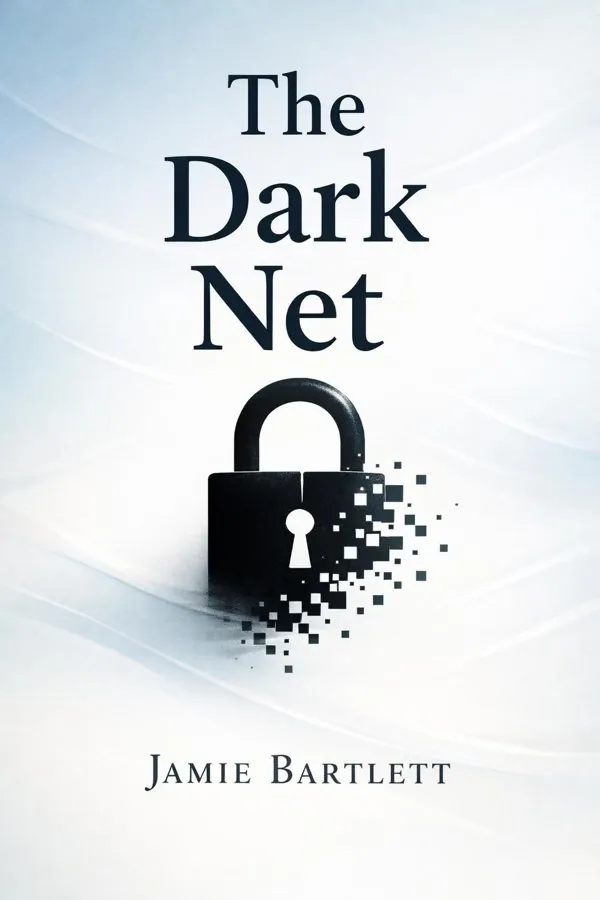
The Dark Net: Inside the Digital Underworld: Summary & Key Insights
 10 min10 chaptersAudio available
Key Takeaways from The Dark Net: Inside the Digital Underworld
The dark net did not emerge by accident; it grew from the internet’s original promise that no single authority should control communication.
We often imagine hackers as criminals in dark rooms, but Bartlett reveals a far more complex culture shaped by curiosity, status, ideology, and technical mastery.
One of the book’s most fascinating insights is that illegal online drug markets often borrowed the language and structure of legitimate e-commerce.
The internet did not invent sexual desire, but it radically changed how desire is distributed, monetized, and hidden.
Radicalization rarely begins with ideology alone; it often begins with loneliness, grievance, curiosity, or the search for belonging.
What Is The Dark Net: Inside the Digital Underworld About?
The Dark Net: Inside the Digital Underworld by Jamie Bartlett is a digital_culture book spanning 10 pages. The Dark Net: Inside the Digital Underworld is Jamie Bartlett’s gripping investigation into the hidden spaces of the internet where anonymity, freedom, experimentation, and criminality exist side by side. Rather than treating the dark net as a purely sinister realm, Bartlett travels through its many subcultures—hackers, online drug traders, cam performers, extremists, trolls, and digital libertarians—to show that these worlds are not separate from society but exaggerated reflections of it. The book matters because it challenges simplistic ideas about technology. The same tools that protect dissidents can shield abusers. The same anonymity that enables honest self-expression can fuel cruelty and extremism. Bartlett is especially well positioned to explore these tensions. As a journalist and researcher focused on technology, politics, and social change, he combines field reporting, interviews, and cultural analysis to make a complicated subject understandable and human. The result is not just a tour of the internet’s underworld, but a deeper examination of what people do when the usual rules, identities, and consequences begin to disappear.
This FizzRead summary covers all 10 key chapters of The Dark Net: Inside the Digital Underworld in approximately 10 minutes, distilling the most important ideas, arguments, and takeaways from Jamie Bartlett's work. Also available as an audio summary and Key Quotes Podcast.
The Dark Net: Inside the Digital Underworld
The Dark Net: Inside the Digital Underworld is Jamie Bartlett’s gripping investigation into the hidden spaces of the internet where anonymity, freedom, experimentation, and criminality exist side by side. Rather than treating the dark net as a purely sinister realm, Bartlett travels through its many subcultures—hackers, online drug traders, cam performers, extremists, trolls, and digital libertarians—to show that these worlds are not separate from society but exaggerated reflections of it. The book matters because it challenges simplistic ideas about technology. The same tools that protect dissidents can shield abusers. The same anonymity that enables honest self-expression can fuel cruelty and extremism. Bartlett is especially well positioned to explore these tensions. As a journalist and researcher focused on technology, politics, and social change, he combines field reporting, interviews, and cultural analysis to make a complicated subject understandable and human. The result is not just a tour of the internet’s underworld, but a deeper examination of what people do when the usual rules, identities, and consequences begin to disappear.
Who Should Read The Dark Net: Inside the Digital Underworld?
This book is perfect for anyone interested in digital_culture and looking to gain actionable insights in a short read. Whether you're a student, professional, or lifelong learner, the key ideas from The Dark Net: Inside the Digital Underworld by Jamie Bartlett will help you think differently.
- ✓Readers who enjoy digital_culture and want practical takeaways
- ✓Professionals looking to apply new ideas to their work and life
- ✓Anyone who wants the core insights of The Dark Net: Inside the Digital Underworld in just 10 minutes
Want the full summary?
Get instant access to this book summary and 100K+ more with Fizz Moment.
Get Free SummaryAvailable on App Store • Free to download
Key Chapters
We often imagine hackers as criminals in dark rooms, but Bartlett reveals a far more complex culture shaped by curiosity, status, ideology, and technical mastery. Hacking is not just theft; it is also exploration. Many hackers are driven by the desire to understand systems deeply, expose weaknesses, and challenge centralized power. Some become cybercriminals, but others improve security, defend civil liberties, or contribute to open-source innovation.
The book explains that hacker culture developed its own ethics, language, and hierarchy. Reputation matters. Skill matters. Cleverness matters. Within this world, breaking into systems can be seen as intellectual sport, political protest, or profit-seeking crime depending on context. The same technical ability can lead one person to report a software vulnerability responsibly and another to sell stolen data on underground forums.
This ambiguity matters in everyday life. Businesses rely on ethical hackers to test security. Governments recruit cybersecurity talent from unconventional backgrounds. At the same time, ransomware attacks, data breaches, and identity theft show how damaging malicious hacking can be. Bartlett helps readers understand that “hacker” is not a single moral category but a spectrum of behavior.
For individuals, the lesson is practical: digital life now depends on invisible systems that are constantly being tested by both defenders and attackers. Strong passwords, two-factor authentication, software updates, and skepticism toward suspicious links are not minor habits; they are basic self-defense in a world shaped by hacker logic.
Actionable takeaway: Treat cybersecurity as a daily practice, and remember that technical talent is powerful but ethically directionless without accountability.
One of the book’s most fascinating insights is that illegal online drug markets often borrowed the language and structure of legitimate e-commerce. On platforms like Silk Road, anonymous buyers and sellers used ratings, reviews, customer service, dispute resolution, and branding to create trust among strangers. Bartlett shows that these systems did not remove criminality; they reorganized it. The internet turned street-level risk into platform-mediated exchange.
This shift matters because it complicates the standard picture of drug dealing. Traditional street markets often involve violence, intimidation, and highly unequal information. Online markets, by contrast, can reduce face-to-face confrontation and let users compare products, dosage information, and seller reputations. Some participants even argued that digital drug markets were safer because they provided quality signals and reduced territorial violence. But that does not make them harmless. These markets still normalize illegal consumption, expose vulnerable users to dangerous substances, and create new forms of fraud and law-enforcement challenge.
Bartlett’s broader point is that digital systems can make even illicit markets feel rational, efficient, and oddly professional. Design influences morality. When a criminal transaction starts to resemble shopping on a trusted website, people may underestimate its risks. This insight applies beyond drugs to scams, gray markets, and misinformation networks.
For modern readers, the practical lesson is to pay attention to how interfaces create confidence. Ratings, slick design, and community feedback can produce an illusion of legitimacy even when the underlying activity is harmful or illegal.
Actionable takeaway: Never confuse a polished digital experience with ethical legitimacy; trustworthy design can be used to sell dangerous behavior.
The internet did not invent sexual desire, but it radically changed how desire is distributed, monetized, and hidden. Bartlett’s exploration of pornography and exploitation examines a part of digital life that many people consume but few discuss honestly. Anonymity lowers social barriers, making it easier for users to seek out niche material, private fantasies, or taboo content. At the same time, it can hide coercion, abuse, trafficking, and the non-consensual circulation of intimate images.
Bartlett does not reduce this world to a simple morality tale. Instead, he shows that digital sexual culture contains both agency and exploitation. Some people use online platforms to earn income, explore identity, or escape shame. Others are manipulated, violated, or turned into commodities by systems that reward attention at any cost. The same architecture that enables private self-expression can also create distance from empathy. Users may consume content without confronting the human reality behind it.
This chapter resonates beyond pornography because it asks a larger question: what happens when technology makes private impulses instantly accessible while weakening accountability? The answer is not censorship alone, nor naive celebration of freedom. It requires digital ethics, consent norms, and stronger awareness of the real people behind the screen.
In practical terms, readers can apply this insight by becoming more critical consumers of online content. Consent, provenance, age verification, and platform incentives matter. So does the willingness to question whether something is available because it is ethical, or simply because it is profitable and difficult to police.
Actionable takeaway: Practice digital empathy by asking who is affected, who profits, and whether genuine consent exists behind any intimate online content.
Radicalization rarely begins with ideology alone; it often begins with loneliness, grievance, curiosity, or the search for belonging. Bartlett’s reporting on online extremism shows how digital spaces help extremist movements recruit, normalize their worldview, and deepen commitment. The internet gives fringe ideas a constant home. Instead of remaining isolated, alienated individuals can now find communities that validate anger, reinforce conspiracy, and frame violence as meaningful action.
A crucial insight in the book is that radicalization online is social before it is intellectual. People are often pulled in by emotional connection, insider language, humor, and a sense of shared mission. Once they feel part of a group, ideas that once seemed outrageous can begin to feel obvious. Algorithms, forums, and encrypted networks can accelerate this process by surrounding users with one-sided narratives and rewarding increasingly extreme participation.
This dynamic extends beyond formal terrorism. It helps explain political polarization, conspiracy subcultures, and online movements built around enemies and identity. When digital environments reward outrage and certainty, they can turn confusion into dogma.
For parents, educators, managers, and citizens, the lesson is not to look only for explicit extremist symbols. More subtle warning signs may include sudden obsession with apocalyptic narratives, withdrawal into insular online communities, or language that divides the world into pure allies and evil enemies. Prevention often begins with conversation, purpose, and offline belonging.
Actionable takeaway: Counter radicalization early by building real-world connection, encouraging critical thinking, and noticing social isolation before ideological commitment hardens.
Trolling is often dismissed as childish mischief, but Bartlett shows that it reveals something profound about digital culture: attention is power, and outrage is easy to engineer. Trolls thrive by provoking emotional responses, derailing conversation, and exposing how vulnerable people become when status, identity, and audience are all concentrated online. What matters to a troll is not always the content of a belief but the effect it produces.
This is why trolling can move from irony to real harm. Harassment campaigns, coordinated pile-ons, and targeted abuse can silence voices, distort public debate, and push people out of online spaces entirely. The emotional distance created by screens reduces empathy and lowers inhibition. Group dynamics make it worse. Individuals who might never insult someone face to face may join abusive online behavior because responsibility feels diffused and performance feels rewarding.
Bartlett’s account is especially useful because it resists the temptation to frame trolls as monsters from nowhere. They emerge from the wider internet economy of virality, reaction, and performative identity. Platforms often reward exactly the behaviors that trolls exploit: speed over reflection, visibility over nuance, conflict over understanding.
In daily life, this insight can change how we respond. Not every provocation deserves engagement. Clear moderation policies, block and mute tools, documentation of abuse, and community norms all matter. So does emotional discipline. Many trolls win by making others lose control.
Actionable takeaway: Protect your attention deliberately—do not feed bad-faith provocation, and support healthier digital spaces with firm boundaries and thoughtful moderation.
One of the most human parts of The Dark Net is Bartlett’s exploration of identity. The internet allows people to reinvent themselves, test hidden aspects of personality, and find communities that would be inaccessible in offline life. For some, this is liberating. People questioning their sexuality, gender, beliefs, or social role can experiment with less fear. Those who feel isolated in their local environment can discover language, support, and recognition online.
Yet the freedom to become someone else also brings instability. Anonymous and pseudonymous environments can encourage deception, manipulation, fantasy, or emotional detachment. Bartlett shows that the digital self is both expressive and performative. People are not simply revealing who they are online; they are also constructing versions of themselves for particular audiences, communities, and desires. This can be empowering, but it can also create fragmentation, where individuals struggle to reconcile online personas with offline responsibilities.
The broader implication is that identity online is not fake simply because it is curated. It is often real in an emotional sense, even when it is selective or stylized. Understanding this helps explain why online communities can feel intensely meaningful and why threats to digital identity can feel deeply personal.
For readers, the practical lesson is to approach online self-expression with both openness and caution. Experimentation can be healthy, but anonymity should not become an excuse to abandon accountability or self-respect. The challenge is not to choose between total exposure and total concealment, but to build coherent integrity across different contexts.
Actionable takeaway: Use the internet to explore who you are, but regularly ask whether your digital personas align with the values you want to live by offline.
Running through the book is a powerful ideological current: the belief that individuals should be free from state interference, corporate surveillance, and centralized regulation. Bartlett shows how digital libertarianism shapes many dark net communities, from privacy advocates and crypto-anarchists to marketplace founders and anti-censorship activists. Their core conviction is that code can do what politics cannot: create systems where authority is structurally limited.
This worldview has enormous appeal. In repressive regimes, privacy tools can protect journalists, activists, and ordinary citizens. In democracies, they can guard against mission creep in surveillance and the growing power of tech platforms. The dark net therefore cannot be understood only as a criminal shelter. It is also a political project rooted in distrust of institutions.
But Bartlett also reveals the blind spots of this philosophy. Absolute freedom can ignore the vulnerable people who suffer when there are no effective rules. Markets without regulation do not stay neutral; they often favor the technically skilled, the ruthless, or the already powerful. A system designed to remove human judgment can end up removing human responsibility.
This tension is central to today’s internet debates about encryption, cryptocurrencies, moderation, and platform governance. The book invites readers to take digital liberty seriously without romanticizing it. Freedom from control is valuable, but it is not the same as justice.
Actionable takeaway: When evaluating “freedom-first” technologies, ask who is protected, who is exposed, and what forms of accountability remain when traditional institutions are bypassed.
The hidden internet exists partly because the visible internet has become so heavily monitored. Bartlett shows that dark net technologies are not just curiosities for criminals or radicals; they are also reactions to a surveillance-heavy world in which governments, corporations, and platforms collect extraordinary amounts of data. Every click, search, location ping, and social interaction can become part of a larger profile. In this context, anonymity tools become a form of resistance.
Yet surveillance and privacy are locked in an escalating struggle. As encryption improves, states demand more access. As tracking grows more sophisticated, users seek stronger concealment. This is not a battle with a final victory. It is an ongoing contest over the architecture of modern life. Bartlett’s reporting helps readers see that surveillance is not only about intelligence agencies. It also lives in ad-tech systems, recommendation engines, and terms-of-service agreements most people never read.
The practical significance is huge. Surveillance shapes behavior. People who believe they are constantly watched may self-censor, conform, or avoid experimentation. At the same time, complete invisibility can enable abuse. The challenge is not choosing one side absolutely, but designing institutions and norms that preserve legitimate privacy while limiting harm.
For ordinary users, small choices matter more than they seem: using secure messaging, reviewing app permissions, limiting data-sharing, and understanding browser privacy settings. These habits are not paranoid. They are forms of digital literacy.
Actionable takeaway: Audit your digital footprint regularly, and treat privacy as a basic civic right that requires both personal habits and public policy protections.
Bartlett’s deepest argument is that the internet’s future will not be determined by technology alone. The dark net matters because it reveals what people do when constraints weaken and incentives change. The hidden web is not separate from society; it is a laboratory that exposes recurring human tendencies: curiosity, greed, cruelty, idealism, desire, rebellion, and the search for belonging. If we want to understand where digital culture is heading, we have to understand these impulses rather than treating technology as destiny.
This is why the book remains relevant beyond its immediate examples. New platforms, cryptocurrencies, AI systems, private networks, and virtual worlds will create fresh versions of the same old tensions. Every digital advance increases both possibility and risk. Better anonymity can protect dissent or hide abuse. More openness can empower communities or spread manipulation. More personalization can create relevance or trap people inside ideological bubbles.
The future of the internet therefore depends on choices made by users, designers, lawmakers, educators, and communities. It will be shaped by moderation rules, privacy rights, platform incentives, business models, and the cultural norms people are willing to defend. Bartlett ultimately resists both utopian and dystopian thinking. The internet is neither salvation nor ruin. It is an amplifier of human nature.
That makes the book especially useful for anyone building, regulating, or simply living online. The key is not to ask whether technology is good or bad, but what kind of behavior it rewards by design.
Actionable takeaway: Help shape better digital environments by supporting technologies, policies, and communities that reward responsibility without crushing freedom.
All Chapters in The Dark Net: Inside the Digital Underworld
About the Author
Jamie Bartlett is a British author, journalist, and researcher whose work focuses on the intersection of technology, politics, and society. He has written extensively about online extremism, digital culture, social media, privacy, and the changing relationship between individuals and power in the internet age. Bartlett is known for combining investigative reporting with clear, engaging analysis, often exploring fringe or emerging communities to reveal wider social trends. He has held research roles connected to the study of digital behavior and public life, and his commentary has appeared across major media platforms. In The Dark Net, Bartlett draws on that background to examine the hidden online world with curiosity, skepticism, and nuance, making him a trusted guide to one of the internet’s most misunderstood domains.
Get This Summary in Your Preferred Format
Read or listen to the The Dark Net: Inside the Digital Underworld summary by Jamie Bartlett anytime, anywhere. FizzRead offers multiple formats so you can learn on your terms — all free.
Available formats: App · Audio · PDF · EPUB — All included free with FizzRead
Download The Dark Net: Inside the Digital Underworld PDF and EPUB Summary
Key Quotes from The Dark Net: Inside the Digital Underworld
“The dark net did not emerge by accident; it grew from the internet’s original promise that no single authority should control communication.”
“We often imagine hackers as criminals in dark rooms, but Bartlett reveals a far more complex culture shaped by curiosity, status, ideology, and technical mastery.”
“One of the book’s most fascinating insights is that illegal online drug markets often borrowed the language and structure of legitimate e-commerce.”
“The internet did not invent sexual desire, but it radically changed how desire is distributed, monetized, and hidden.”
“Radicalization rarely begins with ideology alone; it often begins with loneliness, grievance, curiosity, or the search for belonging.”
Frequently Asked Questions about The Dark Net: Inside the Digital Underworld
The Dark Net: Inside the Digital Underworld by Jamie Bartlett is a digital_culture book that explores key ideas across 10 chapters. The Dark Net: Inside the Digital Underworld is Jamie Bartlett’s gripping investigation into the hidden spaces of the internet where anonymity, freedom, experimentation, and criminality exist side by side. Rather than treating the dark net as a purely sinister realm, Bartlett travels through its many subcultures—hackers, online drug traders, cam performers, extremists, trolls, and digital libertarians—to show that these worlds are not separate from society but exaggerated reflections of it. The book matters because it challenges simplistic ideas about technology. The same tools that protect dissidents can shield abusers. The same anonymity that enables honest self-expression can fuel cruelty and extremism. Bartlett is especially well positioned to explore these tensions. As a journalist and researcher focused on technology, politics, and social change, he combines field reporting, interviews, and cultural analysis to make a complicated subject understandable and human. The result is not just a tour of the internet’s underworld, but a deeper examination of what people do when the usual rules, identities, and consequences begin to disappear.
More by Jamie Bartlett
You Might Also Like
An Ugly Truth: Inside Facebook’s Battle for Domination
Sheera Frenkel, Cecilia Kang
10 min
Cyber Citizens
Ian Goodfellow
10 min
Digital Minimalism: Choosing a Focused Life in a Noisy World
Cal Newport
10 min
E‑Books & Beyond
Various Authors
10 min
The Future of Media
Various Authors
10 min
This Is Why We Can't Have Nice Things
Whitney Phillips
10 minBrowse by Category
Ready to read The Dark Net: Inside the Digital Underworld?
Get the full summary and 100K+ more books with Fizz Moment.