
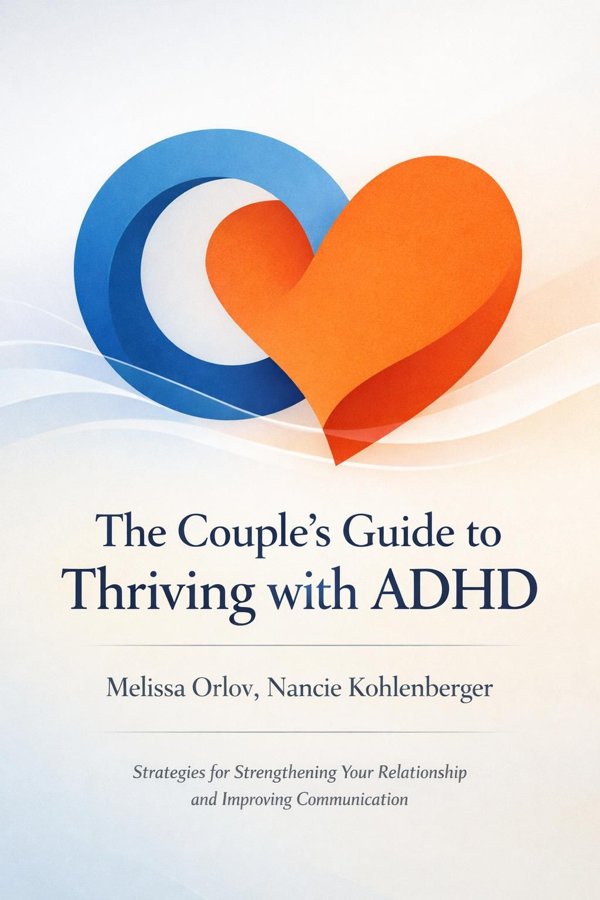
The Couple's Guide to Thriving with ADHD: Strategies for Strengthening Your Relationship and Improving Communication: Summary & Key Insights
by Melissa Orlov, Nancie Kohlenberger
 10 min6 chaptersAudio available
What Is The Couple's Guide to Thriving with ADHD: Strategies for Strengthening Your Relationship and Improving Communication About?
The Couple's Guide to Thriving with ADHD: Strategies for Strengthening Your Relationship and Improving Communication by Melissa Orlov, Nancie Kohlenberger is a relationships book spanning 6 pages. This book offers practical strategies and insights for couples in which one or both partners have Attention Deficit Hyperactivity Disorder (ADHD). It helps partners understand how ADHD symptoms can affect relationships and provides tools to improve communication, reduce conflict, and build stronger emotional connections.
This FizzRead summary covers all 6 key chapters of The Couple's Guide to Thriving with ADHD: Strategies for Strengthening Your Relationship and Improving Communication in approximately 10 minutes, distilling the most important ideas, arguments, and takeaways from Melissa Orlov, Nancie Kohlenberger's work. Also available as an audio summary and Key Quotes Podcast.
The Couple's Guide to Thriving with ADHD: Strategies for Strengthening Your Relationship and Improving Communication
This book offers practical strategies and insights for couples in which one or both partners have Attention Deficit Hyperactivity Disorder (ADHD). It helps partners understand how ADHD symptoms can affect relationships and provides tools to improve communication, reduce conflict, and build stronger emotional connections.
Who Should Read The Couple's Guide to Thriving with ADHD: Strategies for Strengthening Your Relationship and Improving Communication?
This book is perfect for anyone interested in relationships and looking to gain actionable insights in a short read. Whether you're a student, professional, or lifelong learner, the key ideas from The Couple's Guide to Thriving with ADHD: Strategies for Strengthening Your Relationship and Improving Communication by Melissa Orlov, Nancie Kohlenberger will help you think differently.
- ✓Readers who enjoy relationships and want practical takeaways
- ✓Professionals looking to apply new ideas to their work and life
- ✓Anyone who wants the core insights of The Couple's Guide to Thriving with ADHD: Strategies for Strengthening Your Relationship and Improving Communication in just 10 minutes
Want the full summary?
Get instant access to this book summary and 100K+ more with Fizz Moment.
Get Free SummaryAvailable on App Store • Free to download
Key Chapters
In the early stages of love, ADHD’s energy and spontaneity often appear as charisma and passion. The ADHD partner may seem exciting, full of ideas and constant initiative, drawing the non-ADHD partner into a whirl of engagement. Yet over time, what first felt like vitality can become inconsistency. The missed deadlines, forgotten commitments, or emotional impulsiveness begin to wear on patience. The non-ADHD partner may start compensating, taking on more responsibility to keep life orderly. Slowly, the relationship drifts into what I call the ‘parent–child’ dynamic—where one partner becomes the vigilant manager, and the other feels constantly corrected or inadequate.
This shift is insidious. The non-ADHD partner feels abandoned and overburdened, while the ADHD partner feels criticized and powerless. Each side believes the other has changed, but what has truly changed is the distribution of responsibility. ADHD causes inconsistencies in follow-through, and without intentional structure, those inconsistencies trigger resentment.
When I work with couples, I help them step outside this parent–child model. The goal is not to assign blame but to identify the patterns that sustain inequality. It begins when both partners accept that ADHD symptoms—not moral flaws—are shaping behaviors. Once you name the invisible force, you can dismantle the hierarchy it created.
The journey toward equality requires empathy on both sides. The non-ADHD partner must relearn trust—trust that their partner’s forgetfulness is not indifference—and the ADHD partner must reclaim agency by developing habits to manage symptoms. As this shift occurs, the emotional tone of the relationship changes from accusation to partnership. That shift, fragile at first, becomes the foundation of thriving.
Behind the practical chaos of ADHD lie deep emotional wounds—hurt from misread intentions and the slow erosion of goodwill. When communication repeatedly fails, couples begin to construct painful narratives: the non-ADHD partner may quietly believe, 'I don’t matter enough to be remembered,' while the ADHD partner may think, 'No matter what I do, it’s never good enough.' These internal stories form a self-reinforcing loop of resentment and shame.
I urge partners to look beneath behavior and recognize emotion as data. Frustration often hides grief, and anger often reflects fear—fear of being unseen or unwanted. When we decode those emotions, we stop fighting over surface issues like lateness or clutter and begin addressing the true pain points.
In sessions, I often ask couples to describe what they feel in moments of conflict without judgment or defense. That exercise alone can break years of stalemate. When the ADHD partner says, 'I feel overwhelmed by all the things I forget,' and the non-ADHD partner responds, 'I feel lonely doing everything alone,' a bridge forms. That bridge is empathy, and from there we can rebuild connection.
Understanding the emotional landscape also requires compassion toward oneself. ADHD often coexists with shame, especially when symptoms have been misunderstood since childhood. Healing means reframing ADHD not as failure but as difference—one that calls for creative strategies, not moral correction. Only when both partners internalize this reframing can emotional healing begin.
+ 4 more chapters — available in the FizzRead app
All Chapters in The Couple's Guide to Thriving with ADHD: Strategies for Strengthening Your Relationship and Improving Communication
About the Authors
Melissa Orlov is a marriage consultant specializing in helping couples affected by ADHD and the author of several books on the topic. Nancie Kohlenberger, LMFT, is a licensed marriage and family therapist with extensive experience counseling couples dealing with ADHD-related challenges.
Get This Summary in Your Preferred Format
Read or listen to the The Couple's Guide to Thriving with ADHD: Strategies for Strengthening Your Relationship and Improving Communication summary by Melissa Orlov, Nancie Kohlenberger anytime, anywhere. FizzRead offers multiple formats so you can learn on your terms — all free.
Available formats: App · Audio · PDF · EPUB — All included free with FizzRead
Download The Couple's Guide to Thriving with ADHD: Strategies for Strengthening Your Relationship and Improving Communication PDF and EPUB Summary
Key Quotes from The Couple's Guide to Thriving with ADHD: Strategies for Strengthening Your Relationship and Improving Communication
“In the early stages of love, ADHD’s energy and spontaneity often appear as charisma and passion.”
“Behind the practical chaos of ADHD lie deep emotional wounds—hurt from misread intentions and the slow erosion of goodwill.”
Frequently Asked Questions about The Couple's Guide to Thriving with ADHD: Strategies for Strengthening Your Relationship and Improving Communication
The Couple's Guide to Thriving with ADHD: Strategies for Strengthening Your Relationship and Improving Communication by Melissa Orlov, Nancie Kohlenberger is a relationships book that explores key ideas across 6 chapters. This book offers practical strategies and insights for couples in which one or both partners have Attention Deficit Hyperactivity Disorder (ADHD). It helps partners understand how ADHD symptoms can affect relationships and provides tools to improve communication, reduce conflict, and build stronger emotional connections.
You Might Also Like

The 5 Love Languages
Gary Chapman
10 min
Men Are from Mars, Women Are from Venus
John Gray
10 min
She Comes First
Ian Kerner
10 min
No More Mr Nice Guy
Robert Glover
10 min
Hold Me Tight
Sue Johnson
10 min
Mating in Captivity
Esther Perel
10 minBrowse by Category
Ready to read The Couple's Guide to Thriving with ADHD: Strategies for Strengthening Your Relationship and Improving Communication?
Get the full summary and 100K+ more books with Fizz Moment.