
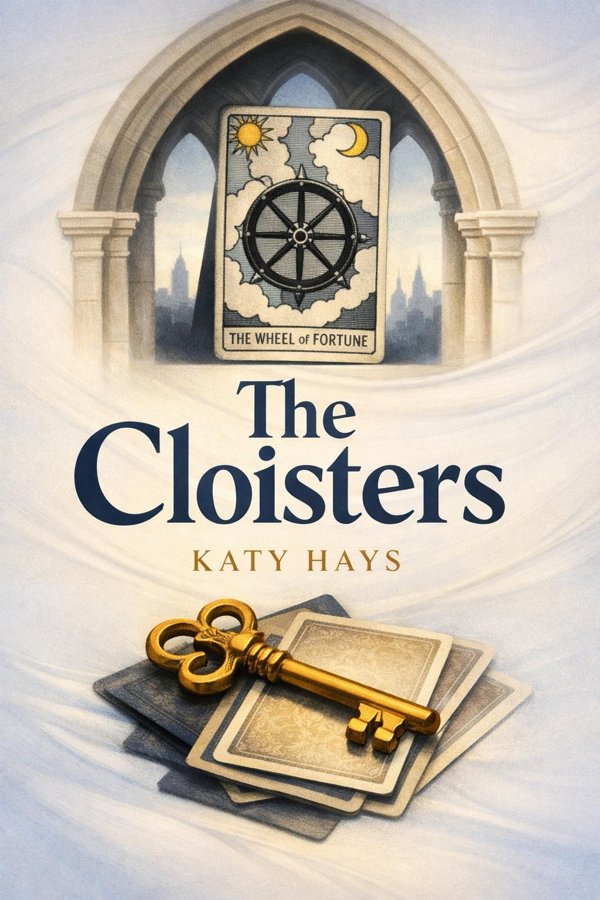
The Cloisters: Summary & Key Insights
by Katy Hays
 10 min3 chaptersAudio available
What Is The Cloisters About?
The Cloisters by Katy Hays is a mystery book spanning 3 pages. A gothic mystery set in New York City, The Cloisters follows Ann Stilwell, a young museum intern who becomes entangled in a world of Renaissance art, divination, and ambition. As she joins a team researching the history of tarot cards at The Cloisters museum, she uncovers dark secrets and faces moral dilemmas about fate, power, and obsession.
This FizzRead summary covers all 3 key chapters of The Cloisters in approximately 10 minutes, distilling the most important ideas, arguments, and takeaways from Katy Hays's work. Also available as an audio summary and Key Quotes Podcast.
The Cloisters
A gothic mystery set in New York City, The Cloisters follows Ann Stilwell, a young museum intern who becomes entangled in a world of Renaissance art, divination, and ambition. As she joins a team researching the history of tarot cards at The Cloisters museum, she uncovers dark secrets and faces moral dilemmas about fate, power, and obsession.
Who Should Read The Cloisters?
This book is perfect for anyone interested in mystery and looking to gain actionable insights in a short read. Whether you're a student, professional, or lifelong learner, the key ideas from The Cloisters by Katy Hays will help you think differently.
- ✓Readers who enjoy mystery and want practical takeaways
- ✓Professionals looking to apply new ideas to their work and life
- ✓Anyone who wants the core insights of The Cloisters in just 10 minutes
Want the full summary?
Get instant access to this book summary and 100K+ more with Fizz Moment.
Get Free SummaryAvailable on App Store • Free to download
Key Chapters
Ann Stilwell’s arrival in New York is marked by a mixture of anticipation and dislocation. She comes from a modest academic background, expecting the grandeur of the Metropolitan Museum to be her playground for intellectual growth. However, fate intervenes abruptly, and she is reassigned to The Cloisters—a museum that specializes in medieval art and sits like a monastery amid the noise of the city.
From the moment she enters The Cloisters, Ann experiences an uncanny quiet. The gardens are fragrant but shadowed, filled with sculptures and relics that belong to another century. It feels as though she has crossed a boundary between modern ambition and ancient enchantment. Patrick Roland, the charismatic curator she meets there, offers her a position on his research team focusing on the historical origins of tarot cards. With him is Rachel, a brilliant and alluring scholar whose career ambitions and charm present an intriguing, but ultimately dangerous, mirror to Ann herself.
In this rarefied world, Ann begins to see scholarship not as passive observation but as a kind of ritual—a means of conjuring the past. The medieval manuscripts and tarot decks in the collection speak seductively to her. They suggest that divination, far from mere superstition, could represent the earliest attempts by scholars to interpret destiny through symbols, patterns, and logic. The idea tempts her, because it aligns so perfectly with her quiet longing for control, for mastery over her own uncertain life.
Yet the museum itself becomes a character in her story. Its courtyards and alcoves conceal whispers of power plays and hidden desires. The deeper Ann ventures into its archives, the more she feels the pull of histories that refuse to remain inert. The Cloisters, for all its beauty, is a space of ambition frozen in stone—a mirror of the modern academic world that still worships discovery as a form of dominion.
Under Patrick’s mentorship, Ann begins to immerse herself in the fascinating study of medieval divination. The guiding thesis of his research—provocative and risky—is that the tarot may not have emerged as a tool of fortune-telling alone but as an intellectual system rooted in Renaissance humanism. To him, the cards were devices for contemplating fate through reason rather than superstition. This notion ignites Ann’s mind. It also blurs the moral boundaries of her internship.
As the weeks pass, the historical inquiry becomes deeply entwined with personal obsession. Ann’s life outside The Cloisters shrinks, her friendships fade, and the gardens become her entire world. She traces the gestures painted on the tarot cards, the symbolism of animals and plants, the geometry of images that link heavens and earth—all in search of a key to understanding why human beings believe in fate. What she discovers, however, is not certainty but hunger. Knowledge becomes addictive, and the museum’s silence turns into echoing loneliness.
Patrick feeds that hunger strategically. His charm masks an ambition that borders on manipulation. His belief in the cards’ scholarly origins is not merely theoretical; he sees them as a path to prestige, to academic immortality. When Ann uncovers a rare deck within the museum’s archives—one whose symbols diverge subtly yet powerfully from known historical designs—it is Patrick who encourages her to view it not just as an artifact, but as proof of his grand claim.
Rachel, meanwhile, oscillates between ally and rival. Her expertise and quiet ruthlessness introduce ambiguity into every conversation. She challenges Patrick’s authority while cultivating Ann’s trust, and the tension among the three scholars increasingly resembles alchemical reaction—consuming, unpredictable, and volatile. Through their interactions, Ann begins to understand that scholarship is not pure pursuit of truth. It can be theater, politics, and seduction all at once.
This section of the story reveals the novel’s intellectual and emotional tension: how easily the pursuit of knowledge can become a veil for ego. The tarot cards, originally instruments for reflection, transform into symbols of human ambition. Every turn of a card speaks to the dangerous appeal of knowing too much—and the cost of believing that knowledge can grant control over destiny.
+ 1 more chapters — available in the FizzRead app
All Chapters in The Cloisters
About the Author
Get This Summary in Your Preferred Format
Read or listen to the The Cloisters summary by Katy Hays anytime, anywhere. FizzRead offers multiple formats so you can learn on your terms — all free.
Available formats: App · Audio · PDF · EPUB — All included free with FizzRead
Download The Cloisters PDF and EPUB Summary
Key Quotes from The Cloisters
“Ann Stilwell’s arrival in New York is marked by a mixture of anticipation and dislocation.”
“Under Patrick’s mentorship, Ann begins to immerse herself in the fascinating study of medieval divination.”
Frequently Asked Questions about The Cloisters
The Cloisters by Katy Hays is a mystery book that explores key ideas across 3 chapters. A gothic mystery set in New York City, The Cloisters follows Ann Stilwell, a young museum intern who becomes entangled in a world of Renaissance art, divination, and ambition. As she joins a team researching the history of tarot cards at The Cloisters museum, she uncovers dark secrets and faces moral dilemmas about fate, power, and obsession.
You Might Also Like

Browse by Category
Ready to read The Cloisters?
Get the full summary and 100K+ more books with Fizz Moment.