
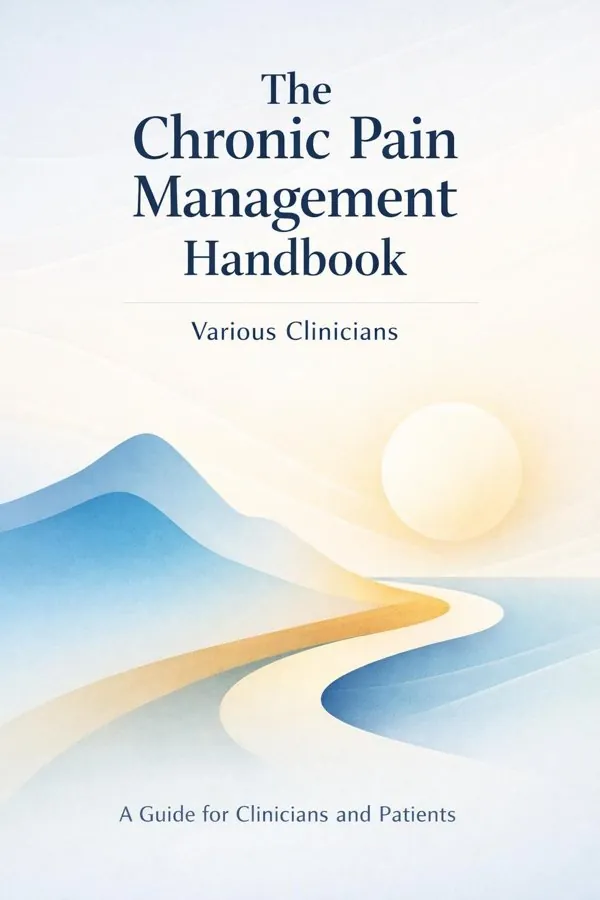
The Chronic Pain Management Handbook: A Guide for Clinicians and Patients: Summary & Key Insights
 10 min9 chaptersAudio available
Key Takeaways from The Chronic Pain Management Handbook: A Guide for Clinicians and Patients
The most important shift in chronic pain care begins with a new question: what if pain is no longer just a sign of tissue damage, but a condition of the nervous system itself?
A pain score alone tells very little.
Medication can reduce suffering, but it is rarely the whole answer.
One of the greatest paradoxes in chronic pain is that rest can feel safe while making things worse.
Pain is physical, but it is never only physical.
What Is The Chronic Pain Management Handbook: A Guide for Clinicians and Patients About?
The Chronic Pain Management Handbook: A Guide for Clinicians and Patients by Various Clinicians is a health_med book spanning 5 pages. Chronic pain is one of the most misunderstood conditions in modern health care: it is often invisible, deeply personal, and rarely solved by a single treatment. The Chronic Pain Management Handbook: A Guide for Clinicians and Patients addresses that complexity head-on by presenting pain not as an isolated symptom, but as a whole-person condition shaped by biology, psychology, behavior, and environment. Rather than promising quick fixes, the book offers a realistic and compassionate framework for long-term management. What makes this handbook especially valuable is its dual audience. Clinicians gain a structured, evidence-informed approach to assessment, treatment planning, and ethical care, while patients and caregivers receive practical tools for understanding symptoms, improving function, and participating actively in recovery. Across its chapters, the book combines expertise from pain medicine, rehabilitation, physical therapy, and psychology, creating a truly multidisciplinary guide. In a field too often divided between medication-only and mindset-only thinking, this handbook argues for integration. Its central message is both reassuring and challenging: chronic pain is complex, but with informed, coordinated care, people can reduce suffering and reclaim meaningful life.
This FizzRead summary covers all 9 key chapters of The Chronic Pain Management Handbook: A Guide for Clinicians and Patients in approximately 10 minutes, distilling the most important ideas, arguments, and takeaways from Various Clinicians's work. Also available as an audio summary and Key Quotes Podcast.
The Chronic Pain Management Handbook: A Guide for Clinicians and Patients
Chronic pain is one of the most misunderstood conditions in modern health care: it is often invisible, deeply personal, and rarely solved by a single treatment. The Chronic Pain Management Handbook: A Guide for Clinicians and Patients addresses that complexity head-on by presenting pain not as an isolated symptom, but as a whole-person condition shaped by biology, psychology, behavior, and environment. Rather than promising quick fixes, the book offers a realistic and compassionate framework for long-term management.
What makes this handbook especially valuable is its dual audience. Clinicians gain a structured, evidence-informed approach to assessment, treatment planning, and ethical care, while patients and caregivers receive practical tools for understanding symptoms, improving function, and participating actively in recovery. Across its chapters, the book combines expertise from pain medicine, rehabilitation, physical therapy, and psychology, creating a truly multidisciplinary guide. In a field too often divided between medication-only and mindset-only thinking, this handbook argues for integration. Its central message is both reassuring and challenging: chronic pain is complex, but with informed, coordinated care, people can reduce suffering and reclaim meaningful life.
Who Should Read The Chronic Pain Management Handbook: A Guide for Clinicians and Patients?
This book is perfect for anyone interested in health_med and looking to gain actionable insights in a short read. Whether you're a student, professional, or lifelong learner, the key ideas from The Chronic Pain Management Handbook: A Guide for Clinicians and Patients by Various Clinicians will help you think differently.
- ✓Readers who enjoy health_med and want practical takeaways
- ✓Professionals looking to apply new ideas to their work and life
- ✓Anyone who wants the core insights of The Chronic Pain Management Handbook: A Guide for Clinicians and Patients in just 10 minutes
Want the full summary?
Get instant access to this book summary and 100K+ more with Fizz Moment.
Get Free SummaryAvailable on App Store • Free to download
Key Chapters
The most important shift in chronic pain care begins with a new question: what if pain is no longer just a sign of tissue damage, but a condition of the nervous system itself? This handbook emphasizes that chronic pain is not simply acute pain that lasted too long. Over time, repeated pain signals can alter how the brain, spinal cord, and peripheral nerves process information. The body becomes more sensitive, and the nervous system starts sounding alarms too easily, even when the original injury has healed or is no longer the main driver.
This idea matters because it changes how clinicians explain pain and how patients understand their experience. A person with persistent back pain, fibromyalgia, migraine, or neuropathy may feel invalidated when tests show little structural damage. The handbook shows that this does not mean the pain is imagined. It means pain has become amplified through sensitization, altered pain pathways, and emotional stress responses. Recognizing this can reduce shame and help patients move away from the frustrating belief that if no one can “find” the damage, nothing is wrong.
In practice, understanding pain physiology supports better care plans. Clinicians can explain flare-ups as nervous system reactivity rather than personal failure. Patients can learn that sleep, movement, mood, stress, and pacing influence pain intensity because they all affect the same pain-processing systems. Treatments such as graded exercise, cognitive behavioral strategies, and certain medications make more sense when viewed through this lens.
Actionable takeaway: Reframe chronic pain as a nervous system condition, not just a structural problem, and use that understanding to build a broader, less fearful treatment plan.
A pain score alone tells very little. Two patients can both rate their pain as eight out of ten, yet one may still work, sleep, and socialize while the other struggles to get through basic daily tasks. The handbook argues that effective chronic pain treatment begins with a multidimensional assessment that captures not only where pain is felt, but how it behaves, what it disrupts, and what may be sustaining it.
A thorough evaluation includes pain onset, quality, timing, triggers, relieving factors, associated symptoms, prior treatments, and relevant medical history. But it also examines sleep quality, mobility, work limitations, mood symptoms, trauma history, medication use, and family or social stressors. This broader lens helps distinguish between nociceptive, neuropathic, inflammatory, centralized, or mixed pain patterns. It also reveals red flags that require urgent attention and identifies modifiable factors that can improve outcomes.
For clinicians, this means moving from a narrow diagnostic mindset to a functional one. Instead of asking only, “What structure is causing pain?” the better question is, “What mechanisms are involved, and what is pain doing to this person’s life?” For patients, a detailed assessment can be validating. It communicates that pain is being taken seriously as a lived experience, not reduced to a body part.
Consider a patient with chronic knee pain. Imaging may show mild arthritis, but the real drivers of disability may include deconditioning, poor sleep, depression, fear of movement, and inconsistent medication use. A superficial assessment would miss most of the treatable problem.
Actionable takeaway: Evaluate chronic pain in terms of mechanisms, function, and life impact, not just intensity or anatomy.
Medication can reduce suffering, but it is rarely the whole answer. One of the handbook’s most balanced contributions is its explanation of pharmacologic care as a tool to support function, not a stand-alone cure. Chronic pain treatment often fails when medications are prescribed in isolation or when expectations are unrealistic. The goal is not simply to erase pain, but to improve daily living while minimizing side effects, dependence, and treatment burden.
The book reviews common medication categories, including acetaminophen, nonsteroidal anti-inflammatory drugs, antidepressants, anticonvulsants, topical agents, muscle relaxants, and in selected cases, opioids. It highlights an essential principle: the right medication depends on the pain mechanism. Neuropathic pain may respond better to certain antidepressants or anticonvulsants than to standard analgesics. Inflammatory conditions may improve with anti-inflammatory strategies. Sleep disturbance, anxiety, or depression may also shape what medication choices make sense.
The handbook is especially careful about opioid prescribing. It neither demonizes nor romanticizes opioids. Instead, it places them within a risk-benefit framework that includes screening, informed consent, dose review, functional goals, and ongoing monitoring. This is crucial in modern pain care, where undertreatment and overtreatment can both cause harm.
For patients, medication works best when paired with tracking. Keeping a simple log of pain levels, activity, sleep, side effects, and function can show whether a drug is truly helping. For clinicians, regular reassessment prevents automatic refills from replacing thoughtful care.
Actionable takeaway: Use medication as one part of a larger plan, and judge success by improved function and quality of life, not pain relief alone.
One of the greatest paradoxes in chronic pain is that rest can feel safe while making things worse. The handbook stresses that carefully guided movement is one of the most powerful non-pharmacologic treatments available. Pain often leads people to avoid activity, which can trigger muscle weakness, joint stiffness, reduced endurance, loss of confidence, and greater pain sensitivity. Over time, inactivity narrows life and reinforces the cycle of pain and disability.
This does not mean patients should simply push through severe pain. The book promotes graded, individualized activity. That means starting below the level that triggers a major flare, then increasing duration or intensity gradually. Walking programs, stretching, strengthening, aquatic therapy, posture work, and physical therapy exercises can all be useful depending on the condition. For some, success begins with standing a little longer, climbing one more stair, or taking short walks several times a day.
Clinicians are encouraged to frame movement as retraining rather than testing. A patient with chronic low back pain, for example, may believe bending is dangerous. Guided repetition under safe conditions can help the nervous system relearn that not every movement is a threat. This lowers fear and builds resilience. Patients often discover that consistency matters more than intensity.
The book also recognizes barriers such as fatigue, obesity, depression, transportation issues, and prior negative exercise experiences. Effective plans meet people where they are rather than where they “should” be.
Actionable takeaway: Replace all-or-nothing activity with a graded movement plan that is gentle, consistent, and focused on rebuilding confidence as well as strength.
Pain is physical, but it is never only physical. The handbook strongly rejects the false choice between “real pain” and “psychological pain.” Emotions, beliefs, attention, and past experiences do not invent pain, but they can amplify or ease it by influencing the nervous system. This is why chronic pain care must include psychological understanding without implying that symptoms are imaginary.
The book explains how fear, catastrophizing, depression, anxiety, anger, trauma, and hypervigilance can increase suffering. A person who believes every flare-up signals serious damage may avoid movement, sleep poorly, become isolated, and experience worsening pain. In contrast, someone who learns coping skills may still have pain but feel less overwhelmed by it. This distinction between pain intensity and pain interference is central.
Psychological approaches such as cognitive behavioral therapy, acceptance and commitment therapy, relaxation training, mindfulness, biofeedback, and stress management are presented as practical tools. For example, a patient who notices rising tension during a pain spike can use diaphragmatic breathing, grounding exercises, or reframing statements like, “This is a flare, not a catastrophe.” These interventions calm physiological arousal and reduce secondary suffering.
Clinicians benefit from learning how language affects outcomes. Saying, “Your back is fragile,” may reinforce fear. Saying, “Your system is sensitive, but we can help it become less reactive,” promotes hope without false reassurance.
Actionable takeaway: Treat emotional and cognitive factors as legitimate parts of pain care, and use evidence-based coping strategies to reduce fear, distress, and disability.
No single profession owns chronic pain, and no single treatment can fully address it. The handbook makes a compelling case that multidisciplinary care is not an idealistic luxury but a practical necessity. Chronic pain often involves overlapping physical, neurological, psychological, and social issues. When treatment addresses only one dimension, progress is often partial or short-lived.
A multidisciplinary model may include a primary care physician, pain specialist, physical therapist, psychologist, occupational therapist, pharmacist, and sometimes social worker or rehabilitation specialist. Each contributes a different lens. Medical providers evaluate diagnoses and medications. Therapists restore movement and function. Psychologists address coping, trauma, sleep, and behavior change. Social support professionals help with work barriers, family strain, and access to services. The value lies not just in multiple experts, but in coordination among them.
For example, a patient with persistent neck pain after an accident may benefit from medication adjustment, physical therapy to reduce guarded movement, psychological support for trauma-related hyperarousal, and workplace modifications to reduce strain. If each intervention occurs in isolation, the patient may receive mixed messages. When care is aligned around shared functional goals, outcomes improve.
The book also insists that patients are part of the team, not passive recipients of treatment. Their goals, values, culture, and daily realities must shape the plan. For one person, success may mean returning to work. For another, it may mean cooking again, sleeping through the night, or walking with grandchildren.
Actionable takeaway: Build chronic pain care around coordinated, team-based treatment with the patient’s own priorities at the center.
What happens between appointments often matters more than what happens during them. One of the handbook’s most empowering ideas is that successful chronic pain management depends on self-management skills practiced daily. This does not mean patients are left to manage alone. It means lasting improvement comes from learning how to respond to pain consistently, skillfully, and with greater confidence.
The book highlights practical tools such as pacing, activity scheduling, sleep hygiene, symptom tracking, relaxation routines, nutrition awareness, and flare-up planning. Pacing is especially important. Many patients alternate between overdoing activity on good days and crashing afterward. The handbook encourages steadier rhythms: doing manageable amounts regularly instead of swinging between extremes. This approach protects function and reduces boom-and-bust cycles.
Sleep is treated as a major therapeutic target, not a side issue. Poor sleep increases pain sensitivity, fatigue, irritability, and reduced coping. Simple interventions such as fixed bedtimes, reducing late caffeine, limiting screen exposure, and using the bed primarily for sleep can support recovery. Stress regulation matters too. A patient who builds short breathing exercises, stretching breaks, and realistic daily goals into their routine may experience fewer severe flares over time.
For clinicians, teaching self-management requires repetition and collaboration. Handouts alone are not enough. Patients need help turning principles into personalized habits. A useful plan might include a walking baseline, a calming routine before bed, and a flare checklist taped to the refrigerator.
Actionable takeaway: Develop a simple daily self-management routine built around pacing, sleep, movement, and flare-up planning, then practice it consistently.
The words used in pain care can change outcomes. This handbook underscores a truth often overlooked in medical training: communication is itself a clinical intervention. Patients with chronic pain frequently encounter skepticism, rushed appointments, and language that implies exaggeration, weakness, or hopelessness. These experiences can deepen distress, reduce trust, and even worsen pain through heightened stress and isolation.
The book encourages clinicians to practice validating, clear, and collaborative communication. Validation does not require certainty about every diagnosis. It means acknowledging that the patient’s suffering is real and worthy of care. Phrases like, “I believe you are in pain,” or, “Even though this is complex, we can still work on improving your function,” can be profoundly therapeutic. Equally important is avoiding language that creates fear, such as describing a spine as “degenerating” without context or labeling a patient “noncompliant” when barriers have not been explored.
Good communication also means setting realistic expectations. Chronic pain often improves gradually, and progress may be measured in sleep, stamina, mood, or participation, not complete symptom elimination. When clinicians explain this clearly, patients are less likely to feel abandoned when there is no quick fix.
Patients and families also benefit from communication tools. Learning to describe triggers, functional limits, medication effects, and treatment goals helps appointments become more productive. Family conversations can improve when pain is framed as a long-term condition requiring support rather than constant proof.
Actionable takeaway: Use language that validates pain, reduces fear, and focuses on shared goals, because communication shapes both trust and treatment success.
Pain management is not only a clinical challenge; it is also an ethical one. The handbook closes this gap by examining how bias, access, safety, and professional responsibility influence care. Chronic pain patients often face stigma, especially when they require long-term treatment, have medically unexplained symptoms, or belong to groups historically underserved by the health system. Ethical pain care requires more than technical skill. It demands fairness, humility, and ongoing reflection.
The book points to difficult tensions clinicians must navigate: relieving suffering without causing harm, prescribing responsibly without abandoning patients, and respecting autonomy while addressing risks such as substance misuse, depression, or suicidality. Ethical practice requires informed consent, transparent documentation, reassessment of treatment effectiveness, and willingness to adjust plans when the burdens outweigh the benefits.
Equity is equally important. People with fewer financial resources may have access to medications but not physical therapy, psychology, transportation, adaptive equipment, or time off work. Cultural differences can shape how pain is described and whether patients feel safe disclosing distress. Implicit bias may influence who is believed, who is labeled difficult, and who receives comprehensive treatment. The handbook urges clinicians to recognize these realities rather than treating all patients as if they begin from the same position.
Future-oriented pain care also includes ongoing research, better education, and more integrated systems of care. Patients deserve treatment that is evidence-based and humane.
Actionable takeaway: Approach pain management with ethical balance and equity in mind, ensuring that safety, dignity, and access are part of every treatment decision.
All Chapters in The Chronic Pain Management Handbook: A Guide for Clinicians and Patients
About the Author
Various Clinicians is a collective designation for the medical and allied health professionals who contributed to this handbook. The contributors represent multiple disciplines commonly involved in chronic pain care, including pain medicine, physical therapy, psychology, rehabilitation, and patient support. Their combined expertise gives the book a practical, integrated perspective that reflects how chronic pain is actually managed in real-world settings. Rather than speaking from a single specialty viewpoint, the authors draw on clinical experience treating patients with persistent pain across hospitals, outpatient practices, and rehabilitation programs. This multidisciplinary background strengthens the handbook’s credibility and usefulness for both professionals and patients. Their shared aim is to translate evidence-based pain care into accessible guidance that is compassionate, realistic, and focused on improving function, resilience, and quality of life.
Get This Summary in Your Preferred Format
Read or listen to the The Chronic Pain Management Handbook: A Guide for Clinicians and Patients summary by Various Clinicians anytime, anywhere. FizzRead offers multiple formats so you can learn on your terms — all free.
Available formats: App · Audio · PDF · EPUB — All included free with FizzRead
Download The Chronic Pain Management Handbook: A Guide for Clinicians and Patients PDF and EPUB Summary
Key Quotes from The Chronic Pain Management Handbook: A Guide for Clinicians and Patients
“The most important shift in chronic pain care begins with a new question: what if pain is no longer just a sign of tissue damage, but a condition of the nervous system itself?”
“Two patients can both rate their pain as eight out of ten, yet one may still work, sleep, and socialize while the other struggles to get through basic daily tasks.”
“Medication can reduce suffering, but it is rarely the whole answer.”
“One of the greatest paradoxes in chronic pain is that rest can feel safe while making things worse.”
“Pain is physical, but it is never only physical.”
Frequently Asked Questions about The Chronic Pain Management Handbook: A Guide for Clinicians and Patients
The Chronic Pain Management Handbook: A Guide for Clinicians and Patients by Various Clinicians is a health_med book that explores key ideas across 9 chapters. Chronic pain is one of the most misunderstood conditions in modern health care: it is often invisible, deeply personal, and rarely solved by a single treatment. The Chronic Pain Management Handbook: A Guide for Clinicians and Patients addresses that complexity head-on by presenting pain not as an isolated symptom, but as a whole-person condition shaped by biology, psychology, behavior, and environment. Rather than promising quick fixes, the book offers a realistic and compassionate framework for long-term management. What makes this handbook especially valuable is its dual audience. Clinicians gain a structured, evidence-informed approach to assessment, treatment planning, and ethical care, while patients and caregivers receive practical tools for understanding symptoms, improving function, and participating actively in recovery. Across its chapters, the book combines expertise from pain medicine, rehabilitation, physical therapy, and psychology, creating a truly multidisciplinary guide. In a field too often divided between medication-only and mindset-only thinking, this handbook argues for integration. Its central message is both reassuring and challenging: chronic pain is complex, but with informed, coordinated care, people can reduce suffering and reclaim meaningful life.
You Might Also Like

On Immunity
Eula Biss
10 min
The Three-Body Problem
Liu Cixin
10 min
Community Health Volunteer Toolkit: Training and Practical Activities
World Health Organization
10 min
Healing Back Pain: The Mind-Body Connection
John E. Sarno
10 min
Health Literacy for All: Practical Guides to Communicate Health Information (Compilations)
World Health Organization
10 min
The Complete Guide to Sports Supplements: An Evidence-Based Review
Anita Bean
10 minBrowse by Category
Ready to read The Chronic Pain Management Handbook: A Guide for Clinicians and Patients?
Get the full summary and 100K+ more books with Fizz Moment.