
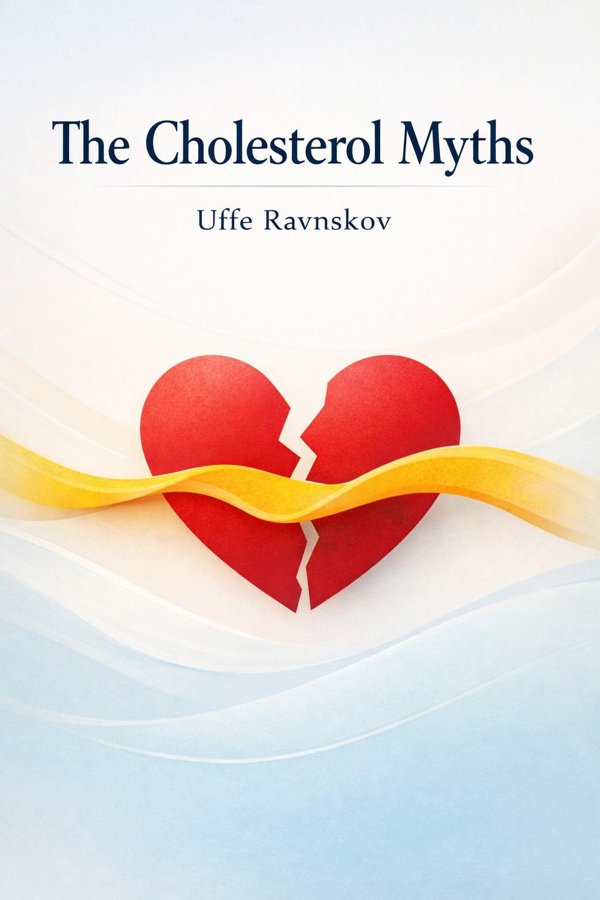
The Cholesterol Myths: Exposing the Fallacy That Saturated Fat and Cholesterol Cause Heart Disease: Summary & Key Insights
 10 min10 chaptersAudio available
Key Takeaways from The Cholesterol Myths: Exposing the Fallacy That Saturated Fat and Cholesterol Cause Heart Disease
A medical theory can become powerful long before it becomes fully proven.
Large population studies can reveal patterns, but patterns are not verdicts.
When a nutritional rule becomes cultural common sense, people stop asking how solid the original evidence really was.
Lower numbers do not always mean better health.
Focusing too much on one suspect can blind us to the larger crime scene.
What Is The Cholesterol Myths: Exposing the Fallacy That Saturated Fat and Cholesterol Cause Heart Disease About?
The Cholesterol Myths: Exposing the Fallacy That Saturated Fat and Cholesterol Cause Heart Disease by Uffe Ravnskov is a health_med book spanning 10 pages. What if one of modern medicine’s most repeated health warnings rests on shakier evidence than most people realize? In The Cholesterol Myths, physician and researcher Uffe Ravnskov takes aim at the long-standing belief that eating saturated fat and having high cholesterol are the main drivers of heart disease. Rather than relying on slogans or popular dietary advice, he reviews epidemiology, clinical trials, laboratory findings, and public health recommendations to argue that the case against cholesterol has been overstated and, at times, selectively presented. The book matters because cholesterol-lowering advice has shaped how millions of people eat, how doctors assess risk, and how health policy is made. Ravnskov challenges readers to look beyond simplified cause-and-effect stories and ask whether the evidence truly supports the fear surrounding saturated fat and cholesterol. His perspective is controversial, but it is also carefully argued and rooted in his background as a Swedish medical doctor, researcher, and author who has spent years examining cardiovascular literature. For readers interested in preventive health, medical debate, or the gap between science and policy, this book offers a provocative reexamination of one of nutrition’s most influential ideas.
This FizzRead summary covers all 10 key chapters of The Cholesterol Myths: Exposing the Fallacy That Saturated Fat and Cholesterol Cause Heart Disease in approximately 10 minutes, distilling the most important ideas, arguments, and takeaways from Uffe Ravnskov's work. Also available as an audio summary and Key Quotes Podcast.
The Cholesterol Myths: Exposing the Fallacy That Saturated Fat and Cholesterol Cause Heart Disease
What if one of modern medicine’s most repeated health warnings rests on shakier evidence than most people realize? In The Cholesterol Myths, physician and researcher Uffe Ravnskov takes aim at the long-standing belief that eating saturated fat and having high cholesterol are the main drivers of heart disease. Rather than relying on slogans or popular dietary advice, he reviews epidemiology, clinical trials, laboratory findings, and public health recommendations to argue that the case against cholesterol has been overstated and, at times, selectively presented.
The book matters because cholesterol-lowering advice has shaped how millions of people eat, how doctors assess risk, and how health policy is made. Ravnskov challenges readers to look beyond simplified cause-and-effect stories and ask whether the evidence truly supports the fear surrounding saturated fat and cholesterol. His perspective is controversial, but it is also carefully argued and rooted in his background as a Swedish medical doctor, researcher, and author who has spent years examining cardiovascular literature. For readers interested in preventive health, medical debate, or the gap between science and policy, this book offers a provocative reexamination of one of nutrition’s most influential ideas.
Who Should Read The Cholesterol Myths: Exposing the Fallacy That Saturated Fat and Cholesterol Cause Heart Disease?
This book is perfect for anyone interested in health_med and looking to gain actionable insights in a short read. Whether you're a student, professional, or lifelong learner, the key ideas from The Cholesterol Myths: Exposing the Fallacy That Saturated Fat and Cholesterol Cause Heart Disease by Uffe Ravnskov will help you think differently.
- ✓Readers who enjoy health_med and want practical takeaways
- ✓Professionals looking to apply new ideas to their work and life
- ✓Anyone who wants the core insights of The Cholesterol Myths: Exposing the Fallacy That Saturated Fat and Cholesterol Cause Heart Disease in just 10 minutes
Want the full summary?
Get instant access to this book summary and 100K+ more with Fizz Moment.
Get Free SummaryAvailable on App Store • Free to download
Key Chapters
A medical theory can become powerful long before it becomes fully proven. Ravnskov’s central claim is that the cholesterol hypothesis gained authority because it offered a neat, intuitive story: dietary saturated fat raises blood cholesterol, cholesterol accumulates in arteries, and heart attacks follow. The problem, he argues, is that real biology is more complex than this chain of logic suggests.
In the book, he revisits how this hypothesis became dominant in the mid-20th century and asks whether the evidence ever justified the certainty with which it was presented. He points out that a plausible theory is not the same as a demonstrated cause. In medicine, many ideas sound convincing at first but weaken once tested across diverse populations and clinical settings. Ravnskov argues that cholesterol became an outsized villain partly because it was measurable, easy to target, and compatible with a simple public health message.
He also emphasizes that the body depends on cholesterol. It is essential for hormone production, cell membranes, and normal physiology. That alone does not prove high cholesterol is harmless, but it does challenge the idea that cholesterol is merely a toxic substance to be suppressed. Ravnskov encourages readers to distinguish between a molecule’s presence in diseased tissue and proof that it caused the disease.
A practical application of this idea is to become more cautious about health claims built on a single biomarker. If a doctor, article, or diet plan reduces heart health to one number alone, Ravnskov would urge deeper questions: What is the quality of evidence? What outcomes matter most? What other risk factors are present?
Actionable takeaway: treat simple explanations of chronic disease with healthy skepticism, and evaluate heart-health advice in the context of overall evidence rather than one dominant theory.
Large population studies can reveal patterns, but patterns are not verdicts. One of Ravnskov’s strongest themes is that epidemiological research has often been used too aggressively to support the cholesterol theory. He argues that observational studies can identify associations, yet they cannot by themselves establish that cholesterol or saturated fat directly causes heart disease.
The book revisits major studies often cited in support of conventional wisdom and highlights inconsistencies, weak correlations, and findings that do not fit the official narrative. Ravnskov is especially interested in how researchers may focus on subgroups that support a conclusion while downplaying broader data that are less persuasive. In his view, this selective emphasis helped transform uncertain associations into widely accepted dogma.
He also draws attention to confounding variables. People who eat certain diets may differ in smoking habits, stress levels, exercise patterns, income, medical care, or inflammatory burden. If these factors are not adequately controlled, researchers may mistakenly attribute risk to cholesterol or saturated fat when the real driver lies elsewhere. This is a critical lesson for any reader trying to interpret health news.
Consider a practical example: if a headline announces that people with lower cholesterol live longer, or that people who avoid saturated fat have fewer heart attacks, the responsible next step is not instant belief. One should ask how the study was designed, whether it was observational or interventional, and whether meaningful outcomes were measured.
Ravnskov’s point is not that epidemiology is useless, but that it is often treated as stronger evidence than it deserves. It can generate hypotheses, but it should not end debate.
Actionable takeaway: when reading nutrition or heart-disease research, always ask whether the evidence shows association or true causation before changing beliefs or behavior.
When a nutritional rule becomes cultural common sense, people stop asking how solid the original evidence really was. Ravnskov examines dietary fat studies and argues that the research linking saturated fat intake to heart disease has often been inconsistent, overinterpreted, or contradicted by later findings.
He challenges the assumption that eating foods rich in saturated fat automatically leads to dangerous cardiovascular outcomes. In his reading of the evidence, some populations consume significant animal fat yet do not show the expected rates of heart disease, while others with supposedly healthier diets still experience substantial cardiovascular illness. Such mismatches suggest that dietary fat alone cannot explain the pattern.
Ravnskov also critiques the leap from changes in blood lipids to claims about long-term health. If one diet lowers total cholesterol but does not clearly reduce heart attacks or extend life, then the practical significance of that dietary advice remains uncertain. He pushes readers to distinguish between biochemical shifts and clinically meaningful benefits.
This insight matters in everyday life. Many people still choose highly processed low-fat products because they believe natural fats are inherently dangerous. Ravnskov’s argument encourages a closer look at the full food context: is a traditional whole-food meal with eggs, butter, or meat automatically worse than a low-fat snack loaded with sugar, refined starch, and additives? He urges readers not to confuse “low-fat” with “healthy.”
His broader challenge is to nutritional reductionism. Diet quality depends on more than isolated fat content; inflammation, insulin response, food processing, nutrient density, and lifestyle all matter. Ravnskov does not argue that all eating patterns are equally healthy, but he does argue that saturated fat has been blamed far beyond what evidence can securely support.
Actionable takeaway: judge foods by their overall nutritional context and real-world effects, not by a simplistic fear of saturated fat alone.
Lower numbers do not always mean better health. A major argument in the book is that cholesterol research and treatment have relied too heavily on surrogate endpoints, especially total cholesterol and LDL measurements, instead of the outcomes patients actually care about: fewer heart attacks, better health, and longer life.
Ravnskov argues that when a drug or diet lowers cholesterol, that result is often treated as proof of benefit even before hard outcomes are convincingly demonstrated. But in medicine, improving a marker does not necessarily improve reality. Blood sugar, blood pressure, inflammatory markers, and cholesterol may all matter, yet each is only one part of a much larger clinical picture.
He points readers to the distinction between biochemical success and therapeutic success. A treatment can look impressive on paper while offering little meaningful benefit in day-to-day health. In some cases, it may even introduce new risks. Ravnskov believes cholesterol-lowering interventions have at times been promoted on the basis of numbers first and outcomes second.
This idea has practical value for anyone discussing preventive care. Imagine a patient told that a medication reduced cholesterol by a certain percentage. Ravnskov would say the next questions should be: Did it reduce total mortality? Did it reduce severe cardiac events? How large was the absolute benefit? What were the adverse effects? These questions are often more important than the headline figure.
The same logic applies to diets. A food plan that changes lipid markers but leaves a person tired, hungry, metabolically unstable, or reliant on ultra-processed foods may not be a genuine health improvement. Ravnskov’s deeper message is that medical decisions should be grounded in outcomes that matter, not just laboratory symbolism.
Actionable takeaway: whenever a treatment is praised for lowering cholesterol, ask whether it improves real clinical outcomes, not just test results.
Focusing too much on one suspect can blind us to the larger crime scene. Ravnskov argues that heart disease is a multifactorial condition and that the obsession with cholesterol has distracted researchers, doctors, and patients from more significant contributors to cardiovascular risk.
He points to factors such as smoking, chronic stress, inflammation, blood clotting abnormalities, infections, high blood pressure, metabolic disturbances, and lifestyle patterns that may play larger roles than mainstream cholesterol theory allows. In his view, narrowing prevention to cholesterol reduction can create a false sense of control while neglecting more important determinants of disease.
This reframing is powerful because it shifts the conversation from a single villain to a systems view of health. A person with modestly elevated cholesterol who exercises regularly, avoids smoking, sleeps well, manages stress, and eats minimally processed food may not carry the same risk as someone with lower cholesterol but serious metabolic or inflammatory problems. Ravnskov does not claim cholesterol is irrelevant in all circumstances; he claims it has been overemphasized relative to other risk factors.
In practical terms, this means a heart-health strategy built only around reducing saturated fat may miss the larger opportunity. For example, helping a patient stop smoking or improve insulin sensitivity could have a far more meaningful effect than marginally lowering cholesterol through diet alone. Likewise, addressing chronic stress, social isolation, or poor sleep may yield benefits that do not show up in simplistic dietary messages.
Ravnskov’s broader challenge is to reductionist medicine. Chronic disease rarely has one master key. Prevention works best when it accounts for the full person and the full pattern of risk rather than one laboratory measure elevated above all others.
Actionable takeaway: build cardiovascular habits around the biggest proven lifestyle risks and protective factors, not around cholesterol fear alone.
If a theory is universally true, it should travel well across cultures. Ravnskov examines population differences around the world and argues that the global picture does not consistently support the claim that saturated fat and cholesterol are the primary causes of heart disease.
He notes that some populations have eaten diets relatively rich in animal fats without experiencing the expected epidemic of coronary disease, while others have shown high cardiovascular burdens despite eating in ways that should, under the standard theory, protect them. These cross-cultural inconsistencies matter because they challenge the confidence with which dietary fat has been singled out.
Ravnskov uses such examples not to prove one universal alternative diet but to show that heart disease emerges from a complex interaction of genetics, food traditions, physical activity, smoking prevalence, industrialization, stress, social conditions, and medical care. In other words, the same nutrient can exist in very different health environments. A saturated fat molecule does not operate in a vacuum.
This has a practical lesson for modern readers who try to borrow health rules from population studies. It is easy to idealize one national diet or demonize another, but Ravnskov argues that public health data should be interpreted with caution. Cultural context matters. Traditional eating patterns often include lifestyle features that are impossible to reduce to a macronutrient summary.
A useful example is the temptation to compare one country’s fat intake with another country’s heart disease rate and treat the difference as causal proof. Ravnskov reminds readers that such comparisons can hide dozens of confounders. They may generate interesting questions, but they rarely deliver final answers.
Actionable takeaway: be wary of universal dietary rules drawn from international comparisons, and look for health guidance that respects context, lifestyle, and whole-pattern evidence.
Once institutions agree on a story, disagreement starts to look like ignorance. Ravnskov explores how the anti-cholesterol consensus became embedded in official guidelines, medical education, media messaging, and food industry marketing. His argument is not merely scientific; it is also about how scientific narratives harden into policy.
He suggests that expert consensus around cholesterol gained momentum through repetition, prestige, and institutional reinforcement as much as through decisive proof. Once influential organizations endorsed low-fat, cholesterol-lowering advice, the message spread through textbooks, public campaigns, packaged-food labeling, and physician training. Over time, the theory came to feel unquestionable because so many authorities repeated it.
Ravnskov is especially interested in what happens to contradictory evidence under these conditions. Data that support the consensus are highlighted; data that conflict with it are dismissed as anomalies, methodological flaws, or exceptions. This is not unique to cholesterol research. It is a broader warning about how group thinking can shape science and policy.
For readers, this chapter offers an important media-literacy lesson. Official recommendations are influential, but they are not infallible. History shows many examples in which medicine revised its confidence after years of certainty. Ravnskov encourages a mindset that respects expertise without surrendering critical judgment.
In daily life, this means being cautious when a nutritional recommendation is presented as settled beyond question, especially if it leads to broad one-size-fits-all policies. Consensus is useful, but it should remain open to challenge from new or neglected evidence.
Ravnskov’s deeper message is that public health certainty can sometimes move faster than scientific certainty. That gap matters when millions of people reshape their diets and treatments based on official advice.
Actionable takeaway: respect expert guidelines, but read them as evolving interpretations of evidence rather than unquestionable final truths.
A treatment’s popularity should never substitute for a careful look at its actual benefits. Ravnskov addresses cholesterol-lowering drugs by asking whether reductions in laboratory values translate into meaningful advantages for patients, especially when side effects and absolute risk reduction are taken into account.
His concern is not simply that these drugs lower cholesterol, but that they are often framed as indispensable based on relative risk claims that sound larger than the practical benefit many patients receive. Ravnskov urges readers to distinguish between relative and absolute improvements. A medication may reduce risk by an impressive percentage on paper while helping only a small number of people in absolute terms, particularly in low-risk populations.
He also raises questions about adverse effects and about whether patients are always given balanced information before starting long-term therapy. In his view, treatment decisions should be individualized rather than driven by generalized fear of cholesterol. Not everyone with an elevated number faces the same risk, and not every person benefits equally from the same intervention.
This perspective is highly relevant in clinical conversations. A patient considering medication should know more than the drug’s effect on LDL. They should ask about the number needed to treat, the likelihood of benefit in their specific risk category, the chance of side effects, and whether lifestyle changes or other risk factors deserve greater attention.
Ravnskov’s broader point is not that every cholesterol-lowering drug is useless, but that automatic prescribing based on guideline thresholds can obscure nuance. Therapeutic decisions should be rooted in informed consent and meaningful outcomes, not just biochemical targets.
Actionable takeaway: if prescribed cholesterol-lowering medication, ask for a clear explanation of your personal absolute benefit, potential side effects, and available alternatives before deciding.
When one theory fails to explain enough, better questions become more valuable than louder repetition. Ravnskov proposes that alternative explanations of heart disease deserve more attention than they typically receive in mainstream discussions. Rather than viewing arterial disease mainly as a cholesterol-storage problem, he encourages readers to consider models involving inflammation, vascular injury, immune response, clotting disturbances, and infection-related mechanisms.
This shift matters because it changes both diagnosis and prevention. If arteries become damaged through inflammatory processes, oxidative stress, endothelial dysfunction, or recurring injury, then cholesterol may be part of the repair scene rather than the original criminal. Ravnskov uses this line of reasoning to argue that the presence of cholesterol in arterial plaques does not automatically prove it initiated the disease.
A practical example is the way clinicians might approach prevention differently under this broader framework. Instead of focusing overwhelmingly on lipid lowering, they might emphasize smoking cessation, blood pressure control, anti-inflammatory lifestyle measures, glucose regulation, oral health, stress reduction, and physical activity. These are not fringe ideas; they are already recognized in cardiovascular care, but Ravnskov argues they deserve greater priority relative to cholesterol reduction.
The value of alternative models is not that they instantly solve every mystery. It is that they better reflect the complexity of chronic disease and open room for more effective interventions. Ravnskov wants readers to recognize that scientific progress often depends on challenging dominant frameworks, especially when too many observations refuse to fit.
His challenge to readers is intellectual as much as medical: if a theory explains only selected facts and must keep ignoring contradictory evidence, it may be time to rethink the map rather than defend it.
Actionable takeaway: broaden your understanding of heart disease beyond cholesterol and include inflammation, metabolism, blood pressure, and lifestyle stressors in your prevention plan.
The most revealing evidence in science is often the evidence that does not fit. Ravnskov repeatedly highlights findings that contradict the standard cholesterol narrative: people with normal cholesterol who suffer heart attacks, older adults whose higher cholesterol does not predict worse outcomes, populations that eat more saturated fat than expected without corresponding disease rates, and trials in which cholesterol reduction fails to produce the promised health gains.
For Ravnskov, these anomalies are not minor exceptions to be brushed aside. They are signals that the dominant theory may be incomplete or overstated. A robust scientific model should account for inconvenient facts, not simply isolate data that confirm existing beliefs. The more a theory depends on ignoring contradictory observations, the less reliable it becomes as a guide to policy and treatment.
This lesson extends beyond cardiology. Many public debates in health become polarized because one side treats inconsistency as irrelevant noise. Ravnskov argues that anomalies deserve careful investigation because they often expose hidden assumptions. In this case, they suggest that cholesterol level alone is a poor universal explanation for who gets heart disease and why.
For ordinary readers, this means resisting all-or-nothing thinking. It is possible that cholesterol plays some role in some contexts while still being far less determinative than public messaging suggests. Nuance is not weakness; it is a better fit for biological reality.
In practical terms, a person should not assume safety because their cholesterol is low, nor panic because it is high in isolation. Family history, inflammation, blood pressure, smoking, diabetes, obesity, exercise, stress, and age all matter. Ravnskov’s contribution is to push readers toward a fuller view of risk.
Actionable takeaway: pay close attention to evidence that challenges popular health beliefs, because exceptions often reveal what simplified theories leave out.
All Chapters in The Cholesterol Myths: Exposing the Fallacy That Saturated Fat and Cholesterol Cause Heart Disease
About the Author
Uffe Ravnskov is a Swedish physician, independent researcher, and author known for his skeptical analysis of conventional cholesterol theory. Trained in medicine and holding a PhD, he has spent much of his career examining whether the evidence truly supports the widespread belief that saturated fat and cholesterol are the primary causes of heart disease. Ravnskov has published papers and books that challenge mainstream interpretations of cardiovascular research, especially the use of epidemiological associations and cholesterol-lowering outcomes as proof of causation. His work has made him a controversial figure in nutrition and preventive medicine, but also an influential voice among readers and researchers interested in medical dissent, evidence quality, and the history of public health recommendations.
Get This Summary in Your Preferred Format
Read or listen to the The Cholesterol Myths: Exposing the Fallacy That Saturated Fat and Cholesterol Cause Heart Disease summary by Uffe Ravnskov anytime, anywhere. FizzRead offers multiple formats so you can learn on your terms — all free.
Available formats: App · Audio · PDF · EPUB — All included free with FizzRead
Download The Cholesterol Myths: Exposing the Fallacy That Saturated Fat and Cholesterol Cause Heart Disease PDF and EPUB Summary
Key Quotes from The Cholesterol Myths: Exposing the Fallacy That Saturated Fat and Cholesterol Cause Heart Disease
“A medical theory can become powerful long before it becomes fully proven.”
“Large population studies can reveal patterns, but patterns are not verdicts.”
“When a nutritional rule becomes cultural common sense, people stop asking how solid the original evidence really was.”
“Lower numbers do not always mean better health.”
“Focusing too much on one suspect can blind us to the larger crime scene.”
Frequently Asked Questions about The Cholesterol Myths: Exposing the Fallacy That Saturated Fat and Cholesterol Cause Heart Disease
The Cholesterol Myths: Exposing the Fallacy That Saturated Fat and Cholesterol Cause Heart Disease by Uffe Ravnskov is a health_med book that explores key ideas across 10 chapters. What if one of modern medicine’s most repeated health warnings rests on shakier evidence than most people realize? In The Cholesterol Myths, physician and researcher Uffe Ravnskov takes aim at the long-standing belief that eating saturated fat and having high cholesterol are the main drivers of heart disease. Rather than relying on slogans or popular dietary advice, he reviews epidemiology, clinical trials, laboratory findings, and public health recommendations to argue that the case against cholesterol has been overstated and, at times, selectively presented. The book matters because cholesterol-lowering advice has shaped how millions of people eat, how doctors assess risk, and how health policy is made. Ravnskov challenges readers to look beyond simplified cause-and-effect stories and ask whether the evidence truly supports the fear surrounding saturated fat and cholesterol. His perspective is controversial, but it is also carefully argued and rooted in his background as a Swedish medical doctor, researcher, and author who has spent years examining cardiovascular literature. For readers interested in preventive health, medical debate, or the gap between science and policy, this book offers a provocative reexamination of one of nutrition’s most influential ideas.
You Might Also Like

On Immunity
Eula Biss
10 min
The Three-Body Problem
Liu Cixin
10 min
Community Health Volunteer Toolkit: Training and Practical Activities
World Health Organization
10 min
Healing Back Pain: The Mind-Body Connection
John E. Sarno
10 min
Health Literacy for All: Practical Guides to Communicate Health Information (Compilations)
World Health Organization
10 min
The Complete Guide to Sports Supplements: An Evidence-Based Review
Anita Bean
10 minBrowse by Category
Ready to read The Cholesterol Myths: Exposing the Fallacy That Saturated Fat and Cholesterol Cause Heart Disease?
Get the full summary and 100K+ more books with Fizz Moment.