
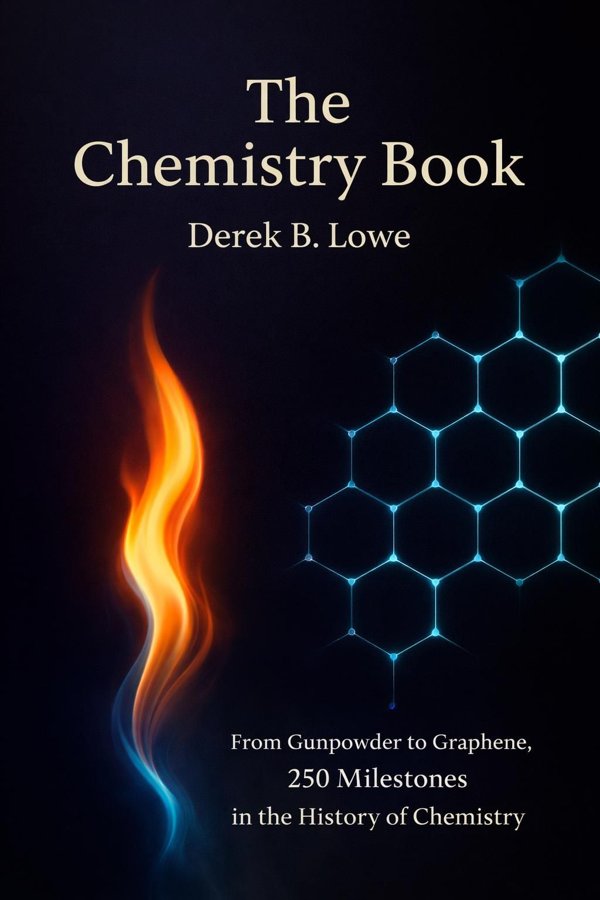
The Chemistry Book: From Gunpowder to Graphene, 250 Milestones in the History of Chemistry: Summary & Key Insights
 10 min10 chaptersAudio available
Key Takeaways from The Chemistry Book: From Gunpowder to Graphene, 250 Milestones in the History of Chemistry
Long before chemistry had a name, people were already changing matter in ways that revealed hidden laws of nature.
Human progress often survives inside imperfect ideas, and alchemy is one of the best examples.
A science comes of age when it stops relying on authority and starts trusting careful measurement.
Nature can seem endlessly diverse, yet chemistry discovered that this diversity arises from a limited set of fundamental building blocks.
Chemistry became truly explanatory when scientists could imagine matter as structured rather than continuous.
What Is The Chemistry Book: From Gunpowder to Graphene, 250 Milestones in the History of Chemistry About?
The Chemistry Book: From Gunpowder to Graphene, 250 Milestones in the History of Chemistry by Derek B. Lowe is a popular_sci book spanning 13 pages. Chemistry is the science of transformation, and The Chemistry Book turns that grand idea into a vivid historical journey. In this richly illustrated volume, Derek B. Lowe traces 250 milestones that show how human beings gradually learned to understand matter, control reactions, isolate elements, build molecules, and engineer entirely new materials. The book moves from ancient practices such as metallurgy, pigments, and fermentation to alchemy, the scientific revolution, atomic theory, synthetic chemistry, biochemistry, quantum mechanics, polymers, nanotechnology, and green chemistry. What makes it especially valuable is that it does not present chemistry as a dry list of facts. Instead, it reveals a long chain of curiosity, experiment, error, and breakthrough that connects gunpowder, the periodic table, fertilizers, plastics, antibiotics, semiconductors, and graphene. Lowe brings unusual authority to the subject. A veteran medicinal chemist with decades in pharmaceutical research, he understands both chemistry’s deep history and its modern applications. The result is an accessible, intellectually rewarding guide for anyone who wants to see how chemistry reshaped civilization and continues to shape our future.
This FizzRead summary covers all 10 key chapters of The Chemistry Book: From Gunpowder to Graphene, 250 Milestones in the History of Chemistry in approximately 10 minutes, distilling the most important ideas, arguments, and takeaways from Derek B. Lowe's work. Also available as an audio summary and Key Quotes Podcast.
The Chemistry Book: From Gunpowder to Graphene, 250 Milestones in the History of Chemistry
Chemistry is the science of transformation, and The Chemistry Book turns that grand idea into a vivid historical journey. In this richly illustrated volume, Derek B. Lowe traces 250 milestones that show how human beings gradually learned to understand matter, control reactions, isolate elements, build molecules, and engineer entirely new materials. The book moves from ancient practices such as metallurgy, pigments, and fermentation to alchemy, the scientific revolution, atomic theory, synthetic chemistry, biochemistry, quantum mechanics, polymers, nanotechnology, and green chemistry. What makes it especially valuable is that it does not present chemistry as a dry list of facts. Instead, it reveals a long chain of curiosity, experiment, error, and breakthrough that connects gunpowder, the periodic table, fertilizers, plastics, antibiotics, semiconductors, and graphene. Lowe brings unusual authority to the subject. A veteran medicinal chemist with decades in pharmaceutical research, he understands both chemistry’s deep history and its modern applications. The result is an accessible, intellectually rewarding guide for anyone who wants to see how chemistry reshaped civilization and continues to shape our future.
Who Should Read The Chemistry Book: From Gunpowder to Graphene, 250 Milestones in the History of Chemistry?
This book is perfect for anyone interested in popular_sci and looking to gain actionable insights in a short read. Whether you're a student, professional, or lifelong learner, the key ideas from The Chemistry Book: From Gunpowder to Graphene, 250 Milestones in the History of Chemistry by Derek B. Lowe will help you think differently.
- ✓Readers who enjoy popular_sci and want practical takeaways
- ✓Professionals looking to apply new ideas to their work and life
- ✓Anyone who wants the core insights of The Chemistry Book: From Gunpowder to Graphene, 250 Milestones in the History of Chemistry in just 10 minutes
Want the full summary?
Get instant access to this book summary and 100K+ more with Fizz Moment.
Get Free SummaryAvailable on App Store • Free to download
Key Chapters
Long before chemistry had a name, people were already changing matter in ways that revealed hidden laws of nature. Ancient artisans did not speak in terms of atoms, orbitals, or reaction mechanisms, yet they learned through repeated practice how fire, minerals, plants, and metals could be transformed into useful materials. Egyptian embalmers preserved bodies with salts and resins. Mesopotamian and Chinese makers developed pigments, ceramics, and early explosives. Metallurgists learned to smelt copper, bronze, and iron, discovering in practice that controlled heating and mixing could alter hardness, color, and durability. Even fermentation, used to make bread, beer, and wine, was an early form of applied chemistry long before microorganisms were understood.
The book shows that these ancient achievements matter because science often begins with technique. People first solve practical problems, then later develop theories to explain why their methods work. Dyeing cloth, making glass, tanning leather, producing perfumes, and refining metals all required careful observation of materials and conditions. These activities trained civilizations to think experimentally, even if they did not yet use modern scientific language.
Today, the same pattern still applies. Much of chemistry remains rooted in observation, iteration, and craft. A pharmaceutical lab, battery startup, or food science team often advances by testing conditions, tracking results, and slowly improving a process. Ancient chemistry reminds us that useful knowledge can precede elegant theory.
Actionable takeaway: Pay closer attention to everyday transformations around you—cooking, cleaning, rusting, dissolving, fermenting. Treat them as small chemistry lessons, and you will start seeing science not as abstraction, but as a practical way of understanding the material world.
Human progress often survives inside imperfect ideas, and alchemy is one of the best examples. To modern readers, alchemy can look like a maze of symbolism, mysticism, and impossible ambitions. Yet Derek B. Lowe makes clear that alchemy also preserved experimental habits during centuries when systematic science had not fully emerged. The alchemists’ dream of transmuting base metals into gold or discovering an elixir of life was misguided in literal terms, but their work kept alive the belief that matter could be transformed, purified, and understood through disciplined practice.
Alchemists developed furnaces, distillation equipment, extraction techniques, and a vocabulary of substances and operations that later chemists would inherit and refine. Their laboratories were places of heating, dissolving, precipitating, condensing, and observing. Even when their theories were tangled with astrology and spiritual allegory, their hands-on methods produced genuine knowledge. Acids were prepared. Salts were classified. Mineral and plant materials were processed in increasingly sophisticated ways.
The larger lesson is that scientific progress is rarely neat. Early investigators may ask the wrong questions, but in the process they invent tools, methods, and habits that make better answers possible. In modern innovation, something similar happens when an overhyped field still leaves behind valuable techniques or data. Failed goals can still produce useful infrastructure.
Alchemy’s true legacy is not gold-making; it is the conviction that nature’s hidden processes can be probed in the workshop and the lab. That mindset helped bridge the gap between ancient craft and modern science.
Actionable takeaway: When evaluating old ideas or even failed projects, ask not only whether the theory was right, but what methods, tools, or insights it contributed. Progress often begins in confusion before it matures into clarity.
A science comes of age when it stops relying on authority and starts trusting careful measurement. The birth of modern chemistry, as portrayed in this book, depended on a decisive shift from speculative philosophy to quantitative experiment. This transformation is closely associated with figures such as Robert Boyle and Antoine Lavoisier, who challenged inherited assumptions and insisted that substances and reactions be studied through reproducible evidence.
Boyle argued that matter should be examined experimentally rather than explained through old doctrines about the four elements. Lavoisier pushed the revolution further by weighing reactants and products and showing that combustion was not the release of a mysterious substance called phlogiston, but a reaction involving oxygen. With this change, chemistry gained something essential: accountability to numbers. Mass conservation, clearer nomenclature, and standardized methods made the field cumulative. Researchers could now compare results, revise theories, and build on one another’s work.
This was more than a technical improvement. It changed the culture of inquiry. Precision balances, controlled apparatus, and systematic naming allowed chemistry to become a reliable framework for understanding matter. The effects were enormous, from better industrial processes to the development of modern education and research.
The same principle governs good science and good decision-making today. Whether you are analyzing environmental data, optimizing a recipe, or testing a new product, guesses become knowledge only when they are disciplined by measurement. Numbers do not eliminate creativity, but they prevent imagination from drifting away from reality.
Actionable takeaway: In any problem-solving effort, identify what can be measured clearly. Keep records, compare outcomes, and let evidence—not habit or intuition alone—guide your next step.
Nature can seem endlessly diverse, yet chemistry discovered that this diversity arises from a limited set of fundamental building blocks. One of the book’s central historical arcs is the discovery, isolation, and classification of the chemical elements. Over time, chemists learned to distinguish true elements from compounds, identify new substances, and gradually uncover the hidden order connecting them.
This story reaches one of its great milestones in the periodic table. Dmitri Mendeleev’s insight was not merely to list known elements, but to arrange them in a pattern that revealed recurring chemical behavior. Even more impressively, he left gaps where unknown elements ought to exist and predicted their properties before they were found. That transformed the periodic table from a catalog into a theory-guided map of matter.
The practical importance of the elements is hard to overstate. Different elements enable different technologies: iron for infrastructure, copper for wiring, silicon for electronics, lithium for batteries, and rare metals for catalysts and advanced devices. The discovery of noble gases changed ideas about reactivity. The isolation of reactive elements such as fluorine opened new industrial possibilities while also revealing serious hazards.
What Lowe emphasizes is that chemistry progresses when patterns become visible. Once scientists could organize the elements, they could explain trends in reactivity, bonding, and material properties. The periodic table became both a summary of known knowledge and a launchpad for future discovery.
Actionable takeaway: Learn to read the periodic table as a pattern, not a poster. Notice how neighboring elements behave, and you will gain a much deeper intuition for why chemicals act the way they do in technology, biology, and daily life.
Chemistry became truly explanatory when scientists could imagine matter as structured rather than continuous. Atomic theory and molecular structure turned chemistry from a record of substances into a predictive science. Beginning with John Dalton’s atomic ideas and advancing through Avogadro, Cannizzaro, Kekulé, and many others, chemists came to see that compounds are not random mixtures but specific arrangements of atoms in definite ratios.
This change solved major puzzles. Why do water and hydrogen peroxide differ so dramatically despite containing the same elements? Why can substances with identical formulas behave differently? The answer lies in structure. Atoms bond in particular ways, and their arrangement determines properties. Structural formulas, valence concepts, stereochemistry, and eventually three-dimensional molecular models allowed chemists to design compounds rather than merely discover them.
Practical applications followed everywhere. Drug design depends on molecular structure, since tiny changes in shape can alter biological effects. Synthetic materials are engineered by controlling how atoms and repeating units are connected. Food chemistry, fragrance design, agricultural chemistry, and semiconductor processing all rely on understanding how microscopic arrangement influences macroscopic behavior.
The book highlights a profound intellectual achievement here: humans learned to infer invisible architecture from visible consequences. No one sees a molecule directly in ordinary experience, but chemistry built methods to reason from reaction patterns, composition, and physical behavior to hidden structure.
Actionable takeaway: Whenever you encounter a chemical product—medicine, plastic, cleaner, fuel—ask not only what it contains, but how it is built. In chemistry, arrangement is often just as important as ingredients.
Not every possible chemical transformation actually happens, and the difference lies in energy, mechanism, and conditions. One of the most important themes in The Chemistry Book is that chemistry is not just about what substances exist, but about how and why they react. Thermodynamics explains whether a reaction is favorable overall, while kinetics explains how fast it proceeds and what pathway it follows. Together, these ideas make sense of everything from burning fuel to preserving food.
Historically, breakthroughs in heat, gases, equilibrium, electrochemistry, and reaction rates transformed chemistry into a science of process. Chemists learned that some reactions release energy, others require it, and many are constrained by barriers that catalysts can lower. This insight is central to industrial production, biological metabolism, and environmental systems. The Haber-Bosch process, for example, depends on balancing pressure, temperature, and catalysts to synthesize ammonia efficiently. Batteries work because oxidation and reduction can be directed into controlled electrical flow. Enzymes in living cells are nature’s superb catalysts, accelerating reactions that would otherwise be too slow for life.
These concepts also explain common experiences. Refrigerators rely on phase changes and energy transfer. Rusting is a slow redox process. Baking depends on gas formation, heat transfer, and molecular change in proteins and starches. Cleaning products work by altering interactions among oils, water, and surfaces.
Lowe’s larger point is that chemistry is dynamic. Matter is always capable of change, but that change follows rules tied to energy landscapes and molecular encounters.
Actionable takeaway: When faced with any transformation problem, ask three questions: Is it energetically favorable, how fast does it happen, and what conditions or catalysts control it? That habit will sharpen your understanding of both science and real-world processes.
A discovery becomes historically transformative when it leaves the laboratory and reorganizes daily life. Industrial and applied chemistry show how deeply chemistry has shaped modern civilization by turning reactions into systems of mass production. The book traces how chemical knowledge moved from isolated demonstrations to large-scale manufacturing of acids, alkalis, fertilizers, dyes, fuels, explosives, detergents, polymers, and pharmaceuticals.
This transition required more than scientific insight. It demanded engineering, standardization, safety protocols, raw material supply chains, and economic vision. Sulfuric acid production became a backbone of industrial capacity. Synthetic dyes revolutionized textiles and reduced dependence on scarce natural colorants. Fertilizer chemistry expanded agricultural productivity and supported population growth. Petroleum refining transformed transportation and manufacturing. At the same time, chemistry’s industrial power also produced pollution, warfare applications, and new forms of risk.
The real lesson is that chemistry is never only theoretical. It changes what societies can make, afford, preserve, transport, and consume. A modern city depends on chemical achievements embedded in concrete, plastics, electronics, medicines, water treatment, food packaging, and energy systems. Chemistry is infrastructure, even when it is invisible.
Lowe’s milestone approach helps readers see that industrial chemistry is built from accumulated improvements rather than one magic invention. A catalyst here, a purification method there, a safer reactor design somewhere else—together they remake economies and habits.
Actionable takeaway: Look around your home or workplace and identify ten objects enabled by large-scale chemistry. This simple exercise builds appreciation for how deeply chemical processes structure modern life—and why responsible innovation in this field matters.
The boundary between living systems and ordinary matter becomes thinner the more chemistry advances. One of the book’s most fascinating contributions is its treatment of organic chemistry, biochemistry, and molecular biology as connected chapters in the same story. Once chemists understood carbon’s remarkable ability to form stable, diverse structures, they could begin to explain the molecules of life and eventually manipulate them.
Organic chemistry opened the door to dyes, drugs, solvents, polymers, and countless synthetic compounds. But it also led directly into biology. The isolation of biomolecules, the understanding of proteins and enzymes, the elucidation of DNA’s structure, and the growth of molecular biology all revealed that life depends on chemical principles. Cells function through reactions, gradients, catalysts, and molecular recognition. Heredity itself is chemically encoded.
This insight changed medicine profoundly. Antibiotics, vaccines, diagnostic reagents, anesthesia, chemotherapy agents, and modern targeted drugs all emerge from chemical understanding applied to biological systems. Agriculture, nutrition, and forensic science have also been transformed by biochemical thinking. Even everyday issues such as metabolism, food spoilage, exercise recovery, and drug interactions become clearer when viewed chemically.
Lowe is especially well positioned to appreciate this domain because medicinal chemistry sits at the crossroads of synthesis, biology, and human health. The book reflects that interdisciplinary perspective. It shows that chemistry is not opposed to life; it is one of the deepest ways of understanding it.
Actionable takeaway: To better understand health, stop treating chemistry and biology as separate subjects. Learn a few core molecular ideas—enzymes, receptors, DNA, metabolism—and many medical and nutritional questions will become far more intelligible.
Some of chemistry’s greatest leaps happened when scientists accepted that matter behaves in ways ordinary intuition cannot predict. Physical chemistry and quantum theory revealed why atoms bond, why spectra exist, why some materials conduct electricity, and why others fluoresce, magnetize, or catalyze reactions. These ideas can seem abstract, but the book shows that they underpin much of modern technology.
Quantum chemistry explains electron behavior, orbital structure, and bond formation. Physical chemistry links these microscopic realities to thermodynamics, spectroscopy, surfaces, and reaction dynamics. With these tools, chemists could move beyond descriptive formulas and begin calculating, modeling, and predicting molecular behavior. That shift helped drive progress in semiconductors, lasers, magnetic materials, photovoltaics, superconductors, and precision catalysis.
The same conceptual revolution also fueled materials science and nanotechnology. Once researchers could manipulate matter at the molecular and atomic scale, they developed polymers with tailored properties, composites, carbon nanotubes, fullerenes, graphene, and smart materials that respond to heat, light, stress, or electrical input. Graphene, featured in the book’s title, symbolizes this frontier: a single layer of carbon atoms with extraordinary strength, conductivity, and promise for electronics, sensors, and energy storage.
The practical message is that abstract science often leads to concrete power. A better theory of electrons eventually changes how we compute, communicate, diagnose disease, and store energy.
Actionable takeaway: Do not dismiss difficult scientific ideas as irrelevant because they feel theoretical. Some of the most useful technologies in your life exist precisely because researchers were willing to investigate nature at its most counterintuitive level.
The same science that creates fertilizers, medicines, and advanced materials can also generate toxins, waste, and environmental damage. One of the most important modern themes in The Chemistry Book is that chemistry has entered an era where responsibility is as important as discovery. Environmental chemistry and green chemistry ask not only whether we can make a substance, but whether we should, and how we can do so with less harm.
Chemical industry brought enormous benefits, yet it also contributed to air pollution, contaminated waterways, persistent plastics, hazardous pesticides, and climate-related challenges linked to fossil fuels. In response, chemists began to rethink design principles. Green chemistry promotes safer solvents, renewable feedstocks, energy-efficient reactions, atom economy, reduced waste, biodegradable materials, and processes that avoid toxic intermediates. Environmental monitoring, atmospheric chemistry, and toxicology help society understand how chemicals move through ecosystems and bodies.
This shift is not anti-chemistry. It is mature chemistry—chemistry aware of systems, consequences, and long-term stewardship. The same analytical skills that created powerful products can be used to design cleaner manufacturing, better recycling, lower-emission energy technologies, and safer consumer goods. Batteries, carbon capture materials, water purification membranes, and biodegradable polymers are all examples of chemistry applied to sustainability challenges.
Lowe’s historical sweep makes a final point clear: every generation inherits chemistry’s powers and its problems. Future milestones will be judged not only by ingenuity, but by wisdom.
Actionable takeaway: When evaluating products or technologies, ask about lifecycle, waste, toxicity, and energy use—not just performance. Responsible chemistry begins with better questions from scientists, companies, and consumers alike.
All Chapters in The Chemistry Book: From Gunpowder to Graphene, 250 Milestones in the History of Chemistry
About the Author
Derek B. Lowe is an American medicinal chemist, author, and science communicator with deep expertise in organic chemistry and drug discovery. He earned his Ph.D. in organic chemistry from Duke University and has spent more than three decades working in pharmaceutical research, where he has contributed to the search for new therapeutic compounds. Lowe is widely respected for his ability to explain complex scientific topics with clarity and wit. He is also the creator of the influential blog In the Pipeline, where he writes about the pharmaceutical industry, medicinal chemistry, biotech, and the realities of modern research. His combination of laboratory experience and accessible writing makes him especially qualified to tell the story of chemistry’s development from ancient practice to cutting-edge materials science.
Get This Summary in Your Preferred Format
Read or listen to the The Chemistry Book: From Gunpowder to Graphene, 250 Milestones in the History of Chemistry summary by Derek B. Lowe anytime, anywhere. FizzRead offers multiple formats so you can learn on your terms — all free.
Available formats: App · Audio · PDF · EPUB — All included free with FizzRead
Download The Chemistry Book: From Gunpowder to Graphene, 250 Milestones in the History of Chemistry PDF and EPUB Summary
Key Quotes from The Chemistry Book: From Gunpowder to Graphene, 250 Milestones in the History of Chemistry
“Long before chemistry had a name, people were already changing matter in ways that revealed hidden laws of nature.”
“Human progress often survives inside imperfect ideas, and alchemy is one of the best examples.”
“A science comes of age when it stops relying on authority and starts trusting careful measurement.”
“Nature can seem endlessly diverse, yet chemistry discovered that this diversity arises from a limited set of fundamental building blocks.”
“Chemistry became truly explanatory when scientists could imagine matter as structured rather than continuous.”
Frequently Asked Questions about The Chemistry Book: From Gunpowder to Graphene, 250 Milestones in the History of Chemistry
The Chemistry Book: From Gunpowder to Graphene, 250 Milestones in the History of Chemistry by Derek B. Lowe is a popular_sci book that explores key ideas across 10 chapters. Chemistry is the science of transformation, and The Chemistry Book turns that grand idea into a vivid historical journey. In this richly illustrated volume, Derek B. Lowe traces 250 milestones that show how human beings gradually learned to understand matter, control reactions, isolate elements, build molecules, and engineer entirely new materials. The book moves from ancient practices such as metallurgy, pigments, and fermentation to alchemy, the scientific revolution, atomic theory, synthetic chemistry, biochemistry, quantum mechanics, polymers, nanotechnology, and green chemistry. What makes it especially valuable is that it does not present chemistry as a dry list of facts. Instead, it reveals a long chain of curiosity, experiment, error, and breakthrough that connects gunpowder, the periodic table, fertilizers, plastics, antibiotics, semiconductors, and graphene. Lowe brings unusual authority to the subject. A veteran medicinal chemist with decades in pharmaceutical research, he understands both chemistry’s deep history and its modern applications. The result is an accessible, intellectually rewarding guide for anyone who wants to see how chemistry reshaped civilization and continues to shape our future.
You Might Also Like

Structures: Or Why Things Don"t Fall Down
J.E. Gordon
10 min
The Road to Wigan Pier
George Orwell
10 min
Bonk: The Curious Coupling of Science and Sex
Mary Roach
10 min
First Bite: How We Learn to Eat
Bee Wilson
10 min
In Pursuit Of The Unknown: 17 Equations That Changed The World
Ian Stewart
10 min
Napoleon's Buttons: 17 Molecules That Changed History
Penny Le Couteur and Jay Burreson
10 minBrowse by Category
Ready to read The Chemistry Book: From Gunpowder to Graphene, 250 Milestones in the History of Chemistry?
Get the full summary and 100K+ more books with Fizz Moment.