
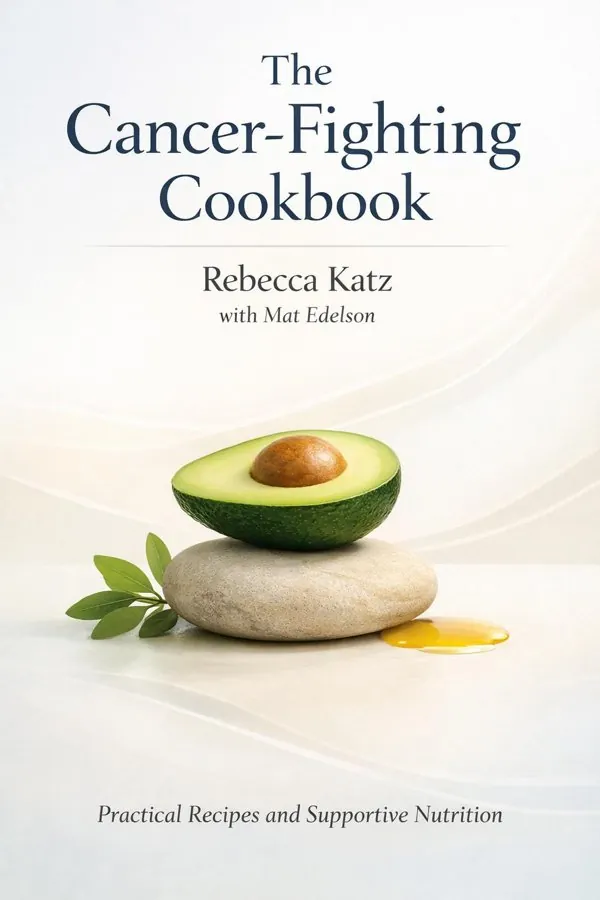
The Cancer-Fighting Cookbook: Practical Recipes and Supportive Nutrition: Summary & Key Insights
by Rebecca Katz with Mat Edelson
 10 min9 chaptersAudio available
Key Takeaways from The Cancer-Fighting Cookbook: Practical Recipes and Supportive Nutrition
Illness does not just affect organs or lab numbers; it reshapes appetite, digestion, energy, and even the meaning of eating.
Food is not only fuel; it is information for the body.
When treatment alters taste, flavor stops being a matter of preference and becomes a medical-quality issue.
The most useful nutrition advice is specific enough to solve real problems.
When energy is low, the quality of a meal often depends on what is already within reach.
What Is The Cancer-Fighting Cookbook: Practical Recipes and Supportive Nutrition About?
The Cancer-Fighting Cookbook: Practical Recipes and Supportive Nutrition by Rebecca Katz with Mat Edelson is a health_med book spanning 11 pages. Cancer treatment often changes a person’s relationship with food just when nourishment matters most. In The Cancer-Fighting Cookbook, chef and nutrition educator Rebecca Katz, with health writer Mat Edelson, offers a compassionate, practical guide to eating during treatment and recovery. This is not a book that promises miracle cures or simplistic dietary rules. Instead, it focuses on what food can realistically do: help maintain strength, support immune function, ease common side effects, and restore comfort and pleasure at the table. Katz brings unusual authority to the subject because she combines culinary skill with deep experience in healing nutrition. Her approach is grounded in whole foods, sensory awareness, and the idea that flavor is not a luxury but a tool, especially for people whose appetite, digestion, and taste perception may be disrupted by chemotherapy, radiation, or surgery. Edelson’s contribution adds clarity and accessibility, helping translate complex health concerns into usable advice. The result is both a cookbook and a source of emotional support. It shows patients and caregivers how to build meals that are adaptable, gentle, nutrient-dense, and genuinely enjoyable, even in the middle of uncertainty.
This FizzRead summary covers all 9 key chapters of The Cancer-Fighting Cookbook: Practical Recipes and Supportive Nutrition in approximately 10 minutes, distilling the most important ideas, arguments, and takeaways from Rebecca Katz with Mat Edelson's work. Also available as an audio summary and Key Quotes Podcast.
The Cancer-Fighting Cookbook: Practical Recipes and Supportive Nutrition
Cancer treatment often changes a person’s relationship with food just when nourishment matters most. In The Cancer-Fighting Cookbook, chef and nutrition educator Rebecca Katz, with health writer Mat Edelson, offers a compassionate, practical guide to eating during treatment and recovery. This is not a book that promises miracle cures or simplistic dietary rules. Instead, it focuses on what food can realistically do: help maintain strength, support immune function, ease common side effects, and restore comfort and pleasure at the table.
Katz brings unusual authority to the subject because she combines culinary skill with deep experience in healing nutrition. Her approach is grounded in whole foods, sensory awareness, and the idea that flavor is not a luxury but a tool, especially for people whose appetite, digestion, and taste perception may be disrupted by chemotherapy, radiation, or surgery. Edelson’s contribution adds clarity and accessibility, helping translate complex health concerns into usable advice.
The result is both a cookbook and a source of emotional support. It shows patients and caregivers how to build meals that are adaptable, gentle, nutrient-dense, and genuinely enjoyable, even in the middle of uncertainty.
Who Should Read The Cancer-Fighting Cookbook: Practical Recipes and Supportive Nutrition?
This book is perfect for anyone interested in health_med and looking to gain actionable insights in a short read. Whether you're a student, professional, or lifelong learner, the key ideas from The Cancer-Fighting Cookbook: Practical Recipes and Supportive Nutrition by Rebecca Katz with Mat Edelson will help you think differently.
- ✓Readers who enjoy health_med and want practical takeaways
- ✓Professionals looking to apply new ideas to their work and life
- ✓Anyone who wants the core insights of The Cancer-Fighting Cookbook: Practical Recipes and Supportive Nutrition in just 10 minutes
Want the full summary?
Get instant access to this book summary and 100K+ more with Fizz Moment.
Get Free SummaryAvailable on App Store • Free to download
Key Chapters
Illness does not just affect organs or lab numbers; it reshapes appetite, digestion, energy, and even the meaning of eating. One of the book’s central insights is that cancer and its treatments create highly individual nutritional challenges. Chemotherapy may blunt taste, trigger nausea, or cause mouth sores. Radiation can make swallowing difficult. Surgery can alter digestion and reduce appetite. As a result, eating is no longer only about choosing “healthy” foods in the abstract. It becomes about meeting the body where it is, day by day.
Katz and Edelson emphasize that supportive nutrition during cancer treatment is practical rather than perfectionistic. A patient struggling to keep food down may need small, frequent meals instead of three standard ones. Someone experiencing fatigue may benefit from calorie-dense smoothies, broths, or easy-to-chew foods. A person with taste changes may need more acidity, herbs, or varied textures to make meals appealing again. The point is not to force an ideal diet but to adapt nourishment to real physical conditions.
This perspective also reduces guilt. Patients often feel pressure to “eat perfectly,” yet treatment can make even simple foods difficult. The authors reframe nutrition as a flexible support system, not a moral test. Food can help preserve strength, hydration, and comfort, but it must be responsive to shifting needs.
An actionable takeaway: stop thinking of nutrition as a fixed plan. Build a short list of “good day,” “low appetite,” and “sensitive stomach” foods so meals can match the body’s current capacity instead of an unrealistic standard.
Food is not only fuel; it is information for the body. Katz’s idea of a “culinary pharmacy” captures the book’s belief that whole foods contain compounds that support healing processes in ways processed foods often do not. Vegetables, fruits, legumes, whole grains, herbs, spices, nuts, seeds, and quality proteins bring vitamins, minerals, fiber, phytonutrients, and anti-inflammatory properties that can help sustain resilience during treatment.
The value of whole foods here is not mystical. It is deeply practical. Brightly colored produce supplies antioxidants and plant compounds. Broths and soups hydrate while delivering minerals and warmth. Beans and grains provide steady energy and fiber. Healthy fats from foods like olive oil, avocado, or nuts can help increase calories for people with reduced appetite. Herbs and spices such as ginger, parsley, cinnamon, and turmeric can add both flavor and supportive nutritional benefits.
Just as important, whole foods can be prepared in ways that suit changing symptoms. Raw vegetables may be difficult for some people, but roasted vegetables or pureed soups may be easier to tolerate. Whole grains can be softened into porridges. Fruit can become compotes or smoothies. Katz continually shows that “whole food” does not mean rigid, hard-to-eat meals; it means working with real ingredients in accessible forms.
The authors also avoid all-or-nothing thinking. If someone relies partly on convenience foods during treatment, that does not erase the value of adding nourishing ingredients where possible. Improvement matters more than purity.
An actionable takeaway: choose one everyday meal, such as breakfast or lunch, and upgrade it with at least one whole-food element like berries, oats, broth, greens, beans, or olive oil to make nourishment more consistent.
When treatment alters taste, flavor stops being a matter of preference and becomes a medical-quality issue. One of Katz’s most distinctive contributions is her insistence that flavor is essential to healing cuisine. If food tastes metallic, bland, overly sweet, or strangely bitter, patients may avoid eating altogether. That means the cook’s job is not merely to deliver nutrients but to make food desirable enough to eat.
Katz approaches flavor with the precision of a chef and the empathy of a caregiver. She works with balancing elements such as sweet, sour, salty, bitter, pungent, and umami to revive interest in food. For example, a squeeze of lemon can brighten a dish for someone whose palate feels dulled. Ginger may help nausea while adding warmth and liveliness. Fresh herbs can make simple foods feel clean and appealing. A little acid from vinegar or citrus can counter flatness, while mild broths can soothe when stronger flavors feel overwhelming.
Texture matters too. Creamy soups, crisp toppings, smooth smoothies, and soft grains can each feel more tolerable depending on the day. Temperature also influences appetite: chilled foods sometimes work better when hot dishes smell too intense, while warm broths can comfort someone sensitive to cold or seeking easy digestion.
This chapter’s larger lesson is empowering: supportive cooking is not bland cooking. Patients do not need to resign themselves to joyless meals. Thoughtful seasoning and sensory awareness can help restore dignity and pleasure.
An actionable takeaway: if a meal tastes off, adjust one flavor dimension before abandoning it entirely. Try adding lemon, fresh herbs, ginger, a pinch of salt, or a contrasting texture to make the food more manageable and appealing.
The most useful nutrition advice is specific enough to solve real problems. Rather than offering generic wellness tips, this book addresses common side effects of cancer treatment and shows how food can be adapted to reduce discomfort. Nausea, constipation, diarrhea, mouth sores, dry mouth, fatigue, and taste changes each call for different culinary strategies.
For nausea, Katz often recommends light, clean flavors and simple preparations, such as ginger tea, rice, applesauce, toast-like foods, or mild soups. For mouth sores, soft, non-acidic foods like porridges, purees, yogurt-based dishes, or creamy soups may be easier to tolerate than crunchy, spicy, or highly acidic meals. If constipation is an issue, fluids, fiber, prunes, oats, cooked fruits, and legumes may help, as long as they are tolerated. For diarrhea, gentler low-fiber foods and hydration may become the priority. Dry mouth may call for sauces, broths, and moist foods instead of dry proteins or crackers.
What makes the guidance especially effective is its flexibility. The same patient may need different strategies from one week to the next. A smoothie that works beautifully one day may feel impossible on another. Katz encourages experimentation without frustration, reminding readers that appetite and tolerance are moving targets.
The book also recognizes the emotional dimension of side effects. Eating can become associated with fear or discomfort. By matching food texture, temperature, and flavor to symptoms, meals become less of a battle and more of a support.
An actionable takeaway: identify the one side effect currently interfering most with eating and build a mini list of three symptom-friendly foods to keep available, such as ginger broth for nausea or soft oatmeal for mouth tenderness.
When energy is low, the quality of a meal often depends on what is already within reach. That is why Katz treats pantry-building as a form of preparation and care. A well-stocked kitchen reduces stress for patients and caregivers, making it easier to create nourishing meals quickly without starting from scratch every time.
The healing pantry in this book includes practical staples rather than exotic superfoods. Broths form a foundational ingredient because they hydrate, soothe, and serve as the base for soups, grains, and sauces. Whole grains like brown rice, quinoa, and oats offer adaptable, easy-to-digest energy. Beans and lentils provide plant protein and fiber. Good oils, nuts, seeds, and nut butters add calorie density and healthy fats. Frozen fruits and vegetables make smoothies and quick meals easier. Aromatics such as onions, garlic, ginger, lemons, and herbs allow simple foods to become flavorful and interesting.
Katz also highlights condiments and flavor boosters as strategic tools. A simple tahini dressing, pesto, infused oil, or herb sauce can transform plain grains or steamed vegetables into something more inviting. For caregivers, this means one cooked base ingredient can become multiple meals with minimal effort.
The healing pantry is really about lowering friction. When treatment days are hard, cooking ambition drops. Pantry ingredients make it possible to assemble broths, porridges, simple soups, smoothies, and bowls without complicated shopping or prep.
An actionable takeaway: create a “support shelf” or drawer with 10 reliable staples, such as broth, oats, rice, lentils, olive oil, nut butter, ginger, lemons, frozen berries, and herbal tea, so nourishment remains possible even on exhausted days.
Comfort food becomes a clinical asset when eating is difficult. Few categories illustrate this better than soups and broths, which Katz treats as central to supportive nutrition. They are warm, hydrating, easy to digest, and endlessly adaptable. For patients dealing with poor appetite, nausea, swallowing issues, or fatigue, a bowl of soup may provide nourishment when more solid meals feel impossible.
Broths are especially valuable because they can act as both a food and an ingredient. A patient may sip broth alone for hydration and comfort, then use the same broth as a base for rice, pureed vegetables, legumes, or shredded proteins. This layered approach makes nutrition easier to scale. On a low-appetite day, broth alone may be enough. On a stronger day, it can become a more substantial meal.
Katz’s culinary style helps elevate these simple preparations. She uses aromatics, herbs, vegetable blends, and balanced seasoning to ensure soups are not merely tolerable but satisfying. A carrot soup can become soothing and slightly sweet; a lentil soup can be hearty without heaviness; a chicken broth can feel restorative rather than bland. Pureed soups also offer a way to deliver vegetables, legumes, and healthy fats in a smooth texture that may be easier to manage.
Beyond nutrition, these foods carry emotional weight. They communicate care, familiarity, and safety. In the context of cancer treatment, that emotional nourishment matters.
An actionable takeaway: prepare or freeze one versatile broth and one blended soup each week. Having both on hand creates a gentle baseline option for days when chewing, appetite, or energy are limited.
A supportive meal is rarely built from one hero ingredient. Katz shows how proteins, grains, and vegetables can be combined in flexible ways to support energy, tissue repair, and overall nourishment without overwhelming the eater. The key is balancing nutrient density with digestibility and appeal.
Protein is especially important during treatment and recovery, but traditional protein-heavy meals may be difficult to tolerate. Large portions of meat can feel too dry, dense, or aromatic. Katz therefore broadens the definition of protein options: eggs, beans, lentils, fish, poultry, tofu, yogurt, smoothies with nut butter, and soft grain-legume combinations can all contribute. Preparation matters. Poached fish, shredded chicken, soft lentils, or scrambled eggs may work better than heavily grilled or dry foods.
Vegetables remain important, but they often need adaptation. Roasted root vegetables, pureed cauliflower, steamed greens, and vegetable soups may be gentler than raw salads. Grains such as quinoa, oats, millet, rice, and barley can serve as soft, grounding bases that carry flavor well and pair with sauces or broths. These foods also help create small, complete meals that are easier to portion and reheat.
The book’s deeper insight is that nourishment should be modular. A patient or caregiver can mix and match ingredients according to symptoms and appetite: grain plus broth plus soft vegetable; eggs plus toast plus fruit; lentils plus rice plus olive oil; tofu plus noodles plus ginger broth.
An actionable takeaway: keep one ready-to-eat protein, one cooked grain, and one prepared vegetable in the refrigerator. With those three elements, you can assemble several gentle meals quickly without having to cook from zero.
For many people in treatment, the problem is not knowing what a healthy dinner looks like; it is getting enough nourishment across the entire day. Appetite may vanish after a few bites, making standard mealtimes unrealistic. Katz responds by giving snacks and smoothies a strategic role rather than treating them as secondary.
Smoothies can be especially effective because they combine hydration, calories, protein, fiber, and flavor in a format that is easy to sip slowly. They can be chilled for people who prefer cold foods, blended smooth for mouth sensitivity, or fortified with ingredients like yogurt, avocado, nut butter, protein-rich dairy or alternatives, fruit, oats, and seeds. Their flexibility makes them ideal for changing needs. A simple banana-berry smoothie may work for someone needing a mild, familiar taste, while a greener blend can support those who want more plant nutrients.
Snacks also help relieve the pressure of large meals. Small portions of hummus, nut butter toast, yogurt, applesauce, soft muffins, hard-boiled eggs, trail mix, or crackers with avocado may provide meaningful nourishment when full meals feel intimidating. These mini-meals are especially useful for preventing long gaps without food, which can worsen fatigue and nausea for some people.
Katz’s point is not merely to increase calories but to create more opportunities to nourish the body gently. Snacks and smoothies can be easier to accept emotionally too, because they feel manageable rather than demanding.
An actionable takeaway: plan three “easy wins” for the day, such as one smoothie and two simple snacks, so nutrition does not depend entirely on whether you feel ready for a full meal.
Helping someone eat during cancer treatment is an act of love, but love alone does not answer practical questions. Caregivers often struggle with uncertainty: What should I cook? What if nothing sounds good? How do I respond when a favorite food suddenly tastes terrible? Katz addresses this overlooked burden by treating caregivers as essential partners who also need support, structure, and permission to be flexible.
One of the book’s most helpful messages is that caregivers should not measure success by whether every meal is finished. A patient’s appetite may fluctuate wildly, and rejected food is not a sign of failure. Instead, the caregiver’s role is to make nourishing options available, observe patterns, and adapt without taking changes personally. If breakfast works better than dinner, shift calories earlier in the day. If cold foods are easier than hot foods, serve more chilled dishes. If one texture causes discomfort, try another.
The authors also suggest simplifying. Caregivers do not need to produce elaborate menus. A few dependable recipes, a stocked pantry, and the ability to modify meals matter far more than culinary complexity. Emotional atmosphere matters too. Gentle encouragement often works better than pressure. Shared meals, attractive presentation, and calm flexibility can help reduce stress around eating.
This guidance protects both patient and caregiver from unnecessary conflict. It recognizes caregiving as logistical, emotional, and culinary work all at once.
An actionable takeaway: keep a simple food journal of what was tolerated, what caused discomfort, and when appetite was strongest. Use that record to guide future meals instead of relying on guesswork or memory.
All Chapters in The Cancer-Fighting Cookbook: Practical Recipes and Supportive Nutrition
About the Author
Rebecca Katz is a chef, nutrition educator, and cookbook author widely recognized for her work in healing cuisine. She specializes in translating nutrition science into flavorful, approachable recipes that support people facing health challenges, including cancer treatment and recovery. Rather than treating healthy food as restrictive, Katz emphasizes the therapeutic value of taste, aroma, texture, and whole ingredients, an approach that has made her especially influential in integrative and supportive nutrition. She has written several books on food and wellness, helping readers connect cooking with resilience, comfort, and everyday care. Mat Edelson, her co-author, is an award-winning health and science writer known for making complex medical topics clear and accessible. Together, they combine culinary expertise and health communication to create practical resources for patients, caregivers, and wellness-minded readers.
Get This Summary in Your Preferred Format
Read or listen to the The Cancer-Fighting Cookbook: Practical Recipes and Supportive Nutrition summary by Rebecca Katz with Mat Edelson anytime, anywhere. FizzRead offers multiple formats so you can learn on your terms — all free.
Available formats: App · Audio · PDF · EPUB — All included free with FizzRead
Download The Cancer-Fighting Cookbook: Practical Recipes and Supportive Nutrition PDF and EPUB Summary
Key Quotes from The Cancer-Fighting Cookbook: Practical Recipes and Supportive Nutrition
“Illness does not just affect organs or lab numbers; it reshapes appetite, digestion, energy, and even the meaning of eating.”
“Food is not only fuel; it is information for the body.”
“When treatment alters taste, flavor stops being a matter of preference and becomes a medical-quality issue.”
“The most useful nutrition advice is specific enough to solve real problems.”
“When energy is low, the quality of a meal often depends on what is already within reach.”
Frequently Asked Questions about The Cancer-Fighting Cookbook: Practical Recipes and Supportive Nutrition
The Cancer-Fighting Cookbook: Practical Recipes and Supportive Nutrition by Rebecca Katz with Mat Edelson is a health_med book that explores key ideas across 9 chapters. Cancer treatment often changes a person’s relationship with food just when nourishment matters most. In The Cancer-Fighting Cookbook, chef and nutrition educator Rebecca Katz, with health writer Mat Edelson, offers a compassionate, practical guide to eating during treatment and recovery. This is not a book that promises miracle cures or simplistic dietary rules. Instead, it focuses on what food can realistically do: help maintain strength, support immune function, ease common side effects, and restore comfort and pleasure at the table. Katz brings unusual authority to the subject because she combines culinary skill with deep experience in healing nutrition. Her approach is grounded in whole foods, sensory awareness, and the idea that flavor is not a luxury but a tool, especially for people whose appetite, digestion, and taste perception may be disrupted by chemotherapy, radiation, or surgery. Edelson’s contribution adds clarity and accessibility, helping translate complex health concerns into usable advice. The result is both a cookbook and a source of emotional support. It shows patients and caregivers how to build meals that are adaptable, gentle, nutrient-dense, and genuinely enjoyable, even in the middle of uncertainty.
You Might Also Like

On Immunity
Eula Biss
10 min
The Three-Body Problem
Liu Cixin
10 min
Community Health Volunteer Toolkit: Training and Practical Activities
World Health Organization
10 min
Healing Back Pain: The Mind-Body Connection
John E. Sarno
10 min
Health Literacy for All: Practical Guides to Communicate Health Information (Compilations)
World Health Organization
10 min
The Complete Guide to Sports Supplements: An Evidence-Based Review
Anita Bean
10 minBrowse by Category
Ready to read The Cancer-Fighting Cookbook: Practical Recipes and Supportive Nutrition?
Get the full summary and 100K+ more books with Fizz Moment.