
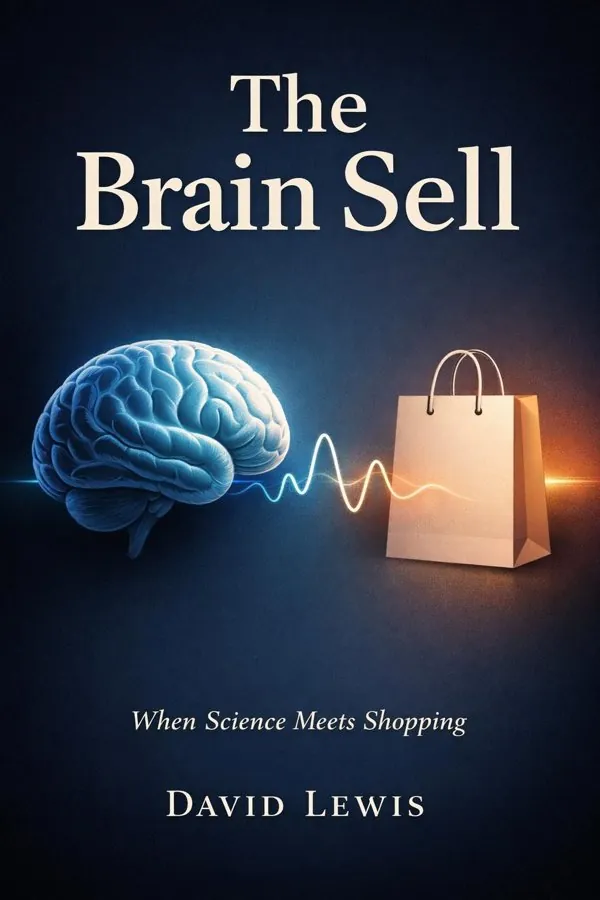
The Brain Sell: When Science Meets Shopping: Summary & Key Insights
by David Lewis
 10 min9 chaptersAudio available
What Is The Brain Sell: When Science Meets Shopping About?
The Brain Sell: When Science Meets Shopping by David Lewis is a marketing book spanning 9 pages. This book explores how neuroscience and psychology are used in marketing and retail to influence consumer behavior. David Lewis, a pioneer in neuromarketing, reveals how the brain responds to advertising, packaging, and store environments, explaining the subconscious processes that drive purchasing decisions.
This FizzRead summary covers all 9 key chapters of The Brain Sell: When Science Meets Shopping in approximately 10 minutes, distilling the most important ideas, arguments, and takeaways from David Lewis's work. Also available as an audio summary and Key Quotes Podcast.
The Brain Sell: When Science Meets Shopping
This book explores how neuroscience and psychology are used in marketing and retail to influence consumer behavior. David Lewis, a pioneer in neuromarketing, reveals how the brain responds to advertising, packaging, and store environments, explaining the subconscious processes that drive purchasing decisions.
Who Should Read The Brain Sell: When Science Meets Shopping?
This book is perfect for anyone interested in marketing and looking to gain actionable insights in a short read. Whether you're a student, professional, or lifelong learner, the key ideas from The Brain Sell: When Science Meets Shopping by David Lewis will help you think differently.
- ✓Readers who enjoy marketing and want practical takeaways
- ✓Professionals looking to apply new ideas to their work and life
- ✓Anyone who wants the core insights of The Brain Sell: When Science Meets Shopping in just 10 minutes
Want the full summary?
Get instant access to this book summary and 100K+ more with Fizz Moment.
Get Free SummaryAvailable on App Store • Free to download
Key Chapters
Most consumers, when asked why they bought a specific product, will cite logical reasons—a good deal, superior quality, convenience. Yet brain-imaging techniques tell a different story. Long before our conscious reasoning begins, the subconscious brain evaluates choices using emotional shorthand. In functional MRI studies, regions such as the ventromedial prefrontal cortex and nucleus accumbens light up in anticipation, linking choice to reward. In these milliseconds, the decision is virtually sealed. What our rational mind later provides is justification.
In my investigations, I found that buying behavior unfolds in three broad neural stages. First is attention—capturing the brain’s limited bandwidth through novelty, movement, or contrast. Second comes emotion, the limbic activation that assigns positive or negative valence. Third is memory encoding, whereby the positive association is logged for future recall. Successful marketing speaks directly to this triad—stimulating curiosity, evoking feeling, and ensuring retention.
Consider the phenomenon of brand loyalty. Far from being a rational comparison of features, it reflects emotional bonding similar to friendship. The brain maps a brand into its network of trust and familiarity, making it harder for alternatives to penetrate. Every jingle, font, and color reinforces this neural template. In *The Brain Sell*, I explain how even minimal cues—such as the rounded shape of a logo—can prime safety and comfort responses deeply rooted in evolution.
Understanding these subconscious influences liberates us. Marketers can design with empathy rather than manipulation, crafting experiences that resonate authentically with human needs. Consumers, too, can recognize which feelings are being engaged and pause to ask: is this desire genuinely mine, or has it been planted by a clever stimulus?
Emotions are the real currency of commerce. Every advertisement aims not merely to inform but to stir an affective response that predisposes the viewer toward purchase. Through decades of experimental studies, I’ve witnessed how sensors measuring skin conductance and facial microexpressions reveal that emotionally charged messages—whether humorous, nostalgic, or dramatic—achieve far stronger recall and conversion. We are, in essence, emotional thinkers with rational overtones.
Color, for instance, acts as a silent but potent persuader. Reds and oranges create excitement and stimulate appetite; blues evoke trust and serenity; greens suggest naturalness and balance. Retailers calibrate color endlessly because the brain instantaneously interprets these wavelengths through associations formed over a lifetime. Likewise, sound operates below conscious awareness. The tempo and key of background music can lengthen or shorten shopping time, while verbal tone determines whether we perceive a brand as authoritative or friendly.
Imagery completes the trinity of sensory triggers. An advertisement that engages mirror neurons by depicting relatable actions—pouring coffee, embracing family—induces empathy. The viewer’s brain partially rehearses the motion, generating a subtle sense of participation. This neurological simulation forms the foundation of persuasive storytelling.
My argument throughout the chapter is that great advertising doesn’t trick the brain; it joins forces with it. The most effective campaigns respect cognitive and emotional architecture, synchronizing message rhythm with natural patterns of attention and arousal. I urge marketers to use this knowledge responsibly, to communicate with authenticity while recognizing that every sensory element, from color palette to soundscape, is a cue in a complex neuropsychological dialogue.
+ 7 more chapters — available in the FizzRead app
All Chapters in The Brain Sell: When Science Meets Shopping
About the Author
David Lewis is a British psychologist and author known for his work in consumer behavior and neuromarketing. He founded Mindlab International and has written extensively on the psychology of shopping and emotional responses to marketing stimuli.
Get This Summary in Your Preferred Format
Read or listen to the The Brain Sell: When Science Meets Shopping summary by David Lewis anytime, anywhere. FizzRead offers multiple formats so you can learn on your terms — all free.
Available formats: App · Audio · PDF · EPUB — All included free with FizzRead
Download The Brain Sell: When Science Meets Shopping PDF and EPUB Summary
Key Quotes from The Brain Sell: When Science Meets Shopping
“Most consumers, when asked why they bought a specific product, will cite logical reasons—a good deal, superior quality, convenience.”
“Emotions are the real currency of commerce.”
Frequently Asked Questions about The Brain Sell: When Science Meets Shopping
The Brain Sell: When Science Meets Shopping by David Lewis is a marketing book that explores key ideas across 9 chapters. This book explores how neuroscience and psychology are used in marketing and retail to influence consumer behavior. David Lewis, a pioneer in neuromarketing, reveals how the brain responds to advertising, packaging, and store environments, explaining the subconscious processes that drive purchasing decisions.
More by David Lewis

You Might Also Like
Captivology: The Science of Capturing People's Attention
Ben Parr
10 min
Marketing 5.0: Technology for Humanity
Philip Kotler, Hermawan Kartajaya, Iwan Setiawan
10 min
Marketing Strategy
Paul Fifield
10 min
UnMarketing: Stop Marketing. Start Engaging.
Scott Stratten
10 min
$100M Leads: How to Get Strangers to Want to Buy Your Stuff
Alex Hormozi
10 min
80/20 Sales and Marketing: The Definitive Guide to Working Less and Making More
Perry Marshall
10 minBrowse by Category
Ready to read The Brain Sell: When Science Meets Shopping?
Get the full summary and 100K+ more books with Fizz Moment.