
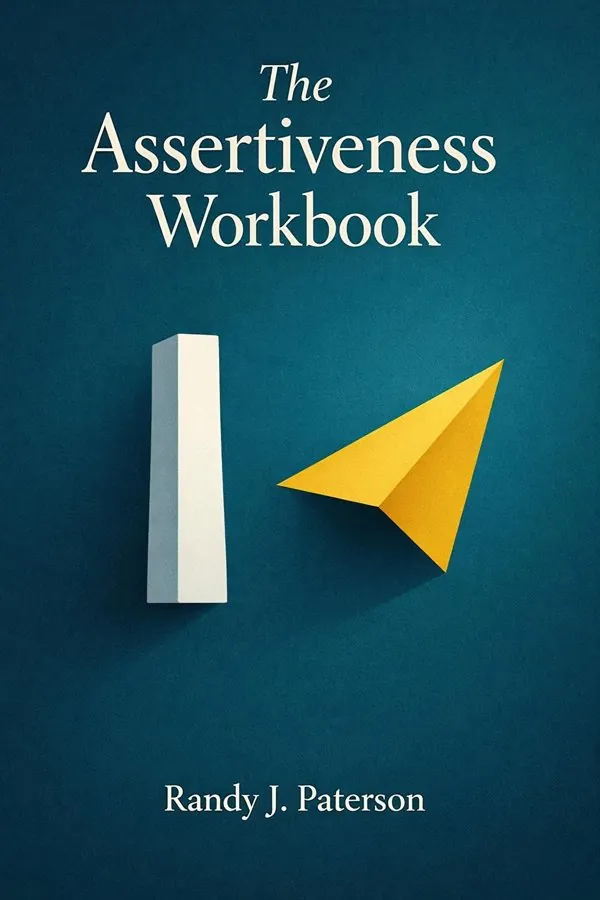
The Assertiveness Workbook: How to Express Your Ideas and Stand Up for Yourself at Work and in Relationships: Summary & Key Insights
 10 min6 chaptersAudio available
What Is The Assertiveness Workbook: How to Express Your Ideas and Stand Up for Yourself at Work and in Relationships About?
The Assertiveness Workbook: How to Express Your Ideas and Stand Up for Yourself at Work and in Relationships by Randy J. Paterson is a communication book spanning 6 pages. The Assertiveness Workbook provides practical exercises and strategies to help readers develop assertive communication skills, set healthy boundaries, and express their needs confidently in both personal and professional relationships. It draws on cognitive-behavioral therapy principles to guide readers in overcoming passivity and aggression, fostering self-respect and mutual respect in interactions.
This FizzRead summary covers all 6 key chapters of The Assertiveness Workbook: How to Express Your Ideas and Stand Up for Yourself at Work and in Relationships in approximately 10 minutes, distilling the most important ideas, arguments, and takeaways from Randy J. Paterson's work. Also available as an audio summary and Key Quotes Podcast.
The Assertiveness Workbook: How to Express Your Ideas and Stand Up for Yourself at Work and in Relationships
The Assertiveness Workbook provides practical exercises and strategies to help readers develop assertive communication skills, set healthy boundaries, and express their needs confidently in both personal and professional relationships. It draws on cognitive-behavioral therapy principles to guide readers in overcoming passivity and aggression, fostering self-respect and mutual respect in interactions.
Who Should Read The Assertiveness Workbook: How to Express Your Ideas and Stand Up for Yourself at Work and in Relationships?
This book is perfect for anyone interested in communication and looking to gain actionable insights in a short read. Whether you're a student, professional, or lifelong learner, the key ideas from The Assertiveness Workbook: How to Express Your Ideas and Stand Up for Yourself at Work and in Relationships by Randy J. Paterson will help you think differently.
- ✓Readers who enjoy communication and want practical takeaways
- ✓Professionals looking to apply new ideas to their work and life
- ✓Anyone who wants the core insights of The Assertiveness Workbook: How to Express Your Ideas and Stand Up for Yourself at Work and in Relationships in just 10 minutes
Want the full summary?
Get instant access to this book summary and 100K+ more with Fizz Moment.
Get Free SummaryAvailable on App Store • Free to download
Key Chapters
In my clinical work, I have found that the road to assertiveness begins with clarity—understanding the continuum of behaviors that shape our interactions. Assertiveness is one of three basic communication styles, the other two being passivity and aggression. Each reflects not only how we speak, but how we perceive ourselves and others.
The passive person lives under the silent assumption that their needs matter less. They agree when they don’t mean to, apologize unnecessarily, and often carry silent resentment that builds over time. They fear conflict and rejection, yet this fear traps them in cycles of invisibility. In contrast, the aggressive person asserts needs by trampling over others. They may appear powerful, but that power is hollow—a way to mask insecurity and fear. Aggression wins battles but loses relationships.
Assertiveness represents the balance point—the respectful middle ground. When you are assertive, you recognize both your own rights and those of the other person. You can say no without hostility, express desire without apology, and engage in disagreement without disrespect. Assertiveness doesn’t promise that you’ll always get what you want, but it ensures that your voice is heard and your dignity intact. To practice assertiveness is to practice mutual respect.
As you progress, you will begin to notice that assertive behavior fosters not only better relationships, but also enhanced self-esteem. When you consistently act in ways aligned with your values, your sense of self-worth strengthens naturally. No affirmation can replace the deep confidence that comes from living honestly.
One of the most transformative steps in assertiveness training is reclaiming your sense of personal rights. Most of us grow up with implicit lessons about whose needs matter. We internalize cultural, familial, or gendered messages: don’t make waves, be polite, don’t be selfish. Over time, we mistake compliance for kindness. In truth, kindness without boundaries becomes self-erasure.
To communicate assertively, you must believe—at a core level—that you have the right to express your feelings, to make mistakes, to change your mind, and to say no. These are not luxuries; they are birthrights of psychological adulthood. Yet rights come with responsibilities. You also bear the responsibility to respect others’ boundaries, to listen as much as you speak, and to own the impact of your words.
Assertiveness isn’t entitlement. It is reciprocity—the courage to honor both self and other. When you live with such a mindset, you cultivate fairness, and fairness sustains genuine relationships. Through exercises in the workbook, you’ll examine the rights you’ve ignored or suppressed, reflect on how guilt and fear distort your sense of self, and gradually rebuild a more balanced psychological contract with the world around you.
+ 4 more chapters — available in the FizzRead app
All Chapters in The Assertiveness Workbook: How to Express Your Ideas and Stand Up for Yourself at Work and in Relationships
About the Author
Randy J. Paterson, Ph.D., is a Canadian psychologist, author, and director of Changeways Clinic in Vancouver. He specializes in cognitive-behavioral therapy, depression, anxiety, and assertiveness training, and is known for his accessible self-help books and workshops on mental health and communication.
Get This Summary in Your Preferred Format
Read or listen to the The Assertiveness Workbook: How to Express Your Ideas and Stand Up for Yourself at Work and in Relationships summary by Randy J. Paterson anytime, anywhere. FizzRead offers multiple formats so you can learn on your terms — all free.
Available formats: App · Audio · PDF · EPUB — All included free with FizzRead
Download The Assertiveness Workbook: How to Express Your Ideas and Stand Up for Yourself at Work and in Relationships PDF and EPUB Summary
Key Quotes from The Assertiveness Workbook: How to Express Your Ideas and Stand Up for Yourself at Work and in Relationships
“In my clinical work, I have found that the road to assertiveness begins with clarity—understanding the continuum of behaviors that shape our interactions.”
“One of the most transformative steps in assertiveness training is reclaiming your sense of personal rights.”
Frequently Asked Questions about The Assertiveness Workbook: How to Express Your Ideas and Stand Up for Yourself at Work and in Relationships
The Assertiveness Workbook: How to Express Your Ideas and Stand Up for Yourself at Work and in Relationships by Randy J. Paterson is a communication book that explores key ideas across 6 chapters. The Assertiveness Workbook provides practical exercises and strategies to help readers develop assertive communication skills, set healthy boundaries, and express their needs confidently in both personal and professional relationships. It draws on cognitive-behavioral therapy principles to guide readers in overcoming passivity and aggression, fostering self-respect and mutual respect in interactions.
You Might Also Like

Magic Words: The Science and Secrets Behind Seven Words That Motivate, Engage, and Influence
Tim David
10 min
Talking Across The Divide: How to Communicate with People You Disagree with and Maybe Even Change the World
Justin Lee
10 min
The Exceptional Presenter: A Proven Formula to Open Up! and Own the Room
Timothy J. Koegel
10 min
4 Essential Keys to Effective Communication in Love, Life, Work--Anywhere!: Including the 12-Day Communication Challenge!
Bento C. Leal III
10 min
Active Listening Techniques: 30 Practical Tools to Hone Your Communication Skills
Nisha Gupta
10 min
Bargaining for Advantage: Negotiation Strategies for Reasonable People
G. Richard Shell
10 minBrowse by Category
Ready to read The Assertiveness Workbook: How to Express Your Ideas and Stand Up for Yourself at Work and in Relationships?
Get the full summary and 100K+ more books with Fizz Moment.