
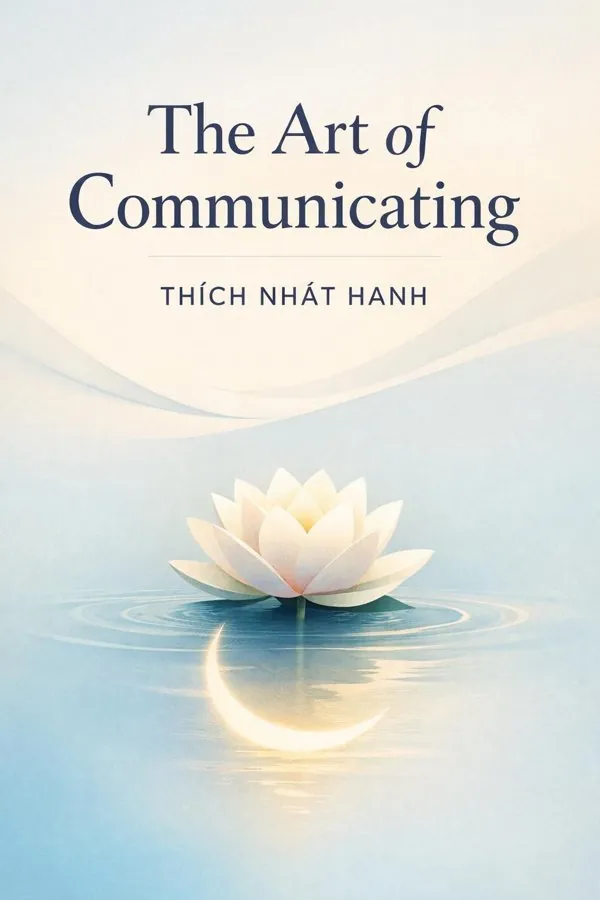
The Art of Communicating: Summary & Key Insights
 10 min11 chaptersAudio available
What Is The Art of Communicating About?
The Art of Communicating by Thích Nhất Hạnh is a communication book spanning 11 pages. In this insightful guide, Zen master Thích Nhất Hạnh explores how mindful communication can transform relationships and bring peace to oneself and others. Drawing from Buddhist teachings, he explains how to listen deeply and speak lovingly, offering practical exercises to cultivate understanding and compassion in daily interactions.
This FizzRead summary covers all 11 key chapters of The Art of Communicating in approximately 10 minutes, distilling the most important ideas, arguments, and takeaways from Thích Nhất Hạnh's work. Also available as an audio summary and Key Quotes Podcast.
The Art of Communicating
In this insightful guide, Zen master Thích Nhất Hạnh explores how mindful communication can transform relationships and bring peace to oneself and others. Drawing from Buddhist teachings, he explains how to listen deeply and speak lovingly, offering practical exercises to cultivate understanding and compassion in daily interactions.
Who Should Read The Art of Communicating?
This book is perfect for anyone interested in communication and looking to gain actionable insights in a short read. Whether you're a student, professional, or lifelong learner, the key ideas from The Art of Communicating by Thích Nhất Hạnh will help you think differently.
- ✓Readers who enjoy communication and want practical takeaways
- ✓Professionals looking to apply new ideas to their work and life
- ✓Anyone who wants the core insights of The Art of Communicating in just 10 minutes
Want the full summary?
Get instant access to this book summary and 100K+ more with Fizz Moment.
Get Free SummaryAvailable on App Store • Free to download
Key Chapters
True communication is not limited to words. It begins with the quality of our presence. When we are present—fully aware of the person in front of us—we already communicate. We do not need to say much; our attentive presence becomes a message of safety and respect. It is from this presence that mindful speech and deep listening flow naturally.
Mindfulness is the seed of genuine communication. If we speak without mindfulness, we are easily carried away by fear, habit, or ego. Words then become weapons. But when we stop, breathe, and become aware of our body and feelings, our speech changes. It carries understanding and compassion. Mindfulness allows us to recognize our emotions before they guide our tongue. It is like a gentle light illuminating our inner landscape, helping us choose words that heal instead of harm.
In Buddhist practice, we cultivate four kinds of nourishment: edible food, sensory impressions, volition, and consciousness. Communication belongs to all four. The words we hear are sensory food; they enter our minds and hearts, sometimes nourishing, sometimes toxic. Before speaking, ask yourself: Will my words nourish peace, or will they create fear? In this awareness, communication becomes a continuation of meditation. It is not separate from our spiritual life; it is part of our daily mindfulness.
The practice begins in silence. By learning to stop and breathe mindfully, you restore connection with yourself. When you feel calm and whole, you can listen deeply and speak lovingly. Every day offers an opportunity to communicate mindfully—with a friend, with a colleague, with a stranger. You will discover that peace begins with a simple act of listening.
Deep listening is a mirror for both the speaker and the listener. It is listening not to judge or to respond immediately but to hear the other’s suffering. When someone speaks from pain, they do not need advice—they need to be understood. Listening becomes an act of compassion that brings relief to both sides.
I often guide my students to practice deep listening in silence for several minutes each day. The practice begins with recognizing that everyone suffers. When you listen to another person’s pain, you touch the collective suffering of humankind. To listen deeply, you must first offer the gift of your presence. If your mind wanders, if you prepare counterarguments or judgments, you interrupt the healing flow. Only by allowing yourself to be fully present can the speaker feel truly heard.
In families, deep listening can transform relationships. Parents long for their children to listen; children long for their parents to understand. The key is to offer time and attention without rushing. When we listen like this, our loved ones feel safe enough to reveal what hides behind their anger or sadness. Very often, anger is simply unspoken hurt. Listening with compassion helps uncover this hidden wound.
Deep listening also applies to social reconciliation and collective healing. When communities are torn by conflict, we begin not by imposing solutions but by listening. I have witnessed how dialogue circles, conducted with mindfulness, can dissolve decades of hatred. A moment of true listening can be the first step toward peace.
As you practice deep listening, remember to listen inwardly as well. You must listen to your own body, your emotions, your thoughts. Only when you understand your own suffering can you hold space for another’s. This is why mindful communication always starts within.
+ 9 more chapters — available in the FizzRead app
All Chapters in The Art of Communicating
About the Author
Thích Nhất Hạnh (1926–2022) was a Vietnamese Zen master, poet, and peace activist. He founded the Plum Village tradition and was a leading figure in engaged Buddhism, known for his teachings on mindfulness, compassion, and peace.
Get This Summary in Your Preferred Format
Read or listen to the The Art of Communicating summary by Thích Nhất Hạnh anytime, anywhere. FizzRead offers multiple formats so you can learn on your terms — all free.
Available formats: App · Audio · PDF · EPUB — All included free with FizzRead
Download The Art of Communicating PDF and EPUB Summary
Key Quotes from The Art of Communicating
“True communication is not limited to words.”
“Deep listening is a mirror for both the speaker and the listener.”
Frequently Asked Questions about The Art of Communicating
The Art of Communicating by Thích Nhất Hạnh is a communication book that explores key ideas across 11 chapters. In this insightful guide, Zen master Thích Nhất Hạnh explores how mindful communication can transform relationships and bring peace to oneself and others. Drawing from Buddhist teachings, he explains how to listen deeply and speak lovingly, offering practical exercises to cultivate understanding and compassion in daily interactions.
You Might Also Like

Magic Words: The Science and Secrets Behind Seven Words That Motivate, Engage, and Influence
Tim David
10 min
Talking Across The Divide: How to Communicate with People You Disagree with and Maybe Even Change the World
Justin Lee
10 min
The Exceptional Presenter: A Proven Formula to Open Up! and Own the Room
Timothy J. Koegel
10 min
4 Essential Keys to Effective Communication in Love, Life, Work--Anywhere!: Including the 12-Day Communication Challenge!
Bento C. Leal III
10 min
Active Listening Techniques: 30 Practical Tools to Hone Your Communication Skills
Nisha Gupta
10 min
Bargaining for Advantage: Negotiation Strategies for Reasonable People
G. Richard Shell
10 minBrowse by Category
Ready to read The Art of Communicating?
Get the full summary and 100K+ more books with Fizz Moment.