
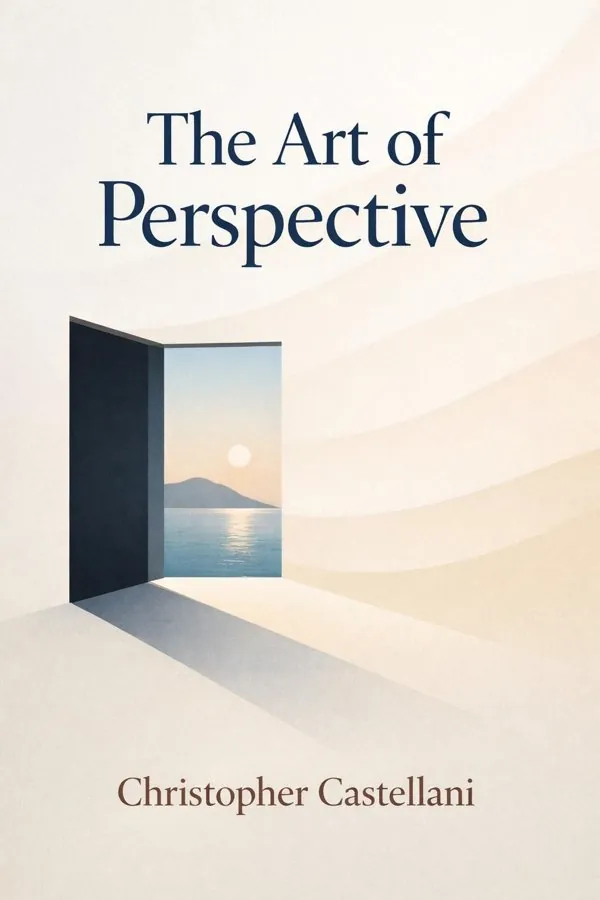
The Art of Clear Thinking: Summary & Key Insights
by Hasard Lee
 10 min10 chapters
Key Takeaways from The Art of Clear Thinking
Most bad decisions do not begin with ignorance; they begin with overconfidence.
Pressure does not merely test thinking; it changes it.
We never respond to raw reality alone; we respond to the meaning we attach to it.
One of the most dangerous myths about judgment is that bias only affects other people.
When stakes are high, memory and instinct are not enough.
What Is The Art of Clear Thinking About?
The Art of Clear Thinking by Hasard Lee is a self-help book published in 2016 spanning 10 pages. Clear thinking is rarely a natural talent; it is a discipline forged under pressure, uncertainty, and consequence. In The Art of Clear Thinking, Hasard Lee explores how better decisions are made when emotion, noise, and mental shortcuts are brought under control. Drawing on his background as a fighter pilot, strategist, and instructor, Lee shows that high-stakes judgment is not reserved for elite professionals in cockpits or command centers. The same habits that help people make sound decisions in moments of danger can also improve how we lead teams, solve problems, navigate conflict, and choose what matters in everyday life. What makes this book compelling is its blend of practical psychology and lived experience. Lee does not present thinking as an abstract intellectual exercise. Instead, he treats it as a skill that can be trained: noticing bias, separating facts from assumptions, slowing down when needed, and acting decisively when time is short. In a world saturated with distraction, outrage, and information overload, his message feels especially urgent. The Art of Clear Thinking is a useful guide for anyone who wants to think with more precision, communicate with more clarity, and make better decisions when it counts.
This FizzRead summary covers all 10 key chapters of The Art of Clear Thinking in approximately 10 minutes, distilling the most important ideas, arguments, and takeaways from Hasard Lee's work.
The Art of Clear Thinking
Clear thinking is rarely a natural talent; it is a discipline forged under pressure, uncertainty, and consequence. In The Art of Clear Thinking, Hasard Lee explores how better decisions are made when emotion, noise, and mental shortcuts are brought under control. Drawing on his background as a fighter pilot, strategist, and instructor, Lee shows that high-stakes judgment is not reserved for elite professionals in cockpits or command centers. The same habits that help people make sound decisions in moments of danger can also improve how we lead teams, solve problems, navigate conflict, and choose what matters in everyday life.
What makes this book compelling is its blend of practical psychology and lived experience. Lee does not present thinking as an abstract intellectual exercise. Instead, he treats it as a skill that can be trained: noticing bias, separating facts from assumptions, slowing down when needed, and acting decisively when time is short. In a world saturated with distraction, outrage, and information overload, his message feels especially urgent. The Art of Clear Thinking is a useful guide for anyone who wants to think with more precision, communicate with more clarity, and make better decisions when it counts.
Who Should Read The Art of Clear Thinking?
This book is perfect for anyone interested in self-help and looking to gain actionable insights in a short read. Whether you're a student, professional, or lifelong learner, the key ideas from The Art of Clear Thinking by Hasard Lee will help you think differently.
- ✓Readers who enjoy self-help and want practical takeaways
- ✓Professionals looking to apply new ideas to their work and life
- ✓Anyone who wants the core insights of The Art of Clear Thinking in just 10 minutes
Want the full summary?
Get instant access to this book summary and 100K+ more with Fizz Moment.
Get Free SummaryAvailable on App Store • Free to download
Key Chapters
Most bad decisions do not begin with ignorance; they begin with overconfidence. One of the core ideas in The Art of Clear Thinking is that the first step toward better judgment is becoming aware of how easily the mind can distort reality. We like to believe we are rational, but in practice we are influenced by stress, ego, fear, urgency, and the stories we tell ourselves. Lee emphasizes that clear thinkers do not assume they see the world accurately. They actively question their interpretations.
This matters because the quality of your decisions depends on the quality of your perception. If you mistake assumptions for facts, or emotion for insight, you can move quickly in the wrong direction. In high-pressure environments, this can be dangerous. In ordinary life, it can still lead to poor hires, unnecessary arguments, wasted time, and costly mistakes. The disciplined thinker learns to ask: What do I know? What am I inferring? What am I missing?
Imagine a manager who assumes an employee is disengaged because deadlines are slipping. A reactive response might be criticism or micromanagement. A clearer response begins with curiosity: Is the workload unrealistic? Are priorities unclear? Is there a personal issue affecting performance? By slowing the rush to judgment, the manager creates room for accuracy and better action.
Lee’s broader point is that awareness is not passivity. It is an active mental habit of monitoring your own thinking while you think. That self-observation helps you catch cognitive traps before they harden into decisions.
Actionable takeaway: Before making an important choice, write down three columns labeled Facts, Assumptions, and Unknowns. This simple pause sharpens perception and improves decision quality.
Pressure does not merely test thinking; it changes it. Lee highlights how stress narrows attention, speeds reaction, and often pushes people toward familiar but flawed patterns. Under strain, the brain tends to favor certainty over accuracy and action over reflection. That is useful when immediate survival is at stake, but in many modern situations it leads to impulsive decisions, distorted priorities, and preventable errors.
A major strength of the book is its insistence that clear thinking is inseparable from stress management. You do not rise to the level of your hopes when pressure increases; you fall to the level of your preparation. In aviation, where Lee’s experience comes from, this principle is obvious. A pilot cannot afford to panic, improvise wildly, or let tunnel vision take over. Procedures, training, and mental discipline exist to preserve judgment when adrenaline surges.
The same pattern shows up in boardrooms, hospitals, classrooms, and homes. A parent dealing with a child’s outburst, a leader handling a public setback, or an investor confronting market volatility can all become mentally compressed by stress. The result is often binary thinking, emotional overreaction, or fixation on the loudest problem instead of the most important one.
Lee suggests that one key to clear thinking is creating space between stimulus and response. This might involve controlled breathing, a checklist, a pause before speaking, or a routine for assessing options. These tools may seem simple, but their value lies in restoring cognitive bandwidth when it is most threatened.
Actionable takeaway: Build a short reset ritual for stressful moments, such as one deep breath, one question about the facts, and one statement of your next best step. Practice it before you need it.
We never respond to raw reality alone; we respond to the meaning we attach to it. Lee repeatedly underscores that clear thinkers learn to distinguish between what happened and the story they immediately create about what happened. This distinction is powerful because much confusion, conflict, and bad judgment comes not from the facts themselves but from the interpretation layered on top of them.
Suppose you send a message and receive no reply. The data is simple: no response yet. The story might be: they are ignoring me, they are upset, I made a mistake, this opportunity is gone. In workplaces, relationships, and leadership settings, these invented narratives quickly shape behavior. People become defensive, aggressive, or discouraged based on conclusions that may be completely wrong.
Lee’s approach invites readers to challenge mental storytelling before acting on it. Clear thinking means resisting the urge to fill every gap in information with emotionally satisfying explanations. In uncertain environments, this skill becomes essential. Leaders often make poor decisions because they confuse a plausible narrative with a verified reality. A compelling explanation can feel true long before it is tested.
This idea is especially useful in communication. If a team misses a target, effective leaders gather specifics before assigning motives. If a deal falls apart, they examine process failures rather than immediately blaming incompetence or bad faith. If a personal relationship becomes tense, they ask clarifying questions instead of assuming intention.
The broader lesson is humility. Facts deserve investigation; stories deserve scrutiny. When those are reversed, thinking becomes cloudy.
Actionable takeaway: Whenever you feel a strong emotional reaction, complete this sentence in writing: “The facts are…, and the story I am telling myself is….” Then challenge the story before you act.
One of the most dangerous myths about judgment is that bias only affects other people. Lee makes clear that bias is not a moral flaw reserved for the uninformed; it is a built-in feature of human cognition. We notice what confirms our expectations, discount what threatens our identity, and prefer conclusions that preserve our confidence. Clear thinking therefore requires not just intelligence, but systems for catching ourselves.
The book treats bias as an operational risk. In other words, it is something that can interfere with performance, not just theory. Confirmation bias, sunk-cost bias, status bias, and overconfidence can all distort decisions in subtle ways. A leader may keep backing a failing strategy because admitting error feels costly. A team may ignore warning signs because they conflict with the original plan. An individual may reject good advice because it arrives from an unexpected source.
Lee’s practical contribution lies in showing that awareness of bias is not enough. Most people can name a few biases, but still fall prey to them. What works better is building decision habits that force perspective. This can include seeking disconfirming evidence, inviting dissent, asking what would prove you wrong, and reviewing decisions after the fact to understand where judgment drifted.
Consider a hiring process. A manager may quickly favor a candidate who resembles previous successful hires. Without structured evaluation criteria, that instinct can override more relevant evidence. By using consistent scorecards and multiple viewpoints, the manager reduces the influence of personal preference disguised as intuition.
Bias cannot be eliminated entirely, but it can be managed with discipline.
Actionable takeaway: For any high-stakes decision, ask one person you trust to argue the opposite case as convincingly as possible. Treat that challenge as part of the decision process, not an obstacle to it.
When stakes are high, memory and instinct are not enough. Lee stresses the value of checklists, procedures, and simple frameworks as tools that support clear thinking when the mind is overloaded. This may seem unglamorous compared with intuition or brilliance, but one of the book’s practical lessons is that good judgment often depends on structure more than inspiration.
In aviation and other high-risk fields, checklists exist because capable people still forget critical steps under pressure. Stress degrades recall. Fatigue reduces attention. Urgency creates shortcuts. A checklist compensates for human limits. It does not replace intelligence; it preserves it. The same logic applies far beyond technical environments.
A business leader can use a checklist before launching a new initiative: What problem are we solving? What assumptions are untested? What are the failure points? Who owns each part? What would success look like in thirty days? A family can create a checklist for emergencies. A student can build one for exam preparation. Even difficult conversations benefit from a mental template: What is my goal? What facts matter? What emotion am I bringing into this? What question should I ask first?
Lee’s deeper point is that structure creates freedom. By standardizing basic processes, you preserve mental energy for what is novel and complex. This reduces avoidable mistakes and keeps emotion from hijacking execution. Clear thinkers do not rely solely on being calm, sharp, or inspired in the moment. They prepare systems that make good performance more likely.
Actionable takeaway: Create one short checklist for a recurring high-pressure situation in your life, such as meetings, negotiations, or problem-solving conversations, and use it consistently until it becomes second nature.
People often mistake fast thinking for clear thinking, but Lee argues that true decisiveness comes from identifying what matters most. When situations become complex, the mind naturally wants to process everything at once. That usually leads to confusion, hesitation, or rushed action based on superficial cues. Clear thinkers simplify intelligently. They reduce noise, isolate critical variables, and focus on the next meaningful decision.
This is especially important when time is limited. In high-stakes settings, waiting for perfect information is impossible. But acting without a framework is just as dangerous. Lee shows that effective decision-makers strike a balance: they gather enough information to understand the situation, then prioritize the few factors that truly drive the outcome. This is not oversimplification; it is disciplined filtering.
For example, a company facing a sudden crisis might be tempted to chase every complaint, rumor, and worst-case scenario at once. A clearer approach asks: What is the immediate threat? What must be stabilized first? What information is essential right now, and what can wait? In personal life, someone navigating job uncertainty might stop spiraling by narrowing attention to the next actionable questions: What is my runway? What roles fit? Who should I contact this week?
Lee’s insight is that clarity often emerges from subtraction. By removing distractions and false urgency, you become more capable of acting well. Decisiveness is not recklessness. It is the disciplined ability to move when enough is known.
Actionable takeaway: In your next difficult decision, identify the three variables that matter most and ignore everything else until those three are addressed. This prevents overload and improves focus.
The smartest person in the room is often the one most vulnerable to error if they stop listening. Lee makes a strong case that humility is not softness or indecision; it is a practical advantage. Clear thinkers understand that competence can create blind spots. Experience builds pattern recognition, but it can also breed complacency. Confidence is useful, yet when it becomes certainty, judgment starts to deteriorate.
Humility improves thinking because it keeps the mind open to correction. A humble person is more likely to seek input, revise assumptions, admit uncertainty, and notice when reality diverges from expectation. In high-performance cultures, this matters deeply. Teams become dangerous when members feel pressure to appear infallible. Mistakes get hidden, questions go unasked, and flawed assumptions go unchallenged.
Lee’s lessons suggest that strong leaders cultivate environments where truth is more important than ego. They reward accurate reporting, not polished appearances. They ask junior voices what others may be missing. They distinguish between authority and omniscience. In practice, this means saying “I may be wrong,” “What do you see that I don’t?” or “What assumptions are we making?” These are not signs of weakness. They are signs that thinking is still alive.
On a personal level, humility also protects against the emotional cost of being wrong. If your identity depends on always being correct, you will resist new evidence. If you treat mistakes as information, you can learn faster. Lee’s approach turns humility into a performance tool.
Actionable takeaway: In your next team discussion or major choice, explicitly ask, “What am I overlooking?” and invite one honest answer before you move forward.
Clarity in chaos is usually earned long before chaos arrives. Lee emphasizes that clear thinking under uncertainty is not mainly a matter of temperament. It is the product of repeated training, reflection, and exposure to decision-making frameworks. People who appear calm in difficult moments are often drawing on preparation that has already shaped their attention and reactions.
This matters because uncertainty is where many people mentally unravel. When outcomes are unclear, the imagination rushes in with fear, speculation, and catastrophizing. The untrained mind either freezes or flails. Lee’s message is encouraging: you can build capacity for uncertainty by practicing how you think, not just what you know.
Training can take many forms. Professionals use simulations, rehearsals, and after-action reviews. Leaders can pre-think crisis scenarios and define response principles before trouble hits. Individuals can rehearse difficult conversations, investment decisions, or career transitions by mapping options and probable outcomes in advance. Even journaling after major decisions is a kind of cognitive training, because it helps you study how your mind worked under pressure.
A useful part of Lee’s framework is the idea that uncertainty should not be treated as an enemy to eliminate at all costs. Often it cannot be removed. The goal is to remain functional within it. That means learning to act with incomplete information, update as conditions change, and avoid letting ambiguity become paralysis.
Actionable takeaway: Pick one recurring uncertain situation in your life and rehearse it in advance. Write down likely scenarios, your first response, and the principles that should guide you. Preparation reduces panic.
A decision is only as valuable as what it teaches you afterward. Lee points out that clear thinking is not a one-time achievement but a cycle of action, review, and refinement. Many people obsess over outcomes alone: if things worked out, they assume the decision was good; if results were poor, they assume the decision was bad. But this is often misleading. Good decisions can produce bad outcomes due to factors beyond control, and bad decisions can occasionally produce lucky results.
That is why after-action reflection matters. Instead of asking only, “Did it work?” Lee’s approach encourages richer questions: What information did I have at the time? What assumptions shaped my choice? Where did emotion help or hurt? What warning signs did I ignore? What would I repeat, and what would I change next time? This process improves judgment by separating decision quality from simple outcome bias.
In professional settings, regular review helps teams become more adaptive. A project debrief can reveal communication gaps, false assumptions, and process breakdowns that would otherwise repeat. In personal life, reflection can uncover patterns in spending, conflict, health habits, or career choices. The aim is not self-blame. It is calibration.
Lee’s broader contribution is to frame reflection as a discipline of growth. Clear thinkers are not perfect thinkers. They are people who learn quickly because they examine their own decisions honestly. Over time, this creates better instincts, stronger self-awareness, and more reliable judgment under pressure.
Actionable takeaway: After your next important decision, spend ten minutes reviewing not just the result but your process. Write down one thing you judged well and one thing you would improve next time.
The most powerful idea in the book may be the simplest: clear thinking is not reserved for dramatic moments. It is built in ordinary moments, through daily habits of attention, honesty, discipline, and reflection. Lee treats decision-making as a lifestyle, not an isolated skill. The way you manage small frustrations, interpret setbacks, prepare for meetings, and listen to others all contributes to how you will think when the stakes rise.
This perspective is liberating because it means anyone can improve. You do not need a cockpit, a crisis, or a title to train your mind. You can practice by slowing down before reacting to an email, checking assumptions before criticizing someone, reducing distractions during important work, or reviewing the day’s choices with more candor. Over time, these habits reshape your baseline way of thinking.
Lee also reminds readers that clarity is connected to character. To think clearly, you must be willing to face uncomfortable facts, restrain ego, and tolerate uncertainty. That requires maturity as much as intellect. The reward is not just better performance. It is steadier leadership, stronger relationships, and a greater sense of agency in a noisy world.
In this sense, the book is both practical and philosophical. It teaches methods, but it also asks what kind of person you want to be when life gets complicated. The answer is someone who sees accurately, responds deliberately, and learns continuously.
Actionable takeaway: End each day by asking yourself three questions: Where did I think clearly today? Where did emotion cloud my judgment? What one habit will I practice tomorrow to think better?
All Chapters in The Art of Clear Thinking
About the Author
Hasard Lee is a former U.S. Air Force fighter pilot, instructor pilot, and operational leader whose work focuses on decision-making, leadership, and performance under pressure. Drawing on years of experience in environments where clarity can have life-or-death consequences, he translates lessons from aviation and military operations into practical tools for everyday judgment. Lee is known for making complex ideas accessible, especially around stress, uncertainty, bias, and disciplined thinking. His writing and speaking connect elite performance principles to business, leadership, and personal growth, helping readers understand how better choices are made in demanding situations. Through his work, he has built a reputation as a thoughtful guide for people who want to think more clearly, act more deliberately, and lead with greater calm and precision.
Get This Summary in Your Preferred Format
Read or listen to the The Art of Clear Thinking summary by Hasard Lee anytime, anywhere. FizzRead offers multiple formats so you can learn on your terms — all free.
Available formats: App · Audio · PDF · EPUB — All included free with FizzRead
Download The Art of Clear Thinking PDF and EPUB Summary
Key Quotes from The Art of Clear Thinking
“Most bad decisions do not begin with ignorance; they begin with overconfidence.”
“Pressure does not merely test thinking; it changes it.”
“We never respond to raw reality alone; we respond to the meaning we attach to it.”
“One of the most dangerous myths about judgment is that bias only affects other people.”
“When stakes are high, memory and instinct are not enough.”
Frequently Asked Questions about The Art of Clear Thinking
The Art of Clear Thinking by Hasard Lee is a self-help book that explores key ideas across 10 chapters. Clear thinking is rarely a natural talent; it is a discipline forged under pressure, uncertainty, and consequence. In The Art of Clear Thinking, Hasard Lee explores how better decisions are made when emotion, noise, and mental shortcuts are brought under control. Drawing on his background as a fighter pilot, strategist, and instructor, Lee shows that high-stakes judgment is not reserved for elite professionals in cockpits or command centers. The same habits that help people make sound decisions in moments of danger can also improve how we lead teams, solve problems, navigate conflict, and choose what matters in everyday life. What makes this book compelling is its blend of practical psychology and lived experience. Lee does not present thinking as an abstract intellectual exercise. Instead, he treats it as a skill that can be trained: noticing bias, separating facts from assumptions, slowing down when needed, and acting decisively when time is short. In a world saturated with distraction, outrage, and information overload, his message feels especially urgent. The Art of Clear Thinking is a useful guide for anyone who wants to think with more precision, communicate with more clarity, and make better decisions when it counts.
You Might Also Like

Browse by Category
Ready to read The Art of Clear Thinking?
Get the full summary and 100K+ more books with Fizz Moment.