
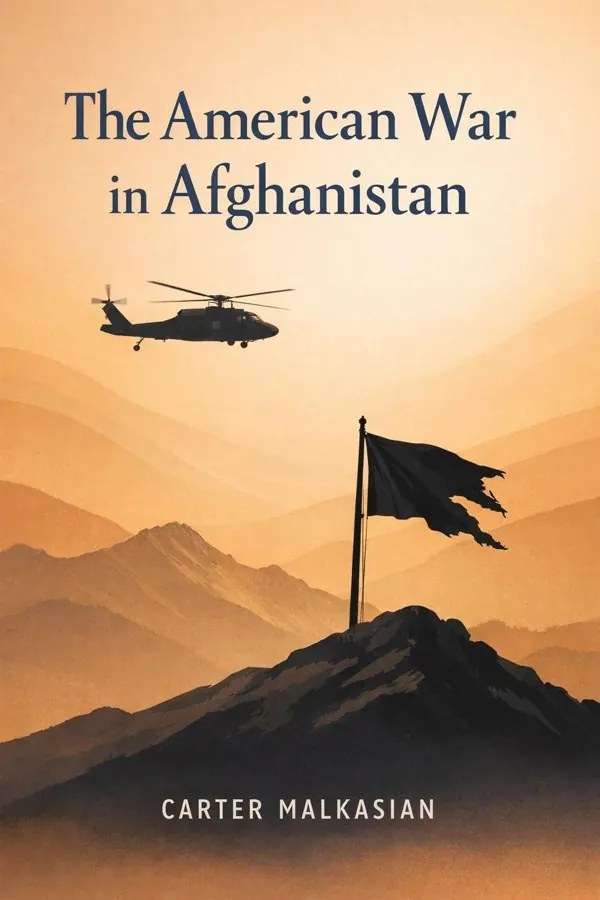
The American War in Afghanistan: A History: Summary & Key Insights
 10 min11 chaptersAudio available
What Is The American War in Afghanistan: A History About?
The American War in Afghanistan: A History by Carter Malkasian is a war_military book spanning 11 pages. This book provides a comprehensive history of the United States' war in Afghanistan from 2001 to 2021. Drawing on extensive interviews and firsthand experience, Carter Malkasian examines the political, military, and cultural dimensions of the conflict, exploring why the war lasted so long and why the Taliban ultimately prevailed. The work offers a balanced and deeply informed account of America’s longest war, its human costs, and its enduring consequences for both Afghanistan and the United States.
This FizzRead summary covers all 11 key chapters of The American War in Afghanistan: A History in approximately 10 minutes, distilling the most important ideas, arguments, and takeaways from Carter Malkasian's work. Also available as an audio summary and Key Quotes Podcast.
The American War in Afghanistan: A History
This book provides a comprehensive history of the United States' war in Afghanistan from 2001 to 2021. Drawing on extensive interviews and firsthand experience, Carter Malkasian examines the political, military, and cultural dimensions of the conflict, exploring why the war lasted so long and why the Taliban ultimately prevailed. The work offers a balanced and deeply informed account of America’s longest war, its human costs, and its enduring consequences for both Afghanistan and the United States.
Who Should Read The American War in Afghanistan: A History?
This book is perfect for anyone interested in war_military and looking to gain actionable insights in a short read. Whether you're a student, professional, or lifelong learner, the key ideas from The American War in Afghanistan: A History by Carter Malkasian will help you think differently.
- ✓Readers who enjoy war_military and want practical takeaways
- ✓Professionals looking to apply new ideas to their work and life
- ✓Anyone who wants the core insights of The American War in Afghanistan: A History in just 10 minutes
Want the full summary?
Get instant access to this book summary and 100K+ more with Fizz Moment.
Get Free SummaryAvailable on App Store • Free to download
Key Chapters
The war’s first chapter was written with confidence and clarity. In the aftermath of September 11, the American people demanded justice, and the U.S. military delivered swift vengeance. Within weeks of launching Operation Enduring Freedom, the Taliban’s hold on Kabul fractured. By December 2001, they had largely vanished as a governing force. Hamid Karzai emerged as the new face of Afghanistan—a Western-backed leader of promise and reconciliation.
I recall the mood of those months—one of triumph mixed with naiveté. The United States believed the enemy was defeated and freedom could now be built from the ruins. Yet even amid military success, the seeds of future struggle were visible. The Taliban’s collapse was not annihilation; their leaders retreated across the Pakistani border, their fighters melted into local populations, and their ideology endured. Afghans welcomed the fall of repression but remained cautious. The swift reconstruction lacked the patience to understand Afghanistan’s social fabric—tribes, faith, and centuries-old resistance to centralized rule.
Those first months gave rise to a powerful illusion: that war had ended. In reality, it had just changed form.
After the victories came the burdens of creation. Nation-building is not merely an act of policy; it demands empathy, cultural understanding, and endurance. During these years, America’s attention was divided—the invasion of Iraq drained focus, funds, and strategic coherence. In Afghanistan, reconstruction began unevenly, driven by international optimism but constrained by local realities.
I saw the contradictions unfold. Roads, schools, and clinics appeared in some regions, while others languished in insecurity. The Afghan National Army was formed but lacked unity. Meanwhile, the Taliban regrouped, finding sanctuary in Pakistan and motivation among rural populations disillusioned with their new government. Corruption alienated the very people the coalition hoped to win. The insurgency did not ignite overnight—it smoldered in the vacuum left by misunderstood governance.
Every dollar spent on infrastructure would falter if trust was absent. That trust eroded quickly as foreign troops were seen less as liberators and more as occupiers. The cultural gap widened: where Americans saw reconstruction, Afghans felt intrusion. Thus began the slow, steady unraveling of Afghanistan’s rebirth.
+ 9 more chapters — available in the FizzRead app
All Chapters in The American War in Afghanistan: A History
About the Author
Carter Malkasian is an American historian and former advisor to the U.S. Joint Chiefs of Staff. He has served in Iraq and Afghanistan and is known for his expertise in counterinsurgency and U.S. foreign policy. Malkasian holds a Ph.D. in history from Oxford University and has written several books on modern warfare and military strategy.
Get This Summary in Your Preferred Format
Read or listen to the The American War in Afghanistan: A History summary by Carter Malkasian anytime, anywhere. FizzRead offers multiple formats so you can learn on your terms — all free.
Available formats: App · Audio · PDF · EPUB — All included free with FizzRead
Download The American War in Afghanistan: A History PDF and EPUB Summary
Key Quotes from The American War in Afghanistan: A History
“The war’s first chapter was written with confidence and clarity.”
“After the victories came the burdens of creation.”
Frequently Asked Questions about The American War in Afghanistan: A History
The American War in Afghanistan: A History by Carter Malkasian is a war_military book that explores key ideas across 11 chapters. This book provides a comprehensive history of the United States' war in Afghanistan from 2001 to 2021. Drawing on extensive interviews and firsthand experience, Carter Malkasian examines the political, military, and cultural dimensions of the conflict, exploring why the war lasted so long and why the Taliban ultimately prevailed. The work offers a balanced and deeply informed account of America’s longest war, its human costs, and its enduring consequences for both Afghanistan and the United States.
You Might Also Like
Patriot
Andrew Britton
10 min
War
John Hersey
10 min
An Army at Dawn: The War in North Africa, 1942–1943
Rick Atkinson
10 min
Brave New War: The Next Stage of Terrorism and the End of Globalization
John Robb
10 min
Catch-22
Joseph Heller
10 min
Command and Control: Nuclear Weapons, the Damascus Accident, and the Illusion of Safety
Eric Schlosser
10 minBrowse by Category
Ready to read The American War in Afghanistan: A History?
Get the full summary and 100K+ more books with Fizz Moment.