
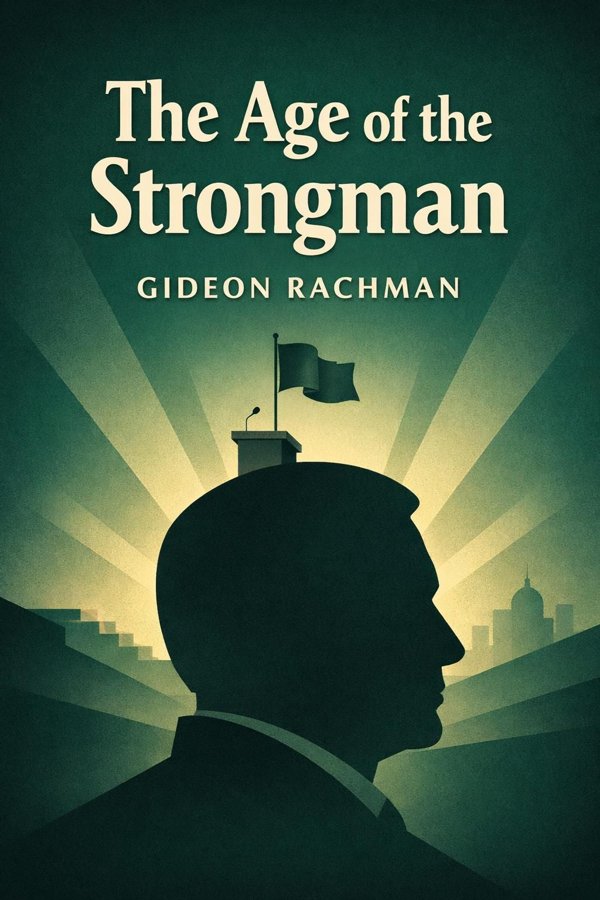
The Age of the Strongman: How the Cult of the Leader Threatens Democracy Around the World: Summary & Key Insights
 10 min5 chaptersAudio available
What Is The Age of the Strongman: How the Cult of the Leader Threatens Democracy Around the World About?
The Age of the Strongman: How the Cult of the Leader Threatens Democracy Around the World by Gideon Rachman is a politics book spanning 5 pages. In this incisive work, Gideon Rachman explores the global rise of authoritarian leaders and the erosion of democratic norms. He examines figures such as Vladimir Putin, Donald Trump, Xi Jinping, and others, analyzing how their personal power and populist appeal reshape politics and international relations. The book offers a compelling account of how strongman rule has become a defining feature of the 21st century.
This FizzRead summary covers all 5 key chapters of The Age of the Strongman: How the Cult of the Leader Threatens Democracy Around the World in approximately 10 minutes, distilling the most important ideas, arguments, and takeaways from Gideon Rachman's work. Also available as an audio summary and Key Quotes Podcast.
The Age of the Strongman: How the Cult of the Leader Threatens Democracy Around the World
In this incisive work, Gideon Rachman explores the global rise of authoritarian leaders and the erosion of democratic norms. He examines figures such as Vladimir Putin, Donald Trump, Xi Jinping, and others, analyzing how their personal power and populist appeal reshape politics and international relations. The book offers a compelling account of how strongman rule has become a defining feature of the 21st century.
Who Should Read The Age of the Strongman: How the Cult of the Leader Threatens Democracy Around the World?
This book is perfect for anyone interested in politics and looking to gain actionable insights in a short read. Whether you're a student, professional, or lifelong learner, the key ideas from The Age of the Strongman: How the Cult of the Leader Threatens Democracy Around the World by Gideon Rachman will help you think differently.
- ✓Readers who enjoy politics and want practical takeaways
- ✓Professionals looking to apply new ideas to their work and life
- ✓Anyone who wants the core insights of The Age of the Strongman: How the Cult of the Leader Threatens Democracy Around the World in just 10 minutes
Want the full summary?
Get instant access to this book summary and 100K+ more with Fizz Moment.
Get Free SummaryAvailable on App Store • Free to download
Key Chapters
In looking at today’s strongmen, I was struck by how modern they appear—and yet how ancient their instincts are. History offers no shortage of domineering leaders: Mussolini, Hitler, Stalin, Mao. But there is something distinct about our current cohort. Unlike the totalitarian monsters of the twentieth century, the 21st-century strongman often emerges within a formally democratic framework. He wins elections, cultivates mass media, and maintains the veneer of legality. Yet beneath this surface lies the same drive for unchecked personal power.
During the Cold War, ideology shaped authoritarianism—whether communist or fascist. Today, ideology has faded; personality has replaced it. These men build cults not around parties or ideas, but around themselves. They identify the nation with their own identity. This shift marks a profound change. Where past dictatorships mobilized bureaucratic propaganda machines, modern strongmen wield television, social media, and emotional narratives. They speak directly to citizens, exploiting resentment and grievance in a world overwhelmed by information and economic anxiety.
I also situate this rise in a wider global context. The 1990s liberal order, dominated by the United States and characterized by optimism about globalization, fostered disillusionment. Economic inequality widened, communities fractured, and trust in technocratic elites eroded. The strongman enters this vacuum as both savior and avenger. He promises to restore pride, punish enemies, and defend ‘ordinary people’ against the corruption of cosmopolitan elites. What we see, then, is not a return to ideology, but the weaponization of identity in a fragmented age.
Vladimir Putin’s Russia stands as the archetype of modern strongman politics. A former KGB officer, he rose to power in 1999, promising order after the chaos of the Yeltsin years. What began as a campaign of stabilization soon hardened into a regime of control. Putin rebuilt the state by dismantling its checks and balances. Independent media were taken over, critical journalists silenced, and oligarchs brought to heel under the doctrine of ‘sovereign democracy’—a euphemism for rule by fear and nationalism.
Putin’s genius was to fuse authoritarian power with a populist national myth. He projected himself as the defender of a humiliated nation, restoring Russian pride after the fall of the Soviet Union. The annexation of Crimea in 2014 typified this strategy: a bold assertion of power that thrilled his supporters and flouted international law. In the years since, Putin has gone from domestic strongman to global disruptor, challenging Western democracies through cyber interference and hybrid warfare. His invasion of Ukraine in 2022 exposed the full extent of his ambitions: to overturn the post–Cold War order and reassert Russia’s dominance through force.
But Putin’s success also reflects systemic weakness. His regime thrives on fear and cynicism, but it has hollowed out civil society. What I observe in Russia is not strength, but fragility masked by theatrical displays of power. When personal rule replaces institutional legitimacy, the state becomes brittle—a phenomenon repeated across every strongman regime.
+ 3 more chapters — available in the FizzRead app
All Chapters in The Age of the Strongman: How the Cult of the Leader Threatens Democracy Around the World
About the Author
Gideon Rachman is the chief foreign affairs commentator for the Financial Times. Known for his deep analysis of global politics and international relations, he has written extensively on geopolitical trends and the challenges facing liberal democracy.
Get This Summary in Your Preferred Format
Read or listen to the The Age of the Strongman: How the Cult of the Leader Threatens Democracy Around the World summary by Gideon Rachman anytime, anywhere. FizzRead offers multiple formats so you can learn on your terms — all free.
Available formats: App · Audio · PDF · EPUB — All included free with FizzRead
Download The Age of the Strongman: How the Cult of the Leader Threatens Democracy Around the World PDF and EPUB Summary
Key Quotes from The Age of the Strongman: How the Cult of the Leader Threatens Democracy Around the World
“In looking at today’s strongmen, I was struck by how modern they appear—and yet how ancient their instincts are.”
“Vladimir Putin’s Russia stands as the archetype of modern strongman politics.”
Frequently Asked Questions about The Age of the Strongman: How the Cult of the Leader Threatens Democracy Around the World
The Age of the Strongman: How the Cult of the Leader Threatens Democracy Around the World by Gideon Rachman is a politics book that explores key ideas across 5 chapters. In this incisive work, Gideon Rachman explores the global rise of authoritarian leaders and the erosion of democratic norms. He examines figures such as Vladimir Putin, Donald Trump, Xi Jinping, and others, analyzing how their personal power and populist appeal reshape politics and international relations. The book offers a compelling account of how strongman rule has become a defining feature of the 21st century.
You Might Also Like
Antifa: The Anti-Fascist Handbook
Mark Bray
10 min
Attack from Within: How Disinformation Is Sabotaging America
Barbara McQuade
10 min
Coercion, Capital, and European States, AD 990–1992
Charles Tilly
10 min
Digital Democracy: Concepts, Methodologies, Tools, and Applications
Various Authors
10 min
Fascism
Stanley G. Payne
10 min
Fire And Fury: Inside The Trump White House
Michael Wolff
10 minBrowse by Category
Ready to read The Age of the Strongman: How the Cult of the Leader Threatens Democracy Around the World?
Get the full summary and 100K+ more books with Fizz Moment.