
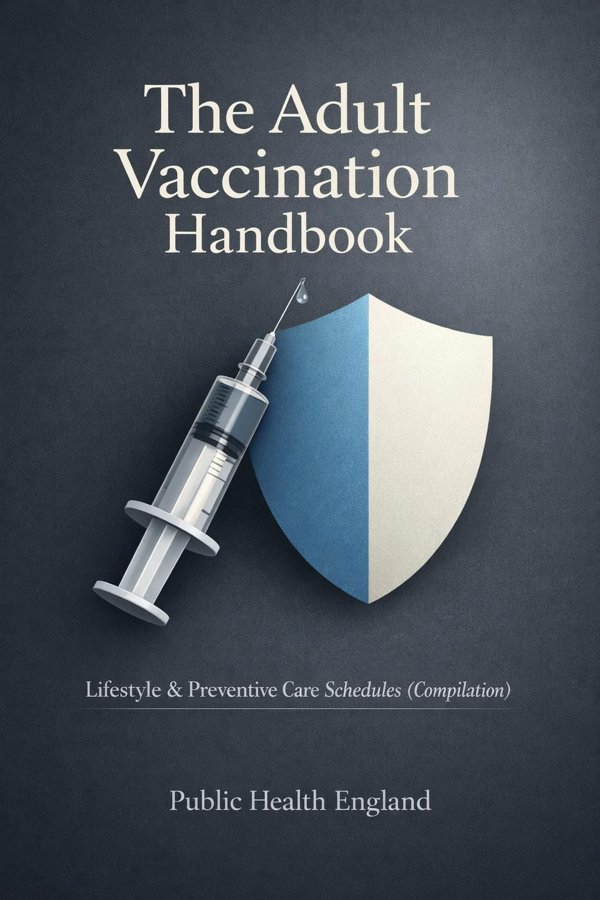
The Adult Vaccination Handbook: Lifestyle & Preventive Care Schedules (Compilation): Summary & Key Insights
 10 min8 chaptersAudio available
Key Takeaways from The Adult Vaccination Handbook: Lifestyle & Preventive Care Schedules (Compilation)
One of the most persistent myths in medicine is that vaccines are mainly for children.
A vaccination program is only as strong as its consistency.
Equality in healthcare does not mean everyone gets the same intervention; it means everyone gets protection matched to their level of need.
Confidence in vaccination does not come from saying vaccines are always simple; it comes from showing that safety is taken seriously at every step.
Preventive care works best when it is not fragmented into separate silos.
What Is The Adult Vaccination Handbook: Lifestyle & Preventive Care Schedules (Compilation) About?
The Adult Vaccination Handbook: Lifestyle & Preventive Care Schedules (Compilation) by Public Health England is a health_med book spanning 5 pages. Adult vaccination is often overshadowed by childhood immunization, yet the need for protection does not end at adolescence. The Adult Vaccination Handbook: Lifestyle & Preventive Care Schedules (Compilation) brings needed attention to this gap by offering a practical, policy-grounded guide to immunization across adult life in the United Kingdom. It explains which vaccines matter, who should receive them, how schedules are determined, and how clinicians can safely respond to special circumstances, contraindications, and public concerns. What makes this handbook especially valuable is its blend of public health strategy and frontline clinical usefulness. It does not treat vaccination as an isolated medical act, but as part of a wider framework of preventive care, risk reduction, ethical practice, and population health planning. The guidance is relevant not only to general practitioners, nurses, pharmacists, and public health teams, but also to anyone trying to understand how modern immunization systems protect communities. Its authority comes from Public Health England, an institution central to national health protection, surveillance, and evidence-based guidance. As a result, the handbook functions both as a reference tool and as a statement of why adult immunization remains one of the most effective and underappreciated tools in preventive medicine.
This FizzRead summary covers all 8 key chapters of The Adult Vaccination Handbook: Lifestyle & Preventive Care Schedules (Compilation) in approximately 10 minutes, distilling the most important ideas, arguments, and takeaways from Public Health England's work. Also available as an audio summary and Key Quotes Podcast.
The Adult Vaccination Handbook: Lifestyle & Preventive Care Schedules (Compilation)
Adult vaccination is often overshadowed by childhood immunization, yet the need for protection does not end at adolescence. The Adult Vaccination Handbook: Lifestyle & Preventive Care Schedules (Compilation) brings needed attention to this gap by offering a practical, policy-grounded guide to immunization across adult life in the United Kingdom. It explains which vaccines matter, who should receive them, how schedules are determined, and how clinicians can safely respond to special circumstances, contraindications, and public concerns.
What makes this handbook especially valuable is its blend of public health strategy and frontline clinical usefulness. It does not treat vaccination as an isolated medical act, but as part of a wider framework of preventive care, risk reduction, ethical practice, and population health planning. The guidance is relevant not only to general practitioners, nurses, pharmacists, and public health teams, but also to anyone trying to understand how modern immunization systems protect communities.
Its authority comes from Public Health England, an institution central to national health protection, surveillance, and evidence-based guidance. As a result, the handbook functions both as a reference tool and as a statement of why adult immunization remains one of the most effective and underappreciated tools in preventive medicine.
Who Should Read The Adult Vaccination Handbook: Lifestyle & Preventive Care Schedules (Compilation)?
This book is perfect for anyone interested in health_med and looking to gain actionable insights in a short read. Whether you're a student, professional, or lifelong learner, the key ideas from The Adult Vaccination Handbook: Lifestyle & Preventive Care Schedules (Compilation) by Public Health England will help you think differently.
- ✓Readers who enjoy health_med and want practical takeaways
- ✓Professionals looking to apply new ideas to their work and life
- ✓Anyone who wants the core insights of The Adult Vaccination Handbook: Lifestyle & Preventive Care Schedules (Compilation) in just 10 minutes
Want the full summary?
Get instant access to this book summary and 100K+ more with Fizz Moment.
Get Free SummaryAvailable on App Store • Free to download
Key Chapters
One of the most persistent myths in medicine is that vaccines are mainly for children. In reality, adulthood brings a new pattern of infectious risk shaped by age, chronic illness, occupation, travel, pregnancy, immune status, and contact with vulnerable people. This handbook begins from a simple but powerful truth: vaccine-preventable disease remains a serious issue across the adult lifespan.
Influenza is a clear example. For healthy younger adults it may be unpleasant, but for older adults, pregnant women, and people with heart, lung, kidney, or metabolic disease, it can trigger hospitalization, severe complications, or death. Pneumococcal infection, similarly, becomes more dangerous with age and frailty. Shingles is not merely a rash but a painful reactivation of latent varicella-zoster virus that can cause prolonged nerve pain and reduced quality of life. Tetanus remains rare largely because immunization works, not because the risk has disappeared. COVID-19 also reinforced how quickly infectious disease can overwhelm health systems and expose existing vulnerabilities.
The handbook emphasizes that adult immunization protects both individuals and the wider public. Healthcare workers reduce transmission risk to patients. Caregivers help shield infants and immunocompromised relatives. Older adults preserve independence by preventing complications that often accelerate decline.
In practice, this means vaccination decisions should be based on current exposure and vulnerability, not outdated assumptions. A middle-aged diabetic patient, a pregnant woman, a care home resident, and a laboratory worker may each need different protections. The adult schedule exists precisely because risk is not uniform.
Actionable takeaway: assess vaccination needs by age, medical condition, lifestyle, and exposure risk rather than assuming previous childhood vaccines provide lifelong, complete protection.
A vaccination program is only as strong as its consistency. Without a clear national schedule, preventive care becomes uneven, opportunistic, and dependent on chance encounters rather than systematic protection. The handbook presents the adult immunization schedule as the backbone of equitable public health practice.
A schedule does several things at once. It defines eligibility, timing, dose intervals, booster requirements, and priority groups. It also helps clinicians translate complex evidence into routine care. Instead of relying on memory or local custom, professionals can follow a standardized framework that reduces errors and improves coverage. That matters because missed opportunities are common in adult medicine. Patients often attend clinics for blood pressure checks, medication reviews, pregnancy care, or chronic disease management, yet leave without having vaccine status reviewed.
In the UK setting, annual influenza vaccination for eligible groups is a key example of schedule-based practice. So are age-related offerings such as shingles vaccination and risk-based recommendations for pneumococcal disease. Catch-up vaccination for incomplete histories is equally important. Adults with uncertain records, migrants, or those who disengaged from care may need structured review rather than passive assumptions.
The handbook also highlights the operational value of schedules. They support reminder systems, audit cycles, stock planning, staff training, and public communication. A receptionist can invite eligible patients, a nurse can deliver according to protocol, and a public health team can monitor uptake across populations.
Most importantly, a schedule turns prevention into routine rather than exception. It normalizes vaccination as part of adult care in the same way cholesterol screening or smoking cessation advice are normalized.
Actionable takeaway: integrate vaccine schedule checks into every routine adult health contact so prevention becomes systematic, not incidental.
Equality in healthcare does not mean everyone gets the same intervention; it means everyone gets protection matched to their level of need. This is why the handbook gives careful attention to special populations and risk-based immunization. Some adults face substantially higher exposure or greater danger from infection, and schedules must adapt accordingly.
People with chronic disease are an obvious priority. A person with asthma, diabetes, chronic kidney disease, liver disease, or cardiovascular disease may experience more severe outcomes from infections that others recover from more easily. Immunocompromised patients, including those receiving chemotherapy, biologic therapies, or post-transplant treatment, may need altered vaccine timing and heightened vigilance. Pregnant women require special consideration because immunization can protect both mother and infant. Healthcare workers need protection not just for themselves but to reduce transmission in clinical settings. Travelers may need vaccines based on destination, duration, and type of travel. Individuals with asplenia or splenic dysfunction need specific protection against encapsulated bacteria.
The handbook’s contribution is its structured approach to these varied groups. It encourages clinicians to ask practical questions: What is this patient’s condition? Is their immune response likely to be reduced? Are live vaccines contraindicated? Is exposure occupational, environmental, or household-based? Could vaccination protect a dependent infant or vulnerable contact?
For example, an adult starting immunosuppressive therapy should ideally have vaccine review before treatment begins. A pregnant woman should be offered recommended seasonal and maternal vaccines at the right time. A care worker should not depend on personal preference alone when patient safety is at stake.
Actionable takeaway: treat vaccine assessment as part of risk stratification, ensuring each adult receives protection tailored to clinical condition, occupation, life stage, and exposure.
Confidence in vaccination does not come from saying vaccines are always simple; it comes from showing that safety is taken seriously at every step. The handbook addresses contraindications, precautions, adverse event management, and informed clinical judgment with the clarity expected of a practical reference.
The first lesson is that true contraindications are fewer than many people assume, but identifying them matters. Severe allergic reaction to a previous dose or vaccine component may prevent further use of a particular vaccine. Live vaccines may be inappropriate for some immunocompromised patients or during pregnancy, depending on the product and circumstances. Temporary illness may justify postponement, but mild minor illness generally does not. This distinction is important because unnecessary delay can leave people exposed, while careless administration can create avoidable risk.
The second lesson concerns expected reactions versus serious adverse events. Soreness, mild fever, or fatigue may be normal and self-limiting. Clinicians should explain this proactively so patients know what to expect and do not mistake ordinary immune response for harm. At the same time, systems must be in place to recognize, document, and report significant adverse events appropriately.
The handbook also underscores procedural safety: obtaining relevant history, checking timing and product, maintaining cold chain standards, documenting administration accurately, and ensuring staff are trained in emergency response such as anaphylaxis management.
Good communication is central to all of this. A patient who understands why a vaccine is recommended, what side effects are common, and when to seek help is more likely to consent confidently and complete the schedule.
Actionable takeaway: combine careful pre-vaccination screening with transparent patient counseling so safety is managed through process, not assumption.
Preventive care works best when it is not fragmented into separate silos. The handbook makes an important conceptual move by linking vaccination to broader lifestyle and preventive health practice. Immunization is not a standalone event; it is part of a wider effort to reduce avoidable illness, maintain independence, and strengthen population resilience.
This broader framing matters because adults rarely think about vaccines in isolation. A person attending a clinic may also be managing smoking cessation, obesity, blood pressure, diabetes, alcohol use, stress, or pregnancy planning. These factors interact. Chronic conditions can increase infection risk. Social deprivation can reduce access to preventive services. Poor health literacy can undermine both vaccine uptake and other self-care behaviors.
By situating vaccination within preventive care, the handbook encourages opportunistic, whole-person practice. A flu jab appointment can become a moment to review medications, discuss respiratory health, and identify care gaps. A travel consultation can open discussion about food safety, malaria prevention, and sexual health. A chronic disease review can include vaccine eligibility checks alongside lifestyle counseling.
The ethical dimension is equally important. Adult vaccination raises questions of autonomy, informed consent, public responsibility, and equitable access. The handbook implies that ethical practice is not coercion, but respectful engagement grounded in evidence and patient dignity. Clinicians must balance individual choice with the duty to prevent harm, especially in settings involving vulnerable groups.
This integrated approach improves efficiency and relevance. Patients are more likely to accept preventive interventions when they are presented as part of a coherent health strategy rather than a disconnected recommendation.
Actionable takeaway: embed vaccine conversations into routine lifestyle, chronic disease, and preventive care reviews so immunization becomes part of holistic adult health management.
A vaccine given but not recorded is, from a systems perspective, almost as problematic as a vaccine never given. The handbook stresses that documentation, recall systems, and program administration are not bureaucratic extras; they are essential to effective adult immunization.
Adult vaccination is especially vulnerable to fragmented records. Unlike childhood immunization, which often follows a tightly organized schedule, adult care is spread across general practice, hospitals, pharmacies, occupational health settings, travel clinics, and community services. Patients may move, change providers, or forget prior doses. Some arrive with incomplete histories, uncertain foreign records, or no documentation at all. Without reliable systems, under-vaccination and unnecessary repeat vaccination both become more likely.
Strong records serve several purposes. They help clinicians confirm what has been administered, identify overdue vaccines, plan boosters, track batch numbers, and respond if a product issue arises. At a population level, documentation supports uptake monitoring, quality improvement, outbreak preparedness, and resource allocation. It also helps identify inequalities: if certain age groups, ethnic communities, or deprived areas have lower coverage, targeted intervention becomes possible.
The handbook’s practical implications are straightforward. Vaccinations should be recorded promptly and accurately, including date, product, batch, route, site, and administrator. Practices should use invitation and recall systems, especially for seasonal campaigns and age-based eligibility. Data sharing between settings should be as seamless as governance allows.
For example, a patient discharged after cancer treatment should not have to restart vaccine planning from memory. Nor should a pharmacist-administered influenza vaccine disappear from the primary care record.
Actionable takeaway: treat vaccine documentation and recall systems as frontline clinical tools that prevent missed doses, duplication, and population-level blind spots.
Facts alone do not guarantee vaccine acceptance. Adults make health decisions through a mix of evidence, emotion, prior experience, cultural belief, social influence, and trust in institutions. The handbook implicitly recognizes that successful immunization depends not only on scientific correctness but also on communication that respects patient concerns without surrendering rigor.
Many hesitant patients are not anti-vaccine in any absolute sense. They may be uncertain about necessity, worried about side effects, confused by changing recommendations, or skeptical because they feel healthy. Others may have encountered misinformation online or had a previous negative healthcare experience. Dismissing these concerns can deepen resistance. The more effective approach is to listen, clarify, and personalize the recommendation.
A good vaccine discussion addresses three questions: Why is this needed now? What are the benefits and risks? What happens if we do nothing? For instance, an older adult considering shingles vaccination may not realize the condition can cause months of nerve pain. A pregnant patient may be more receptive when the conversation highlights infant protection, not just maternal benefit. A healthcare worker may understand vaccination differently when framed as part of professional patient safety.
Communication should be concise, evidence-based, and honest. Overstating certainty can backfire. So can using jargon. The clinician’s goal is not to win an argument but to support informed, confident decision-making.
The handbook’s larger lesson is that trust is cumulative. Clear records, consistent recommendations, respectful dialogue, and visible safety procedures all reinforce confidence in the system.
Actionable takeaway: approach vaccine hesitancy with empathy, plain language, and personalized risk-benefit discussion rather than blunt reassurance or confrontation.
Every adult vaccination encounter is also a small act of public health. The handbook goes beyond one-to-one clinical advice by showing how adult immunization depends on planning, surveillance, prioritization, and coordinated delivery across the health system.
At the population level, vaccination programs must balance evidence, cost-effectiveness, disease burden, operational feasibility, and equity. Decisions about which vaccines to fund or prioritize are not arbitrary. They reflect epidemiological monitoring, outcome data, and assessment of where the greatest preventable harm lies. Seasonal influenza campaigns, for example, require forecasting demand, securing supply, identifying eligible groups, training staff, running public communications, and monitoring uptake in real time.
Outbreaks make the need for public health infrastructure even clearer. Rapid deployment depends on having registries, communication pathways, cold chain logistics, and trusted local delivery points. Similarly, low uptake in a specific group may reveal broader structural issues such as language barriers, transportation limits, digital exclusion, or mistrust rooted in past inequality.
The handbook also points toward interprofessional responsibility. General practice, pharmacy, hospitals, care homes, occupational health teams, and public health agencies all contribute to success. No single provider can achieve high adult coverage alone.
This systems perspective is particularly valuable because it reframes vaccination from a private transaction into a shared civic protection strategy. The goal is not merely to administer doses, but to reduce transmission, avoid preventable pressure on health services, and protect those least able to withstand infection.
Actionable takeaway: think about adult vaccination at both patient and system level, supporting not just individual uptake but equitable program design, outreach, and surveillance.
All Chapters in The Adult Vaccination Handbook: Lifestyle & Preventive Care Schedules (Compilation)
About the Author
Public Health England (PHE) was an executive agency of the UK Department of Health and Social Care, created to protect and improve the nation’s health and reduce health inequalities. It played a central role in infectious disease surveillance, vaccination guidance, screening programs, emergency response, health improvement campaigns, and evidence-based policy support. PHE worked closely with the NHS, local authorities, laboratories, and healthcare professionals to translate public health research into practical national action. Its publications were widely used by clinicians and policymakers because they combined epidemiological evidence with implementation guidance. As the institutional author of this handbook, PHE brings credibility grounded in population health expertise, preventive strategy, and frontline public health operations across England.
Get This Summary in Your Preferred Format
Read or listen to the The Adult Vaccination Handbook: Lifestyle & Preventive Care Schedules (Compilation) summary by Public Health England anytime, anywhere. FizzRead offers multiple formats so you can learn on your terms — all free.
Available formats: App · Audio · PDF · EPUB — All included free with FizzRead
Download The Adult Vaccination Handbook: Lifestyle & Preventive Care Schedules (Compilation) PDF and EPUB Summary
Key Quotes from The Adult Vaccination Handbook: Lifestyle & Preventive Care Schedules (Compilation)
“One of the most persistent myths in medicine is that vaccines are mainly for children.”
“A vaccination program is only as strong as its consistency.”
“Equality in healthcare does not mean everyone gets the same intervention; it means everyone gets protection matched to their level of need.”
“Confidence in vaccination does not come from saying vaccines are always simple; it comes from showing that safety is taken seriously at every step.”
“Preventive care works best when it is not fragmented into separate silos.”
Frequently Asked Questions about The Adult Vaccination Handbook: Lifestyle & Preventive Care Schedules (Compilation)
The Adult Vaccination Handbook: Lifestyle & Preventive Care Schedules (Compilation) by Public Health England is a health_med book that explores key ideas across 8 chapters. Adult vaccination is often overshadowed by childhood immunization, yet the need for protection does not end at adolescence. The Adult Vaccination Handbook: Lifestyle & Preventive Care Schedules (Compilation) brings needed attention to this gap by offering a practical, policy-grounded guide to immunization across adult life in the United Kingdom. It explains which vaccines matter, who should receive them, how schedules are determined, and how clinicians can safely respond to special circumstances, contraindications, and public concerns. What makes this handbook especially valuable is its blend of public health strategy and frontline clinical usefulness. It does not treat vaccination as an isolated medical act, but as part of a wider framework of preventive care, risk reduction, ethical practice, and population health planning. The guidance is relevant not only to general practitioners, nurses, pharmacists, and public health teams, but also to anyone trying to understand how modern immunization systems protect communities. Its authority comes from Public Health England, an institution central to national health protection, surveillance, and evidence-based guidance. As a result, the handbook functions both as a reference tool and as a statement of why adult immunization remains one of the most effective and underappreciated tools in preventive medicine.
You Might Also Like

On Immunity
Eula Biss
10 min
The Three-Body Problem
Liu Cixin
10 min
Community Health Volunteer Toolkit: Training and Practical Activities
World Health Organization
10 min
Healing Back Pain: The Mind-Body Connection
John E. Sarno
10 min
Health Literacy for All: Practical Guides to Communicate Health Information (Compilations)
World Health Organization
10 min
The Complete Guide to Sports Supplements: An Evidence-Based Review
Anita Bean
10 minBrowse by Category
Ready to read The Adult Vaccination Handbook: Lifestyle & Preventive Care Schedules (Compilation)?
Get the full summary and 100K+ more books with Fizz Moment.