
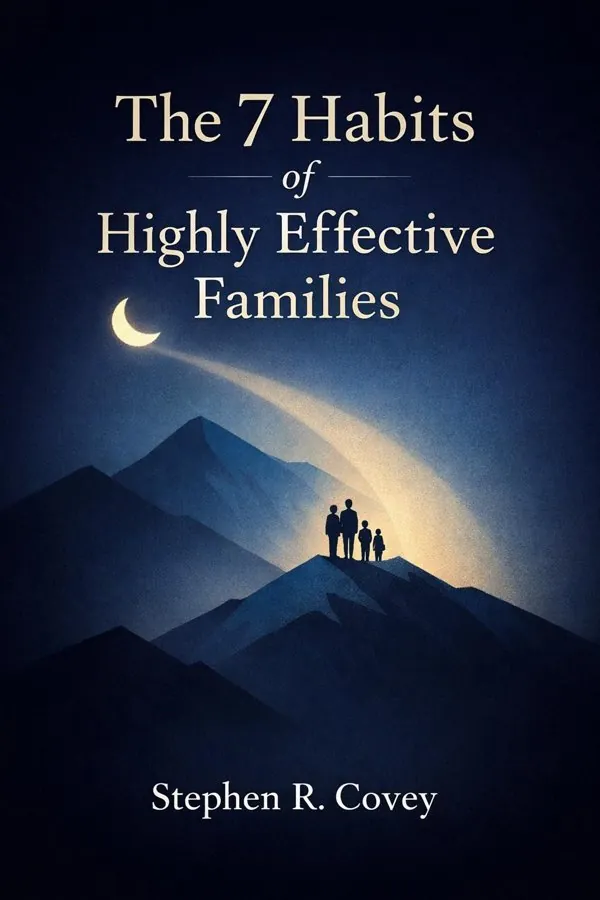
The 7 Habits of Highly Effective Families: Summary & Key Insights
 10 min11 chaptersAudio available
What Is The 7 Habits of Highly Effective Families About?
The 7 Habits of Highly Effective Families by Stephen R. Covey is a habits book spanning 11 pages. In this book, Stephen R. Covey applies the timeless principles of his bestselling 'The 7 Habits of Highly Effective People' to the family setting. He offers practical guidance on building strong, loving, and effective family relationships through trust, communication, and shared values. Covey emphasizes proactive parenting, mutual respect, and the creation of a family mission statement to foster unity and resilience.
This FizzRead summary covers all 11 key chapters of The 7 Habits of Highly Effective Families in approximately 10 minutes, distilling the most important ideas, arguments, and takeaways from Stephen R. Covey's work. Also available as an audio summary and Key Quotes Podcast.
The 7 Habits of Highly Effective Families
In this book, Stephen R. Covey applies the timeless principles of his bestselling 'The 7 Habits of Highly Effective People' to the family setting. He offers practical guidance on building strong, loving, and effective family relationships through trust, communication, and shared values. Covey emphasizes proactive parenting, mutual respect, and the creation of a family mission statement to foster unity and resilience.
Who Should Read The 7 Habits of Highly Effective Families?
This book is perfect for anyone interested in habits and looking to gain actionable insights in a short read. Whether you're a student, professional, or lifelong learner, the key ideas from The 7 Habits of Highly Effective Families by Stephen R. Covey will help you think differently.
- ✓Readers who enjoy habits and want practical takeaways
- ✓Professionals looking to apply new ideas to their work and life
- ✓Anyone who wants the core insights of The 7 Habits of Highly Effective Families in just 10 minutes
Want the full summary?
Get instant access to this book summary and 100K+ more with Fizz Moment.
Get Free SummaryAvailable on App Store • Free to download
Key Chapters
Being proactive in family life means realizing that we are not victims of our circumstances or heritage. Too often families live trapped in cycles of blame—parents blame the culture, children blame parents, and everyone feels at the mercy of something outside themselves. But every family member, no matter how young, can make choices that build or weaken trust. To be proactive is to recognize that within the family environment, our power lies between stimulus and response. We can choose to listen rather than shout, to pause rather than react, to forgive rather than hold grudges. This is the foundation habit—the one that gives every other habit life.
When your family faces tension, a proactive mindset asks: What can I do to contribute to a better outcome? For instance, if a teenager slams the door in frustration, a parent who reacts in anger escalates the conflict. A proactive parent instead centers on principles: patience, empathy, and love. That doesn’t mean passivity—it means deliberate response. When families embrace this habit, children learn early that their actions matter. They see responsibility modeled, not as control, but as empowerment. And gradually, the family begins to shift from a circle of reactivity to a circle of initiative.
Every effective family lives by a vision—whether consciously or unconsciously. Many families drift, hoping that things will somehow work out. But hope is not a strategy. To begin with the end in mind means defining together what matters most. In corporate settings, organizations craft mission statements. Families should do the same, not as a bureaucratic exercise, but as a heartfelt conversation. What kind of family do we want to be? What values do we stand for? What relationships are sacred? Crafting your family mission can be a transformative experience. It gives every decision—how we spend time, how we resolve conflict—a compass.
I’ve sat with families who gathered around a living room table, sharing stories of what they admire about each other, writing words like trust, laughter, learning, and faith. That process itself deepens unity. When children participate, they gain ownership of family values. And as life changes—jobs shift, children grow—the mission becomes a constant reminder of the bigger picture. This habit invites you to lead your family intentionally, to design life with vision rather than drift with necessity.
+ 9 more chapters — available in the FizzRead app
All Chapters in The 7 Habits of Highly Effective Families
About the Author
Stephen R. Covey (1932–2012) was an American educator, author, businessman, and keynote speaker. He was best known for his book 'The 7 Habits of Highly Effective People,' which became a cornerstone of modern personal and organizational effectiveness. Covey was a co-founder of FranklinCovey Co. and a professor at the Jon M. Huntsman School of Business at Utah State University.
Get This Summary in Your Preferred Format
Read or listen to the The 7 Habits of Highly Effective Families summary by Stephen R. Covey anytime, anywhere. FizzRead offers multiple formats so you can learn on your terms — all free.
Available formats: App · Audio · PDF · EPUB — All included free with FizzRead
Download The 7 Habits of Highly Effective Families PDF and EPUB Summary
Key Quotes from The 7 Habits of Highly Effective Families
“Being proactive in family life means realizing that we are not victims of our circumstances or heritage.”
“Every effective family lives by a vision—whether consciously or unconsciously.”
Frequently Asked Questions about The 7 Habits of Highly Effective Families
The 7 Habits of Highly Effective Families by Stephen R. Covey is a habits book that explores key ideas across 11 chapters. In this book, Stephen R. Covey applies the timeless principles of his bestselling 'The 7 Habits of Highly Effective People' to the family setting. He offers practical guidance on building strong, loving, and effective family relationships through trust, communication, and shared values. Covey emphasizes proactive parenting, mutual respect, and the creation of a family mission statement to foster unity and resilience.
More by Stephen R. Covey
The 7 Habits of Highly Effective People
Stephen R. Covey
10 min
Primary Greatness: The 12 Levers of Success
Stephen R. Covey
10 min
Live Life in Crescendo: Your Most Important Work Is Always Ahead of You
Stephen R. Covey, Cynthia Covey Haller
10 min
The 8th Habit: From Effectiveness to Greatness
Stephen R. Covey
10 minYou Might Also Like

Atomic Habits: An Easy & Proven Way to Build Good Habits and Break Bad Ones
James Clear
10 min
A Complaint Free World: How to Stop Complaining and Start Enjoying the Life You Always Wanted
Will Bowen
10 minBadass Habits: Cultivate the Awareness, Boundaries, and Daily Upgrades You Need to Make Them Stick
Jen Sincero
10 min
Better Than Before: Mastering The Habits Of Our Everyday Lives
Gretchen Rubin
10 min
Change Anything: The New Science of Personal Success
Kerry Patterson
10 min
Discipline Equals Freedom: Field Manual
Jocko Willink
10 minBrowse by Category
Ready to read The 7 Habits of Highly Effective Families?
Get the full summary and 100K+ more books with Fizz Moment.