
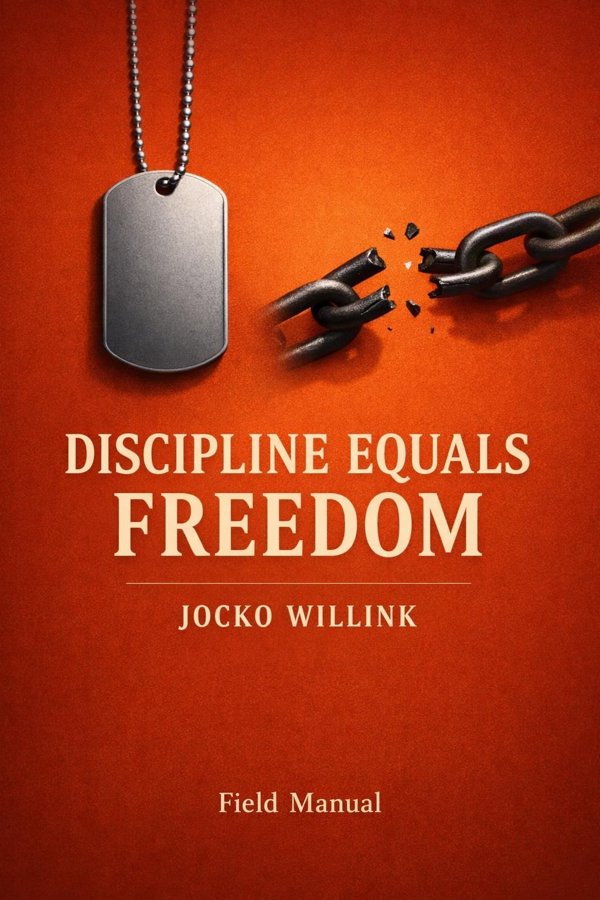
Discipline Equals Freedom: Field Manual: Summary & Key Insights
 10 min9 chaptersAudio available
Key Takeaways from Discipline Equals Freedom: Field Manual
Every external battle is lost or won internally first.
The body is not separate from character; it reveals it.
The first decisions of the day often determine the quality of the rest of it.
Excuses are attractive because they feel intelligent.
Leadership begins long before titles, teams, or authority.
What Is Discipline Equals Freedom: Field Manual About?
Discipline Equals Freedom: Field Manual by Jocko Willink is a habits book spanning 9 pages. Discipline Equals Freedom: Field Manual is Jocko Willink’s blunt, practical guide to self-mastery. Part manifesto, part training handbook, and part wake-up call, the book argues that the freedom most people want—control over time, health, emotions, money, and purpose—does not come from comfort or spontaneity. It comes from discipline. Willink draws on lessons forged during two decades as a U.S. Navy SEAL officer, including combat leadership in Iraq, to show that success is built through habits, routines, accountability, and the willingness to do hard things consistently. The book covers mental toughness, physical training, leadership, resilience, and execution, but its core message is simple: stop negotiating with weakness and start acting with intention. What makes this book matter is its refusal to sugarcoat reality. Willink does not offer motivation as a feeling; he presents discipline as a system. His authority comes not from abstract theory but from high-stakes experience, making this field manual especially compelling for readers who want straightforward principles they can apply immediately in everyday life.
This FizzRead summary covers all 9 key chapters of Discipline Equals Freedom: Field Manual in approximately 10 minutes, distilling the most important ideas, arguments, and takeaways from Jocko Willink's work. Also available as an audio summary and Key Quotes Podcast.
Discipline Equals Freedom: Field Manual
Discipline Equals Freedom: Field Manual is Jocko Willink’s blunt, practical guide to self-mastery. Part manifesto, part training handbook, and part wake-up call, the book argues that the freedom most people want—control over time, health, emotions, money, and purpose—does not come from comfort or spontaneity. It comes from discipline. Willink draws on lessons forged during two decades as a U.S. Navy SEAL officer, including combat leadership in Iraq, to show that success is built through habits, routines, accountability, and the willingness to do hard things consistently. The book covers mental toughness, physical training, leadership, resilience, and execution, but its core message is simple: stop negotiating with weakness and start acting with intention. What makes this book matter is its refusal to sugarcoat reality. Willink does not offer motivation as a feeling; he presents discipline as a system. His authority comes not from abstract theory but from high-stakes experience, making this field manual especially compelling for readers who want straightforward principles they can apply immediately in everyday life.
Who Should Read Discipline Equals Freedom: Field Manual?
This book is perfect for anyone interested in habits and looking to gain actionable insights in a short read. Whether you're a student, professional, or lifelong learner, the key ideas from Discipline Equals Freedom: Field Manual by Jocko Willink will help you think differently.
- ✓Readers who enjoy habits and want practical takeaways
- ✓Professionals looking to apply new ideas to their work and life
- ✓Anyone who wants the core insights of Discipline Equals Freedom: Field Manual in just 10 minutes
Want the full summary?
Get instant access to this book summary and 100K+ more with Fizz Moment.
Get Free SummaryAvailable on App Store • Free to download
Key Chapters
Every external battle is lost or won internally first. That is one of the central truths in Discipline Equals Freedom: Field Manual. Jocko Willink argues that mental discipline sits underneath every other form of achievement. Before you improve your body, your work, your finances, or your relationships, you must learn to command your thoughts. This does not mean pretending fear, anger, frustration, or laziness do not exist. It means recognizing them without letting them take over your decisions.
Willink’s approach is direct: your mind will constantly offer comfort, excuses, delay, and self-pity. It will tell you to sleep in, skip the workout, avoid the difficult conversation, or blame circumstances. Mental discipline is the ability to hear that internal voice and choose action anyway. In this sense, discipline is not a mood. It is a refusal to be ruled by impulse.
A practical example is the moment you wake up and do not want to get out of bed. The mind instantly generates arguments for staying comfortable. If you obey those arguments, you strengthen weakness. If you get up despite them, you strengthen control. The same principle applies at work when a hard task feels intimidating. Instead of waiting to “feel ready,” disciplined people begin.
Willink’s larger point is that the mind must be trained like a muscle. You do that by making small, difficult choices on purpose: finishing what you start, controlling emotional reactions, and taking responsibility instead of complaining. Over time, these decisions reshape identity.
Actionable takeaway: identify one recurring excuse your mind uses and decide in advance what disciplined action you will take the next time it appears.
The body is not separate from character; it reveals it. Willink treats physical discipline as a foundation for confidence, resilience, and self-respect. Training the body is not about aesthetics alone. It is about proving to yourself, daily, that you can endure discomfort, follow a standard, and push beyond convenience. A disciplined body supports a disciplined mind.
In the book, physical training is presented almost as a moral practice. Getting up early, exercising hard, choosing useful nutrition, and refusing laziness all create momentum that spreads into other areas of life. If you regularly surrender to physical weakness, that pattern often appears elsewhere too. But if you consistently train, stretch your limits, and maintain your health, you cultivate grit.
This is why Willink emphasizes simple, repeatable standards. You do not need a perfect gym, a complicated program, or elite athletic talent to begin. Push-ups, pull-ups, running, lifting, walking, mobility work, and clean eating are enough to start building discipline. The point is consistency, not novelty. The body improves because it is challenged repeatedly.
Physical discipline also has strategic benefits. Better fitness improves energy, mood, focus, and stress tolerance. A person who trains regularly is often better equipped to handle long workdays, setbacks, and pressure. In that sense, fitness is not vanity; it is operational readiness for life.
Willink’s message is especially powerful because it removes the emotional drama from training. You work out whether you feel motivated or not. You eat with intention whether temptation is present or not. You do what supports your mission.
Actionable takeaway: commit to a non-negotiable physical routine this week, even if it is only 20 minutes a day, and treat it as a test of character rather than a fitness chore.
The first decisions of the day often determine the quality of the rest of it. Willink famously champions early rising not because waking up early is magically virtuous, but because it creates space, control, and momentum. Mornings are quieter, distractions are fewer, and excuses are easier to defeat before the world starts making demands. Early rising becomes a symbol of ownership.
The deeper lesson, however, is not simply about the clock. It is about consistency. A disciplined life is built on repeated routines that reduce dependence on mood. When you wake up at a set time, train, prepare, review priorities, and begin the day with intention, you are no longer drifting into chaos. You are directing it.
For example, someone who wakes up early can exercise before work, plan the day, and handle an important task before emails and interruptions consume attention. Compare that to waking late, rushing, skipping preparation, and reacting all day. The difference is not just productivity. It is psychological control.
Habit consistency matters because every repeated action becomes part of identity. If you repeatedly get up when you said you would, you become someone who keeps commitments. If you repeatedly delay, you become someone who negotiates with weakness. Small patterns are never just small patterns; they are training.
Willink’s style rejects perfectionism. If a morning goes wrong, correct quickly and return to the routine. Discipline is not destroyed by one imperfect day. It is destroyed by allowing one mistake to become a new standard.
Actionable takeaway: create a fixed morning sequence for the next seven days—wake time, movement, planning, and first priority task—and follow it without debate.
Excuses are attractive because they feel intelligent. They explain delay, justify comfort, and protect ego. Willink treats them as poison. In his view, procrastination is rarely a time-management problem alone; it is usually a discipline problem. People postpone action not because they lack awareness, but because they do not want the discomfort attached to the task.
The book pushes readers to see excuses for what they are: permission slips for mediocrity. It is easy to say conditions are not right, energy is low, timing is poor, or more preparation is needed. Sometimes those reasons are valid. Often they are not. More often, they are camouflage for fear, laziness, or uncertainty.
Willink’s antidote is simple and severe: do the task. Start now. Break inertia with movement. If you need to write, write one paragraph. If you need to train, put on your shoes. If you need to fix a problem at work, make the first call. Action clarifies more than overthinking ever will.
A common example is delaying a difficult conversation with a colleague or partner. The mind predicts conflict, awkwardness, or failure, so the conversation gets postponed. But postponement usually worsens the issue. Discipline means addressing reality directly instead of waiting for emotional comfort.
This approach builds self-trust. Every time you act despite resistance, you teach yourself that discomfort is survivable. Every time you procrastinate, you teach yourself the opposite. That is why Willink is so uncompromising: the stakes are larger than one task. Your habits shape your standard.
Actionable takeaway: choose the one task you have been avoiding most and spend 15 uninterrupted minutes on it today before doing anything easier.
Leadership begins long before titles, teams, or authority. Willink argues that discipline is the first credential of leadership because people follow what they see more than what they hear. If you cannot govern your time, emotions, effort, and standards, your influence will always be limited. Self-leadership comes first.
This principle is especially important because many people imagine leadership as communication, charisma, or strategy. Willink does not deny those matter, but he insists they rest on a more basic truth: example. The leader who arrives prepared, trains hard, remains calm under pressure, tells the truth, and does what needs to be done creates trust. The leader who talks about standards while living carelessly destroys credibility.
In practical terms, this means disciplined leadership shows up in everyday behavior. A manager who takes responsibility instead of blaming subordinates sets a powerful tone. A parent who models consistency, patience, and follow-through teaches more than lectures ever could. A team member who is reliable without needing supervision often becomes influential even without formal rank.
Willink’s military background sharpens this point. In high-pressure environments, people do not want a leader who panics, complains, or cuts corners. They want someone steady. Discipline creates that steadiness. It allows a leader to prioritize correctly, control emotion, and execute under stress.
The lesson also works in reverse: if you want better leadership around you, become more disciplined yourself. Leadership is not only top-down. Standards spread through culture, and culture is shaped by behavior.
Actionable takeaway: pick one area where others rely on you—home, work, or community—and raise your visible standard this week through preparation, punctuality, and personal accountability.
Stress is not merely an obstacle; it is a test of structure. Willink presents fear, pressure, fatigue, and adversity as unavoidable parts of life. The real question is not whether hardship will come, but whether you will meet it prepared. Resilience is not built in the middle of crisis. It is built beforehand through disciplined habits that make you harder to break.
One of the strongest ideas in the book is that suffering can be useful if approached correctly. Hard workouts, early mornings, difficult responsibilities, and uncomfortable truths all train your capacity to endure. They create familiarity with discomfort, and familiarity reduces panic. A person who voluntarily does hard things is less likely to collapse when involuntary hardship arrives.
Consider someone facing a job loss, a health setback, or a major personal disappointment. The event is painful no matter what. But the disciplined person often recovers faster because they have built routines: exercise, planning, emotional control, financial caution, and purposeful action. These habits do not eliminate pain, but they provide structure in chaos.
Willink also reframes fear. Fear is not a sign to retreat automatically. Sometimes it is simply information. You acknowledge it, prepare, and move. Courage, in this framework, is disciplined action in the presence of fear, not the absence of fear.
This mindset prevents victimhood. Instead of asking, “Why is this happening to me?” the disciplined person asks, “What must I do now?” That shift restores agency immediately.
Actionable takeaway: when facing a stressful situation, write down the facts, the worst realistic outcome, and the next three actions you can control, then execute the first one immediately.
The title of the book sounds paradoxical until you live it. Most people associate freedom with having no rules, no obligations, and no restrictions. Willink argues the opposite: a lack of discipline often produces chaos, weakness, debt, regret, and dependence. Real freedom comes from structure. Discipline creates options.
Think about money. A person who spends impulsively may feel free in the moment, but eventually becomes constrained by debt and stress. A person who budgets, saves, and plans may feel restricted at first, yet gains long-term freedom. The same applies to health, time, relationships, and work. Undisciplined choices create hidden chains. Disciplined choices create capacity.
This is why routines, standards, and boundaries are so important in Willink’s philosophy. They are not punishments. They are tools that protect what matters. A workout schedule protects health. A calendar protects priorities. A sleep routine protects energy. Honest communication protects trust. In each case, structure enables a more expansive life.
The idea also explains why comfort can be dangerous. Comfort seduces people into patterns that feel good now but reduce freedom later. Discipline often feels uncomfortable now but expands freedom later. The timeline matters.
Willink’s contribution is to make this principle visceral rather than abstract. He shows that discipline is not a denial of life; it is the method by which you gain command over it. The disciplined person can respond rather than react because they have built stability beneath themselves.
Actionable takeaway: choose one area where you feel trapped—time, money, health, or attention—and install one clear rule today that reduces chaos and increases control.
Ambition without execution is just noise. Willink emphasizes that discipline must translate into action through clear priorities and decisive follow-through. Many people fail not because they lack goals, but because they chase too many things at once, confuse activity with progress, or avoid committing to the most important task. Discipline cuts through that fog.
A central tactical lesson in the book is to identify what matters most and focus on it first. This requires honesty. Not every task is equal. Not every opportunity deserves attention. Not every urgent request deserves immediate response. The disciplined person learns to sort signal from distraction and align effort with mission.
In practical life, that might mean finishing the project that drives real business value before checking messages all morning. It might mean addressing a failing relationship before adding more commitments. It might mean choosing debt repayment over impulse spending. Prioritization is strategic courage.
Execution then depends on simplicity. Break large goals into direct actions. Decide the next step. Do it. Reassess. Continue. Willink’s military mindset favors plans, but not overcomplicated ones. A perfect plan is useless if it delays movement. A solid plan executed aggressively usually beats endless analysis.
This is especially relevant in modern life, where distraction is constant. Without disciplined prioritization, a person can be busy all day and accomplish almost nothing meaningful. The book insists that freedom and success require disciplined attention.
Actionable takeaway: every evening, write down tomorrow’s top three priorities in order, and begin the next day with the first one before opening email, social media, or low-value tasks.
Transformation is usually less dramatic than people hope and more demanding than they expect. Willink’s field manual rejects the fantasy of sudden reinvention. Instead, it argues for continuous improvement through sustained discipline over time. Small gains, repeated consistently, become major change.
This matters because many readers begin with enthusiasm but fade when results are not immediate. Willink redirects attention from outcomes to standards. You may not control how quickly progress appears, but you do control whether you train today, whether you keep your word today, whether you eat well today, and whether you learn from mistakes today. Long-term progress is built from these repeated choices.
The power of this mindset is that it removes dependence on dramatic motivation. Some days will feel strong and focused. Others will feel heavy and uninspired. Discipline bridges that gap. You continue anyway. Over months and years, the person who continues steadily almost always surpasses the person who relies on intensity alone.
Continuous improvement also requires humility. Discipline is not proof that you are finished; it is proof that you are willing to keep refining. You assess weaknesses honestly, make corrections, and return to the work. In this way, discipline becomes a lifelong operating system rather than a temporary challenge.
A useful example is someone trying to rebuild health. One perfect week will not change much. But walking daily, training four times a week, improving nutrition, sleeping better, and repeating those choices for a year can completely alter energy, weight, confidence, and identity.
Actionable takeaway: choose one metric that reflects steady improvement—workouts completed, pages written, dollars saved, or hours slept—and track it daily for the next 30 days without breaking the chain.
All Chapters in Discipline Equals Freedom: Field Manual
About the Author
Jocko Willink is a retired U.S. Navy SEAL officer, leadership expert, podcaster, and bestselling author. He spent roughly twenty years in the SEAL Teams, including service as the commander of Task Unit Bruiser during the Iraq War, where he led combat operations in Ramadi. His military experience shaped his philosophy of discipline, responsibility, and decisive leadership. After retiring from the Navy, he co-founded Echelon Front, a leadership consulting firm that helps businesses and organizations apply battlefield-tested principles to management and culture. Willink gained a wide audience through books such as Extreme Ownership, Discipline Equals Freedom, and through The Jocko Podcast. He is known for his blunt communication style and his emphasis on accountability, resilience, physical fitness, and consistent action.
Get This Summary in Your Preferred Format
Read or listen to the Discipline Equals Freedom: Field Manual summary by Jocko Willink anytime, anywhere. FizzRead offers multiple formats so you can learn on your terms — all free.
Available formats: App · Audio · PDF · EPUB — All included free with FizzRead
Download Discipline Equals Freedom: Field Manual PDF and EPUB Summary
Key Quotes from Discipline Equals Freedom: Field Manual
“Every external battle is lost or won internally first.”
“The body is not separate from character; it reveals it.”
“The first decisions of the day often determine the quality of the rest of it.”
“Excuses are attractive because they feel intelligent.”
“Leadership begins long before titles, teams, or authority.”
Frequently Asked Questions about Discipline Equals Freedom: Field Manual
Discipline Equals Freedom: Field Manual by Jocko Willink is a habits book that explores key ideas across 9 chapters. Discipline Equals Freedom: Field Manual is Jocko Willink’s blunt, practical guide to self-mastery. Part manifesto, part training handbook, and part wake-up call, the book argues that the freedom most people want—control over time, health, emotions, money, and purpose—does not come from comfort or spontaneity. It comes from discipline. Willink draws on lessons forged during two decades as a U.S. Navy SEAL officer, including combat leadership in Iraq, to show that success is built through habits, routines, accountability, and the willingness to do hard things consistently. The book covers mental toughness, physical training, leadership, resilience, and execution, but its core message is simple: stop negotiating with weakness and start acting with intention. What makes this book matter is its refusal to sugarcoat reality. Willink does not offer motivation as a feeling; he presents discipline as a system. His authority comes not from abstract theory but from high-stakes experience, making this field manual especially compelling for readers who want straightforward principles they can apply immediately in everyday life.
More by Jocko Willink

Extreme Ownership
Jocko Willink
10 min
Discipline Equals Freedom
Jocko Willink
10 min
The Dichotomy of Leadership: Balancing the Challenges of Extreme Ownership to Lead and Win
Jocko Willink, Leif Babin
10 min
Leadership Strategy and Tactics: Field Manual
Jocko Willink
10 minYou Might Also Like

Atomic Habits: An Easy & Proven Way to Build Good Habits and Break Bad Ones
James Clear
10 min
A Complaint Free World: How to Stop Complaining and Start Enjoying the Life You Always Wanted
Will Bowen
10 minBadass Habits: Cultivate the Awareness, Boundaries, and Daily Upgrades You Need to Make Them Stick
Jen Sincero
10 min
Better Than Before: Mastering The Habits Of Our Everyday Lives
Gretchen Rubin
10 min
Change Anything: The New Science of Personal Success
Kerry Patterson
10 min
Dopamine Detox: A Short Guide to Remove Distractions and Get Your Brain to Do Hard Things
Thibaut Meurisse
10 minBrowse by Category
Ready to read Discipline Equals Freedom: Field Manual?
Get the full summary and 100K+ more books with Fizz Moment.