
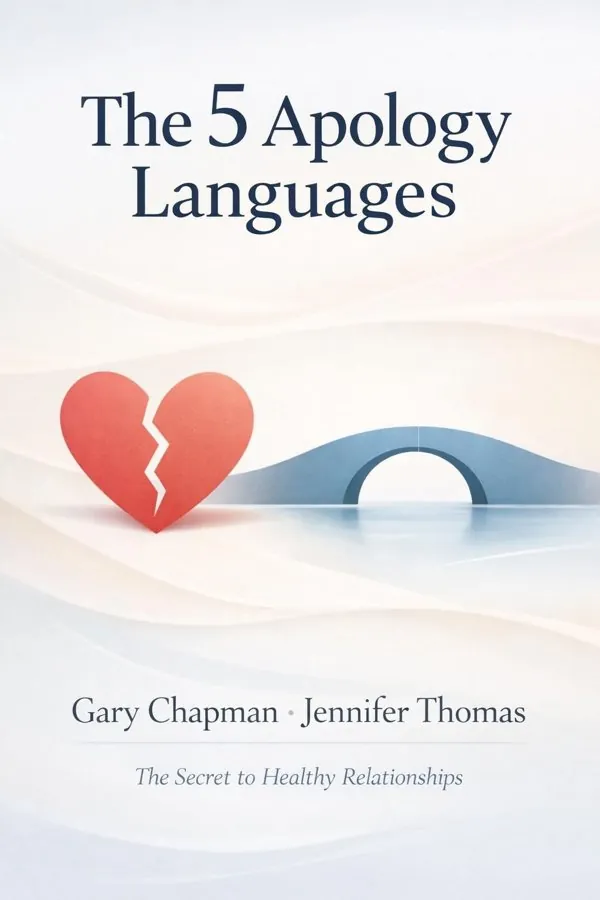
The 5 Apology Languages: The Secret to Healthy Relationships: Summary & Key Insights
by Gary Chapman, Jennifer Thomas
 10 min11 chaptersAudio available
What Is The 5 Apology Languages: The Secret to Healthy Relationships About?
The 5 Apology Languages: The Secret to Healthy Relationships by Gary Chapman, Jennifer Thomas is a relationships book spanning 11 pages. In this book, relationship expert Gary Chapman and psychologist Jennifer Thomas explore how people express and receive apologies differently. They identify five distinct 'apology languages'—expressing regret, accepting responsibility, making restitution, genuinely repenting, and requesting forgiveness—and show how understanding these can help repair and strengthen relationships. The book provides practical guidance for couples, families, and colleagues to communicate remorse and forgiveness more effectively.
This FizzRead summary covers all 11 key chapters of The 5 Apology Languages: The Secret to Healthy Relationships in approximately 10 minutes, distilling the most important ideas, arguments, and takeaways from Gary Chapman, Jennifer Thomas's work. Also available as an audio summary and Key Quotes Podcast.
The 5 Apology Languages: The Secret to Healthy Relationships
In this book, relationship expert Gary Chapman and psychologist Jennifer Thomas explore how people express and receive apologies differently. They identify five distinct 'apology languages'—expressing regret, accepting responsibility, making restitution, genuinely repenting, and requesting forgiveness—and show how understanding these can help repair and strengthen relationships. The book provides practical guidance for couples, families, and colleagues to communicate remorse and forgiveness more effectively.
Who Should Read The 5 Apology Languages: The Secret to Healthy Relationships?
This book is perfect for anyone interested in relationships and looking to gain actionable insights in a short read. Whether you're a student, professional, or lifelong learner, the key ideas from The 5 Apology Languages: The Secret to Healthy Relationships by Gary Chapman, Jennifer Thomas will help you think differently.
- ✓Readers who enjoy relationships and want practical takeaways
- ✓Professionals looking to apply new ideas to their work and life
- ✓Anyone who wants the core insights of The 5 Apology Languages: The Secret to Healthy Relationships in just 10 minutes
Want the full summary?
Get instant access to this book summary and 100K+ more with Fizz Moment.
Get Free SummaryAvailable on App Store • Free to download
Key Chapters
When we first began to explore the psychology of apologies, we noticed something fascinating: two people could experience the same apology in completely opposite ways. One would feel deeply moved, while the other remained untouched, still holding on to pain. This discrepancy wasn’t about sincerity—it was about communication style. Every individual has an internal 'language of apology,' a particular way they interpret expressions of remorse. These differences are subtle but powerful.
Our research revealed five distinct apology languages: expressing regret, accepting responsibility, making restitution, genuinely repenting, and requesting forgiveness. Much like the love languages framework, understanding these five forms allows us to connect more meaningfully with the emotional needs of others. If your spouse values accepting responsibility, vague words of regret won’t ring true. If your colleague values restitution, verbal apologies without action may seem dismissive. Recognizing these languages helps remove the barriers that keep relationships stuck in cycles of misunderstanding.
But more than theory, this concept restores balance to human communication. Every apology language represents a dimension of humility and empathy—an acknowledgment that relationships thrive when we speak to others in ways they can truly hear. Through this framework, we learn that saying sorry is not about self-defense or pacification; it is about showing our commitment to healing together.
Expressing regret is where many apologies begin. It is the emotional acknowledgement that we have caused pain. In this language, words matter immensely. People who speak this apology language value hearing clear, sincere expressions of sorrow—phrases that communicate empathy and recognition of suffering. Simply saying you 'didn’t mean to' doesn’t convey regret. What matters is that the hurt person feels understood and respected.
I’ve seen countless reconciliations hinge on this single principle: when you express regret, speak directly to the emotional wound rather than the facts of the offense. For example, telling someone, 'I’m sorry that my words embarrassed you; I can see how that must have hurt,' allows them to feel seen. The power lies in emotional validation. It tells them, 'Your pain matters to me.'
This form of apology is deeply human. It doesn’t justify or explain—it empathizes. When practiced sincerely, expressing regret opens the door to forgiveness and lowers defenses. It’s the kind of apology that gently pulls two hearts back toward understanding.
+ 9 more chapters — available in the FizzRead app
All Chapters in The 5 Apology Languages: The Secret to Healthy Relationships
About the Authors
Gary Chapman is a counselor, pastor, and author best known for his 'The 5 Love Languages' series, which has sold millions of copies worldwide. Jennifer Thomas is a psychologist, speaker, and author specializing in relationship and communication issues. Together, they combine decades of experience in counseling and psychology to help people build healthier relationships through better understanding of emotional communication.
Get This Summary in Your Preferred Format
Read or listen to the The 5 Apology Languages: The Secret to Healthy Relationships summary by Gary Chapman, Jennifer Thomas anytime, anywhere. FizzRead offers multiple formats so you can learn on your terms — all free.
Available formats: App · Audio · PDF · EPUB — All included free with FizzRead
Download The 5 Apology Languages: The Secret to Healthy Relationships PDF and EPUB Summary
Key Quotes from The 5 Apology Languages: The Secret to Healthy Relationships
“When we first began to explore the psychology of apologies, we noticed something fascinating: two people could experience the same apology in completely opposite ways.”
“Expressing regret is where many apologies begin.”
Frequently Asked Questions about The 5 Apology Languages: The Secret to Healthy Relationships
The 5 Apology Languages: The Secret to Healthy Relationships by Gary Chapman, Jennifer Thomas is a relationships book that explores key ideas across 11 chapters. In this book, relationship expert Gary Chapman and psychologist Jennifer Thomas explore how people express and receive apologies differently. They identify five distinct 'apology languages'—expressing regret, accepting responsibility, making restitution, genuinely repenting, and requesting forgiveness—and show how understanding these can help repair and strengthen relationships. The book provides practical guidance for couples, families, and colleagues to communicate remorse and forgiveness more effectively.
You Might Also Like

The 5 Love Languages
Gary Chapman
10 min
Men Are from Mars, Women Are from Venus
John Gray
10 min
She Comes First
Ian Kerner
10 min
No More Mr Nice Guy
Robert Glover
10 min
Hold Me Tight
Sue Johnson
10 min
Mating in Captivity
Esther Perel
10 minBrowse by Category
Ready to read The 5 Apology Languages: The Secret to Healthy Relationships?
Get the full summary and 100K+ more books with Fizz Moment.