
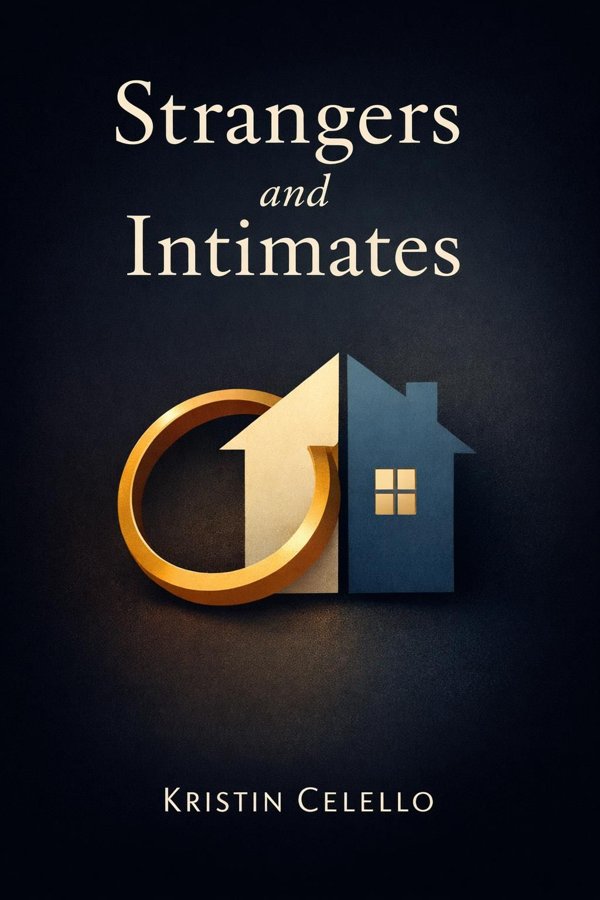
Strangers and Intimates: Summary & Key Insights
 10 min9 chaptersAudio available
Key Takeaways from Strangers and Intimates
A useful way to understand modern marriage is to remember that it was not originally organized around personal happiness.
One of the biggest social revolutions of the twentieth century happened not in government but in the home: marriage came to be reimagined as companionship.
The 1950s are often remembered as the golden age of marriage, but Celello complicates that familiar image.
Modern marriage asks for a difficult balance: complete closeness without loss of self.
When moral authority weakens, expert authority often steps in.
What Is Strangers and Intimates About?
Strangers and Intimates by Kristin Celello is a sociology book spanning 9 pages. Strangers and Intimates: Marriage in the Age of the Individual is a sharp, revealing history of how marriage in the United States changed over the twentieth century. Kristin Celello shows that marriage did not simply become more modern, romantic, or equal over time. Instead, it was repeatedly redefined as Americans tried to balance two powerful ideals: the desire for deep emotional intimacy and the growing belief that each person should pursue self-expression, independence, and personal fulfillment. Drawing on legal debates, popular magazines, advice literature, psychology, and public culture, Celello traces how marriage moved from a civic and moral institution to a highly personal relationship expected to satisfy emotional, sexual, and psychological needs. That shift matters because many of today’s tensions around marriage, divorce, gender roles, and selfhood were shaped by these earlier transformations. Celello writes not as a moralist but as a historian attentive to contradiction, showing how marriage became both more private and more demanding. Her expertise in American family and gender history makes this book an illuminating guide to one of the most important social changes of modern life.
This FizzRead summary covers all 9 key chapters of Strangers and Intimates in approximately 10 minutes, distilling the most important ideas, arguments, and takeaways from Kristin Celello's work. Also available as an audio summary and Key Quotes Podcast.
Strangers and Intimates
Strangers and Intimates: Marriage in the Age of the Individual is a sharp, revealing history of how marriage in the United States changed over the twentieth century. Kristin Celello shows that marriage did not simply become more modern, romantic, or equal over time. Instead, it was repeatedly redefined as Americans tried to balance two powerful ideals: the desire for deep emotional intimacy and the growing belief that each person should pursue self-expression, independence, and personal fulfillment. Drawing on legal debates, popular magazines, advice literature, psychology, and public culture, Celello traces how marriage moved from a civic and moral institution to a highly personal relationship expected to satisfy emotional, sexual, and psychological needs. That shift matters because many of today’s tensions around marriage, divorce, gender roles, and selfhood were shaped by these earlier transformations. Celello writes not as a moralist but as a historian attentive to contradiction, showing how marriage became both more private and more demanding. Her expertise in American family and gender history makes this book an illuminating guide to one of the most important social changes of modern life.
Who Should Read Strangers and Intimates?
This book is perfect for anyone interested in sociology and looking to gain actionable insights in a short read. Whether you're a student, professional, or lifelong learner, the key ideas from Strangers and Intimates by Kristin Celello will help you think differently.
- ✓Readers who enjoy sociology and want practical takeaways
- ✓Professionals looking to apply new ideas to their work and life
- ✓Anyone who wants the core insights of Strangers and Intimates in just 10 minutes
Want the full summary?
Get instant access to this book summary and 100K+ more with Fizz Moment.
Get Free SummaryAvailable on App Store • Free to download
Key Chapters
A useful way to understand modern marriage is to remember that it was not originally organized around personal happiness. At the start of the twentieth century, Americans often treated marriage as a social institution tied to order, morality, citizenship, and the reproduction of stable households. It was expected to structure adult life, regulate sexuality, and support a wider social framework. Love mattered, but it was not always seen as the sole or even primary foundation for a good marriage.
Celello shows that this earlier model positioned marriage as something larger than two individuals pursuing private satisfaction. Husbands and wives had gendered obligations: men were expected to provide, women to nurture and manage the home. Marriage was also connected to respectability. A successful union reflected not only on a couple but on families, communities, and national ideals. In this framework, endurance and duty often mattered more than emotional transparency or personal growth.
This historical perspective is important because it challenges the assumption that marriage has always been about intimacy. For example, advice manuals and public discussions from the early twentieth century often emphasized discipline, compatibility of character, and social responsibility rather than constant emotional fulfillment. Marriage was viewed as a stabilizing institution first and a vehicle for self-discovery second.
In practice, this helps readers see that many contemporary frustrations with marriage come from holding it to standards that are historically new. When people today expect marriage to deliver identity, passion, friendship, and security all at once, they are relying on a modern model, not a timeless one.
Actionable takeaway: When evaluating modern marriage ideals, first ask which expectations are historical inheritances and which are recent cultural inventions.
One of the biggest social revolutions of the twentieth century happened not in government but in the home: marriage came to be reimagined as companionship. In the 1920s and 1930s, Americans increasingly embraced the idea that husbands and wives should be friends, lovers, and partners, not merely co-managers of duty. Celello explains that this companionate ideal emphasized affection, shared leisure, sexual compatibility, and emotional connection.
This was a major shift because it raised the emotional stakes of marriage. A good marriage was no longer judged only by permanence, respectability, or household function. It was now expected to feel satisfying. Popular magazines, marriage manuals, and reformers promoted the image of a couple bound by mutual attraction and shared personality. Sexual intimacy, once discussed more cautiously in public, began to appear as an essential part of marital success.
Yet companionate marriage was not simply liberating. It also created new pressures. If marriage was supposed to provide friendship and emotional fulfillment, then loneliness within marriage became harder to justify. Couples had to cultivate intimacy actively. A spouse who fulfilled practical duties but failed emotionally could now be seen as inadequate.
You can see this pattern today in how people often describe an ideal spouse as a “best friend.” That language has roots in the historical transformations Celello documents. The expectation that marriage should offer conversation, emotional openness, recreation, and sexual chemistry emerged over time; it was not always built into the institution.
Actionable takeaway: Reflect on how much of your idea of a “good relationship” comes from companionate marriage ideals, and decide consciously which of those expectations are realistic and sustainable.
The 1950s are often remembered as the golden age of marriage, but Celello complicates that familiar image. Postwar America did elevate marriage and family life as central markers of normal adulthood. Economic growth, suburban expansion, and mass consumer culture helped popularize the ideal of the breadwinning husband, homemaking wife, and child-centered household. On the surface, this looked like stability and consensus.
But the domestic ideal was not as harmonious as nostalgia suggests. The model depended on strict gender roles that often limited both women and men. Wives were told to find fulfillment in domestic service while husbands were pressed to prove themselves through steady work and authority. Emotional intimacy was encouraged, yet actual social arrangements often kept the partners unequal. A marriage could appear successful publicly while containing frustration, isolation, or resentment privately.
Celello shows how postwar culture made marriage seem both natural and mandatory. Media, schools, religion, and policy all reinforced the message that adulthood culminated in heterosexual marriage and family formation. This social pressure increased conformity, but it also masked unmet needs. Women who felt constrained by domesticity or men who felt trapped by provider expectations had limited cultural language for their dissatisfaction.
A practical modern application is to question idealized historical comparisons. People often invoke the 1950s as proof that marriage used to be simpler or stronger. Celello demonstrates that what looked stable from the outside often depended on suppressed conflict and unequal power.
Actionable takeaway: Be cautious about romanticizing past family models; instead, ask what social costs and hidden tensions made those models seem stable.
Modern marriage asks for a difficult balance: complete closeness without loss of self. That tension lies at the center of Celello’s argument. Over the twentieth century, Americans increasingly embraced individualism, the belief that each person should pursue authenticity, self-development, and personal fulfillment. Marriage did not disappear under this pressure, but it was transformed. The relationship had to justify itself not only socially but psychologically.
As individualism grew stronger, marital success came to depend on whether the union helped each partner become a fuller self. Spouses were expected to support each other’s goals, emotions, and identities. At the same time, no one wanted marriage to feel like suffocating dependence. This produced a paradox: Americans wanted marriage to provide profound intimacy while also preserving personal autonomy.
Celello traces how this ideal changed expectations around conflict, sacrifice, and permanence. Earlier models often accepted self-denial as part of marriage. The newer model made prolonged unhappiness harder to defend. If a relationship blocked growth or self-expression, leaving it could seem reasonable rather than shameful. This did not mean people valued marriage less. In many cases, it meant they valued it so much that anything short of emotional and personal fulfillment felt unacceptable.
This tension appears today in debates over work-life balance, separate interests, emotional labor, and the language of “being true to yourself.” Couples are often encouraged to merge emotionally without erasing individuality, a task that requires negotiation rather than tradition.
Actionable takeaway: In any close relationship, discuss explicitly where you want interdependence and where you need autonomy instead of assuming both partners define individuality the same way.
Marriage changed not only because people wanted more intimacy, but because many women began questioning the unequal terms on which intimacy had been offered. Celello shows that feminism and broader social change in the mid- to late twentieth century challenged the assumption that marriage naturally benefited women. Activists and writers highlighted unpaid domestic labor, legal dependency, restricted opportunity, and the cultural expectation that wives should sacrifice more than husbands.
This critique did not simply attack marriage from the outside. It pushed Americans to reconsider what equality inside marriage should look like. If wives worked for pay, should housework and child care still be coded as female duties? If marriage was supposed to be a partnership, why were authority and economic power so unevenly distributed? Feminism made these contradictions visible.
The result was not the end of marriage but its renegotiation. More couples began aspiring to shared decision-making, dual-career arrangements, and less rigid gender roles. At the same time, transitions were uneven. Many marriages adopted egalitarian ideals faster than they adopted egalitarian practices, creating frustration when rhetoric and reality diverged.
A modern reader can see the lasting influence of this shift in ongoing arguments about mental load, caregiving, workplace flexibility, and fairness in relationships. Even when couples believe in equality, inherited habits and institutions can reproduce imbalance.
Celello’s insight is that marriage cannot be understood apart from gender politics. Emotional intimacy is shaped by who has time, power, money, and freedom.
Actionable takeaway: If you value equality in relationships, define specific expectations about labor, money, and decision-making rather than assuming shared values will automatically produce fair arrangements.
A society’s view of divorce reveals what it believes marriage is for. Celello explains that as the emotional and individualistic ideals of marriage strengthened, divorce came to be understood differently. In older frameworks, divorce often signaled moral failure, broken duty, or social disorder. In the newer framework, a failed marriage could be seen as one that no longer served the well-being or self-development of the people inside it.
This was a profound cultural change. If marriage existed to promote intimacy, mutual respect, and fulfillment, then staying in a chronically unhappy or harmful marriage was not automatically virtuous. Legal reforms, changing public attitudes, and therapeutic thinking all helped normalize the idea that ending a marriage might sometimes be the healthiest option. Divorce became less a violation of marriage’s purpose and more an acknowledgment that the relationship had ceased to meet it.
At the same time, Celello does not present divorce as simple liberation. The decline of stigma did not eliminate emotional pain, financial strain, or family disruption. Rather, it changed the standard by which marriage was judged. Longevity alone no longer proved success. A shorter marriage marked by growth or dignity might be valued more highly than a long but miserable one.
This shift remains visible in contemporary discussions of relationships. People often ask not merely whether a marriage lasted, but whether it was loving, fair, and life-giving. That moral language reflects the twentieth-century transformation Celello documents.
Actionable takeaway: Evaluate relationships by quality and mutual well-being, not just duration, while also recognizing the real costs and responsibilities involved in ending them.
Many people think their private expectations are uniquely personal, but Celello shows how deeply those expectations are shaped by media and popular culture. Throughout the twentieth century, magazines, films, advertisements, advice columns, and television helped define what marriage should feel like. They modeled romance, sexual chemistry, domestic roles, conflict resolution, and the appearance of a happy household.
Media did more than reflect social change; it actively organized desire. Companionate marriage, suburban domesticity, therapeutic self-disclosure, and later ideals of equality and self-fulfillment all circulated through popular culture. A couple watching movies, reading household magazines, or consuming television did not just see entertainment. They absorbed scripts about what good husbands and wives should want from each other.
This is especially important because media often presented ideals selectively. It celebrated romance while hiding routine labor, promoted domestic bliss while muting boredom, and encouraged individual fulfillment without always explaining how to reconcile that with long-term obligation. In this sense, culture trained people to expect intensity and satisfaction while offering limited guidance on endurance, compromise, and structural inequality.
Today, social media continues this pattern in amplified form. Curated images of weddings, parenting, date nights, and “healthy relationships” can make ordinary marriages seem disappointing by comparison. Celello’s historical approach reminds readers that intimate standards are culturally produced, not merely privately discovered.
Actionable takeaway: Audit the media narratives shaping your relationship expectations and separate aspirational images from the daily practices that actually sustain intimacy.
Perhaps the clearest sign of change is that marriage moved from being the unquestioned center of adult life to one important option among several. By the late twentieth century, Americans still valued marriage, but they approached it with new flexibility. Cohabitation, delayed marriage, blended families, dual-earner households, and more open discussion of alternative life paths all reflected the weakening of one rigid model.
Celello argues that this did not mean marriage lost symbolic power. In fact, as it became less compulsory, many people invested it with even greater emotional significance. Marriage was increasingly expected to be chosen freely, entered authentically, and sustained only if it remained meaningful. That combination made the institution both more voluntary and more emotionally loaded.
This transformation also exposed inequality. Not everyone had equal access to the economic stability, social recognition, or legal support that made modern marriage easier to sustain. As traditional scripts faded, couples had more freedom but also more responsibility to invent their own arrangements. Negotiation replaced assumption.
For modern readers, this explains why marriage can feel both less obligatory and more difficult. Without a single dominant script, partners must define expectations about work, fidelity, child care, money, and personal space more consciously. Freedom brings flexibility, but also uncertainty.
Celello’s larger point is that modern marriage survives not by remaining unchanged, but by adapting to a culture that prizes choice and selfhood.
Actionable takeaway: Treat marriage or long-term partnership as a consciously designed institution, and discuss its rules, goals, and boundaries with the same seriousness earlier generations brought to inherited norms.
All Chapters in Strangers and Intimates
About the Author
Kristin Celello is an American historian and scholar of modern U.S. family life, gender, and marriage. She serves as an associate professor at Queens College, City University of New York, where her teaching and research focus on the social and cultural history of intimacy, domestic life, and women’s experiences. Celello is particularly interested in how institutions that seem private, such as marriage and family, are shaped by larger political, economic, and ideological changes. In Strangers and Intimates, she brings a historian’s rigor to questions many people assume are timeless, showing how expectations about love, partnership, and personal fulfillment developed across the twentieth century. Her work is valued for combining careful archival research with clear insight into the ongoing tensions between intimacy, equality, and individualism.
Get This Summary in Your Preferred Format
Read or listen to the Strangers and Intimates summary by Kristin Celello anytime, anywhere. FizzRead offers multiple formats so you can learn on your terms — all free.
Available formats: App · Audio · PDF · EPUB — All included free with FizzRead
Download Strangers and Intimates PDF and EPUB Summary
Key Quotes from Strangers and Intimates
“A useful way to understand modern marriage is to remember that it was not originally organized around personal happiness.”
“One of the biggest social revolutions of the twentieth century happened not in government but in the home: marriage came to be reimagined as companionship.”
“The 1950s are often remembered as the golden age of marriage, but Celello complicates that familiar image.”
“Modern marriage asks for a difficult balance: complete closeness without loss of self.”
“When moral authority weakens, expert authority often steps in.”
Frequently Asked Questions about Strangers and Intimates
Strangers and Intimates by Kristin Celello is a sociology book that explores key ideas across 9 chapters. Strangers and Intimates: Marriage in the Age of the Individual is a sharp, revealing history of how marriage in the United States changed over the twentieth century. Kristin Celello shows that marriage did not simply become more modern, romantic, or equal over time. Instead, it was repeatedly redefined as Americans tried to balance two powerful ideals: the desire for deep emotional intimacy and the growing belief that each person should pursue self-expression, independence, and personal fulfillment. Drawing on legal debates, popular magazines, advice literature, psychology, and public culture, Celello traces how marriage moved from a civic and moral institution to a highly personal relationship expected to satisfy emotional, sexual, and psychological needs. That shift matters because many of today’s tensions around marriage, divorce, gender roles, and selfhood were shaped by these earlier transformations. Celello writes not as a moralist but as a historian attentive to contradiction, showing how marriage became both more private and more demanding. Her expertise in American family and gender history makes this book an illuminating guide to one of the most important social changes of modern life.
You Might Also Like
Between the World and Me
Ta-Nehisi Coates
10 min
Half the Sky
Nicholas D. Kristof, Sheryl WuDunn
10 min
Men Explain Things To Me
Rebecca Solnit
10 min
Rational Ritual
Michael Suk-Young Chwe
10 min
The New Jim Crow
Michelle Alexander
10 min
Beyond Culture
Edward T. Hall
10 minBrowse by Category
Ready to read Strangers and Intimates?
Get the full summary and 100K+ more books with Fizz Moment.