
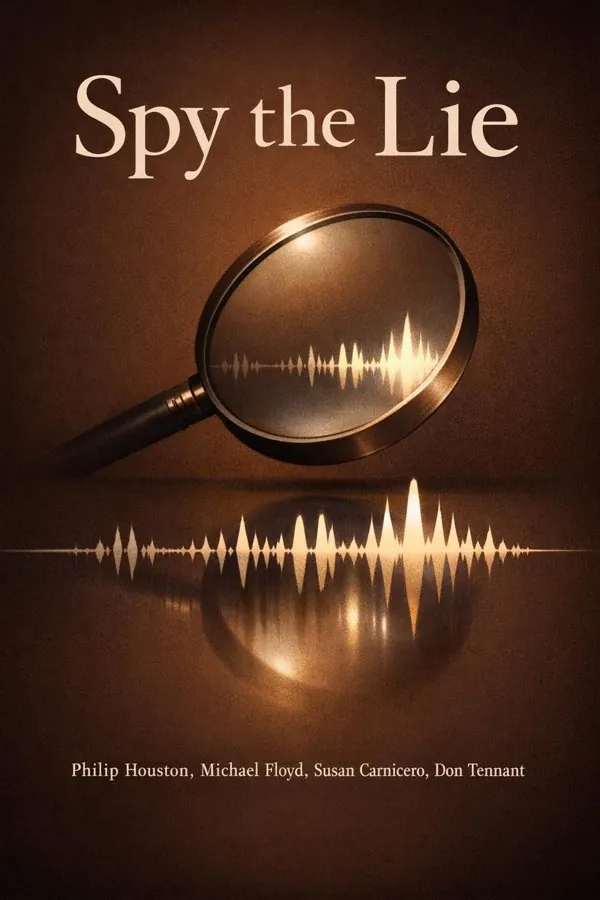
Spy the Lie: Former CIA Officers Teach You How to Detect Deception: Summary & Key Insights
by Philip Houston, Michael Floyd, Susan Carnicero, Don Tennant
 10 min6 chaptersAudio available
What Is Spy the Lie: Former CIA Officers Teach You How to Detect Deception About?
Spy the Lie: Former CIA Officers Teach You How to Detect Deception by Philip Houston, Michael Floyd, Susan Carnicero, Don Tennant is a psychology book spanning 6 pages. Written by former CIA officers, this book reveals the techniques used by intelligence professionals to detect deception in everyday life. It provides readers with practical tools to recognize verbal and nonverbal cues that indicate lying, helping them make better judgments in personal and professional interactions.
This FizzRead summary covers all 6 key chapters of Spy the Lie: Former CIA Officers Teach You How to Detect Deception in approximately 10 minutes, distilling the most important ideas, arguments, and takeaways from Philip Houston, Michael Floyd, Susan Carnicero, Don Tennant's work. Also available as an audio summary and Key Quotes Podcast.
Spy the Lie: Former CIA Officers Teach You How to Detect Deception
Written by former CIA officers, this book reveals the techniques used by intelligence professionals to detect deception in everyday life. It provides readers with practical tools to recognize verbal and nonverbal cues that indicate lying, helping them make better judgments in personal and professional interactions.
Who Should Read Spy the Lie: Former CIA Officers Teach You How to Detect Deception?
This book is perfect for anyone interested in psychology and looking to gain actionable insights in a short read. Whether you're a student, professional, or lifelong learner, the key ideas from Spy the Lie: Former CIA Officers Teach You How to Detect Deception by Philip Houston, Michael Floyd, Susan Carnicero, Don Tennant will help you think differently.
- ✓Readers who enjoy psychology and want practical takeaways
- ✓Professionals looking to apply new ideas to their work and life
- ✓Anyone who wants the core insights of Spy the Lie: Former CIA Officers Teach You How to Detect Deception in just 10 minutes
Want the full summary?
Get instant access to this book summary and 100K+ more with Fizz Moment.
Get Free SummaryAvailable on App Store • Free to download
Key Chapters
In our work at the CIA, we needed a framework that would isolate behaviors associated with deception and distinguish them from ordinary human variability. The behavioral model we built became that cornerstone—a disciplined system to interpret actions, not emotions.
Our model begins with a simple premise: behavior is a response to stress. A truthful person and a deceptive person both experience stress in a high-stakes interview, but the deceptive person faces an additional emotional burden—the cognitive load of sustaining a lie. That load leaks into observable behaviors. We divide those behaviors into three categories: verbal, nonverbal, and paralinguistic. But before any analysis can start, we must first establish a baseline—the subject’s natural manner of speaking, moving, and reacting when unthreatened. Without the baseline, we’re guessing, and guessing has no place in intelligence.
In practice, the model operates like a dialogue loop: we ask a question, observe the immediate and short-term responses, note deviations from baseline, then follow up strategically. The ten-second window after a question is critical—it’s in this space that the subconscious often betrays what the conscious mind tries to hide. This window became our operational focus point, where we learned to watch for the truth behind the words.
It’s crucial to emphasize that the model doesn’t label people as liars. It highlights behaviors that *may* suggest deception, guiding us toward further inquiry. A single indicator means little; clusters of indicators seen together under consistent stress conditions tell the story. Over time, these patterns become unmistakable.
Words carry more than meaning—they carry intent. In listening to hundreds of hours of interrogations, we noticed recurring verbal habits that accompanied deceptive behavior. One common pattern was evasive language. When asked direct questions, deceptive individuals often deflect, answer a different question, or use qualifying statements to create distance between themselves and the truth.
Consider responses such as, “To the best of my knowledge” or “Honestly, I don’t think so.” These qualifiers serve as psychological buffers. They give the speaker wiggle room, allowing them to sound truthful while avoiding absolute commitment. This tactic is not accidental—it’s a defense mechanism developed subconsciously to protect the lie.
Another verbal indicator arises in pronoun use. Truthful people claim ownership of their narratives; deceptive ones frequently dissociate. You’ll hear them shift from “I” to “we” or “they,” subtly deflecting responsibility. Similarly, deception can manifest in unnecessary detail or excessive specificity. When someone embellishes routine events with irrelevant facts, it often signals an effort to construct credibility instead of simply recalling it.
But context remains the anchor. Verbal cues must be analyzed alongside the situation’s stress dynamics. A nervous witness may sound evasive out of fear, not dishonesty. A trained observer learns to isolate the elements of speech that emerge *after* stress spikes—those are the most revealing moments. Throughout the book, we illustrate these insights with real interrogation examples, demonstrating how verbal indicators evolved under pressure and how careful questioning revealed the true story underneath.
+ 4 more chapters — available in the FizzRead app
All Chapters in Spy the Lie: Former CIA Officers Teach You How to Detect Deception
About the Authors
Philip Houston, Michael Floyd, and Susan Carnicero are former CIA officers with decades of experience in interviewing, interrogation, and behavioral analysis. Don Tennant is a journalist who collaborated with them to bring their expertise to a general audience.
Get This Summary in Your Preferred Format
Read or listen to the Spy the Lie: Former CIA Officers Teach You How to Detect Deception summary by Philip Houston, Michael Floyd, Susan Carnicero, Don Tennant anytime, anywhere. FizzRead offers multiple formats so you can learn on your terms — all free.
Available formats: App · Audio · PDF · EPUB — All included free with FizzRead
Download Spy the Lie: Former CIA Officers Teach You How to Detect Deception PDF and EPUB Summary
Key Quotes from Spy the Lie: Former CIA Officers Teach You How to Detect Deception
“In our work at the CIA, we needed a framework that would isolate behaviors associated with deception and distinguish them from ordinary human variability.”
“Words carry more than meaning—they carry intent.”
Frequently Asked Questions about Spy the Lie: Former CIA Officers Teach You How to Detect Deception
Spy the Lie: Former CIA Officers Teach You How to Detect Deception by Philip Houston, Michael Floyd, Susan Carnicero, Don Tennant is a psychology book that explores key ideas across 6 chapters. Written by former CIA officers, this book reveals the techniques used by intelligence professionals to detect deception in everyday life. It provides readers with practical tools to recognize verbal and nonverbal cues that indicate lying, helping them make better judgments in personal and professional interactions.
You Might Also Like

The Body Keeps the Score
Bessel van der Kolk
10 min
Surrounded by Idiots
Thomas Erikson
10 min
Emotional Intelligence
Daniel Goleman
10 min
Attached
Amir Levine
10 min
Why Does He Do That
Lundy Bancroft
10 min
Women Who Run with the Wolves
Clarissa Pinkola Estés
10 minBrowse by Category
Ready to read Spy the Lie: Former CIA Officers Teach You How to Detect Deception?
Get the full summary and 100K+ more books with Fizz Moment.