
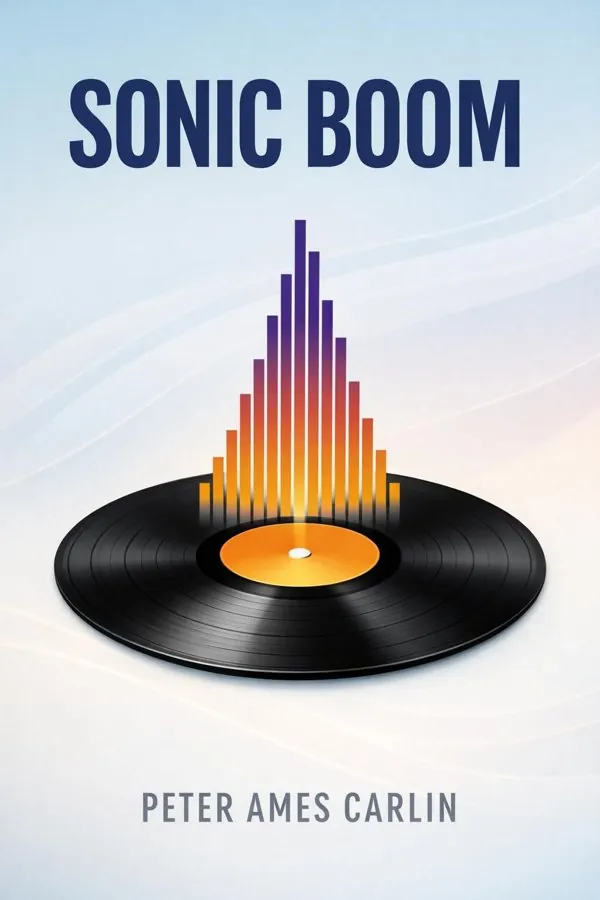
Sonic Boom: The Impossible Rise of Warner Bros. Records, from Hendrix to Fleetwood Mac to Madonna to Prince: Summary & Key Insights
 10 min4 chaptersAudio available
What Is Sonic Boom: The Impossible Rise of Warner Bros. Records, from Hendrix to Fleetwood Mac to Madonna to Prince About?
Sonic Boom: The Impossible Rise of Warner Bros. Records, from Hendrix to Fleetwood Mac to Madonna to Prince by Peter Ames Carlin is a music_film book spanning 4 pages. Sonic Boom tells the story of Warner Bros. Records, one of the most influential record labels in music history. Peter Ames Carlin traces its evolution from a small, artist-friendly company into a powerhouse that shaped the sound of modern music, nurturing artists like Jimi Hendrix, Fleetwood Mac, Madonna, and Prince. The book explores the creative and business forces that defined the label’s golden era and its eventual decline amid industry changes.
This FizzRead summary covers all 4 key chapters of Sonic Boom: The Impossible Rise of Warner Bros. Records, from Hendrix to Fleetwood Mac to Madonna to Prince in approximately 10 minutes, distilling the most important ideas, arguments, and takeaways from Peter Ames Carlin's work. Also available as an audio summary and Key Quotes Podcast.
Sonic Boom: The Impossible Rise of Warner Bros. Records, from Hendrix to Fleetwood Mac to Madonna to Prince
Sonic Boom tells the story of Warner Bros. Records, one of the most influential record labels in music history. Peter Ames Carlin traces its evolution from a small, artist-friendly company into a powerhouse that shaped the sound of modern music, nurturing artists like Jimi Hendrix, Fleetwood Mac, Madonna, and Prince. The book explores the creative and business forces that defined the label’s golden era and its eventual decline amid industry changes.
Who Should Read Sonic Boom: The Impossible Rise of Warner Bros. Records, from Hendrix to Fleetwood Mac to Madonna to Prince?
This book is perfect for anyone interested in music_film and looking to gain actionable insights in a short read. Whether you're a student, professional, or lifelong learner, the key ideas from Sonic Boom: The Impossible Rise of Warner Bros. Records, from Hendrix to Fleetwood Mac to Madonna to Prince by Peter Ames Carlin will help you think differently.
- ✓Readers who enjoy music_film and want practical takeaways
- ✓Professionals looking to apply new ideas to their work and life
- ✓Anyone who wants the core insights of Sonic Boom: The Impossible Rise of Warner Bros. Records, from Hendrix to Fleetwood Mac to Madonna to Prince in just 10 minutes
Want the full summary?
Get instant access to this book summary and 100K+ more with Fizz Moment.
Get Free SummaryAvailable on App Store • Free to download
Key Chapters
When Warner Bros. launched its record division in the late 1950s, it did not yet understand the landscape it was entering. Initially, the label existed largely to capitalize on soundtrack albums for Warner films, relying on safe bets rather than cultural phenomena. Their early releases were cautious and conventional, and the company seemed more like an offshoot than a pioneer. But within this confusion, an opening emerged.
The studio executives—particularly men like Mike Maitland and Mo Ostin—sensed that the key to success wasn’t control, but trust. Unlike other labels micromanaging their performers, they envisioned a space where musicians could explore sound without corporate meddling. It was a radical notion for a Hollywood-backed company, but it would soon pay off.
By the 1960s, Warner’s relationship with artists like the Grateful Dead, Jimi Hendrix (through the Reprise imprint originally founded by Frank Sinatra), and others marked a turning point. The label's ethos became synonymous with artistic freedom. Mo Ostin, an unpretentious and intuitive executive, built the kind of culture that viewed musicians as collaborators rather than products. The label’s identity slowly differentiated itself from its corporate parent—no longer just a film studio’s experiment, but a creative powerhouse nurturing artists and ideas that reflected the shifting mood of an entire generation.
Moving into the 1970s, Warner Bros. Records found itself at the confluence of art and opportunity. Through strategic acquisitions—particularly the integration of Reprise Records—the label brought under its wing an extraordinary variety of talent: from James Taylor’s confessional warmth to Joni Mitchell’s poetic sophistication, from the Doobie Brothers’ easygoing harmonies to the trailblazing emergence of Fleetwood Mac. These artists didn’t just fill catalogs—they defined the soundtracks of their eras.
Fleetwood Mac’s journey epitomized everything Warner Bros. believed in. When the band, long struggling to maintain relevance, reinvented itself with the addition of Lindsey Buckingham and Stevie Nicks, Warner didn’t merely sign a contract; it invested in a transformation. The resulting album, *Fleetwood Mac* (1975), and later *Rumours* (1977), became two of the best-selling records in history—not because they followed a corporate formula, but because Warner’s approach allowed authentic reinvention to thrive.
Behind these triumphs was a culture of creative risk-taking. The label celebrated idiosyncrasies rather than flattening them. It gave Frank Zappa the freedom to satirize the industry, Neil Young the liberty to drift through genres, and Randy Newman the space to craft songs so complex they resisted easy categorization. This openness built an internal mythology: Warner Bros. wasn’t just a company, it was a laboratory where genius could be unpredictable, sometimes unwieldy—but always genuine.
+ 2 more chapters — available in the FizzRead app
All Chapters in Sonic Boom: The Impossible Rise of Warner Bros. Records, from Hendrix to Fleetwood Mac to Madonna to Prince
About the Author
Peter Ames Carlin is an American journalist and author known for his biographies of major figures in music and television, including Bruce Springsteen, Paul McCartney, and Brian Wilson. His work often combines deep research with narrative storytelling to illuminate the cultural impact of his subjects.
Get This Summary in Your Preferred Format
Read or listen to the Sonic Boom: The Impossible Rise of Warner Bros. Records, from Hendrix to Fleetwood Mac to Madonna to Prince summary by Peter Ames Carlin anytime, anywhere. FizzRead offers multiple formats so you can learn on your terms — all free.
Available formats: App · Audio · PDF · EPUB — All included free with FizzRead
Download Sonic Boom: The Impossible Rise of Warner Bros. Records, from Hendrix to Fleetwood Mac to Madonna to Prince PDF and EPUB Summary
Key Quotes from Sonic Boom: The Impossible Rise of Warner Bros. Records, from Hendrix to Fleetwood Mac to Madonna to Prince
“launched its record division in the late 1950s, it did not yet understand the landscape it was entering.”
“Records found itself at the confluence of art and opportunity.”
Frequently Asked Questions about Sonic Boom: The Impossible Rise of Warner Bros. Records, from Hendrix to Fleetwood Mac to Madonna to Prince
Sonic Boom: The Impossible Rise of Warner Bros. Records, from Hendrix to Fleetwood Mac to Madonna to Prince by Peter Ames Carlin is a music_film book that explores key ideas across 4 chapters. Sonic Boom tells the story of Warner Bros. Records, one of the most influential record labels in music history. Peter Ames Carlin traces its evolution from a small, artist-friendly company into a powerhouse that shaped the sound of modern music, nurturing artists like Jimi Hendrix, Fleetwood Mac, Madonna, and Prince. The book explores the creative and business forces that defined the label’s golden era and its eventual decline amid industry changes.
You Might Also Like
Beethoven: A Documentary Study
H. C. Robbins Landon
10 min
Cinema Speculation
Quentin Tarantino
10 min
Deep Listening: A Composer's Sound Practice
Pauline Oliveros
10 min
Dylan Goes Electric!: Newport, Seeger, Dylan, and the Night That Split the Sixties
Elijah Wald
10 min
Future Frames
Maria Walsh
10 min
Hamilton: The Revolution: Being the Complete Libretto of the Broadway Musical, with a True Account of Its Creation, and Concise Remarks on Hip-Hop, the Power of Stories, and the New America
Lin-Manuel Miranda, Jeremy McCarter
10 minBrowse by Category
Ready to read Sonic Boom: The Impossible Rise of Warner Bros. Records, from Hendrix to Fleetwood Mac to Madonna to Prince?
Get the full summary and 100K+ more books with Fizz Moment.