
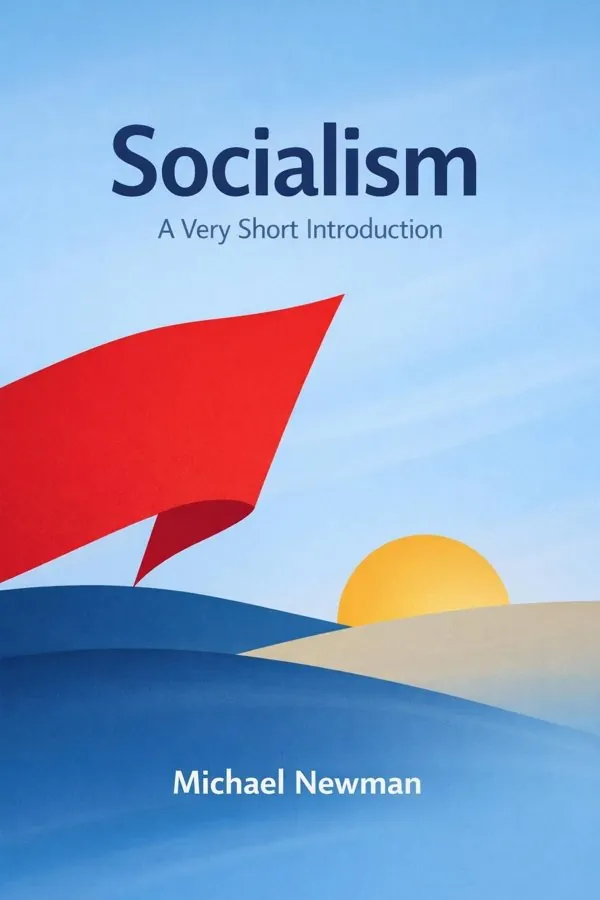
Socialism: A Very Short Introduction: Summary & Key Insights
 10 min9 chaptersAudio available
What Is Socialism: A Very Short Introduction About?
Socialism: A Very Short Introduction by Michael Newman is a politics book spanning 9 pages. This concise introduction explores the history, theory, and practice of socialism, tracing its evolution from early utopian ideas to modern democratic and market-oriented forms. Michael Newman examines key thinkers, movements, and debates, offering a balanced overview of socialism’s achievements, challenges, and continuing relevance in contemporary politics.
This FizzRead summary covers all 9 key chapters of Socialism: A Very Short Introduction in approximately 10 minutes, distilling the most important ideas, arguments, and takeaways from Michael Newman's work. Also available as an audio summary and Key Quotes Podcast.
Socialism: A Very Short Introduction
This concise introduction explores the history, theory, and practice of socialism, tracing its evolution from early utopian ideas to modern democratic and market-oriented forms. Michael Newman examines key thinkers, movements, and debates, offering a balanced overview of socialism’s achievements, challenges, and continuing relevance in contemporary politics.
Who Should Read Socialism: A Very Short Introduction?
This book is perfect for anyone interested in politics and looking to gain actionable insights in a short read. Whether you're a student, professional, or lifelong learner, the key ideas from Socialism: A Very Short Introduction by Michael Newman will help you think differently.
- ✓Readers who enjoy politics and want practical takeaways
- ✓Professionals looking to apply new ideas to their work and life
- ✓Anyone who wants the core insights of Socialism: A Very Short Introduction in just 10 minutes
Want the full summary?
Get instant access to this book summary and 100K+ more with Fizz Moment.
Get Free SummaryAvailable on App Store • Free to download
Key Chapters
+ 7 more chapters — available in the FizzRead app
All Chapters in Socialism: A Very Short Introduction
About the Author
Michael Newman is an Emeritus Professor of Politics at London Metropolitan University. His research focuses on socialist theory, international relations, and political movements. He has written extensively on socialism and the British left.
Get This Summary in Your Preferred Format
Read or listen to the Socialism: A Very Short Introduction summary by Michael Newman anytime, anywhere. FizzRead offers multiple formats so you can learn on your terms — all free.
Available formats: App · Audio · PDF · EPUB — All included free with FizzRead
Download Socialism: A Very Short Introduction PDF and EPUB Summary
Key Quotes from Socialism: A Very Short Introduction
“Before socialism became a mass movement, it was a moral protest.”
“Karl Marx transformed socialism from moral vision into critical science.”
Frequently Asked Questions about Socialism: A Very Short Introduction
Socialism: A Very Short Introduction by Michael Newman is a politics book that explores key ideas across 9 chapters. This concise introduction explores the history, theory, and practice of socialism, tracing its evolution from early utopian ideas to modern democratic and market-oriented forms. Michael Newman examines key thinkers, movements, and debates, offering a balanced overview of socialism’s achievements, challenges, and continuing relevance in contemporary politics.
You Might Also Like

Antifa: The Anti-Fascist Handbook
Mark Bray
10 min
Attack from Within: How Disinformation Is Sabotaging America
Barbara McQuade
10 min
Coercion, Capital, and European States, AD 990–1992
Charles Tilly
10 min
Digital Democracy: Concepts, Methodologies, Tools, and Applications
Various Authors
10 min
Fascism
Stanley G. Payne
10 min
Fire And Fury: Inside The Trump White House
Michael Wolff
10 minBrowse by Category
Ready to read Socialism: A Very Short Introduction?
Get the full summary and 100K+ more books with Fizz Moment.