
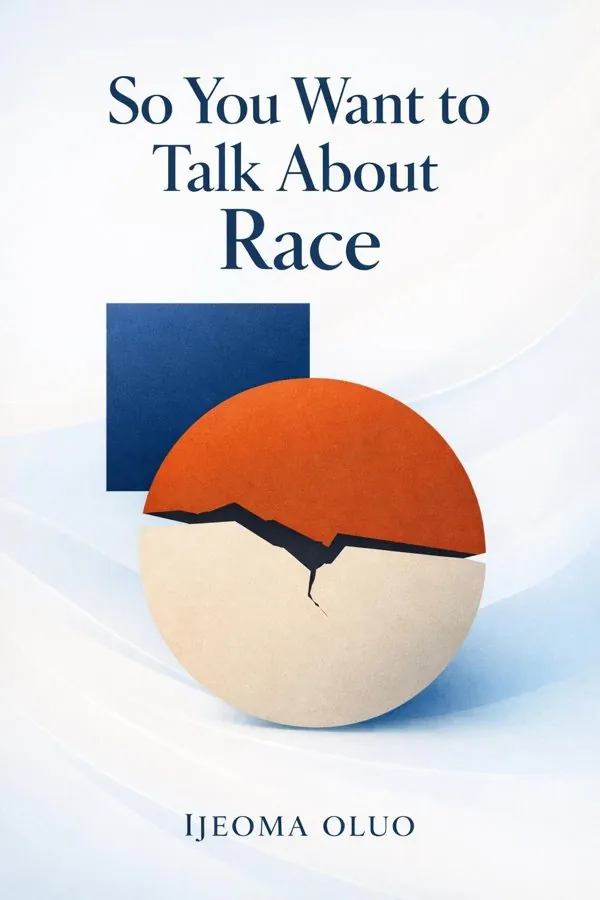
So You Want to Talk About Race: Summary & Key Insights
by Ijeoma Oluo
 10 min12 chaptersAudio available
What Is So You Want to Talk About Race About?
So You Want to Talk About Race by Ijeoma Oluo is a sociology book spanning 12 pages. In this powerful and accessible book, Ijeoma Oluo explores the complex realities of race and racism in contemporary America. Through clear explanations and personal insight, she provides readers with practical guidance on how to engage in honest, informed conversations about race, privilege, police brutality, intersectionality, and systemic inequality. The book serves as a roadmap for those seeking to understand and dismantle racial injustice in everyday life.
This FizzRead summary covers all 12 key chapters of So You Want to Talk About Race in approximately 10 minutes, distilling the most important ideas, arguments, and takeaways from Ijeoma Oluo's work. Also available as an audio summary and Key Quotes Podcast.
So You Want to Talk About Race
In this powerful and accessible book, Ijeoma Oluo explores the complex realities of race and racism in contemporary America. Through clear explanations and personal insight, she provides readers with practical guidance on how to engage in honest, informed conversations about race, privilege, police brutality, intersectionality, and systemic inequality. The book serves as a roadmap for those seeking to understand and dismantle racial injustice in everyday life.
Who Should Read So You Want to Talk About Race?
This book is perfect for anyone interested in sociology and looking to gain actionable insights in a short read. Whether you're a student, professional, or lifelong learner, the key ideas from So You Want to Talk About Race by Ijeoma Oluo will help you think differently.
- ✓Readers who enjoy sociology and want practical takeaways
- ✓Professionals looking to apply new ideas to their work and life
- ✓Anyone who wants the core insights of So You Want to Talk About Race in just 10 minutes
Want the full summary?
Get instant access to this book summary and 100K+ more with Fizz Moment.
Get Free SummaryAvailable on App Store • Free to download
Key Chapters
To have any honest discussion about race, we need to start with definitions. Race is not a biological fact; it’s a social construct built to justify inequality. The idea of racial difference was historically created to rationalize slavery, colonization, and exploitation. Racism, then, is not simply about individuals being unkind or prejudiced. Racism is a system of advantage based on race—a network of institutions, policies, and cultural messages that privilege white people and disadvantage those who are not.
When people say, 'I don’t see color,' they often believe they’re rejecting racism. But in claiming not to see color, they also refuse to see how race shapes experiences and opportunities. Racism works because it hides itself as normal. It embeds itself in education systems that misrepresent history, in hiring processes that reward conformity to white norms, and in policing practices that treat black and brown bodies as threats.
Understanding racism as structural forces us to move beyond guilt and towards responsibility. Guilt is paralyzing—it keeps us focused on ourselves. Responsibility, on the other hand, keeps us engaged. It asks: what am I doing, intentionally or not, to uphold systems that harm others? This reframing is where meaningful change begins.
Privilege is not about what you’ve suffered; it’s about what you’ve been spared. Many people resist conversations about privilege because they hear blame where there is only description. Privilege does not mean your life has been easy—it means certain barriers were never placed in your path because of your race.
But privilege doesn’t exist in isolation. Intersectionality, a framework coined by Kimberlé Crenshaw, helps us see how different aspects of identity—race, gender, class, sexuality, ability—intersect to shape our experiences of oppression or advantage. A white woman faces sexism but benefits from racial privilege. A Black woman experiences both racism and sexism, often in ways that cannot be separated. Understanding this complexity is vital if we want our fight for justice to include everyone.
Recognizing privilege is not an exercise in shame—it is a call to awareness. Once we see how privilege operates, we can use it to challenge exclusion rather than ignore it. It becomes a question of solidarity: How can I use what I have to open space for those denied the same?
+ 10 more chapters — available in the FizzRead app
All Chapters in So You Want to Talk About Race
About the Author
Ijeoma Oluo is an American writer, speaker, and activist known for her work on race, feminism, and social justice. Her writing has appeared in publications such as The Guardian, The Stranger, and Jezebel. Oluo’s work focuses on making complex social issues accessible and actionable for a broad audience.
Get This Summary in Your Preferred Format
Read or listen to the So You Want to Talk About Race summary by Ijeoma Oluo anytime, anywhere. FizzRead offers multiple formats so you can learn on your terms — all free.
Available formats: App · Audio · PDF · EPUB — All included free with FizzRead
Download So You Want to Talk About Race PDF and EPUB Summary
Key Quotes from So You Want to Talk About Race
“To have any honest discussion about race, we need to start with definitions.”
“Privilege is not about what you’ve suffered; it’s about what you’ve been spared.”
Frequently Asked Questions about So You Want to Talk About Race
So You Want to Talk About Race by Ijeoma Oluo is a sociology book that explores key ideas across 12 chapters. In this powerful and accessible book, Ijeoma Oluo explores the complex realities of race and racism in contemporary America. Through clear explanations and personal insight, she provides readers with practical guidance on how to engage in honest, informed conversations about race, privilege, police brutality, intersectionality, and systemic inequality. The book serves as a roadmap for those seeking to understand and dismantle racial injustice in everyday life.
You Might Also Like
Between the World and Me
Ta-Nehisi Coates
10 min
Half the Sky
Nicholas D. Kristof, Sheryl WuDunn
10 min
Men Explain Things To Me
Rebecca Solnit
10 min
Rational Ritual
Michael Suk-Young Chwe
10 min
The New Jim Crow
Michelle Alexander
10 min
Beyond Culture
Edward T. Hall
10 minBrowse by Category
Ready to read So You Want to Talk About Race?
Get the full summary and 100K+ more books with Fizz Moment.